
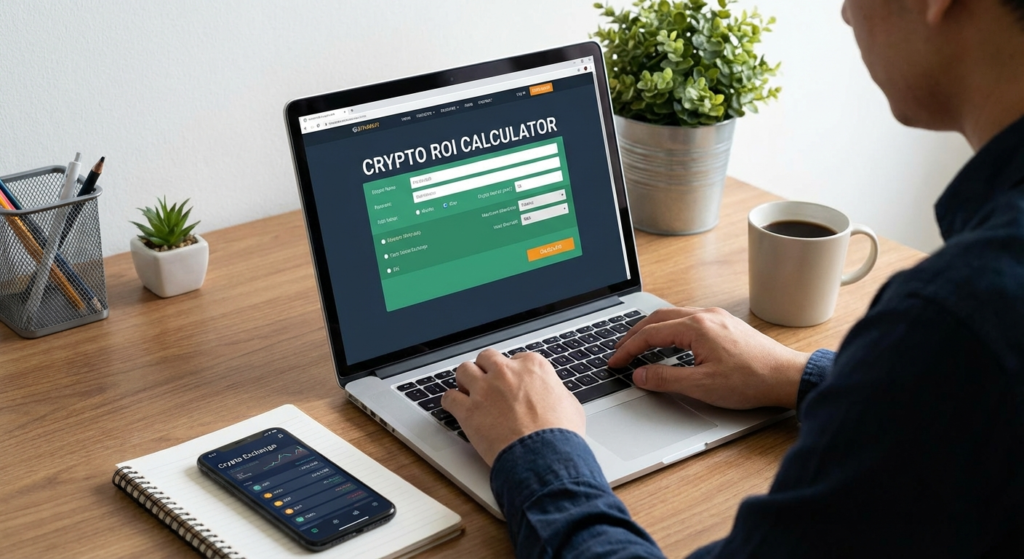
I will never forget the first time I thought I absolutely crushed a trade. I bought Ethereum right before a major network upgrade, watched the price spike 15% over the weekend, and hit the sell button with a massive grin on my face. I was a genius. Or so I thought.
When I finally checked my actual exchange balance a few days later, my “massive” profit had vanished. Between the decentralized exchange routing spread, the exorbitant Ethereum gas fees to execute the smart contract, and the withdrawal fee to move my fiat back to my bank, I actually lost $12. That was a brutal reality check.
Here is the thing about trading digital assets: raw price action is an illusion. A token pumping 20% does not mean your portfolio grew by 20%. If you are trading blindly without factoring in the friction costs of the market, you aren’t investing. You are gambling.
This is exactly why a crypto ROI calculator is the most critical tool in your arsenal. By stripping away the emotion and forcing you to look at hard, undeniable data, it transforms you from a hopeful speculator into a calculated investor. Let’s break down exactly how to use one to protect your capital and maximize your actual take-home gains.
The Brutal Truth About Crypto Profits
In traditional finance, calculating Return on Investment (ROI) is fairly straightforward. You buy a stock, pay a flat broker fee, and sell it later. Crypto is an entirely different beast.
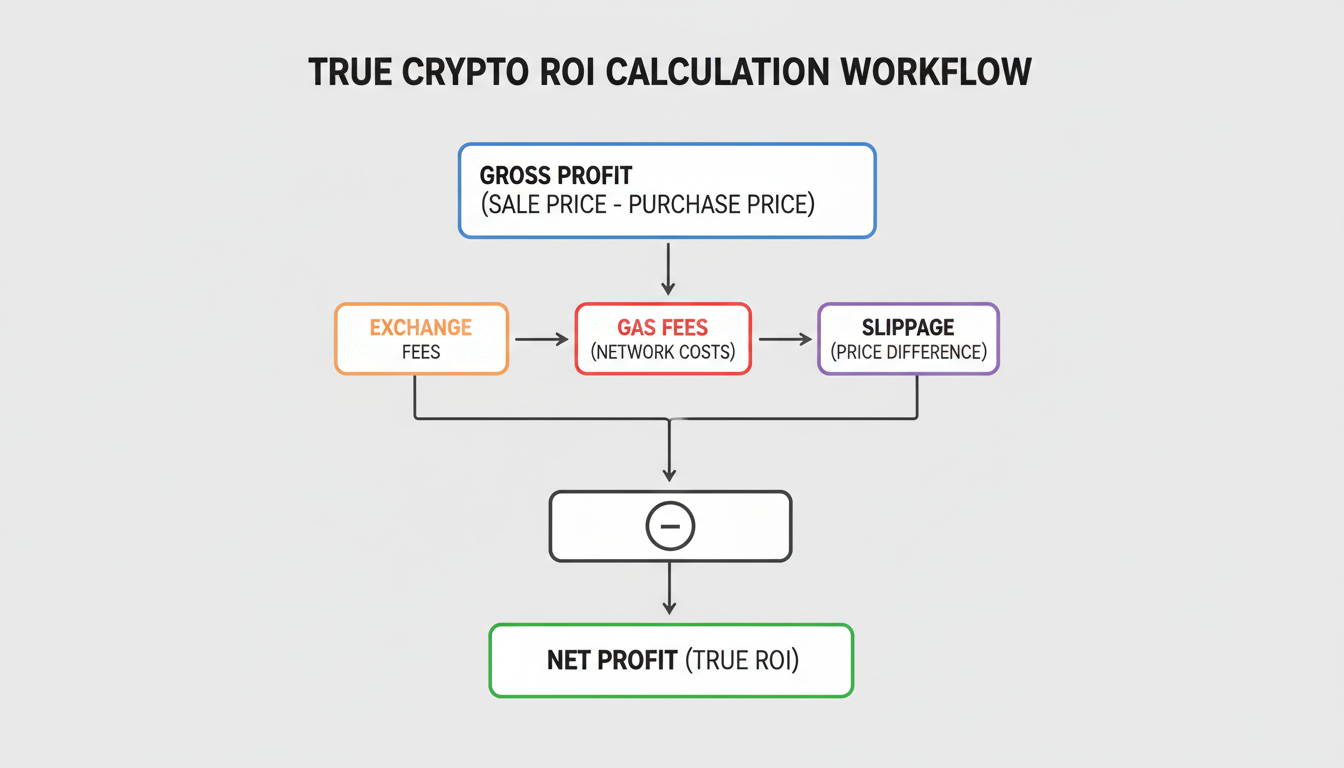
The digital asset market introduces a chaotic mix of variables. You have maker and taker fees on centralized exchanges. You have network gas fees that fluctuate by the minute. You have slippage on low-liquidity decentralized exchanges (DEXs). If you ignore these, your mental math will always betray you.
⚠️ Watch Out
Never rely on the default “Profit/Loss” dashboard on your crypto exchange. These dashboards frequently calculate your gains based on the current spot price, completely ignoring the spread and the fees you will pay the second you actually try to close the position.
A dedicated crypto ROI calculator fixes this. It acts as a financial lie detector, showing you the exact net profit you will walk away with after the market takes its cut.
Raw Price Increase vs. Actual ROI
To understand why mental math fails, look at this breakdown. Let’s say you invest $1,000 into a mid-cap altcoin. The token price goes up by 10%. Your brain tells you that you just made $100. But let’s look at what happens when we run this through a proper calculator.
| Metric | Mental Math (The Illusion) | Crypto ROI Calculator (The Reality) |
|---|---|---|
| Initial Investment | $1,000.00 | $1,000.00 |
| Price Increase | + 10% | + 10% |
| Gross Value | $1,100.00 | $1,100.00 |
| Buy Fee (0.5%) | Ignored | – $5.00 |
| Network Gas Fee | Ignored | – $15.00 |
| Sell Fee (0.5%) | Ignored | – $5.50 |
| Slippage (1%) | Ignored | – $11.00 |
| Actual Net Profit | $100.00 (10% ROI) | $63.50 (6.35% ROI) |
As you can see, nearly 40% of your expected profit was eaten by market friction. If you were planning to sell at a 5% gain, you would have actually lost money. This is why precision matters.
7 Essential Steps to Master Your Profits Using a Crypto ROI Calculator
Based on hands-on testing and years of managing digital portfolios, I’ve developed a strict workflow. If you want to stop bleeding capital, follow these seven steps every single time you plan a trade.
1. Define Your True Entry Capital
Don’t just input the amount of crypto you bought. Input the total fiat currency (USD, EUR, etc.) that left your bank account. This ensures you are accounting for any fiat-to-crypto on-ramp fees charged by providers like MoonPay or Stripe.
2. Log the Exact Entry Price
Precision is everything. Don’t round up or down. If you bought Bitcoin at $64,231.45, enter exactly that. When dealing with fractional assets, a few dollars on the entry price drastically alters the final percentage.
3. Factor in the Exchange Spread
The spread is the difference between the highest price a buyer is willing to pay and the lowest price a seller will accept. If you use a “market buy” order, you are paying the spread. A premium crypto ROI calculator will let you adjust for this hidden cost.
💡 Pro Tip
Always use “Limit Orders” instead of “Market Orders” on centralized exchanges. Limit orders often qualify for lower “maker” fees and completely eliminate the risk of negative slippage, instantly improving your baseline ROI.
4. Input Maker and Taker Fees
Every exchange charges a toll. Binance, Coinbase, and Kraken all have different fee tiers based on your 30-day trading volume. Find your specific fee tier and plug that percentage into your calculator.
5. Account for Network Gas Fees
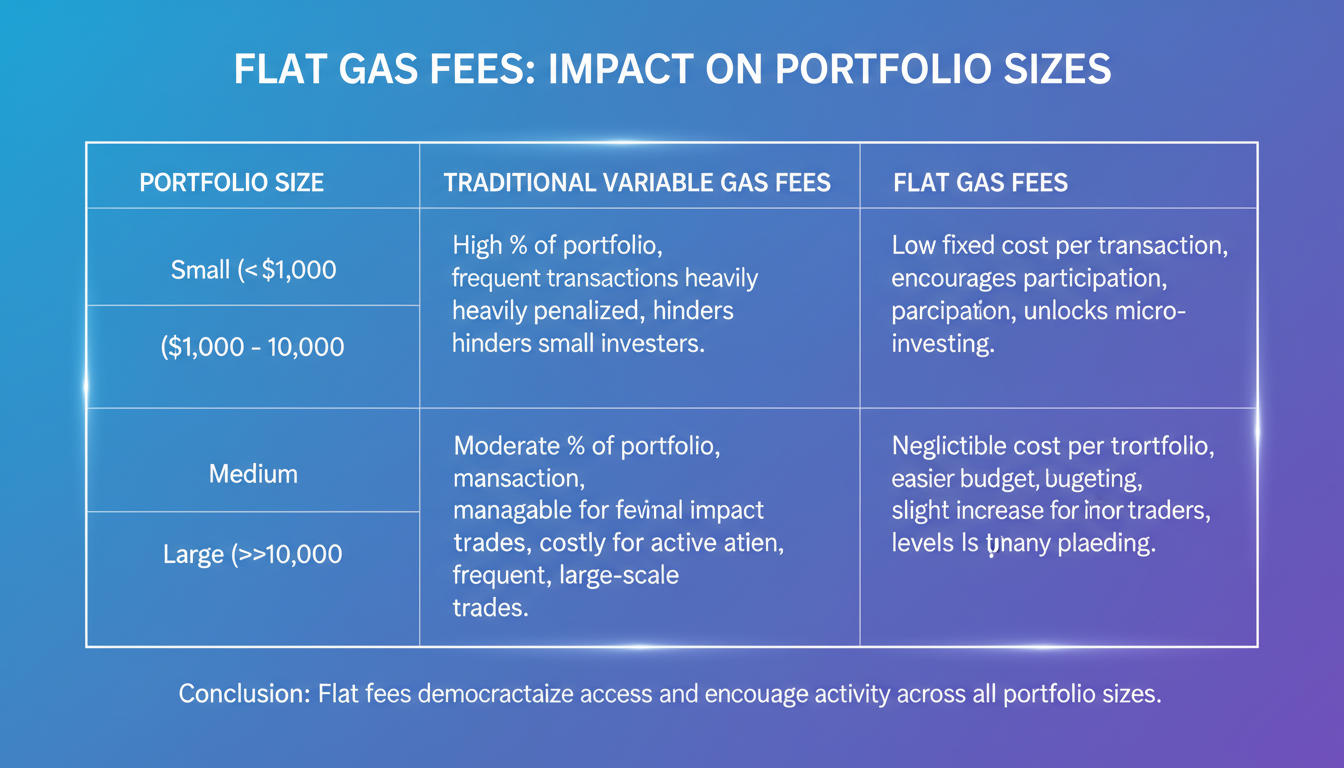
If you are trading on-chain (using Uniswap, PancakeSwap, etc.), gas fees are your biggest enemy. A $30 gas fee on a $10,000 trade is negligible. That same $30 fee on a $100 trade instantly puts you at a -30% ROI before the token even moves. Always calculate gas relative to your position size.
6. Project Multiple Exit Targets
Don’t just calculate your current profit. Use the tool to map out your future. Run scenarios for a 20%, 50%, and 100% price increase. Write down the exact dollar amount you will make at each level. This removes emotion and gives you a concrete plan for taking profits.
7. Log the Data for Tax Season
Every time you swap one crypto for another, it is a taxable event in most jurisdictions. By calculating your exact net ROI per trade, you are simultaneously building a clean ledger for your accountant. Trust me, your future self will thank you.
Spot Trading vs. Staking: Adjusting Your ROI Math
As your strategy evolves beyond simple buying and selling, your calculations need to evolve too. The math changes entirely when you enter the world of Decentralized Finance (DeFi). Mastering the Art of Text Flipping: Your Comprehensive Guide to the Upside Down Text Generator
When you stake a token or provide liquidity, you aren’t just tracking price appreciation. You are tracking yield. This is where the difference between ROI and APY (Annual Percentage Yield) becomes critical. ROI is your total return over a specific period. APY is your projected return over a year, assuming compounding interest. BMI Calculator India Health Guide: Understanding Your Health and Wellness
If you are holding a token long-term, you should absolutely understand the compound interest formula with monthly contributions. Reinvesting your staking rewards (compounding) can turn a mediocre ROI into an exponential one.
| Strategy | Primary ROI Drivers | Hidden Risks to Calculate |
|---|---|---|
| Spot Trading | Buy price vs. Sell price | Exchange fees, slippage, spread |
| Staking | Token price + Reward yield | Lock-up periods, slashing penalties |
| Liquidity Pools | Trading fee accumulation | Impermanent loss (divergence risk) |
🎯 Key Takeaway
A high APY does not guarantee a positive ROI. If a staking pool pays you 50% APY in rewards, but the underlying token drops 60% in value, your actual ROI is deeply negative. Always calculate the total net return, not just the advertised yield.
The Hidden Killers of Crypto Returns
Trading without calculation is like flying a plane blindfolded. You might stay in the air for a while, but eventually, you are going to crash. I’ve seen countless traders wipe out their accounts because they ignored these three ROI killers.
1. Emotional Holding (Bag Holding)
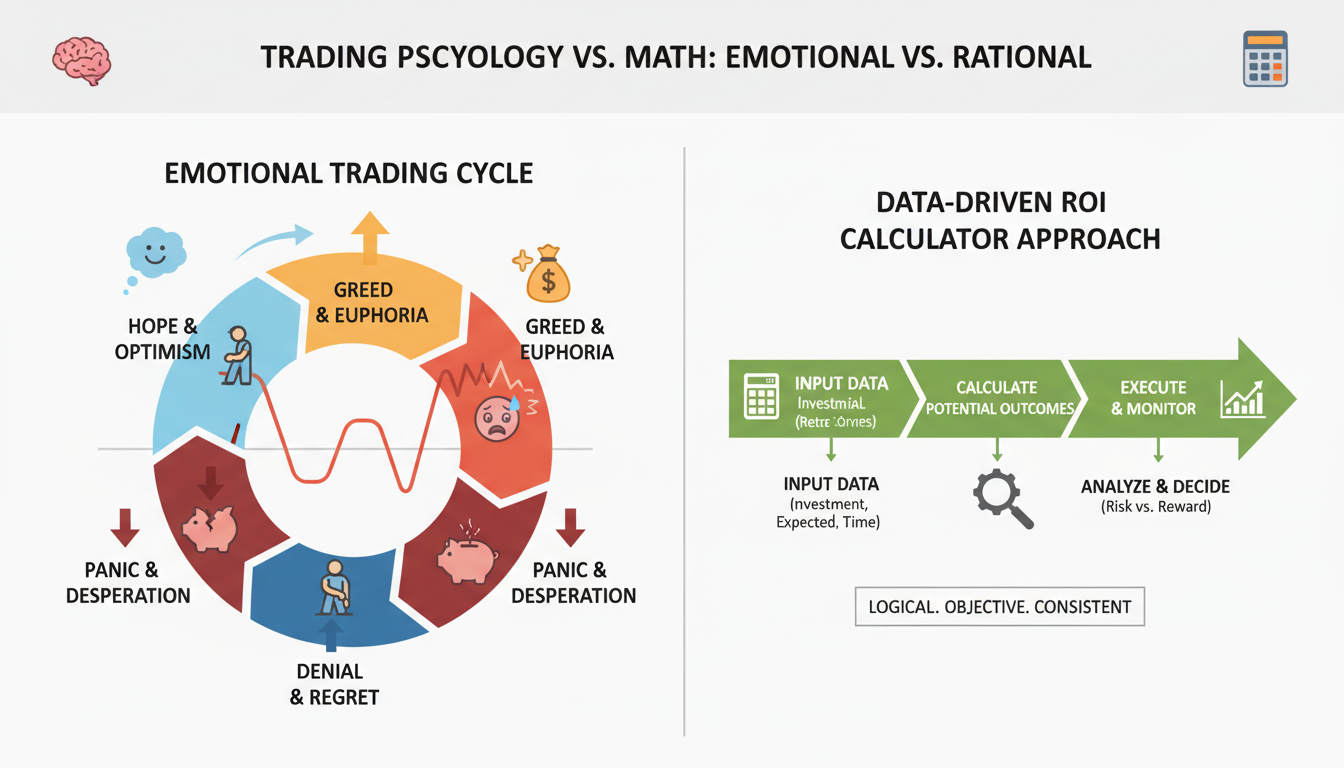
Without seeing the hard data of a negative ROI staring them in the face, traders hold onto losing positions hoping for a miraculous rebound. A calculator forces you to confront reality. If your ROI hits your predetermined stop-loss limit (say, -15%), you cut the trade. No emotion. Just math.
2. Ignoring Impermanent Loss
If you provide liquidity to a DEX, you must use an advanced crypto ROI calculator that factors in impermanent loss. If one token in your pair skyrockets while the other stays flat, the automated market maker will rebalance your pool, often leaving you with less value than if you had just held the tokens in your wallet.
⚠️ Watch Out
Never provide liquidity to highly volatile token pairs without running an impermanent loss calculation first. The trading fees you earn rarely cover the massive divergence loss during a sudden market crash or pump.
3. Overtrading
When you realize how much fees eat into your profits, you stop taking mediocre trades. You realize that scalping a 2% gain isn’t worth the risk when fees consume 1.5% of it. Calculating your true ROI naturally makes you a more patient, selective trader.
Top Features to Look for in a Crypto ROI Calculator
Not all tools are created equal. If you are serious about tracking your portfolio, look for a calculator that offers these specific features:
- Multi-Currency Support: You need the ability to calculate ROI against USD, EUR, BTC, or ETH pairs. Sometimes your USD value goes up, but your Bitcoin value goes down.
- Granular Fee Customization: It must have separate input fields for maker fees, taker fees, and flat network gas fees.
- DCA Tracking: If you buy Bitcoin every week, your ROI isn’t based on a single entry. The tool needs to calculate your weighted average entry price.
- Visual Scenario Graphs: The best tools provide charts that visualize your profit/loss potential across a sliding scale of future price points.
💡 Pro Tip
If you are running an e-commerce business that accepts crypto, your calculations need to be even tighter. Treat your crypto revenue just like traditional sales by running it through a free ecommerce profit margin calculator to ensure market volatility isn’t destroying your business margins.
Conclusion: Let the Data Drive
In the high-stakes, hyper-volatile environment of cryptocurrency, your edge doesn’t come from guessing which coin will pump next. Your edge comes from risk management.
A crypto ROI calculator is your ultimate defense mechanism. It transforms abstract market movements into concrete, actionable data. By consistently analyzing your entry points, accounting for every single hidden fee, and projecting your future gains, you take control of your financial destiny.
Stop guessing. Start calculating. Open up a calculator right now, plug in your worst-performing asset, and face the math. It might sting today, but it will make you a vastly more profitable trader tomorrow.
❓ Frequently Asked Questions
What is considered a “good” ROI in crypto?
A good ROI is entirely dependent on your risk profile. In traditional stock markets, 7-10% annually is the gold standard. In crypto, traders often target 20-50% per trade due to the extreme risk. However, according to industry experts, consistently compounding small gains (5-10%) is far more sustainable than chasing 100x moonshots.
Does a crypto ROI calculator automatically account for taxes?
No. Most standard calculators focus strictly on gross and net profit relative to exchange and network fees. Because capital gains tax rates vary wildly depending on your country and income bracket, you must take your final net ROI figure and apply your local tax rate manually.
Can I use an ROI calculator if I am shorting the market?
Yes. Advanced calculators allow you to select “Short” positions. The math simply reverses: your trade becomes profitable when your exit price is lower than your entry price. You still need to input borrowing fees and margin interest, which are unique to shorting.
Why is my actual exchange profit lower than the calculator predicted?
This is almost always due to slippage. If you place a large market order on an exchange with low liquidity, the price changes as your order fills. You end up paying a worse average price than the spot price you entered into the calculator. Always use limit orders to prevent this.
How often should I recalculate my portfolio’s ROI?
If you are a long-term investor (HODLer), checking once a month is plenty. Checking daily will only cause emotional fatigue. If you are a swing trader, you must calculate your projected ROI before entering the trade, and calculate your actual ROI the minute you close it to update your trading journal.