
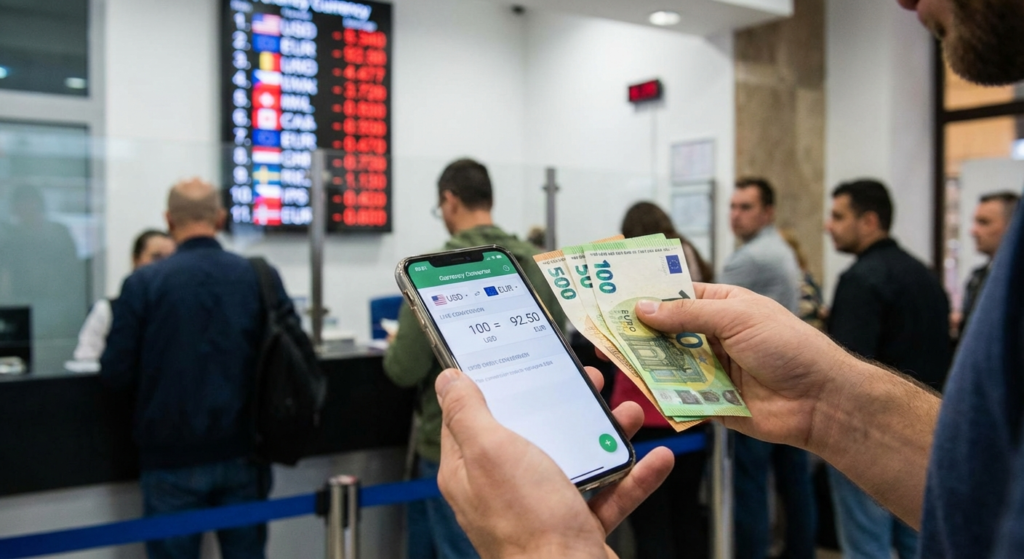
In an increasingly globalized world, the boundaries of commerce and travel are shrinking. Whether you are a globetrotter planning your next European vacation, an online shopper eyeing gadgets from Japan, or an investor diversifying a portfolio, understanding the value of money across borders is crucial. This is where the currency converter becomes an indispensable tool. It is not merely a calculator; it is a bridge between different economies, allowing you to make informed financial decisions instantly.
Many people underestimate the volatility of exchange rates. A fluctuation of just a few percentage points can significantly impact your travel budget or the profit margins of an international business deal. By mastering the use of currency converter tools, you ensure that you are never caught off guard by hidden fees or poor exchange rates. In this comprehensive guide, we will explore the mechanisms, benefits, and practical applications of these tools to help you maximize your money’s potential.
What is a Currency Converter and How Does It Work?
At its core, a currency converter is a software application or digital tool that converts the quantity of one currency into the relative quantities of other currencies. It relies on current market exchange rates, which are determined by the foreign exchange market (Forex).
The mechanism is straightforward but dynamic. The tool pulls real-time data from financial data providers. For instance, if you want to convert US Dollars (USD) to Euros (EUR), the converter checks the current trading rate—say, 1 USD = 0.92 EUR—and applies the math to your input amount. However, it is important to note that the “market rate” shown on a currency converter is often the “mid-market rate,” which is the midpoint between the buy and sell prices of two currencies.
Real-Time Data
Top-tier converters update every few seconds to reflect the live Forex market, ensuring you get the most accurate snapshot of value.
Multi-Currency Support
Modern tools can handle conversions between virtually any circulating currency, from the British Pound to the Japanese Yen.
Historical Data
Advanced converters allow you to see how rates have changed over weeks, months, or years, aiding in trend analysis.
Why You Need a Reliable Currency Converter
You might wonder why you cannot simply rely on the mental math or the rate provided by a local money changer. The answer lies in accuracy and transparency. Financial institutions often add a markup to the exchange rate, known as the “spread.” Without a reliable currency converter, you have no baseline to compare these rates against, leaving you vulnerable to excessive fees.
Furthermore, for those managing long-term financial goals, understanding global economics is vital. Just as you would calculate how much money is needed for retirement based on inflation and local costs, you must account for currency strength if you plan to retire abroad or invest in foreign assets.
Top Uses of a Currency Converter in Daily Life
The utility of these tools extends far beyond simple curiosity. Here are the primary scenarios where a currency converter is essential.
1. International Travel Planning
When planning a trip, budgeting is the first step. Hotel prices, train tickets, and meal costs are often listed in the local currency. Using a currency converter helps you translate these costs into your home currency, giving you a realistic view of your expenses. It helps you decide if that luxury hotel in Paris fits your budget or if the street food in Bangkok is as cheap as it seems.
2. Cross-Border Online Shopping
E-commerce giants often ship globally, but they may display prices in USD, GBP, or CNY. Before hitting the “Buy” button, input the price into a currency converter. This ensures you aren’t paying more than the item is worth locally. Additionally, it helps you verify if your credit card’s conversion fee makes the purchase worthwhile.
3. Freelancing and Remote Work
With the rise of the gig economy, many professionals work for clients overseas. If you are billed in USD but live in India or Europe, your actual income fluctuates with the exchange rate. A currency converter allows freelancers to invoice correctly and anticipate their actual earnings after conversion.
The Role of a Currency Converter in Investments
For investors, the stakes are higher. The Forex market is the largest financial market in the world. However, even if you aren’t a direct Forex trader, currency value affects international stocks and mutual funds.
When engaging in investment planning, such as determining the best SIP strategies for your portfolio, you must consider the currency risk if your funds have international exposure. A strengthening domestic currency might lower the returns of your foreign investments, while a weakening currency could boost them. A robust currency converter helps you track these values in real-time.
Arbitrage Opportunities
Identify price differences for the same asset in different markets by converting costs instantly. 7 Steps to Master Manual Math and Beat the Percentage Calculator
Risk Management
Calculate the exact exposure of your portfolio to foreign currency fluctuations to hedge effectively.
Dividend Calculation
Accurately convert dividends received from foreign stocks into your local spending currency.
How to Choose the Best Currency Converter
Not all converters are created equal. To get the most out of your currency converter, look for the following features:
- Live Rates: Ensure the tool refreshes frequently. Old rates are useless in a volatile market.
- Offline Mode: Essential for travelers who may not have data roaming access.
- User-Friendly Interface: It should be as simple as entering a number and selecting countries.
- Transfer Functionality: Some advanced converters link to transfer services, allowing you to send money at the rate you see.
According to financial experts at Bloomberg, relying on delayed data can cost businesses significantly over time. Always ensure your source is authoritative.
Factors Influencing Exchange Rates
While using a currency converter tells you the what, understanding the why can help you predict future movements. Several macroeconomic factors drive these rates:
Inflation and Interest Rates
Generally, a country with a consistently lower inflation rate exhibits a rising currency value, as its purchasing power increases relative to other currencies. Higher interest rates offer lenders in an economy a higher return relative to other countries. Therefore, higher interest rates attract foreign capital and cause the exchange rate to rise.
Political Stability and Economic Performance
Investors prefer stable countries with strong economic performance. Turmoil can cause a currency to plummet. For detailed economic data and how it impacts currency, sources like the International Monetary Fund (IMF) provide invaluable insights.
Common Mistakes to Avoid
Even with the best currency converter, user error can lead to financial loss. Avoid these common pitfalls:
- Ignoring Fees: The converter shows the mid-market rate. Banks and kiosks will charge a fee or offer a worse rate. Always factor in a 2-3% margin.
- Using Outdated Apps: If your app hasn’t updated its rates since you left the hotel Wi-Fi, you might be calculating with yesterday’s numbers.
- Confusing Sell and Buy Rates: Remember, the bank “sells” you foreign currency at a higher rate and “buys” it back at a lower rate.
Conclusion
The use of currency converter tools has evolved from a convenience for tourists to a necessity for global citizens. Whether you are navigating the streets of a foreign city, managing a remote business, or optimizing an international investment portfolio, accurate currency conversion is the bedrock of sound financial planning. By understanding how these tools work and integrating them into your daily financial routine, you can protect your wealth, uncover savings, and make decisions with confidence. Don’t let exchange rates be a mystery; equip yourself with a reliable converter and take control of your global finances today.
FAQs
Most reputable online currency converters are highly accurate and reflect the live mid-market rate. However, the rate you receive at a bank or exchange bureau will differ because they include a service fee or profit margin.
Yes, many mobile apps offer an offline mode. They save the last updated exchange rates to your device, allowing you to perform calculations even when you don’t have an active data connection.
Converters usually display the “mid-market” rate (the wholesale rate). Banks and credit card companies add a “spread” or markup to this rate to make a profit, which is why their rate is less favorable.
Exchange rates fluctuate constantly—every second during trading hours—due to the active Forex market. Major changes usually happen in response to economic news, interest rate announcements, or geopolitical events.
Yes, modern currency converters often include digital currencies. They can calculate the value of Bitcoin, Ethereum, and other cryptocurrencies against fiat currencies like USD or EUR.