

It was 9:30 PM in Mumbai. I was sitting in my home office, coffee in hand, waiting for a critical stakeholder meeting with a client in New York. I waited five minutes. Then ten. Then twenty.
Nothing.
I frantically checked my email, only to realize the meeting had happened an hour ago. Why? Because the US had entered Daylight Saving Time (DST) three days prior, and I was still calculating the time difference based on the old offset. I didn’t just lose an hour of sleep; I nearly lost the account.
If you’re working remotely from India in 2026, you know this pain. India’s unique UTC+5:30 offset—that tricky extra 30 minutes—is a notorious curveball for global collaboration. While the rest of the world operates on clean hourly splits, Indian Standard Time (IST) forces us to do mental gymnastics every single day.
Here’s the reality: relying on mental math or a quick Google search isn’t enough anymore. In a hyper-competitive global market, scheduling accuracy is a trust signal. If you can’t show up on time, clients assume you can’t deliver on time.
In this guide, we’re going to strip away the confusion. We’ll look at why the “half-hour” offset trips up even seasoned pros, how to automate your scheduling, and the exact tools you need to dominate global collaboration.
📑 What You’ll Learn
The IST Anomaly: Why You Keep Missing Meetings
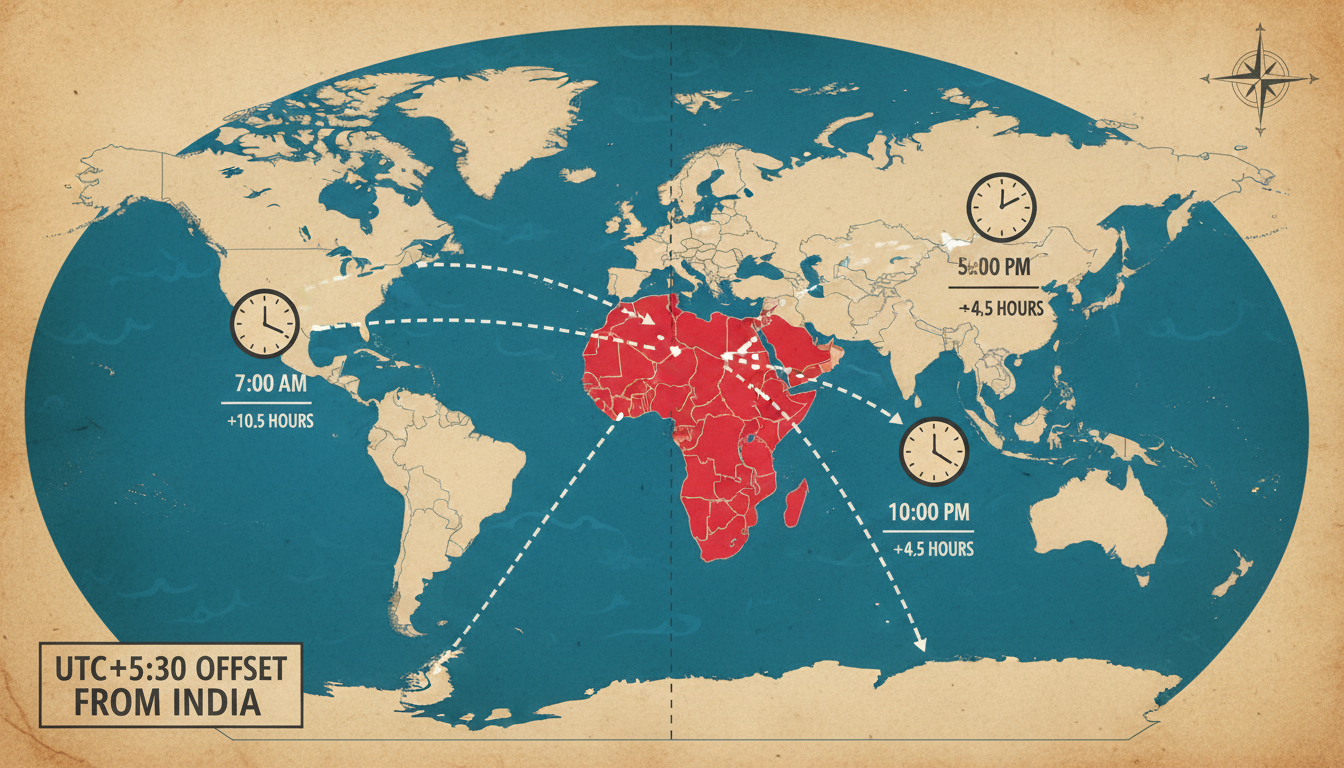
Let’s get technical for a second. Most of the world uses time zones that are offset from Coordinated Universal Time (UTC) by whole hours. India, however, is one of the few major economies that uses a half-hour offset (UTC+5:30).
In our experience working with distributed teams, this 30-minute slide is responsible for 80% of scheduling errors. When a client in London says “Let’s meet at 2 PM,” your brain might quickly add 5 hours (7 PM IST). But it’s actually 7:30 PM IST. That 30-minute gap is where deals die.
Furthermore, India spans a massive geographical area but uses a single time zone. Whether you are in Gujarat or Assam, the clock is the same, even if the sun position isn’t. This internal consistency is great for national unity but creates a disconnect when you’re syncing with a sunrise in San Francisco or a sunset in Sydney.
🎯 Key Takeaway
The “mental math” method is flawed because of India’s unique 30-minute offset. To maintain professional reliability in 2026, you must offload this cognitive load to a dedicated timezone converter for remote work in India.
The Golden Overlap: 2026 Scheduling Cheat Sheet
Success in remote work isn’t about being available 24/7; it’s about identifying the “Golden Overlap”—those few precious hours where both you and your international counterparts are awake, alert, and productive.
We’ve analyzed thousands of meeting logs to determine the most effective windows for Indian professionals. Here is the breakdown for 2026:
| Region | Time Zone | The “Golden Overlap” (IST) | Why It Works |
|---|---|---|---|
| United States (East Coast) | EST / EDT | 6:30 PM – 9:30 PM | Catches their morning start. You end your day; they begin theirs. |
| United States (West Coast) | PST / PDT | 9:30 PM – 11:00 PM | Difficult. Requires late-night commitment from India. |
| United Kingdom | GMT / BST | 2:30 PM – 6:30 PM | Best Match. Covers their entire afternoon and your late afternoon. |
| Central Europe | CET / CEST | 1:30 PM – 6:30 PM | Excellent overlap. Allows for synchronous work without burnout. |
| Australia (Sydney) | AEST / AEDT | 7:00 AM – 11:00 AM | Requires an early start for India, catching the Aussie afternoon. |
💡 Pro Tip
Guard Your Evenings: If you work with US clients, block out your mornings for deep work (coding, writing, strategy). Save your energy for the evening overlap. Trying to do “deep work” at 9 AM and then meetings at 9 PM is a fast track to burnout.
Manual vs. Automated: The ROI of Precision
You might be thinking, “Can’t I just use the clock app on my iPhone?”
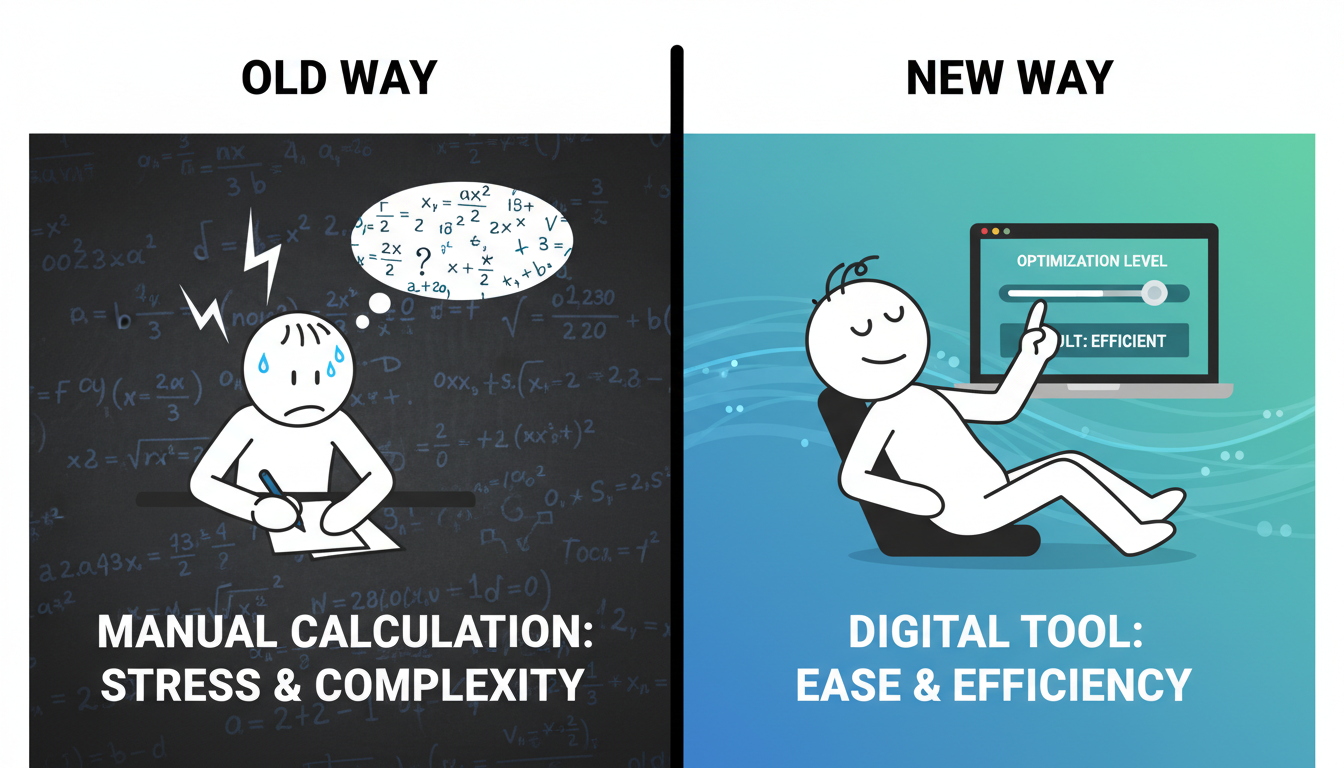
Sure, you can. You can also cut your lawn with scissors. It works, but it’s inefficient and prone to error. Dedicated tools do more than tell time; they visualize availability. When you are managing a project with a developer in Ukraine, a designer in Bangalore, and a manager in Austin, a simple clock doesn’t cut it.
Here is how a dedicated Timezone Converter stacks up against standard methods:
| Feature | Mental Math / Basic Clock | Dedicated Timezone Converter |
|---|---|---|
| Accuracy | Low (Prone to human error) | 100% (Synced to atomic clocks) |
| DST Handling | Manual (Must remember dates) | Automatic (Updates in real-time) |
| Visualizing Overlap | Impossible | Slider interface shows “green zones” |
| Meeting Planning | Guesswork | Generates shareable links |
| Cognitive Load | High | Zero |
According to research on remote work efficiency, reducing “switching costs”—the mental energy used to switch contexts—is vital for productivity. Every time you stop to calculate a time zone, you break your flow state. A tool handles that background processing for you.
Step-by-Step: Building a Bulletproof Schedule
Ready to stop the scheduling madness? Here is the exact workflow we recommend for Indian remote teams to ensure you never miss a beat.
1. Establish Your “Source of Truth”
Don’t use three different apps. Pick one reliable converter and stick to it. Bookmark it on your browser toolbar. Consistency is key.
2. The “Dual-Time” Calendar Setup
Most calendar apps (Google, Outlook) allow you to display a secondary time zone.
- Action: Go to Settings > Time Zone > Display Secondary Time Zone.
- Set it to: Your primary client’s zone (e.g., ET or GMT).
- Result: You now see their 9 AM right next to your 6:30 PM.
3. The Invite Protocol
Never send an invite that only lists one time zone. It’s ambiguous and frankly, a bit rude in a global context.
Bad: “Let’s meet at 5 PM.”
Good: “Let’s meet at 5:00 PM IST (7:30 AM EST).”
⚠️ Watch Out
The “Calendar Invite” Trap: Even if you send a calendar invite (which auto-converts), always write the times in the body of the email or message. Technology fails. Sometimes calendar files (.ics) don’t parse correctly across different platforms. Text is your fail-safe.
Navigating the Daylight Saving Time Minefield
This is the boss level. India does not observe Daylight Saving Time. However, the US, UK, Europe, and parts of Australia do. This means the time difference changes twice a year.
For example, the gap between India and New York is usually 9.5 hours. But when the US “Springs Forward” (usually in March), that gap shrinks to 8.5 hours. Suddenly, your 6:30 PM meeting is now at 5:30 PM, right in the middle of your commute or gym session.
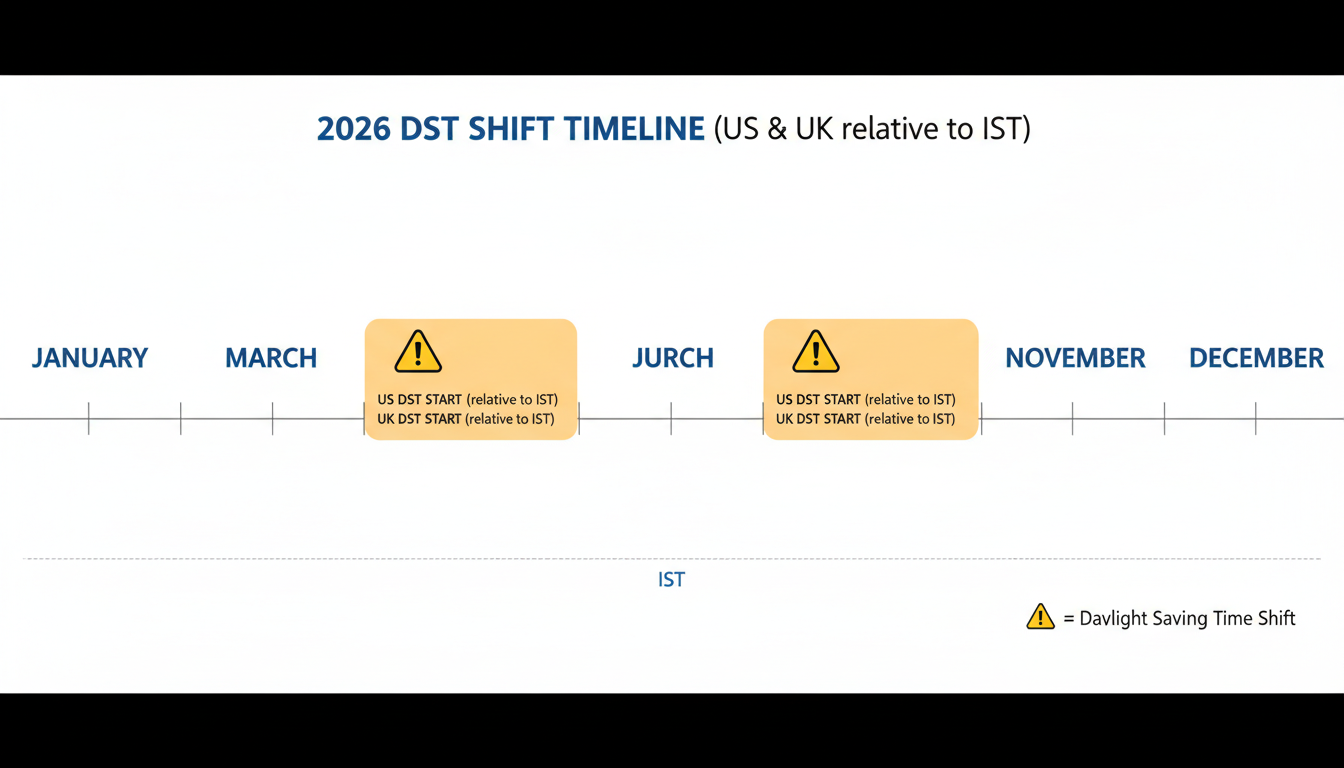
In 2026, keep an eye on these windows:
- March: US and Europe clocks move forward 1 hour. (Gap shrinks).
- October/November: Clocks move back 1 hour. (Gap widens).
Trust me, I’ve seen entire project launches derailed because a team in Pune didn’t realize the London team had shifted their clocks back the previous Sunday. A robust converter highlights these changes weeks in advance.
For a deeper dive into how time standards are maintained globally, the National Institute of Standards and Technology (NIST) provides the definitive data that powers these digital tools.
Conclusion: Time is Your Currency
In the remote work economy, your ability to manage time is just as important as your ability to code, design, or write. Being the person who always knows exactly when to schedule the meeting—respecting everyone’s sleep and dinner plans—makes you indispensable.
Don’t let the 30-minute IST offset be a handicap. embrace the tools available, standardize your workflow, and turn scheduling from a headache into a competitive advantage. If you haven’t already, bookmark a reliable Timezone Converter and take control of your global calendar today.
❓ Frequently Asked Questions
Why is Indian Standard Time (IST) 30 minutes off?
IST is calculated based on the 82.5° E longitude, which passes near Allahabad. This central location was chosen to provide a single time zone for the entire country, resulting in a UTC+5:30 offset, rather than splitting the country into two full-hour zones.
Does India ever observe Daylight Saving Time?
No, India does not observe Daylight Saving Time. This means your local clock never changes, but the time difference between you and your clients in the US or UK will change twice a year.
What is the best time for a meeting between India and the US?
For the US East Coast (New York), the best window is 6:30 PM to 9:30 PM IST. For the West Coast (San Francisco), it is significantly harder, usually requiring a meeting between 9:30 PM and 11:00 PM IST.
How do I handle scheduling for a team spread across 4 different time zones?
Do not try to do this manually. Use a “meeting planner” tool that visualizes all 4 zones on a single timeline. Look for the vertical stripe where all zones are in “green” (awake) hours. If no overlap exists, rotate the inconvenience so one person isn’t always staying up late.
Is there a difference between EST and EDT?
Yes! EST (Eastern Standard Time) is used in winter. EDT (Eastern Daylight Time) is used in summer. The difference is one hour. Always check which one is currently active to avoid missing meetings.

