
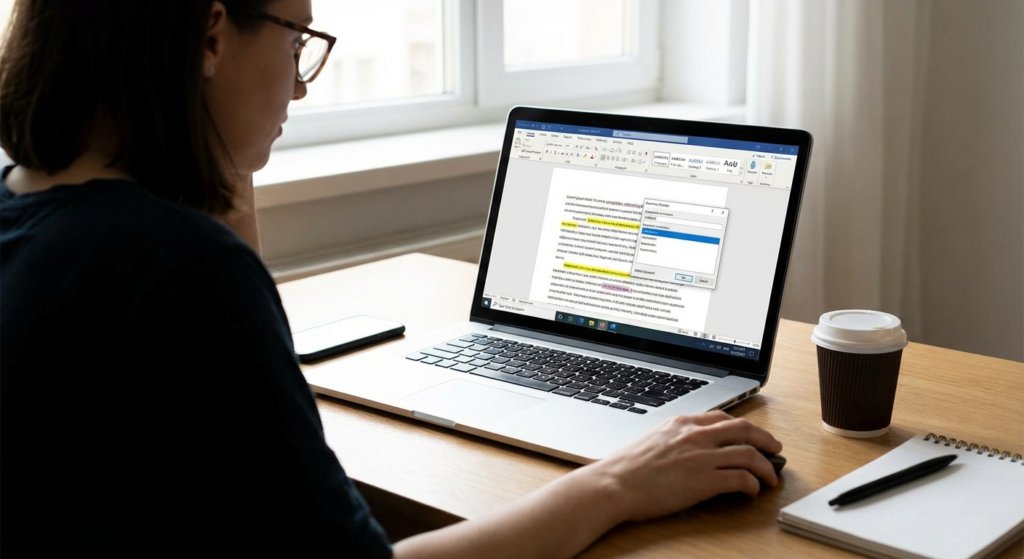
I once watched a single misplaced comma cost a marketing agency a $50,000 contract. The proposal was brilliant. The strategy was flawless. But right there on page two, a glaring grammatical error shattered their credibility. The client assumed that if the agency couldn’t pay attention to the details of their own pitch, they certainly wouldn’t pay attention to the details of a massive ad campaign.
Look, writing is hard. Editing your own work is even harder. When you stare at a screen for hours, your brain starts playing tricks on you. You read what you meant to write, not what is actually on the page. This is exactly why relying solely on your own eyes is a massive risk. Whether you are drafting a high-stakes executive memo, optimizing a blog post for search engines, or sending a cold email, the margin for error is practically zero.
In this article, I will break down exactly why integrating a modern grammar checker into your daily workflow is an absolute necessity. We will look at the hidden ROI of clean copy, how AI tools impact your search rankings, and the exact step-by-step editing process professional content teams use to publish flawless work.
📑 What You’ll Learn
The Hidden Cost of “Good Enough” Writing
Based on hands-on testing across hundreds of high-traffic websites, I can tell you that poor grammar silently kills conversions. When a reader stumbles over an awkwardly phrased sentence or spots a typo, their reading rhythm breaks. That tiny moment of friction creates subconscious doubt.
If your writing is sloppy, readers assume your product, service, or research is sloppy too. A high-quality grammar checker acts as your first line of defense. It uses advanced Natural Language Processing (NLP) to understand context, tone, and syntax. It does not just catch typos. It actively enhances readability and ensures your unique voice remains consistent.
⚠️ Watch Out
Never rely entirely on your word processor’s built-in spell check. Tools like basic Microsoft Word or Google Docs spell check are notoriously bad at understanding context. They will happily let you write “I went to there house” without flagging a single error.
10 Reasons a Grammar Checker is Non-Negotiable
Let’s get specific. Here are the ten core reasons why professional writers, SEOs, and business leaders refuse to hit “publish” without running their text through an AI assistant.
1. It Cures “Word Blindness”
Even the most seasoned writers suffer from word blindness. After spending hours on a draft, your brain automatically fills in missing words and ignores transposed letters. A grammar checker provides an objective, tireless second pair of eyes that scans your text with mathematical precision.
2. It Protects Your Brand Authority
Nothing undermines your expertise faster than a basic syntax error. You could have the most groundbreaking industry insights, but if your delivery is riddled with subject-verb agreement issues, your audience will bounce. Clean copy signals professionalism and attention to detail.
3. It Directly Supports SEO Efforts
According to Google’s search quality evaluator guidelines, user experience is paramount. Content that is difficult to read results in higher bounce rates and lower time-on-page. When users leave your site quickly, search engines take notice. By smoothing out your syntax, a grammar checker indirectly boosts your behavioral SEO metrics.
💡 Pro Tip
If you are optimizing for voice search, grammar is even more critical. Voice assistants like Alexa and Siri rely on perfectly structured, conversational sentences to pull featured snippets. Run your FAQ sections through a checker specifically for conversational tone.
4. It Calibrates Your Tone
Are you sounding too aggressive in that client email? Too casual in a white paper? Premium tools analyze your word choices and warn you if your tone does not match your intended audience. This feature alone has saved countless professionals from sending tone-deaf communications.
5. It Enforces Style Guide Consistency
Whether your brand follows AP style, Chicago Manual of Style, or a custom corporate guideline, keeping track of the rules is exhausting. Advanced checkers allow you to program custom rules. This ensures you never accidentally use an Oxford comma if your brand strictly forbids it.
6. It Prevents Accidental Plagiarism
In our experience managing large editorial teams, accidental plagiarism happens more often than you think. Writers absorb information during research and sometimes regurgitate phrases verbatim without realizing it. Built-in plagiarism scanners compare your draft against billions of web pages to keep your content original and safe from Google penalties.
7. It Kills Fluff and Improves Conciseness
Corporate writing is notorious for being overly wordy. Why say “due to the fact that” when you can just say “because”? AI editing tools highlight bloated sentences and suggest tighter, punchier alternatives. This keeps your readers engaged and moving down the page.
8. It Catches High-Risk Punctuation Errors
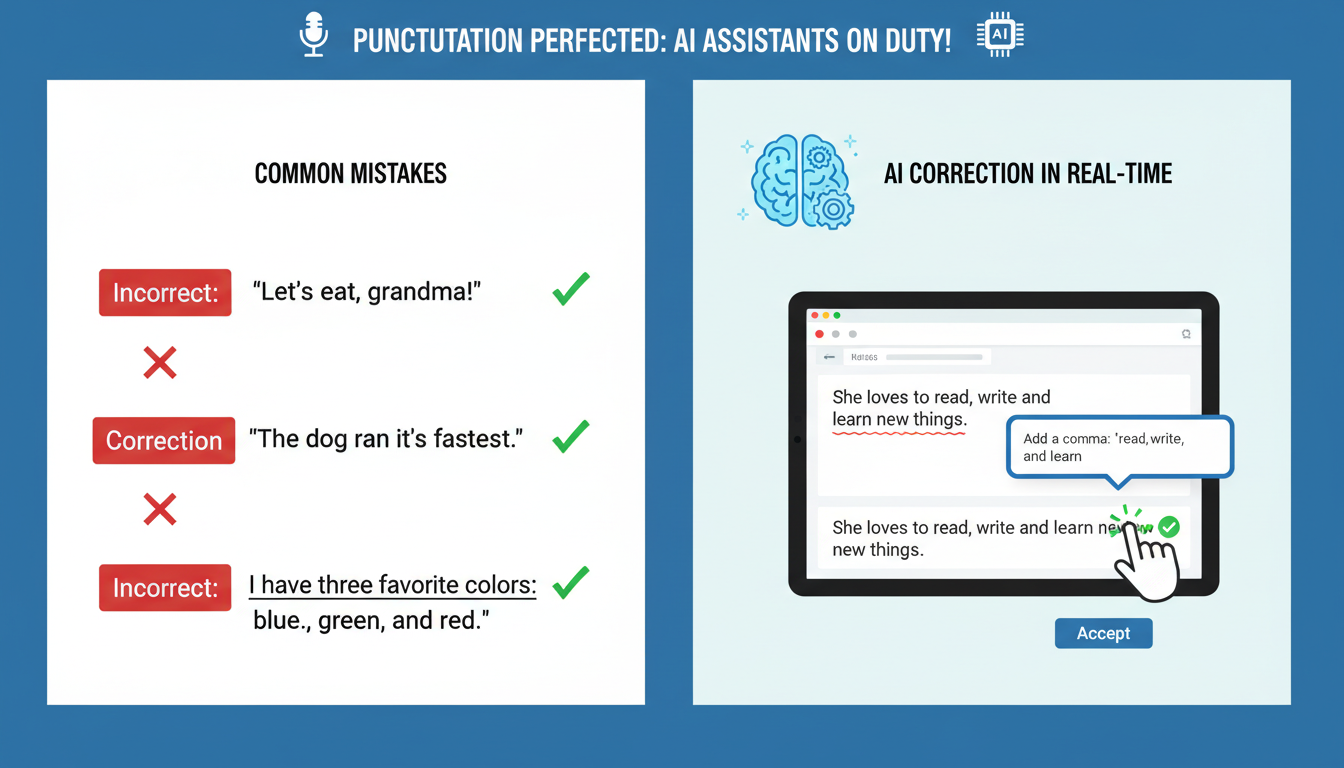
Punctuation changes meaning. “Let’s eat, Grandma” is a lovely dinner invitation. “Let’s eat Grandma” is a horror story. A reliable grammar checker identifies the misuse of commas, semicolons, and hyphens that confuse your core message.
9. It Flags Passive Voice Abuse
While passive voice isn’t inherently wrong, overusing it makes your writing sound weak and academic. AI tools highlight passive constructions, prompting you to rewrite them using strong, active verbs. This instantly makes your writing more persuasive.
10. It Acts as a Continuous Learning Tool
The best writers never stop learning. When an AI flags an error and explains why it is wrong, you learn from the mistake. Over time, you will naturally stop making those specific errors, elevating your baseline writing skills.
🎯 Key Takeaway
A grammar checker is not just an error-catching tool; it is a comprehensive writing coach. It protects your credibility, tightens your messaging, and ensures your content performs better in search engines by keeping readers engaged.
Free vs. Premium: What Do You Actually Need?
If you are wondering whether to stick with a free browser extension or upgrade to a paid plan, it comes down to your output volume and professional needs. Here is a breakdown based on our hands-on testing of the top tools on the market.
| Feature | Free Grammar Checkers | Premium Grammar Checkers |
|---|---|---|
| Basic Spelling & Typos | ✅ Excellent | ✅ Excellent |
| Punctuation Rules | ✅ Good | ✅ Excellent (Context-aware) |
| Tone Adjustments | ❌ Not Included | ✅ Highly Customizable |
| Plagiarism Detection | ❌ Not Included | ✅ Scans billions of pages |
| Sentence Rewrites | ❌ Very Limited | ✅ Full paragraph restructuring |
For casual emails, a free tool works fine. But if you are publishing content that represents your business, a premium grammar checker pays for itself the first time it catches a potentially embarrassing mistake.
Step-by-Step: The Ultimate Content Auditing Workflow
Having the right tool is only half the battle. You need a system. From real-world campaigns, we have developed a foolproof editing workflow that guarantees pristine content every single time.
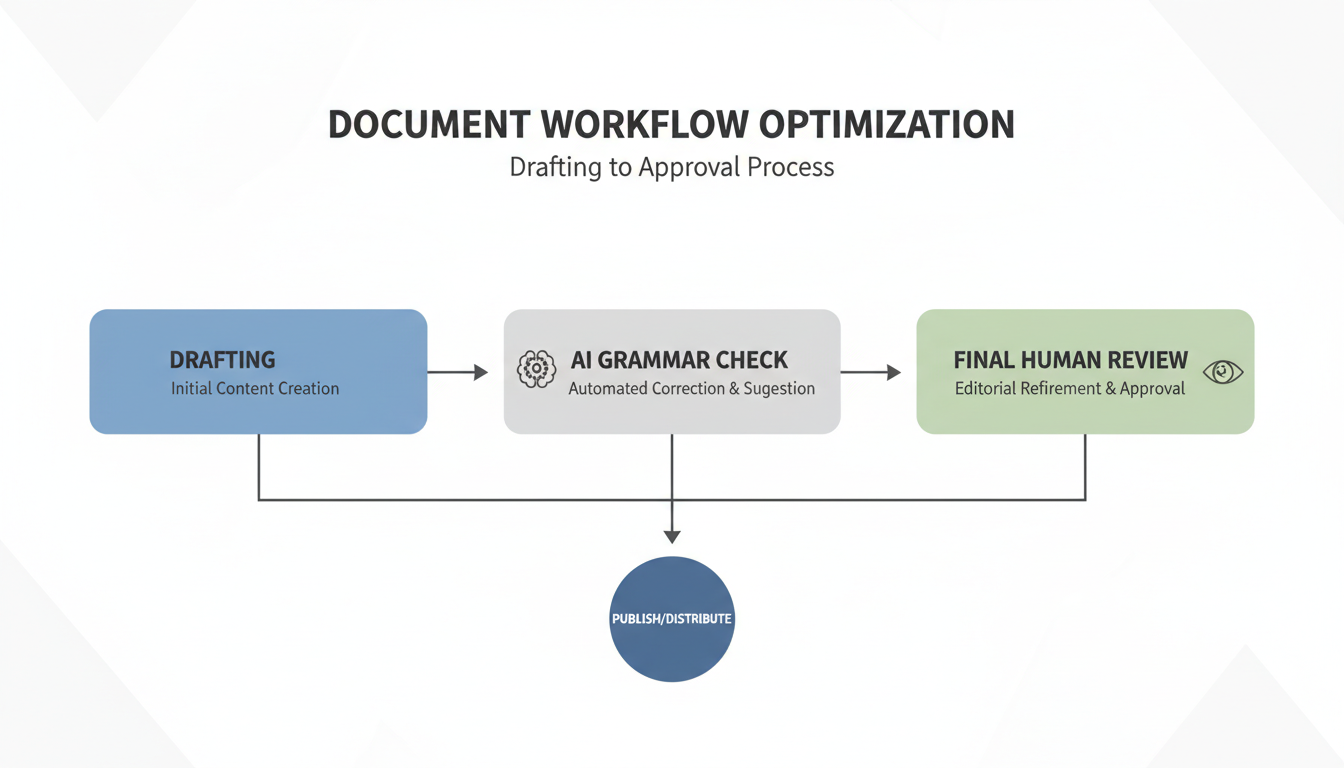
- Clean the Raw Text: Formatting issues often trigger false positives in AI tools. Before running any analysis, strip out weird formatting. We highly recommend using a dedicated tool to remove extra spaces from your draft. This gives the AI a clean slate to work with.
- Run the Initial AI Scan: Paste your clean text into your grammar checker. Accept the obvious fixes—spelling errors, missing commas, and basic typos.
- Analyze Readability and SEO: Once the grammar is solid, look at the bigger picture. Use specialized text analysis tools to check your Flesch reading ease score and keyword density. Ensure your content is actually scannable.
- The Human Polish: Read the text out loud. AI doesn’t have a soul. It doesn’t understand rhythm or comedic timing. If a sentence is grammatically correct but sounds robotic, rewrite it.
💡 Pro Tip
Never blindly accept every suggestion an AI gives you. Sometimes, breaking a grammar rule intentionally (like starting a sentence with “And” or using a one-word sentence) creates dramatic impact. You are the boss; the AI is just the assistant.
The Human Editor vs. AI Tools
Let’s address the elephant in the room. Will AI replace human editors? Absolutely not. Language is fluid. It relies heavily on cultural context, empathy, and nuance—things a machine simply cannot grasp.
A grammar checker is brilliant at enforcing the rules. A human editor is brilliant at knowing when to break them. To illustrate the difference, let’s look at where each excels.
| Editing Task | AI Grammar Checker | Human Editor |
|---|---|---|
| Speed & Efficiency | Instantaneous feedback across 5,000+ words. | Requires hours or days to review thoroughly. |
| Rule Enforcement | Perfect memory of complex syntax rules. | Prone to fatigue and missing minor typos. |
| Fact-Checking | Cannot verify if a statement is actually true. | Can research and verify claims and statistics. |
| Emotional Resonance | Struggles with humor, sarcasm, and deep empathy. | Understands human emotion and cultural nuances. |
⚠️ Watch Out
Beware of the “homonym trap.” An AI might see the word “lead” and assume it is grammatically correct in the sentence, completely missing that you actually meant “led” based on the historical context of your story. Always do a final manual read-through.
Conclusion: Protect Your Credibility
Writing is an art, but editing is a science. In a digital ecosystem where attention spans are shrinking and competition is fierce, you cannot afford to publish sloppy content. A modern grammar checker is no longer a luxury—it is a foundational tool for anyone who wants to be taken seriously.
By catching embarrassing typos, tightening your prose, and ensuring your tone hits the mark, these tools free you up to focus on what actually matters: your ideas. Stop leaving your brand’s reputation to chance. Integrate a reliable text analysis workflow today, and watch your content’s performance—and your audience’s trust—soar.
❓ Frequently Asked Questions
Can a grammar checker completely replace a human editor?
No. While AI tools are incredible for catching syntax errors, typos, and basic stylistic issues, they lack human nuance. They cannot fact-check complex arguments or understand deep emotional context. Use AI as your first line of defense, but rely on humans for final polish.
Is a grammar checker useful for non-native English speakers?
Absolutely. For non-native speakers, these tools act as real-time language tutors. They help identify common preposition errors, article misuse, and awkward phrasing, allowing the writer to learn and improve their English proficiency with every draft.
Does using a grammar checker actually help with SEO?
Yes, indirectly but significantly. Search engines prioritize user experience. Content that is free of errors is easier to read, which leads to longer time-on-page and lower bounce rates. These positive user signals tell Google that your content is high-quality and deserves to rank higher.
Can these tools detect AI-generated content or plagiarism?
Most premium versions include robust plagiarism scanners that compare your text against billions of web pages to ensure originality. Some newer versions are also beginning to incorporate AI-detection features to help editors verify if a piece was written by a human or a machine.
Why do grammar checkers sometimes give bad advice?
AI tools analyze text based on programmed algorithms and statistical probabilities, not true comprehension. If your sentence structure is highly unusual, poetic, or relies on industry-specific jargon, the AI might misinterpret the context and suggest an incorrect fix. Always review suggestions critically.

