
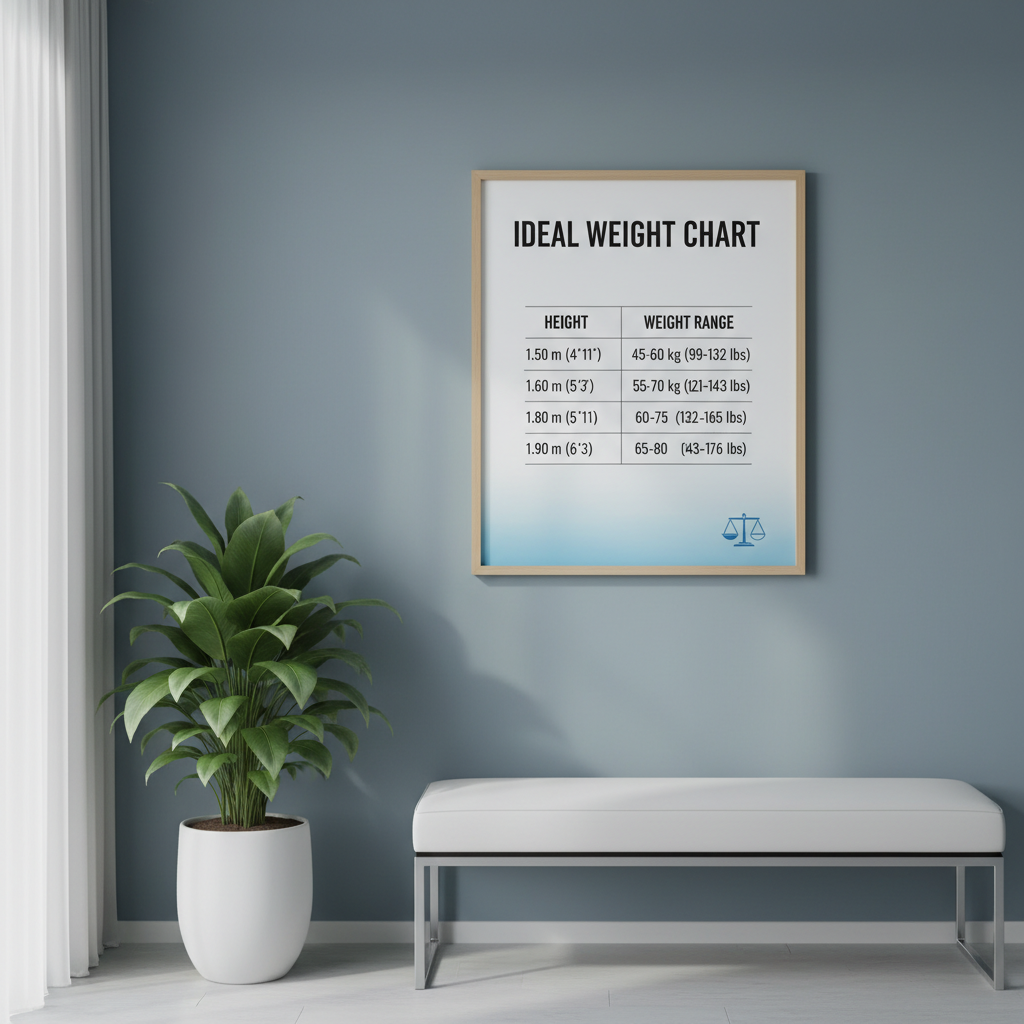
Understanding What ‘Ideal Weight’ Truly Means
For decades, society has sought a simple, universal answer to the question: “What is my ideal weight?” While charts and formulas offer guidance, the concept of ideal weight is far more nuanced than a single number on a scale. To truly understand your body’s needs, we must look beyond generalized metrics and embrace a personalized approach. This comprehensive guide will help you decode the complexities of the ideal weight for height and age chart, examining its utility, limitations, and how to use it as a starting point for achieving optimal health.
The quest for the perfect weight often begins with consulting a static chart that correlates height, gender, and sometimes age. While these charts provide valuable baseline data, they rarely account for crucial factors like muscle mass, bone density, or individual metabolic rates. Our goal here is to equip you with the knowledge to interpret the data intelligently, ensuring your health journey is informed, sustainable, and focused on wellness rather than just weight loss.
Why Analyzing the Ideal Weight for Height and Age Chart is Essential
Consulting an ideal weight for height and age chart serves as an important initial screening tool. Knowing your approximate healthy weight range provides context for evaluating potential health risks associated with being significantly overweight or underweight. However, its importance lies in its ability to prompt further, more detailed investigation into body composition.
The Health Benefits of Maintaining Range
Maintaining a weight within a recognized healthy range significantly reduces the risk of numerous chronic conditions. Excess body fat, particularly visceral fat stored around the organs, is linked to metabolic syndrome, type 2 diabetes, heart disease, and hypertension. Conversely, being severely underweight can lead to nutritional deficiencies, weakened immune function, and bone density issues.
- Cardiovascular Health: Reduced strain on the heart and circulatory system.
- Metabolic Function: Improved insulin sensitivity and stable blood sugar levels.
- Joint Health: Less stress on weight-bearing joints like knees and hips.
- Longevity: Studies often show a correlation between maintaining a healthy weight throughout adulthood and increased lifespan.
The Limitations of a Single Metric
One of the biggest pitfalls of relying solely on a simple weight chart is its inability to distinguish between muscle and fat. An athlete with high muscle density might be categorized as ‘overweight’ or ‘obese’ according to a standard chart, yet possess excellent health and minimal body fat. Therefore, while the ideal weight for height and age chart is a good starting point, it should never be the final word on your health status.
Key Metrics Used in Calculating the Ideal Weight for Height and Age Chart
When health professionals assess weight, they typically rely on several key metrics, often moving beyond just the number on the scale. These metrics help paint a more accurate picture of risk and body composition.
Body Mass Index (BMI): Calculation and Interpretation
BMI is the most commonly used metric derived from height and weight. It is calculated by dividing weight in kilograms by the square of height in meters (kg/m²). While flawed for individuals with high muscle mass, BMI is a statistically useful tool for population health studies and for the majority of the general public. The standard categories are:
- Underweight: Below 18.5
- Normal Weight: 18.5 – 24.9
- Overweight: 25.0 – 29.9
- Obesity: 30.0 and above
According to the Centers for Disease Control and Prevention (CDC), “BMI is an inexpensive and easy-to-perform method of screening for weight categories that may pose health problems.” Learn more about BMI categories from the CDC.
Beyond BMI: Waist Circumference and Body Fat Percentage
For a more precise understanding of risk, particularly for cardiovascular disease, health experts often recommend measuring waist circumference. Fat stored centrally (around the abdomen) is metabolically more dangerous than fat stored in the hips and thighs.
Waist Circumference Thresholds
A high-risk waist circumference is typically defined as over 40 inches (102 cm) for men and over 35 inches (88 cm) for non-pregnant women, regardless of their height or BMI classification.
Body Fat Percentage (BFP)
BFP measures the proportion of fat mass to total body mass. This is the most accurate indicator of true body health. Ideal ranges vary significantly by age and gender, but generally, 10-22% for men and 20-32% for women is considered healthy.
Skeletal Frame Assessment
Some older ideal weight charts attempt to factor in skeletal structure (small, medium, or large frame). This helps adjust the recommended range, recognizing that individuals with larger bone structure naturally weigh more.
How Age and Gender Influence the Ideal Weight Range
The standard ideal weight for height and age chart must account for biological differences between men and women, and the inevitable changes that occur as we age, particularly concerning muscle mass and hormonal shifts.
Gender Differences in Body Composition
Women naturally have a higher essential body fat percentage than men, primarily due to reproductive needs. This means that a healthy weight range for a woman will necessarily include a higher proportion of fat mass compared to a man of the same height and age.
For instance, a 5’7″ male might have an ideal weight range centered around 145-165 pounds, whereas a 5’7″ female might see her ideal range centered around 135-155 pounds, but with a higher healthy body fat percentage.
Age-Related Changes and Muscle Mass
As individuals age, sarcopenia—the gradual loss of muscle mass and strength—becomes a significant factor. Muscle is metabolically active, burning more calories than fat, even at rest. If an older adult weighs the same as they did in their 20s but has lost 10 pounds of muscle and gained 10 pounds of fat, their health profile has worsened, even if the weight chart suggests they are stable.
This is where the age component of the ideal weight for height and age chart becomes important. Often, charts for older adults allow for a slightly higher BMI (sometimes up to 27 or 28) before categorizing them as ‘overweight,’ acknowledging that a bit of extra weight may offer protective benefits against frailty and illness later in life.
Quote Insight: “The scale measures gravity, not health. True health is measured by vitality, energy, and body composition, not just a number on a weight chart.”
Using the Ideal Weight for Height and Age Chart as a Starting Point
Instead of viewing the weight chart as a rigid target, use it as a compass pointing toward a general healthy zone. The real work begins in personalizing this data.
If you want a quick assessment based on established formulas like the Hamwi or Devine methods, utilize our specialized Ideal Weight Calculator. This tool provides a baseline figure, which you can then adjust based on your lifestyle factors.
Step 1: Calculate Your Baseline
Determine your BMI and check where your current weight falls within the standard chart range (underweight, normal, overweight). This establishes the necessity for weight adjustment.
Step 2: Assess Body Composition
Use methods like bioelectrical impedance analysis (BIA), DEXA scans, or simple skinfold calipers to estimate your body fat percentage. This tells you what that weight consists of (muscle vs. fat).
Step 3: Factor in Lifestyle
Are you highly active, sedentary, or pregnant? Do you lift weights? These factors drastically change what your body needs and how much muscle mass you carry, requiring adjustments to the chart’s general recommendation.
Step 4: Consult a Professional
A registered dietitian or physician can interpret all data points—chart range, BMI, waist circumference, and blood work—to set a realistic and medically sound goal weight range for you.
Beyond the Chart: A Holistic Approach to Health
Focusing obsessively on achieving a specific number derived from an ideal weight for height and age chart can be counterproductive. Optimal health is achieved through consistent, sustainable habits that prioritize overall well-being.
Nutrition and Movement
A healthy diet emphasizes nutrient-dense, whole foods, including lean proteins, complex carbohydrates, and healthy fats. Coupled with regular physical activity—a mix of cardiovascular exercise and strength training—this foundation helps optimize body composition, even if the scale moves slowly.
Strength training is especially critical for maintaining the metabolically active muscle mass that declines with age, ensuring that the weight you do carry is healthy tissue. This is the best way to counteract the negative effects of sarcopenia.
The Role of Sleep and Stress Management
We often overlook the non-dietary factors that profoundly impact weight and metabolism. Chronic lack of sleep (less than 7 hours) disrupts hormones like ghrelin (hunger hormone) and leptin (satiety hormone), leading to increased cravings and fat storage.
Similarly, chronic stress raises cortisol levels, which promotes visceral fat accumulation. Addressing sleep hygiene and implementing stress-reducing practices (like mindfulness or regular exercise) are non-negotiable components of maintaining a healthy weight range.
Focus on Fitness, Not Just Fat Loss
Aim for functional fitness—the ability to perform daily tasks with ease. Improved endurance, strength, and flexibility are better indicators of health than scale weight.
Prioritize Nutrient Density
Shift focus from calorie counting to nutrient quality. Eating foods rich in vitamins, minerals, and fiber supports metabolic health and sustained energy.
Consistency Over Intensity
Small, sustainable changes to diet and activity level yield far better long-term results than crash diets or extreme workout regimes. Consistency is the key to maintaining your ideal weight range.
Ultimately, the goal is not merely to hit a number on the ideal weight for height and age chart, but to feel energized, strong, and capable in your body. Weight is a metric, but wellness is a lifestyle. For comprehensive guidance on achieving health goals through lifestyle changes, Harvard T.H. Chan School of Public Health provides excellent resources on healthy living and nutrition. Explore the Healthy Eating Plate guide here.
Conclusion
The ideal weight for height and age chart provides a valuable framework, offering generalized healthy weight ranges based on population data. However, modern health wisdom dictates that this chart is only the first step. True ideal weight is individualized, incorporating body composition, genetics, age-related metabolic changes, and lifestyle factors. Use the chart to establish your baseline, but prioritize metrics like body fat percentage, waist circumference, strength, and vitality to define your personal optimal health zone. Achieving long-term well-being is about embracing a holistic lifestyle that supports your body’s unique needs, ensuring you are not just reaching a number, but thriving.
FAQs
The primary limitation is that standard charts, including those based on BMI, cannot distinguish between lean muscle mass and body fat. This means athletes or very muscular individuals may be incorrectly categorized as ‘overweight’ even if they have low body fat and excellent cardiovascular health.
Yes, age significantly affects the ideal weight range. As people age, they tend to lose metabolically active muscle mass (sarcopenia) and may gain fat. Some health guidelines suggest a slightly higher BMI range might be acceptable or even protective for older adults (over 65), provided they maintain strength and function.
BMI remains a relevant and useful screening tool for the general population because it is easy to calculate and highly correlated with health risks across large groups. However, for personalized assessment, it should always be used alongside other metrics like waist circumference and body fat percentage.
Body frame size is typically determined by measuring wrist circumference relative to height. Generally, if your wrist circumference is small relative to your height, you have a small frame, and your ideal weight range would lean toward the lower end of the chart recommendation. A doctor or dietitian can provide precise measurements and interpretations.
If you are highly active, especially if you engage in strength training, you will likely carry more muscle mass. In this scenario, aiming for the middle to upper end of the ‘normal’ range on the ideal weight for height and age chart is often appropriate, as this weight likely includes beneficial lean tissue rather than excess fat.
Read Also:
- Unlocking Creator Wealth: How Much YouTube Pays for 1000 Views in India (2024 Complete Guide)
- The Ultimate Guide to Choosing and Using a Cash Counter Calculator India
- Find the Best App to Split Bills with Friends: Ultimate Comparison Guide for Seamless Group Expenses
- Mastering Productivity: The Ultimate Eisenhower Matrix Template Online Guide
- 10 Proven Strategies to Master SEO Texte for Higher Google Rankings
- YouTube Timestamp Secrets for 2026