
You’re pouring hours into creating incredible content. You hit publish, feel that rush of excitement, and then… crickets. Your masterpiece is buried on page five of Google, invisible to the world. Sound familiar?
Here’s the hard truth: great content isn’t enough anymore. Without the right data, you’re flying blind. You don’t know which keywords to target, how your competitors are winning, or what technical glitches are holding your site back. It’s like trying to bake a cake without a recipe.
This is where the best SEO tools come in. They aren’t magic wands, but they are your compass, your map, and your sonar all in one. They replace guesswork with data-driven certainty.
In this completely updated guide for 2026, we’re not just going to list some tools. We’re going to show you how to build a powerful, cost-effective SEO “tech stack” tailored to your specific needs—from solopreneur to full-scale agency. You’ll learn which tools are non-negotiable, which are worth the investment, and how to make them work for you.
📑 What You’ll Learn
- Why Most SEO Fails (And How Tools Fix It)
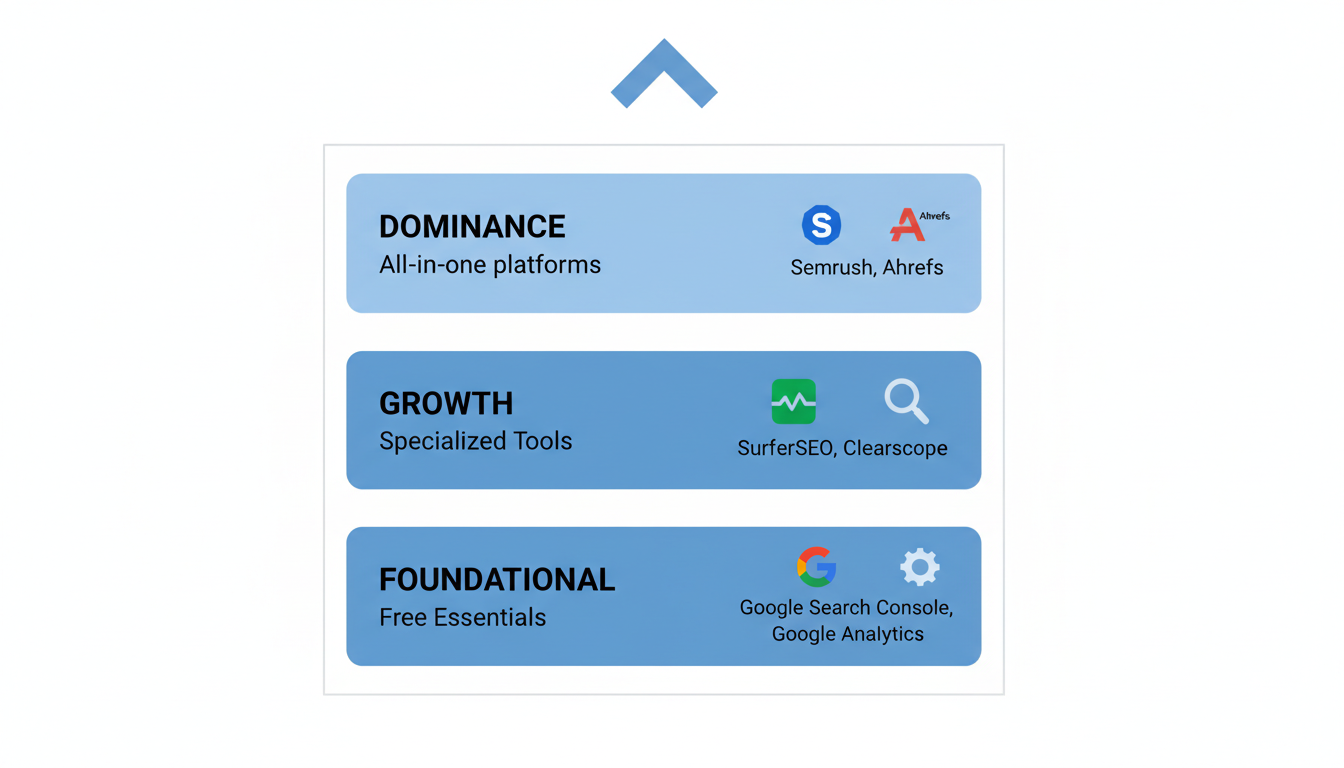
- The Modern SEO Tech Stack: A Tiered Approach
- Tier 1: The Foundational Stack (Free & Essential)
- Tier 2: The Growth Stack (For Serious Contenders)
- Tier 3: The Dominance Stack (All-in-One Powerhouses)
- How to Choose Your Perfect SEO Tool Stack
- Frequently Asked Questions
Why Most SEO Fails (And How Tools Fix It)
Let’s be clear. The most expensive SEO tool on the planet won’t save a bad strategy. Your success hinges on understanding your audience and creating content that genuinely helps them. This aligns perfectly with what Google wants to rank, as outlined in their guidelines on creating helpful, reliable, people-first content.
So, where do tools fit in? They provide the critical data to inform that strategy.
- They uncover opportunity: Find keywords your audience is actively searching for that you’d never have guessed.
- They reveal the competition’s playbook: See exactly which pages drive traffic for your rivals and which websites link to them.
- They find hidden problems: Identify technical errors like broken links or slow pages that are silently killing your rankings.
- They measure what matters: Track your rank for important keywords and see the direct impact of your efforts.
Without this data, you’re just guessing. With it, every decision is strategic.
The Modern SEO Tech Stack: A Tiered Approach
Forget thinking about a single “best” tool. The smartest SEOs build a stack. We’ve broken this down into three tiers based on your goals, budget, and business stage. You don’t need everything at once. Start at Tier 1 and level up when you’re ready.
Tier 1: The Foundational Stack (Free & Essential)
This is your non-negotiable starting point. Every single website owner, regardless of size or budget, needs these. They are the bedrock of any successful SEO campaign.
1. Google Search Console (GSC)
If you ignore everything else, don’t ignore this. Google Search Console is a free service from Google that gives you a direct line of communication with the search engine. It’s the ultimate source of truth.
- What it does: Shows you which queries bring users to your site, lets you submit sitemaps, alerts you to indexing problems, and provides core performance metrics (clicks, impressions, CTR).
- Why it’s essential: It’s pure, unfiltered data straight from the source. In our experience, the “Performance” report is the single most valuable free SEO resource available anywhere.
2. Google Analytics 4 (GA4)
While GSC tells you what happens before a user clicks to your site, GA4 tells you what happens after. It’s the other half of the puzzle.
- What it does: Tracks user behavior on your site—which pages they visit, how long they stay, and what actions they take.
- Why it’s essential: It helps you understand if your content is actually engaging. High traffic with a 95% bounce rate is a signal that your content isn’t matching user intent.
💡 Pro Tip
The first thing you should do is link your Google Search Console and Google Analytics 4 accounts. This integration pulls your GSC query data directly into your GA4 reports, giving you a powerful, unified view of the entire user journey from search to conversion.
3. Screaming Frog SEO Spider
This is the technical SEO’s best friend. Screaming Frog is a desktop application that acts as a web crawler, just like Googlebot. It scans your website to find technical issues.
- What it does: Finds broken links (404s), identifies redirect chains, checks for missing meta titles and descriptions, analyzes page depth, and much more.
- Why it’s essential: The free version crawls up to 500 URLs, which is more than enough for most small to medium-sized websites to perform a basic health check. Fixing these technical issues is often the fastest way to see a ranking boost.
Tier 2: The Growth Stack (For Serious Contenders)
Once you have the foundation, it’s time to get specialized. These tools solve specific problems and are perfect for businesses ready to invest in content marketing and on-page optimization.
4. SurferSEO / Clearscope
These are the leaders in AI-powered content optimization. They analyze the top-ranking pages for your target keyword and give you a data-driven blueprint for what to include in your own content.
- What they do: Provide recommendations on word count, important terms to include (NLP), heading structure, and questions to answer.
- Why they’re essential: They take the guesswork out of on-page SEO. Instead of wondering what Google wants to see, you get a clear, actionable checklist. Based on our hands-on testing, pages optimized with these tools consistently perform better.
| Feature | SurferSEO | Clearscope |
|---|---|---|
| Core Strength | Comprehensive on-page analysis with a focus on correlation data. | High-quality NLP term suggestions and a streamlined, focused workflow. |
| Best For | Users who want a full suite of content tools, including an AI writer and audit features. | Content teams and writers who prioritize a clean interface and top-tier term relevance. |
| Pricing Model | Tiered plans based on number of articles per month. Generally more affordable. | Tiered plans based on number of reports and user seats. Generally more premium. |
⚠️ Watch Out
Don’t treat content optimization scores as gospel. It’s easy to get obsessed with hitting a 100/100 score and end up “keyword stuffing.” Use these tools as a guide, not a rulebook. Your primary goal is to write for the human reader first. A well-written, natural-sounding article with a score of 85 will always beat a robotic, over-optimized article with a score of 100.
5. AnswerThePublic / AlsoAsked
Staring at a blank page? These tools are idea-generation goldmines. They tap into Google’s “People Also Ask” and autocomplete data to show you what real people are searching for around your topic.
- What they do: Visualize search queries as questions, prepositions, and comparisons.
- Why they’re essential: They help you build content that directly answers your audience’s questions, which is key for creating helpful content and capturing featured snippets.
6. Rank Math / Yoast SEO
If your website is on WordPress, one of these plugins is mandatory. They handle the foundational on-page SEO tasks directly within your dashboard.
- What they do: Make it easy to edit title tags and meta descriptions, generate XML sitemaps, manage redirects, and implement schema markup.
- Why they’re essential: They simplify technical tasks that would otherwise require code, making on-page SEO accessible to everyone. Rank Math’s free version is particularly feature-rich.
The Dominance Stack (All-in-One Powerhouses)
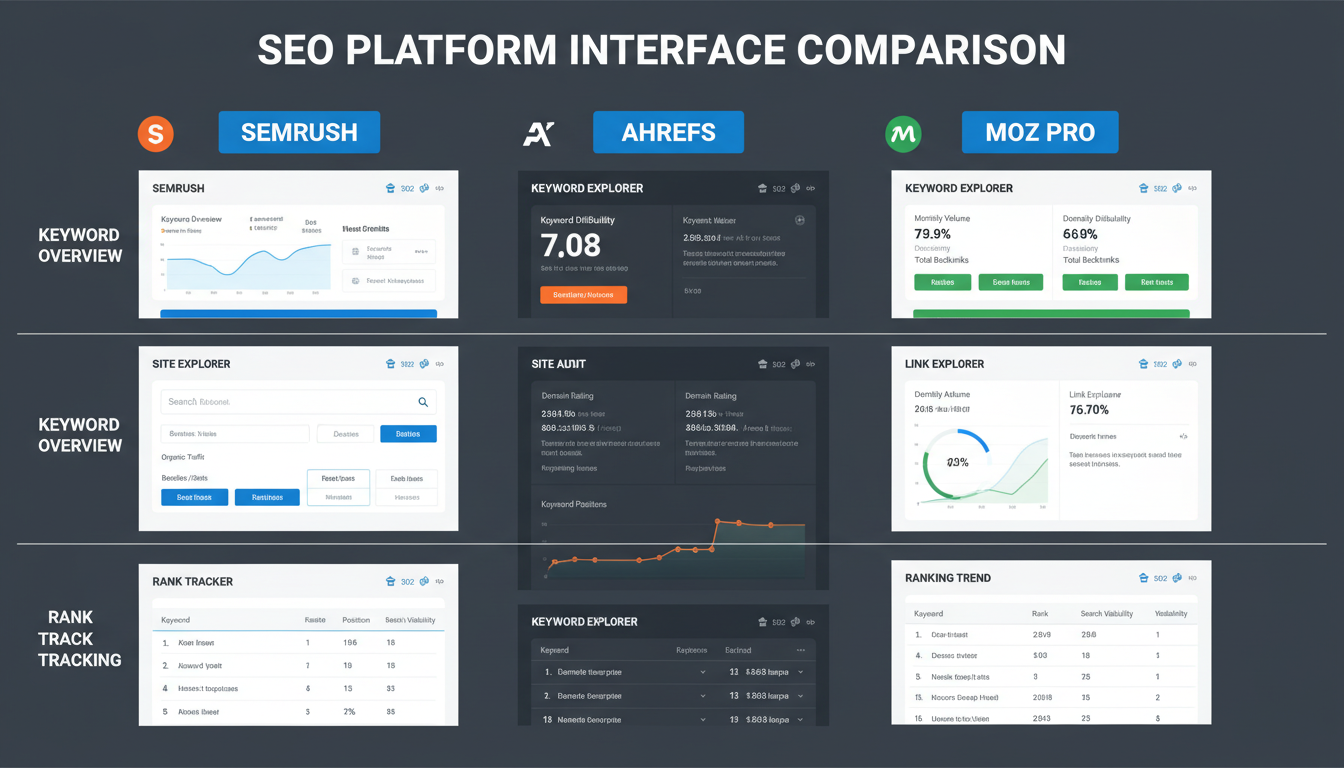
When you’re ready to scale, an all-in-one suite is your command center. These platforms combine keyword research, rank tracking, backlink analysis, and site auditing into a single, powerful interface. They’re a significant investment, but for agencies and competitive businesses, they’re indispensable.
7. Semrush
Semrush is a complete digital marketing toolkit. Its strength lies in its sheer breadth of features and its exceptional competitive analysis capabilities.
- Best Feature: The “Keyword Gap” and “Backlink Gap” tools are phenomenal for seeing exactly where your competitors are outranking you.
- Who it’s for: Marketers who need a holistic view that includes SEO, PPC, and content marketing. It’s an incredibly versatile platform.
8. Ahrefs
Ahrefs built its reputation on having the best backlink index in the business, and that remains a core strength. Its interface is clean, fast, and beloved by SEO professionals.
- Best Feature: “Site Explorer” is the gold standard for analyzing a competitor’s backlink profile and top pages. The data is second to none.
- Who it’s for: SEO specialists, link builders, and content strategists who need the most accurate and comprehensive backlink data available.
9. Moz Pro
Moz has been a cornerstone of the SEO community for years. It’s known for its educational resources and user-friendly tools. It’s less intimidating than its rivals, making it a great choice for those leveling up.
- Best Feature: “Keyword Explorer” provides excellent suggestions and a simple “Difficulty” score. Moz’s “Domain Authority” (DA) metric is also a widely used industry benchmark.
- Who it’s for: Small businesses, in-house marketers, and those who value a clean UI and strong community support.
| Platform | Core Strength | Ideal User | Trust Signal |
|---|---|---|---|
| Semrush | Competitive Analysis & Keyword Research | All-in-one Digital Marketers & Agencies | Largest keyword database on the market. |
| Ahrefs | Backlink Analysis & Content Research | Dedicated SEO Professionals & Link Builders | Most active web crawler after Google. |
| Moz Pro | User-Friendliness & All-Round SEO | SMBs & In-house Teams Learning SEO | Pioneered industry metrics like Domain Authority. |
💡 Pro Tip
Don’t just track your own keywords. Set up a project in Semrush or Ahrefs for your top 3 competitors. Monitor their new keywords, top pages, and new backlinks weekly. This is the fastest way to reverse-engineer their success and find opportunities they’re exploiting that you’ve missed.
🎯 Key Takeaway
The best SEO tool is the one that solves your biggest problem right now. Don’t pay for a massive all-in-one suite if your main issue is poor on-page optimization. Start with the free foundational tools, then strategically invest in a specialized tool to clear your next hurdle.
How to Choose Your Perfect SEO Tool Stack: A 4-Step Guide
Feeling overwhelmed? Don’t be. Follow this simple, battle-tested process to build the right stack for you.
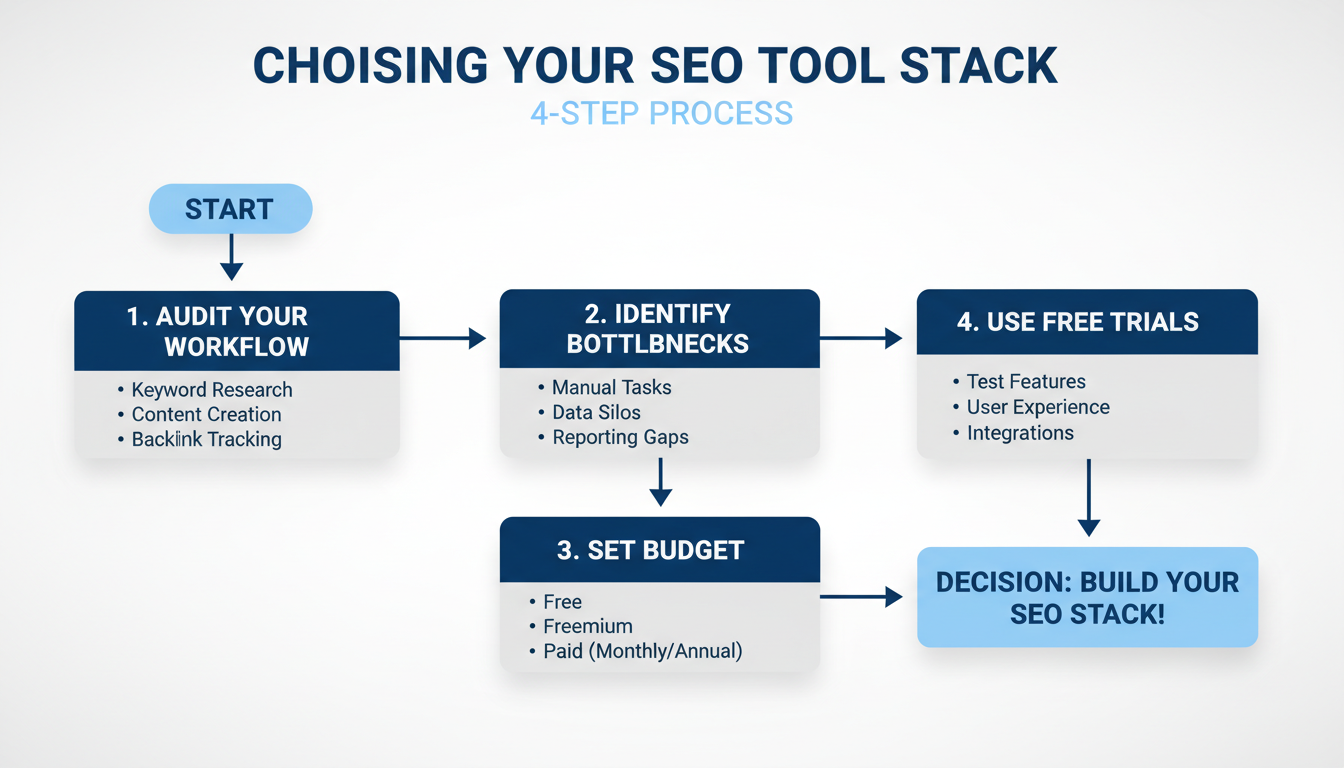
- Step 1: Audit Your Current SEO Workflow.
Be honest. Where are you spending the most time? What tasks feel like pure guesswork? Are you struggling with content ideas, technical fixes, or building links? Write it down. - Step 2: Identify Your #1 Bottleneck.
Look at your list. What’s the one thing holding you back the most?- “I don’t know what to write about.” -> You need an idea generation tool (AnswerThePublic).
- “My content isn’t ranking.” -> You need an on-page optimization tool (SurferSEO).
- “I don’t know why my competitor is beating me.” -> You need a competitive analysis tool (Semrush/Ahrefs).
- Step 3: Set a Realistic Budget.
Start with free tools. There’s no shame in running on the foundational stack for months. When you’re ready to invest, choose a tool that directly addresses the bottleneck you identified in Step 2. The ROI will be obvious. - Step 4: Leverage Free Trials Like a Pro.
Never buy an expensive tool without trying it first. Sign up for a 7-day trial and have a specific goal. For example: “During my Ahrefs trial, I will find 10 content gaps and analyze the backlink profile of my top competitor.” This focused approach tells you if the tool is truly a fit for your workflow.
⚠️ Watch Out
Avoid “Shiny Object Syndrome.” It’s tempting to subscribe to every tool you hear about on Twitter. This leads to a bloated, expensive stack where you only use 10% of each tool’s features. Be disciplined. Master one tool before adding another.
❓ Frequently Asked Questions
What are the absolute must-have SEO tools for a beginner in 2026?
For any beginner, the non-negotiable stack is Google Search Console and Google Analytics 4. They are 100% free and provide the most critical data directly from the source. If you use WordPress, add a free SEO plugin like Rank Math or Yoast SEO. Master these three before even thinking about paid tools.
Is Semrush or Ahrefs better?
This is the classic SEO debate! Honestly, they are both top-tier. In our experience, Ahrefs still has a slight edge in backlink data accuracy and user interface design. Semrush, however, offers a more comprehensive digital marketing suite, with stronger features for PPC and social media analysis. The best choice depends on your primary focus. Use the free trials of both to see which one you prefer.
Can I do SEO without any paid tools?
Yes, you absolutely can, especially for a smaller website or personal blog. Using the “Foundational Stack” (GSC, GA4, Screaming Frog free) gives you enough data to make significant progress. However, as your site grows and competition increases, the time-saving and competitive intelligence features of a paid tool provide a massive advantage.
How much should I budget for SEO tools?
This varies wildly. A solopreneur or small business can start at $0 and then scale to a specialized tool for around $50-$150/month (like SurferSEO). A small agency or serious business should budget for an all-in-one suite, which typically starts at $100-$130/month for an entry-level plan (like Ahrefs or Semrush). Always choose a plan that fits your current needs, not your future ambitions.
Are AI SEO tools going to replace traditional tools?
Not replace, but enhance. AI is being integrated into all major platforms to speed up analysis and content creation. Tools like SurferSEO use it for on-page recommendations. However, the core functions of crawling, backlink indexing, and rank tracking still rely on massive data infrastructure. AI will make these tools smarter, not obsolete.
What are the two other tools you’d add to this list?
Great question. For outreach and link building, Hunter.io is fantastic for finding email addresses. For local businesses, BrightLocal is an indispensable tool for tracking local rankings and managing citations. We kept the main list focused, but these are excellent specialized additions.
Your Strategy is Still the Ultimate Tool
It’s easy to get lost in a sea of dashboards, metrics, and reports. But remember this: SEO tools are instruments, not the musician. They provide the data, but your strategy, creativity, and understanding of your audience are what create the music.
The most powerful insights in the world are useless without action. So here’s your next step.
Don’t just close this tab. Go and open Google Search Console right now. Look at your top 10 queries. Is your content truly the best result for those searches? Start there. That’s how you win.