
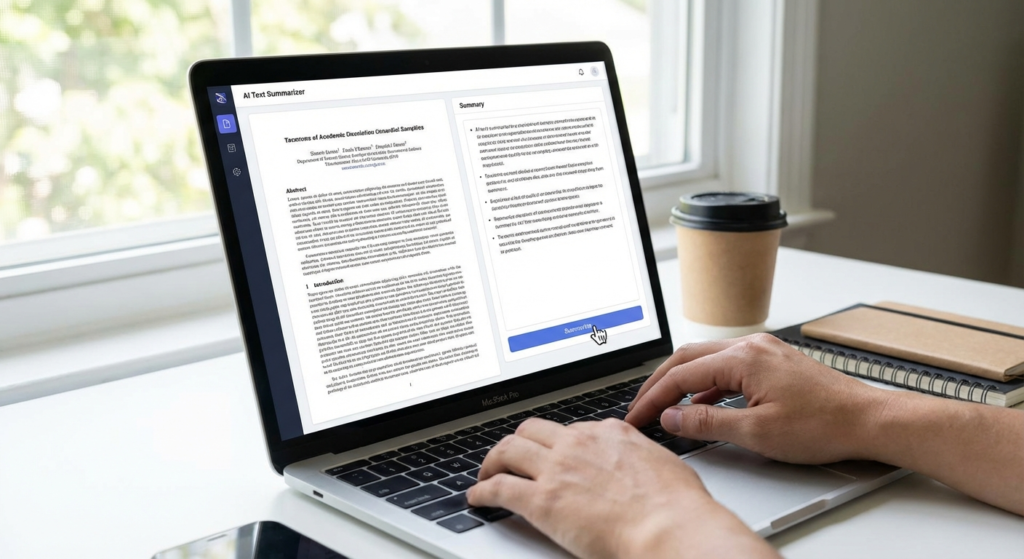
In an era defined by information overload, professionals, students, and content creators are constantly bombarded with vast amounts of data. Whether you are conducting academic research, analyzing market trends, or simply trying to digest the daily news, the sheer volume of reading material can be overwhelming. This is where a robust text summarizer becomes an indispensable tool. By leveraging advanced artificial intelligence, a text summarizer can condense lengthy articles, reports, and documents into concise, digestible snippets without losing the core meaning. In this comprehensive guide, we will explore the transformative potential of these tools and how integrating a text summarizer into your daily routine can skyrocket your productivity.
Understanding the Mechanics of a Modern Text Summarizer
To truly appreciate the value of a text summarizer, it is essential to understand what happens behind the scenes. These tools rely on Natural Language Processing (NLP), a branch of artificial intelligence that enables computers to understand, interpret, and manipulate human language. When you input content into a text summarizer, algorithms analyze the text to identify key sentences, thematic structures, and essential keywords.
There are generally two types of summarization techniques used by these tools:
Extractive Summarization
This method works like a highlighter. The AI scans the original text and pulls out the most important sentences exactly as they appear. It effectively creates a summary by stitching together the most weighted phrases found within the source material.
Abstractive Summarization
This is a more advanced approach closer to human intelligence. The AI interprets the text and generates new sentences to capture the essence of the content. It rephrases and condenses information rather than just copying it, offering a more natural flow.
Understanding these distinctions helps users choose the right text summarizer mode for their specific needs, whether they require verbatim quotes or a fluid overview.
Key Benefits of Implementing a Text Summarizer in Your Workflow
Why should you adopt a text summarizer? The benefits extend far beyond simple time-saving. By stripping away fluff and redundant phrasing, these tools clarify complex ideas and enhance comprehension. For remote teams and digital nomads, efficiency is currency. If you are looking to optimize your team’s output, utilizing a text summarizer alongside other best productivity tools for remote teams can significantly reduce the time spent on administrative reading and reporting.
1. Accelerated Research Capabilities
For students and researchers, scanning through dozens of academic papers is a standard part of the job. A text summarizer allows you to quickly evaluate whether a paper is relevant to your thesis without reading the entire document. This rapid screening process ensures that you invest your deep-reading time only in the most pertinent sources.
2. Enhanced Content Creation Strategy
Content writers often need to repurpose existing content or curate industry news. A text summarizer can quickly generate meta descriptions, social media captions, or executive summaries from long-form blog posts. This capability is particularly useful when managing various content formats; for more on handling different text types, you might explore a comprehensive text converter tools online guide.
Who Can Benefit Most from a Text Summarizer?
While almost anyone dealing with text can benefit, certain industries see an immediate ROI when adopting a text summarizer.
- Legal Professionals: Lawyers can use these tools to summarize case files and legal precedents, extracting the crux of the argument efficiently.
- Marketing Executives: Marketers can summarize competitor analysis reports and customer feedback surveys to identify trends instantly.
- Students and Academics: Summarizing lecture notes and textbooks helps in creating concise study guides for revision.
- Financial Analysts: Quickly digesting earnings reports and news articles helps in making faster investment decisions.
Overcoming Information Overload with a Text Summarizer
Information overload acts as a bottleneck to decision-making. When we are presented with too much data, our cognitive processing slows down, leading to analysis paralysis. A text summarizer acts as a filter, allowing only the high-value information to pass through. According to research by the Nielsen Norman Group, users often read only about 20% of the text on an average web page. An AI summarizer aligns with this behavior by delivering that crucial 20% upfront, ensuring you don’t miss the critical data points hidden in the noise.
Choosing the Right Text Summarizer for Your Needs
Not all tools are created equal. When selecting a text summarizer, consider factors such as language support, integration with your browser or word processor, and the ability to adjust the summary length. Some advanced tools also offer “bullet point” modes versus “paragraph” modes, giving you control over the final output format.
Feature: Summary Length Control
Look for a slider or percentage setting that lets you decide how short the summary should be. This is crucial for tailoring the output for different platforms (e.g., a tweet vs. an email).
Feature: Keyword Preservation
Top-tier summarizers ensure that specific SEO keywords or technical terms are retained in the summary, preserving the context and searchability of the content.
Feature: Plagiarism Safety
Abstractive summarizers are generally safer for avoiding plagiarism as they rewrite content, whereas extractive ones require proper citation as they use exact quotes.
Best Practices for Text Summarizer Accuracy
While AI has advanced significantly, human oversight remains vital. A text summarizer is an assistant, not a replacement for critical thinking. Here are some best practices to ensure accuracy:
- Review the Output: Always read the summary to ensure it captures the nuance of the original text. AI can sometimes misinterpret sarcasm or complex metaphors.
- Check for Bias: Ensure the summarizer hasn’t inadvertently omitted counter-arguments that were present in the source text, which could skew the narrative.
- Combine Tools: Use a summarizer in conjunction with grammar checkers and plagiarism detectors for a polished final result.
Furthermore, understanding the underlying technology of NLP is fascinating. Major tech entities like IBM continue to push the boundaries of how machines understand human language, making these tools smarter every year.
Future Trends in AI Summarization
As we look toward the future, the capabilities of the humble text summarizer are set to expand. We are already seeing the integration of multi-modal summarization, where AI can summarize video and audio content into text. Imagine uploading a recording of an hour-long meeting and receiving a concise textual summary of action items and key decisions within seconds. This evolution will further bridge the gap between different media formats and text, creating a seamless ecosystem of information consumption.
Conclusion
Incorporating a text summarizer into your digital toolkit is one of the smartest moves you can make in 2025. Whether you are looking to save time on research, create punchy content, or simply manage the flood of daily information, these AI-driven tools offer a powerful solution. By understanding how they work—differentiating between extractive and abstractive methods—and applying them strategically, you can enhance your productivity and focus on high-value cognitive tasks. Embrace the technology, but remember to use it as a scaffold for your own intelligence, ensuring that efficiency never comes at the cost of accuracy.
FAQs
Generally, yes, but it depends on the complexity of the jargon. Advanced abstractive summarizers are getting better at handling technical language, but human review is always recommended for medical, legal, or highly specialized engineering documents to ensure no critical safety details are omitted.
If you use an extractive summarizer that copies sentences word-for-word and present it as your own work without citation, it is plagiarism. However, using a summarizer to understand a topic and then writing your own insights, or using an abstractive summarizer with proper review and editing, is a legitimate research aid.
Many premium AI text summarizers now support multiple languages. They can summarize a text in its native language or even translate and summarize simultaneously, which is incredibly useful for international business and research.
Summarizing involves condensing a large text into its main points, resulting in a much shorter version. Paraphrasing involves rewriting a specific passage or text in your own words to clarify meaning, usually resulting in a text of similar length to the original.
Yes, there are many free tools available online. However, free versions often have character limits and may lack advanced features like file uploads (PDF/Word) or abstractive summarization capabilities found in paid versions.
Read Also:
- Readability Tool: Skyrocket Content SEO & Engagement
- 7 Proven Strategies to Build Wealth Using an Investment Calculator
- 10 Powerful Ways a Budget Planner Can Transform Your Financial Freedom
- 7 Ways a Meta Tag Generator Can Revolutionize Your SEO Strategy in 2024
- Mastering Your Money: How to Use a Budget Planner Effectively
- Blogs
- Your 2026 Secret to Faster Laps
- Text to Hex Converter: The Complete 2026 Guide for Developers
- Linear Foot to Feet in 2026: The Pro’s Guide to Measuring
- Copyright Checker: The Ultimate Guide to Protect Your Content (2026)
- Your 2026 SEO Secret: Plagiarism Checkers
- 9 Essential Insights on Using a Watermark Remover for Flawless Images – Visual Story
- Is 2026 a Leap Year? The Answer

