
Decoding Your Cycle: Finding the Window and Using a When Is the Best Time to Get Pregnant Calculator
For couples trying to conceive (TTC), the journey often revolves around one critical element: timing. Understanding your menstrual cycle and pinpointing the exact moment of ovulation is perhaps the most powerful step you can take toward successful conception. But how do you move beyond guesswork and identify that optimal window? This is where the power of accurate tracking and specialized tools comes into play. Knowing precisely when is the best time to get pregnant calculator technology can provide is crucial for maximizing your monthly chances.
In fact, research shows that intercourse timed during the 6-day fertile window, especially the two days immediately preceding ovulation, yields the highest probability of pregnancy. If you have been relying solely on the standard 28-day cycle assumption, you might be missing your peak fertility days entirely. This comprehensive guide explores reliable ovulation tracking methods and explains how to integrate them with a calculator to achieve conception mastery.
The Biology Behind the Timing: Why Knowing Your Cycle is Key
Ovulation is the release of a mature egg from the ovary, which typically happens only once per cycle. Once released, the egg has a lifespan of only 12 to 24 hours. While that seems like a narrow window, the real fertile window is much wider because sperm can survive inside the female reproductive tract for up to five days. Therefore, the highest probability of conception occurs when live, healthy sperm are already waiting in the fallopian tube when the egg is released.
The fertile window includes the five days leading up to ovulation and the day of ovulation itself. Tracking allows you to identify this critical 6-day period, ensuring you time intercourse correctly. By consistently tracking your cycle data, you gain insights far more specific than generic calendar assumptions.
Understanding the Fertile Window and Why Timing Is Crucial to Determine When Is the Best Time to Get Pregnant Calculator Results
While the average menstrual cycle is 28 days, only a small percentage of women actually fit this model perfectly. Cycle lengths can range from 21 to 35 days, and the timing of ovulation within that cycle is highly individual. Most of this variability comes from the follicular phase (the time from the start of the period until ovulation). The luteal phase (the time from ovulation until the next period) is much more consistent, usually lasting 12 to 16 days.
If you have an irregular cycle, relying on simple calendar tracking is ineffective. You need concrete biological markers to confirm ovulation. This is why combining physical observations with digital tools is the most accurate approach to identify when is the best time to get pregnant calculator analysis can pinpoint.
The first step in effective tracking is gathering historical data. Knowing your average cycle length and the typical length of your luteal phase provides the baseline input necessary for any reliable digital prediction.
Interpreting the Data: What Your When Is the Best Time to Get Pregnant Calculator Results Mean
A fertility calculator utilizes the date of your last menstrual period (LMP) and your average cycle length to estimate the likely date of ovulation. This calculation provides a powerful starting point, projecting your upcoming fertile window. However, it is essential to remember that these tools offer a prediction, not a guarantee, especially if your cycles fluctuate.
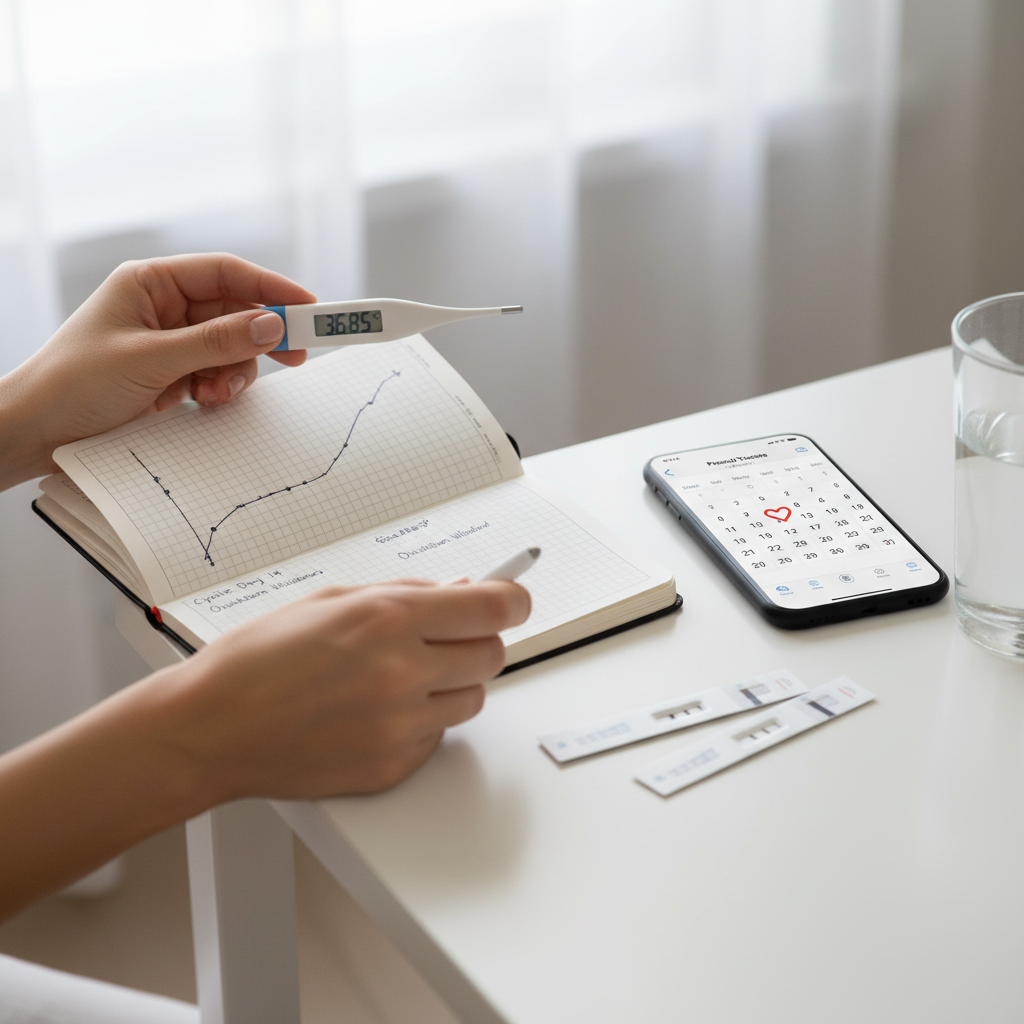
This is where dedicated digital resources, like an Ovulation Fertility Calculator, become invaluable. They simplify complex calculations, providing a quick visual map of your likely fertile days based on the input data you provide.
Prediction vs. Confirmation
Calculators predict the fertile window based on past patterns. Biological methods (BBT, OPKs) confirm the hormonal shift associated with ovulation. For maximum success, use both.
The Peak Day
The calculator often highlights the ‘peak’ fertility day—the estimated day of ovulation. Intercourse should be timed heavily in the 2-3 days leading up to this predicted peak.
Data Refinement
The more cycles you track and input into the calculator, the more accurate its predictions become. Consistency improves reliability over time.
Advanced Methods for Pinpointing Ovulation: Beyond the Simple Calendar
Relying solely on a calendar method (the standard 14-day rule) often fails because it assumes ovulation always occurs exactly 14 days before the next period, which isn’t always true. Modern TTC strategies involve actively monitoring physical markers that signal impending or completed ovulation.
There are three primary biological methods used for effective tracking:
- Basal Body Temperature (BBT) Charting: BBT is your body’s lowest resting temperature. It requires taking your temperature immediately upon waking, before any activity. After ovulation occurs, the hormone progesterone causes a sustained temperature rise (usually 0.5 to 1.0 degree Fahrenheit) that lasts until menstruation. BBT confirms that ovulation has already happened, which is excellent for verifying cycle length and improving future calculator predictions.
- Cervical Mucus Monitoring (CMM): This is often the earliest predictor of fertility. As estrogen levels rise leading up to ovulation, cervical mucus changes consistency, becoming clear, stretchy, and slippery, resembling raw egg whites. This ‘egg-white cervical mucus’ (EWCM) is optimal for sperm transport and survival, signaling the beginning of your peak fertile window.
- Ovulation Predictor Kits (OPKs): These over-the-counter tests detect the surge of Luteinizing Hormone (LH) in urine. The LH surge occurs roughly 12 to 36 hours before the egg is released. OPKs are the most direct way to predict ovulation in real time, giving you a crucial head start for timing intercourse.
BBT Charting
Method: Daily temperature reading.
Pro: Confirms ovulation timing for future cycles.
Con: Only tells you ovulation happened after the fact; easily influenced by illness or poor sleep.
Cervical Mucus
Method: Daily observation of fluid consistency.
Pro: Non-invasive and often provides the earliest warning sign of fertility.
Con: Subjective interpretation; can be affected by medications or infections.
OPK Testing
Method: Urine testing for LH surge.
Pro: Provides real-time prediction (12-36 hours lead time).
Con: Can be expensive; some women experience false surges or require frequent testing.
Maximizing Conception Success: How the When Is the Best Time to Get Pregnant Calculator Works
The true power of modern fertility planning lies in synthesizing data from multiple sources. You input your historical cycle data (LMP, cycle length) into a calculator to generate the prediction, and then you use biological methods (like OPKs or BBT) to refine and confirm that prediction in real time.
For instance, if your calculator predicts ovulation on Day 14, you should begin using OPKs on Day 10. When the OPK turns positive, you know your predicted fertile window is confirmed and adjusted, often narrowing the best time down to a 48-hour period. Timing intercourse during this specific window significantly boosts success rates compared to generalized attempts.
“Consistent tracking, combined with an understanding of hormonal shifts, is the gold standard for couples seeking to optimize their timing for conception. It removes the uncertainty inherent in generalized cycle assumptions.”
If you find that your cycle is highly irregular, or if your BBT chart shows no clear sustained temperature shift, it may indicate an underlying issue, such as an anovulatory cycle (a cycle where no egg is released). In such cases, consulting a healthcare provider is essential, as the calculator can only work effectively with relatively predictable cycles.
Practical Application: Using Tracking Data to Maximize Your Results
Once you have identified your fertile window using tracking and the prediction from when is the best time to get pregnant calculator tools, the application is straightforward: focused intercourse. It is often recommended to have intercourse every day or every other day during the six days leading up to and including the day of ovulation. This ensures a constant supply of fresh, viable sperm is available.
While timing is paramount, maximizing sperm health and overall reproductive wellness also plays a major role. External factors, such as diet and stress, can influence hormonal balance and even sperm quality, indirectly impacting the success of your meticulously timed efforts.
Lifestyle Factors That Influence Conception Success
Optimizing your lifestyle while TTC supports a healthy reproductive environment. These factors complement the accuracy provided by your tracking methods:
- Nutrition: A balanced diet rich in folate, iron, and Omega-3 fatty acids supports both egg and sperm health.
- Weight Management: Maintaining a healthy Body Mass Index (BMI) is crucial, as both being significantly underweight or overweight can disrupt hormonal balance and ovulation timing. For guidance on foundational calorie needs, you might find resources related to calculating your basal metabolic rate helpful, though specialized fertility advice is always best.
- Stress Reduction: Chronic, severe stress can suppress ovulation. Techniques like yoga, meditation, or simply ensuring adequate rest are beneficial.
- Avoiding Toxins: Limiting alcohol, eliminating smoking, and reducing caffeine intake are recommended for both partners trying to conceive.
According to the Centers for Disease Control and Prevention (CDC), couples who understand their fertile window have a significantly higher chance of conception within the first few cycles of focused effort. This emphasizes that knowledge derived from accurate tracking is your greatest asset. Understanding preconception health and tracking is a fundamental step, ensuring your body is ready for pregnancy.
Addressing Common Questions About Using a When Is the Best Time to Get Pregnant Calculator
Many couples initially struggle with which method is right for them or how accurate the digital tools truly are. The best approach is usually a combination of methods—often referred to as the Sympto-Thermal Method (STM)—which combines BBT, CMM, and calendar predictions.
While the calculator gives you a predicted date, integrating it with real-time feedback (like OPKs) allows you to adjust your timing if ovulation occurs earlier or later than projected. If you have cycles that vary by more than five days, a calculator alone is insufficient, and you must rely heavily on daily biological markers.
Furthermore, recognizing the viability window for sperm is key. Even if you miss the exact day of ovulation, having intercourse in the 1-3 days prior is highly effective. Sperm can maintain viability for several days within the reproductive tract, waiting for the egg to arrive. This biological reality provides a buffer zone, meaning you don’t need to hit the exact 12-hour mark of the egg’s life. The Mayo Clinic emphasizes the importance of understanding sperm viability when timing conception efforts.
Final Steps to Determine When Is the Best Time to Get Pregnant Calculator Guidance Provides
Mastering ovulation tracking requires patience and consistency. You must chart your data diligently, whether it’s daily temperatures, cervical mucus observations, or OPK results. The more robust your data set, the more accurately your preferred when is the best time to get pregnant calculator tool can guide your efforts.
If you are tracking and timing intercourse successfully for six months (if under 35) or three months (if over 35) without conception, it is time to seek medical advice. While tracking is a powerful tool, it does not diagnose underlying fertility conditions. However, the data you collect from your tracking efforts will be invaluable to your physician when beginning fertility investigations.
By understanding the science, utilizing the available technology, and listening to your body’s signals, you transition from hopeful waiting to proactive planning, giving yourself the best possible chance of achieving pregnancy.
FAQs
The calendar method (which assumes ovulation occurs 14 days before menstruation) is generally unreliable, especially for women with irregular cycles. It only provides a rough prediction based on averages. For accurate timing, it should be combined with biological tracking methods like OPKs or BBT charting.
You should begin having intercourse at least 5 days before your predicted ovulation date. Since sperm can survive up to five days, having intercourse every day or every other day starting at Day -5 ensures that sperm are already present in the fallopian tubes when the egg is released, maximizing the probability of conception.
If your cycles vary significantly (more than 5-7 days), an ovulation calculator based solely on past cycles will provide inaccurate predictions. In this scenario, you must rely more heavily on real-time biological markers, particularly Ovulation Predictor Kits (OPKs) which detect the LH surge, and cervical mucus monitoring, as these methods confirm hormonal changes regardless of cycle length.
BBT (Basal Body Temperature) tracking confirms ovulation after it has occurred by noting the post-ovulatory temperature rise caused by progesterone. OPK (Ovulation Predictor Kits) predict ovulation before it happens by detecting the LH surge, which typically precedes egg release by 12 to 36 hours. Both are useful: OPKs for timing intercourse, and BBT for verifying the cycle length for future predictions.
The calculator itself is based on mathematical inputs (LMP and cycle length) and is not affected by stress. However, high levels of psychological or physical stress can delay or even suppress actual ovulation, making the calculator’s prediction inaccurate for that specific cycle. Therefore, stress management is an important part of ensuring predictable, trackable cycles.
Read Also:
- Mastering Cash Tallying: Your Essential Guide to the Best Cash Counter Calculator India Needs
- Leap Year Facts: Understanding the Science and History – And Determining If 2026 Is a Leap Year
- Mastering Content Rewriting: Finding the Best Free Article Spinner Without Login
- Optimizing Hypertrophy: Using a Daily Protein Intake for Muscle Growth Calculator Effectively
- The Ultimate Guide to Crafting SEO Friendly URL Slugs: Choosing the Right Generator
- 10 Reasons Why Using a Password Generator Is Essential for Security in 2025
- 7 Powerful Ways to Use a Quiz Maker to Skyrocket Engagement and Sales
- 12 Expert Tips to Master Any Online Converter Tool for Maximum Efficiency
- Merge PDF Files Online: Best Strategies & Tools
- Best PDF to Word Converter Guide: 7 Expert Tips for Flawless Edits
- The Ultimate Seconds Conversion Chart: Formulas & Tables (2026 Guide)