
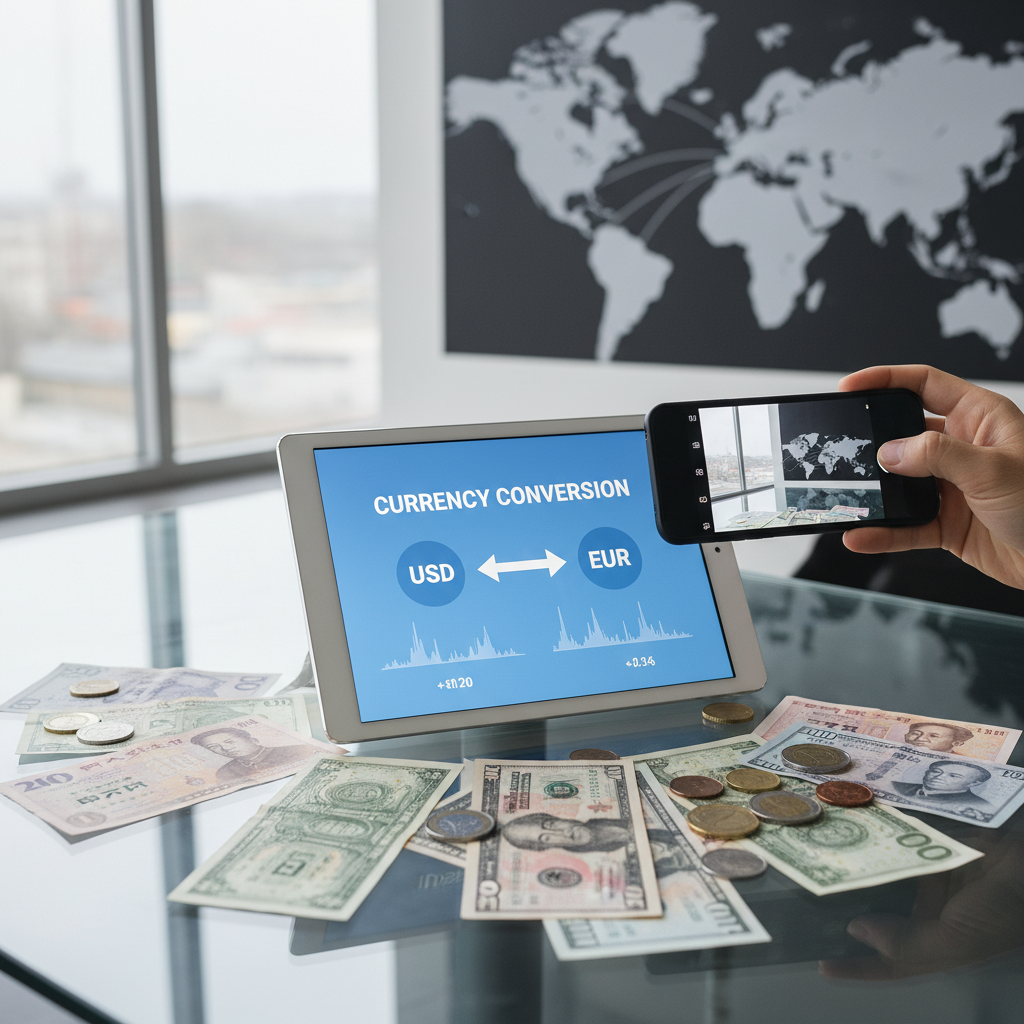
The Critical Importance of Tracking the USD to INR Currency Converter Live
In the globalized economy, the exchange rate between the US Dollar (USD) and the Indian Rupee (INR) is one of the most frequently monitored financial pairings in the world. Whether you are an international investor, a student paying tuition, a business importing goods, or a traveler planning a trip to India, knowing the precise conversion value is essential. That’s why relying on a high-quality usd to inr currency converter live tool is no longer a luxury—it’s a necessity.
Within the first few moments of checking the market, you realize rates are constantly shifting. These fluctuations, driven by economic policy, geopolitical events, and market sentiment, can significantly impact the final value of your transaction. Using an outdated static rate can cost you hundreds or even thousands of dollars on large transfers. This guide will walk you through the mechanisms of currency conversion and show you how to leverage a real-time Currency Convertor to ensure you always get the best possible rate.
Understanding the Need for a Real-Time USD to INR Currency Converter Live
Why do financial experts insist on using a ‘live’ converter rather than simply Googling the rate once a day? The answer lies in volatility. The USD/INR pair is highly sensitive to news coming out of both Washington D.C. and New Delhi. A single announcement from the Federal Reserve or the Reserve Bank of India (RBI) can change the rate almost instantly.
A reliable usd to inr currency converter live provides the mid-market rate—the true rate at which banks and large financial institutions trade currencies amongst themselves. This is the benchmark against which all other conversion rates are measured. Without this real-time benchmark, you cannot accurately assess the fees or spreads charged by your chosen financial service provider.
What Determines the USD to INR Exchange Rate?
Currency rates are not set arbitrarily; they are dictated by supply and demand in the foreign exchange (Forex) market. Several key factors contribute to the constant movement of the USD to INR rate:
- Interest Rates: Higher interest rates in the US (set by the Fed) often strengthen the USD relative to the INR, as foreign capital flows towards higher returns.
- Trade Balance: If India imports significantly more from the US than it exports, the demand for USD increases, typically pushing the INR lower.
- Inflation: Countries with lower inflation rates usually see their currency strengthen. Consistent high inflation in India can put downward pressure on the Rupee.
- Geopolitical Stability: Periods of political or economic uncertainty lead investors to seek ‘safe haven’ currencies, often boosting the USD.
“The exchange rate is a barometer of a nation’s economic health and its relationship with the global market. Real-time data is essential for accurate economic decision-making.”
How to Use a Reliable USD to INR Currency Converter Live Tool
While the fundamental mechanism of a currency converter is simple, a quality live tool provides features that enhance accuracy and utility. Here is a step-by-step guide to making the most out of your conversion tool:
- Input the Base Currency: Typically, this is the amount you hold (e.g., 500 USD).
- Select Target Currency: Ensure the target is set to INR (Indian Rupee).
- Verify the ‘Live’ Status: Look for a timestamp or a refresh indicator confirming the rate is current (usually updated every few seconds).
- Analyze Historical Data: The best converters offer charts showing how the rate has moved over the past day, week, month, or year. This helps identify trends and optimal transfer windows.
- Set Rate Alerts: If you are planning a transfer in the future, set an alert to notify you when the usd to inr currency converter live rate hits a specific target you deem favorable.
Feature 1: Mid-Market Accuracy
A top-tier converter displays the true interbank rate, allowing you to easily compare it against the less favorable rates offered by banks or PayPal.
Feature 2: Historical Trending
Accessing charts is crucial for strategic transfers. If the Rupee is weakening (meaning you get more INR per USD), historical data helps confirm if the current rate is unusually high.
Feature 3: Calculation Speed
In fast-moving markets, the converter must update instantaneously. Slow converters risk providing stale data, leading to incorrect transfer calculations.
Beyond the Spot Rate: Fees and Spreads Affecting USD to INR Conversions
It is vital to understand that the rate shown on the usd to inr currency converter live tool (the mid-market rate) is almost never the rate you will actually receive when conducting a transaction. Financial institutions make money in two primary ways when exchanging currency:
1. Hidden Spreads (The Rate Markup)
Banks rarely offer the mid-market rate. Instead, they mark up the rate, effectively buying the currency from you at a lower price and selling it at a higher price. This difference is known as the spread, and it is often where most of your money is lost during conversion. For example, if the live rate is 1 USD = 83.00 INR, your bank might offer you 1 USD = 82.50 INR. That 0.50 INR difference is pure profit for the bank.
2. Overt Transaction Fees
This is the flat fee or percentage charge applied directly to the transaction amount. While some modern fintech companies advertise ‘zero fees,’ they often incorporate a slightly higher spread to compensate. Always calculate the total cost, including both the spread and the fee, to determine the true cost of conversion.
Understanding these hidden costs is what makes a real-time usd to inr currency converter live tool so powerful. It arms you with the knowledge to negotiate or select the most cost-effective transfer method.
Maximizing Value with a Real-Time USD to INR Currency Converter Live
Strategic timing can be the difference between a good transfer and a great one. For large corporate transactions or significant remittances, even a small movement of 0.1% can translate into thousands of dollars in savings or losses. Monitoring the usd to inr currency converter live feed allows for proactive financial management.
- The Best Time to Transfer: Generally, the best time to execute a transfer is when the Rupee is weaker relative to the Dollar, meaning your USD buys more INR.
- Weekend Considerations: The Forex markets officially close on weekends (Friday evening EST to Sunday evening EST). Many conversion services rely on the closing rate from Friday, which may not reflect current market sentiment if major news breaks over the weekend. Avoid transferring during these times if the market is expected to shift significantly.
- Using Forward Contracts: If you are a business, you might use the live rate to decide whether to lock in a future rate (a forward contract) to hedge against unfavorable movements.
Comparing Different Currency Conversion Scenarios
The total cost of conversion depends entirely on the provider you choose. Using a live converter helps you quantify the cost of convenience vs. the cost of optimization.
Scenario 1: Traditional Bank Transfer
Rate Received: Often significantly lower than the live mid-market rate (high spread).
Fees: High flat fee ($20 – $50).
Speed: 3-5 business days.
Best For: Users prioritizing security over cost for non-urgent, infrequent transfers.
Scenario 2: Modern Fintech Transfer Service (e.g., Wise, Remitly)
Rate Received: Very close to the live mid-market rate (low spread).
Fees: Low percentage fee (0.5% – 1.5%).
Speed: Same day to 1 business day.
Best For: Regular remitters and small businesses seeking optimization and speed.
Scenario 3: Credit Card Conversion (Travel)
Rate Received: Generally poor, plus foreign transaction fees (around 3%).
Fees: High percentage fee.
Speed: Instantaneous, but costly.
Best For: Emergency purchases while abroad, not large transfers.
The Role of Central Banks and Economic Data
The stability of the usd to inr currency converter live rate is heavily influenced by the actions of the central banks. In the United States, the Federal Reserve’s decisions regarding the Federal Funds Rate ripple across the globe. When the Fed signals a rate hike, the USD typically strengthens as investors seek higher returns on dollar-denominated assets.
Similarly, the RBI monitors India’s inflation and liquidity conditions. The RBI often intervenes in the Forex market, sometimes buying or selling USD, to prevent the Rupee from becoming too volatile or depreciating too rapidly. Keeping track of the economic calendars for both nations, especially for key data releases like GDP reports, employment figures, and CPI (Consumer Price Index) reports, provides predictive power when analyzing the live conversion rate. You can monitor economic data directly from sources like the Federal Reserve’s official website.
Furthermore, global events play a critical role. For example, shifts in global crude oil prices directly impact India, which is a massive oil importer. When oil prices surge, India needs more USD to purchase the same amount of oil, putting downward pressure on the INR. Monitoring global commodity markets alongside your usd to inr currency converter live tool provides a holistic view of the forces at play.
If you are managing other financial tools, such as using an online GST invoice generator, or perhaps calculating your academic standing using a CGPA calculator, financial awareness becomes a core skill. The ability to quickly interpret real-time data is key to success in multiple domains.
Regulatory Environment and Future Trends in USD/INR Conversion
The future of currency conversion is moving toward greater transparency and speed, largely thanks to blockchain technology and open banking initiatives. Regulatory bodies, including the RBI, are continually updating guidelines to protect consumers and ensure fair practices in international remittance.
One major trend is the move toward instant payment rails. Systems that facilitate immediate settlement, bypassing traditional correspondent banking networks, are becoming more common, potentially reducing the time lag and associated risks of rate fluctuation during a transaction. As these systems mature, the gap between the mid-market rate shown on a converter and the final rate received by the customer will likely shrink.
For those interested in deeper economic analysis, tracking the Reserve Bank of India’s publications on exchange rate management offers invaluable insight into long-term trends and stability measures affecting the Rupee.
In summary, whether you are making a one-off transfer or managing daily currency exposure, utilizing a high-quality usd to inr currency converter live tool ensures you operate with maximum transparency and minimal risk. It transforms currency conversion from a guessing game into a strategic advantage.
FAQs
The live rate (mid-market rate) is the true, interbank exchange rate, updated in real-time. The rate your bank offers includes a "spread" or markup, which is the bank’s profit margin, making the rate you receive less favorable than the live rate.
The USD/INR rate changes constantly, often several times per second, during Forex trading hours (typically Monday morning in Asia through Friday evening in New York). The fluctuations are driven by trading volume, economic news releases, and market speculation.
It is usually better to transfer during the week when Forex markets are open. On weekends, many services use a fixed Friday closing rate, meaning you might miss out on favorable rate movements that occur when markets reopen on Sunday evening or Monday morning.
Slippage refers to the difference between the expected rate when you initiate a transaction and the actual rate at which the transaction is executed. In volatile markets, if your transaction takes a few seconds to process, the rate might have moved unfavorably, resulting in slippage.
Economic reports (like inflation or employment data) indicate the health and trajectory of an economy. Strong US data typically strengthens the USD because it increases the likelihood of Federal Reserve interest rate hikes, making dollar assets more attractive to global investors, thus impacting the exchange rate.
Read Also:
- The Ultimate Guide to SSL Verification: How to Use a Check If Website Is Safe Tool and Protect Your Data
- The Definitive Guide to Finding the Ideal Blog Post Word Count for SEO Success
- The Essential Guide to How to Find Area Pincode by Location Quickly and Accurately
- How to Check Domain Age and Authority: A Comprehensive Guide for SEO Success
- 10 Creative Ways to Use an Online Collage Maker for Stunning Visuals