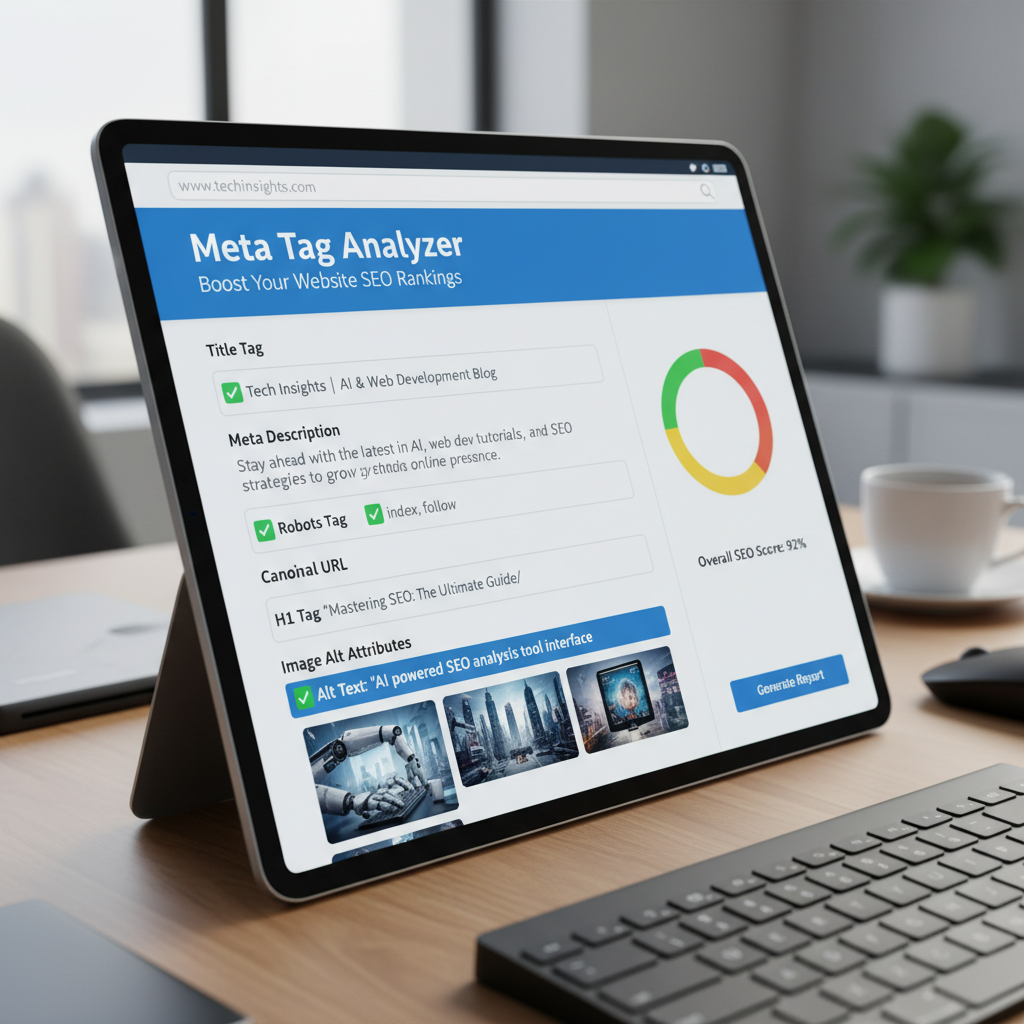
In the complex world of search engine optimization (SEO), visibility is everything. While high-quality content and robust backlinks grab the headlines, the foundational elements of your website — the meta tags — often determine whether a user clicks on your link or scrolls right past it. If you are serious about competing in organic search, mastering metadata analysis is non-negotiable. This comprehensive meta tag analyzer seo optimization guide is designed to help you transform hidden code into powerful ranking signals.
Meta tags are snippets of text that describe a page’s content, but they appear only in the page’s source code, not on the live page itself. Search engines rely heavily on these tags to understand what your page is about, how to index it, and how to display it in the Search Engine Results Pages (SERPs). Neglecting these elements means leaving your SEO success to chance. By utilizing a reliable meta tag analyzer, you gain the power to audit, optimize, and execute a winning on-page strategy.
Why Every SEO Strategy Needs a Reliable Meta Tag Analyzer SEO Optimization Guide
Think of your website’s meta tags as the digital storefront window for search engines and potential visitors. If the window is dirty, misleading, or poorly labeled, no one is coming inside. A dedicated meta tag analyzer provides the crucial diagnostic capabilities required to ensure every page is presenting its best face to the world.
The primary benefit of using an analyzer is speed and accuracy. Manually checking the title length, description character count, and the presence of crucial tags across hundreds of pages is impractical. An analyzer automates this process, flagging errors that directly impact your Click-Through Rate (CTR) and overall indexability.
Understanding the Core Meta Tags
While modern SEO has shifted focus away from keyword stuffing in meta tags, the structural importance remains paramount. There are four primary tags that every analyzer scrutinizes:
1. Title Tag (<title>)
This is the most critical on-page SEO element. It defines the page’s topic and is displayed as the clickable headline in the SERP. Analyzers check for optimal length (typically 50-60 characters or 580 pixels) and ensure the primary keyword is present and close to the beginning.
2. Meta Description
While not a direct ranking factor, the description is your sales pitch. Analyzers ensure it is concise, compelling, and within the visible limit (approx. 155-160 characters). A strong description dramatically improves CTR, signaling relevance to search engines.
3. Robots Meta Tag
This tag tells search engine crawlers how to interact with the page. Common values include index/noindex and follow/nofollow. A critical error here (e.g., accidentally setting a vital page to noindex) can completely destroy your organic visibility.
4. Viewport Tag
Essential for mobile optimization. This tag instructs browsers on how to adjust the page dimensions and scaling to fit the device screen. Analyzers confirm its presence and correct configuration, which is vital for Google’s mobile-first indexing.
How a Meta Tag Analyzer Works: Auditing for Compliance and Quality
A high-quality meta tag analyzer seo optimization guide doesn’t just check for the existence of tags; it evaluates them against current SEO best practices and technical limitations. The tool typically scrapes the provided URL, extracts the metadata, and compares the findings against a set of rules established by major search engines.
The analysis process usually covers three main areas: length constraints, keyword presence, and technical compliance.
Common Meta Tag Errors Identified by Analyzers
Many common SEO problems stem directly from poorly configured or missing metadata. An analyzer quickly identifies the following critical issues:
- Duplicate Titles and Descriptions: This dilutes the authority of your pages and confuses search engines about which version to rank. Analyzers are crucial for identifying sitewide duplication.
- Overly Long or Short Tags: If too long, the tags get truncated in the SERPs, hiding crucial information. If too short, you miss opportunities to include relevant keywords and compelling copy.
- Missing Tags: Pages without a title tag are nearly invisible. Pages without a meta description will have search engines randomly pull text from the page body, often resulting in irrelevant snippets.
- Misconfigured Robots Tags: The dreaded
noindexerror on high-value pages is instantly flagged, preventing accidental de-indexing. - Keyword Stuffing: Although analyzers cannot perfectly judge intent, they can flag titles or descriptions that contain excessive repetition of the target keyword, which can trigger spam filters.
As SEO expert Rand Fishkin once noted, “Meta descriptions are the advertisements for your content. If you don’t make them compelling, you’re wasting the impression.” Utilizing the data from a meta tag analyzer allows you to perfect that ‘advertisement.’
Advanced Optimization Techniques Using Your Meta Tag Analyzer SEO Optimization Guide
Auditing is only half the battle; optimization is where the real ranking gains happen. Once you have the analysis report, you must implement strategic changes to capitalize on the opportunities identified. This requires a nuanced approach that balances keyword relevance with user psychology.
Optimize for CTR, Not Just Keywords
Focus on emotional triggers (e.g., ‘Discover,’ ‘Ultimate,’ ‘Free,’ ‘Proven’) in your meta descriptions. Use the space to answer the user’s implicit query immediately. High CTR signals that your result is highly relevant, which positively impacts rankings.
Perfect Title Tag Proximity
Ensure your primary keyword is as close to the beginning of the title tag as possible. This gives it maximum weight and relevance in the eyes of search engines. Use secondary keywords later in the title if space allows.
Implement Unique Branding
If applicable, add your brand name to the end of the title tag (e.g., | Company Name). This builds trust and recognition. Ensure the brand name doesn’t push the title over the character limit, causing truncation.
Leverage Actionable Verbs
Start your descriptions with strong, actionable verbs (e.g., ‘Learn how to,’ ‘Download the guide,’ ‘Compare features’). This encourages immediate interaction from the search user.
For those looking to streamline their workflow, many tools exist to help generate and analyze these crucial elements. Utilizing modern Meta Tag Tools can dramatically speed up the optimization process, ensuring compliance with the guidelines laid out in this meta tag analyzer seo optimization guide.
Beyond the Basics: Schema, Viewport, and Canonical Tags
While title and description tags are essential for user interaction, other technical meta elements are critical for search engine processing and ranking authority. A thorough meta tag analysis includes these advanced elements:
- Canonical Tags: The
rel="canonical"tag tells search engines which version of a page is the preferred or "master" version. This is vital for managing duplicate content issues arising from tracking parameters, pagination, or different versions of the same product. Incorrect canonicalization can lead to severe indexing problems. - Schema Markup: Although technically not a traditional "meta tag," Schema (structured data) provides context about the page’s content (e.g., star ratings, recipe details, event dates). It is crucial for earning rich snippets, which significantly increase visibility and CTR. You can explore the official Google Search Central documentation on structured data for implementation best practices.
- Hreflang Tags: Essential for international SEO, these tags tell search engines the relationship between pages in different languages or aimed at different geographical regions.
Ensuring these technical tags are correctly implemented is a cornerstone of modern SEO. Errors in canonical or hreflang tags can result in search engines ignoring your primary content or showing the wrong language version to users.
Implementing the Findings for Higher Rankings
The true value of a meta tag analyzer seo optimization guide lies in its implementation. Finding errors is easy; fixing them systematically for maximum impact requires strategy. Focus on high-priority pages first: your homepage, category pages, and pages that already rank on the second page of Google (positions 11-20), as these offer the fastest route to ranking improvement.
Phase 1: Prioritize Critical Errors
Immediately address any pages blocked by noindex tags or those with missing title tags. These are the quickest wins and remove immediate roadblocks to indexing.
Phase 2: Optimize High-Traffic/Low-CTR Pages
Identify pages that receive many impressions but have a low CTR. Rewrite the meta descriptions to be more compelling and include a clear call-to-action to encourage clicks.
Phase 3: Address Duplication
Use canonical tags to consolidate authority from duplicate or near-duplicate pages. If necessary, rewrite titles and descriptions to ensure every page offers a unique value proposition.
Phase 4: Monitor and Iterate
Meta tag optimization is not a one-time task. After implementation, monitor the CTR and ranking changes over the next 4-6 weeks. Use the analyzer regularly to catch new issues as the site grows.
It is important to remember that search engines are constantly evolving how they interpret and display metadata. For instance, Google often rewrites title tags if they deem the provided title irrelevant or too long. This emphasizes the need for continuous monitoring and adherence to best practices, ensuring your tags are clear, concise, and highly relevant to the page content. You can read more about how search engines handle titles and descriptions on authoritative industry sites like Search Engine Land.
Conclusion: Making Metadata Count
Meta tags are the unsung heroes of on-page SEO. They bridge the gap between your content and the search engine’s understanding of it. By leveraging a dedicated meta tag analyzer seo optimization guide, you move beyond guesswork and apply data-driven optimization techniques.
Regular auditing, strategic rewriting of titles and descriptions for maximum CTR, and meticulous attention to technical tags like canonicals and robots are the keys to unlocking significant ranking improvements. Integrate meta tag analysis into your routine SEO workflow, and watch as your organic visibility and traffic climb.
FAQs
The title tag (<title>) is technically a required HTML element, not a "meta" tag, but it is often grouped with them because it performs a similar descriptive function. It is the most important element for SEO and is displayed as the main clickable headline in the SERPs. A meta tag (like the meta description or robots tag) provides additional instructions or descriptions to the browser and search engine and is not visible on the page itself.
No, meta descriptions are not considered a direct ranking factor by Google. However, they are absolutely crucial for SEO because they significantly influence the Click-Through Rate (CTR). A high CTR signals relevance to search engines, which can indirectly lead to higher rankings. A well-written description acts as a compelling advertisement for your content.
You should use a meta tag analyzer whenever you publish a new page or make significant changes to existing content. For large, established websites, a full audit should be performed quarterly (every three months) to catch duplicated tags, truncation errors, or accidental noindex placements that may have occurred during development updates or content migrations.
The optimal length for a meta description is generally between 155 and 160 characters. While Google sometimes displays longer snippets, staying within this range ensures your message is fully visible across most devices and prevents truncation, maximizing the impact of your sales pitch.
Yes, Google frequently rewrites title tags if it determines that the provided title is too long, misleading, or irrelevant to the user’s query. This often happens if the title tag doesn’t match the content of the page well. To minimize this, ensure your title tag is concise, accurately reflects the page content, and stays within the recommended pixel width limit (around 580 pixels or 50-60 characters).
Read Also:
- 10 Smart EMI Calculator Tips Avoiding Debt Traps and Securing Your Financial Future
- 7 Best Image Compressor Tools Without Quality Loss
- Basal Metabolic Rate: How to Basal Metabolic Rate Calculate Daily Calories for Optimal Health
- Pressure Convertor
- 7 Secrets to Choosing the Best PDF to Word Converter in 2024
- Watch Hurawatch Offline? Your 2026 Guide
- Master Mental Math in 2026
- Your 2026 Password Security Upgrade
- JSON to CSV: Your 2026 Data Guide
- Unlock Your 2026 Wealth With Compounding
- Master Global Money: Your 2026 Guide
- Your 2026 SERP Checker Guide
- Tons to Yards: The 2026 Pro Formula
- Frame Your 50×70 Art Perfectly in 2026
- Biological Age Test: What’s Your Real Age? (2026 Guide)