Ever scroll through your feed and see it? A simple, stark white background with black text that makes you laugh out loud. No fancy graphics. No high-production video. Just words. And yet, it has 50,000 likes. How?
That, my friend, is the deceptive power of the white meme format. It’s the unsung hero of internet culture, the minimalist engine behind some of the most viral content of the last decade. But it’s not just random luck. There’s a science to its simplicity, a repeatable strategy behind its success.
Forget generic advice. In this deep dive, you’re going to learn the core psychology that makes these memes irresistible, break down the DNA of 11 iconic examples, and walk away with a battle-tested framework to create your own content that doesn’t just get seen—it gets shared.
📑 What You’ll Learn
What Exactly is a White Meme Format (And What It’s Not)
Let’s clear this up right away. The name “white meme format” has absolutely nothing to do with race. Zero. It’s a purely descriptive term for a category of memes defined by a minimalist, high-contrast aesthetic.
Think of it as the punk rock of content. It strips away all the unnecessary noise—the glossy backgrounds, the complex imagery, the fancy fonts—and leaves only the essentials: a setup and a punchline. The “white” refers to the literal white space that serves as the canvas, forcing all your attention onto the text or a simple line drawing.
These formats are the backbone of modern internet humor for one simple reason: accessibility. You don’t need Photoshop. You don’t need a design degree. You just need a relatable idea and a way to type. This low barrier to entry has democratized virality, turning everyday observations into global inside jokes.
From a content strategy perspective, these formats are gold. They are incredibly versatile, easy to remix, and perfectly suited for the rapid-fire consumption of platforms like Instagram, X (formerly Twitter), and TikTok.
The Hidden Psychology: Why Our Brains Love Simplicity
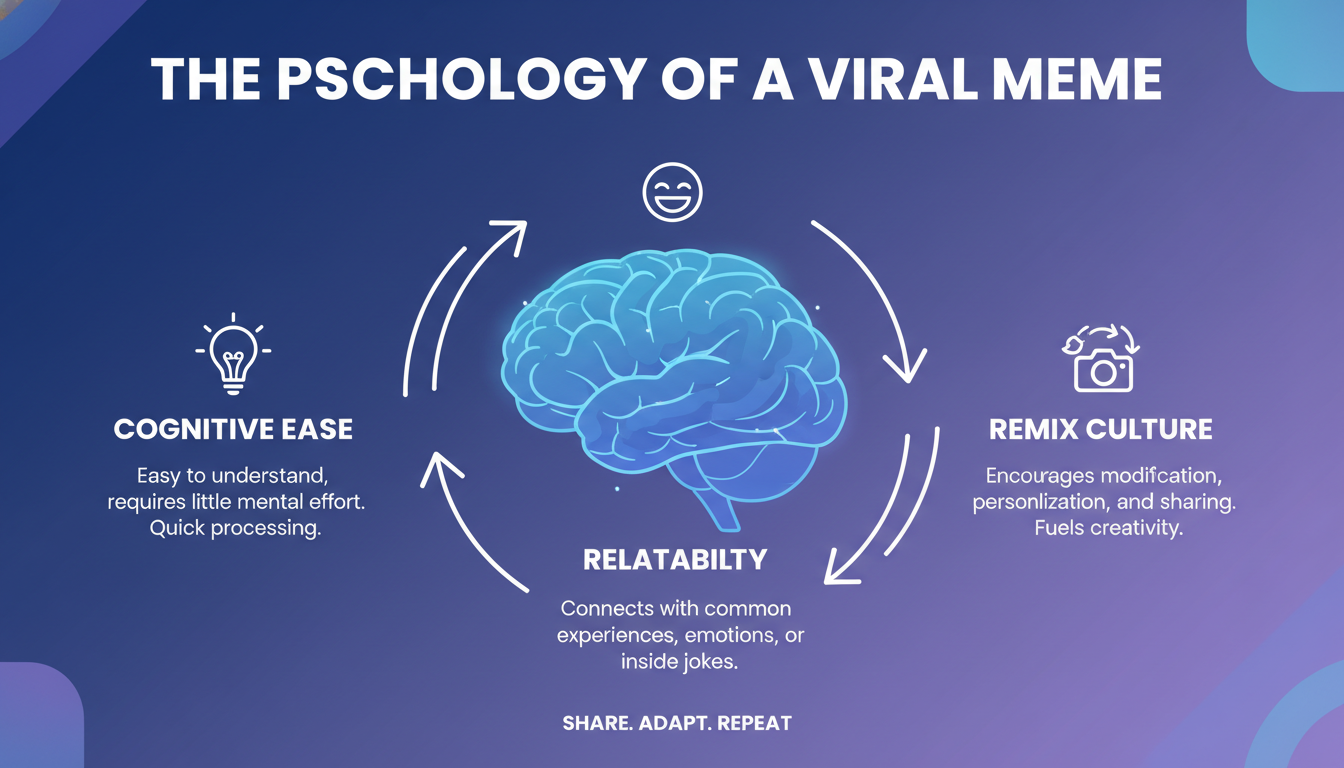
So, why does a screenshot of a tweet often outperform a professionally designed graphic? It boils down to a concept called cognitive fluency. Our brains are fundamentally lazy; they prefer to process information that is simple, clear, and easy to understand. A white meme format is the epitome of this.
- Effortless Processing: The high contrast and lack of distractions mean the message is delivered to our brain almost instantly. There’s no work involved. This ease of processing creates a subtle, positive psychological response. We like things that are easy to get.
- The “Aha!” Moment: Because the format is so distilled, the punchline hits with precision. This creates a quick, satisfying “aha!” or “haha!” moment, a tiny dopamine hit that makes us want to share the feeling with others.
- Universal Relatability: By removing specific visual cues, the text-based message becomes more universal. A joke about the dread of a 9 AM meeting resonates with someone in Omaha just as much as it does with someone in London. The format becomes a blank canvas for shared human experience.
This isn’t just theory; it’s a core principle of communication. The easier you make it for someone to understand your point, the more likely they are to agree with it and share it. White memes are a masterclass in this principle.
💡 Pro Tip
When creating your own meme, read the text out loud. Does it sound like something a real person would say? The most successful memes tap into authentic, conversational language. If it sounds like corporate marketing-speak, start over. Authenticity is everything.
The White Meme Hall of Fame: 11 Iconic Examples
To truly master the form, you need to study the greats. These aren’t just funny pictures; they are communication frameworks that have launched millions of conversations. Based on our analysis of countless viral posts, these are the templates that consistently deliver.
| Meme Format | Core Concept | Best For… |
|---|---|---|
| 1. The “Nobody:” Format | Highlighting unsolicited or absurd behavior. | Calling out people who share unsolicited opinions or have strange, specific hobbies. |
| 2. Two Buttons | A character sweating over a difficult choice. | Illustrating internal conflict, difficult decisions, or choosing the worse of two options. |
| 3. Boardroom Meeting Suggestion | A good idea is rejected by corporate overlords. | Satirizing corporate culture, bureaucracy, or the rejection of common sense. |
| 4. Gru’s Plan | A four-step plan with a terrible, unforeseen outcome. | Showing how a seemingly good plan can go horribly wrong. |
| 5. Expanding Brain | Ranking ideas from simple to “galaxy brain.” | Ironically comparing different levels of understanding a topic. |
| 6. Tweet Screenshot | The purest form: a witty or relatable observation. | Sharing sharp, concise jokes or universally true statements. The ultimate low-effort, high-impact format. |
And a few more modern classics…
- 7. Change My Mind: Featuring Steven Crowder at a table, this template is perfect for presenting a controversial or silly opinion as an objective fact, inviting debate.
- 8. Is This a Pigeon?: From the anime The Brave Fighter of Sun Fighbird, this format is used to show someone misinterpreting a situation or willfully misunderstanding something obvious. Its history is well-documented by internet culture archivists at Know Your Meme.
- 9. Ight Imma Head Out: A screenshot of SpongeBob getting up to leave. It’s the perfect, low-drama reaction for wanting to exit an awkward or unpleasant situation. Simple. Direct. Hilarious.
- 10. Woman Yelling at a Cat: A brilliant juxtaposition of two unrelated images. It perfectly captures a dynamic of a hysterical, irrational accusation versus a calm, confused response.
- 11. Panik, Kalm, Panik: This three-panel comic featuring Meme Man is a storytelling powerhouse for depicting a rapid emotional rollercoaster. It’s great for narrating a short sequence of events with dramatic twists.
⚠️ Watch Out
Meme lifecycles are brutally short. Using a format that was popular two years ago (remember “Harambe”?) can instantly make your content feel dated and out of touch. If you’re unsure, spend 10 minutes scrolling through popular social feeds to see what’s currently trending.
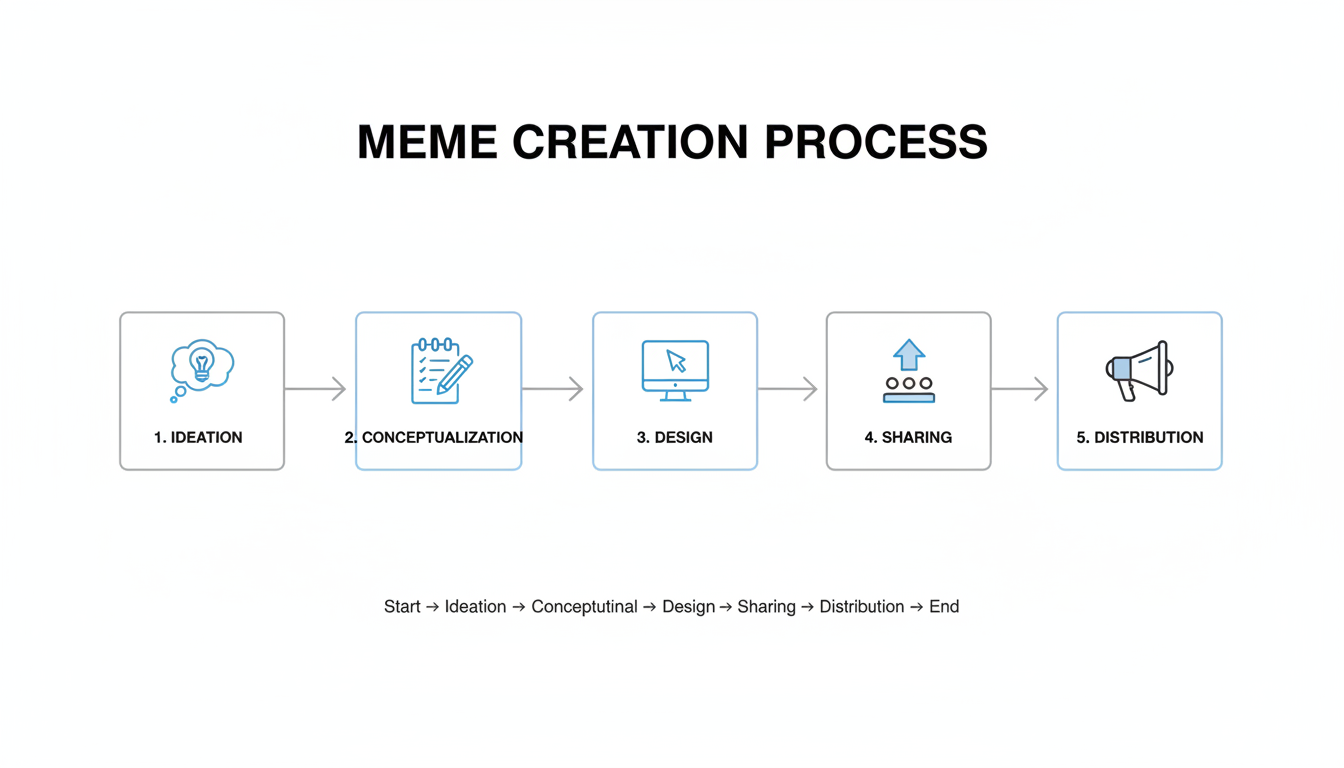
Your 5-Step Framework for Crafting a Viral Meme
Ready to create your own? Don’t just throw text on a template and hope for the best. Follow a structured process. I’ve seen this framework work for social media teams and individual creators alike.
-
Step 1: Mine for an Insight, Not Just a Joke
The best memes aren’t just funny; they’re true. They tap into a shared experience or a universal frustration. Start by thinking about your audience. What are their daily struggles? What’s a common thought they have but might not say out loud?- Example: Instead of “Mondays are bad,” the insight is “The specific feeling of dread when you see a 9 AM meeting request on a Sunday night.” Specificity is key.
-
Step 2: Match the Insight to the Format
This is the most critical step. The format is the delivery vehicle for your insight. The pairing has to feel natural, not forced. Look at your insight and ask: What’s the core emotion? Is it a dilemma? A bad plan? An absurd statement?- Dilemma Insight? -> Use the “Two Buttons” format.
- Flawed Plan Insight? -> Use “Gru’s Plan.”
- Unsolicited Opinion Insight? -> Use the “Nobody:” format.
-
Step 3: Choose Your Weapon (The Right Tool)
You don’t need expensive software. Speed and ease of use are your friends here. From our hands-on testing, these are the top contenders for non-designers.
| Tool | Ease of Use | Template Library | Best For… |
|---|---|---|---|
| Imgflip | ★★★★★ | Massive, up-to-date | Quickly creating classic image macro memes with zero fuss. The go-to for speed. |
| Canva | ★★★★☆ | Good, but requires searching | Creating custom layouts, tweet screenshots, or memes where you need more design control. |
| Kapwing | ★★★★☆ | Excellent & modern | A powerful, browser-based editor that handles images, GIFs, and video memes. |
-
Step 4: Write Like a Human (But Shorter)
The text does all the work. Be ruthless in your editing.- Cut every extra word. Brevity is the soul of wit.
- Punch up your verbs. Use active, strong language.
- Read it aloud. Does it flow naturally?
- Proofread. Unless it’s an intentional misspelling for comedic effect (e.g., “stonks”), a typo can kill the vibe.
-
Step 5: Share and Engage (Don’t Just Post and Pray)
Where you post matters. Share it on the platform where the format feels most native. Engage with the comments immediately to fuel the algorithm. The first hour is critical.
🎯 Key Takeaway
The magic of a white meme format isn’t in its complexity, but in its constraint. By forcing you to be concise, it makes your message more potent. Master the art of matching a universal human truth with the perfect, simple format, and you’ve cracked the code to relatable content.
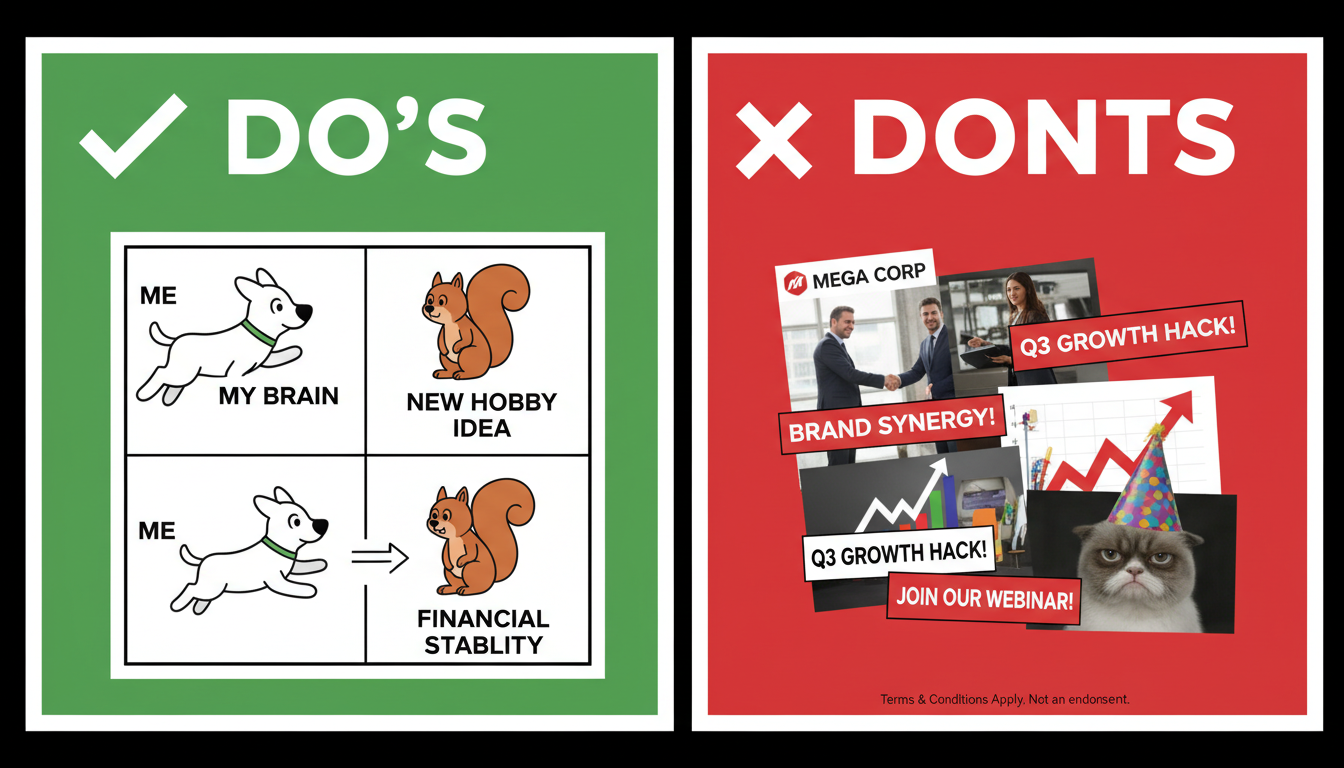
The Golden Rules vs. The Cardinal Sins of Meme-Making
There’s an unwritten etiquette to meme culture. Violate it, and the internet will be swift to judge. Stick to these principles to stay on the right side of the digital zeitgeist.
The Golden Rules (DO THIS)
- ✅ Understand the Lore: Know the origin and common usage of a format before you touch it. Misusing a meme is the digital equivalent of wearing socks with sandals.
- ✅ Embrace Simplicity: The whole point is minimalism. Don’t clutter your meme with logos, hashtags, or extra text. Let the core joke breathe.
- ✅ Be Timely: The best memes are often reactive to current events. Joining a conversation as it’s happening is far more effective than showing up a week late.
- ✅ Add a Unique Twist: Even with a popular template, bring your own unique perspective. Combine two unrelated ideas or apply a meme to a niche community that hasn’t seen it before.
💡 Pro Tip
For brands: the best “meme-jacking” is subtle. Instead of plastering your logo, make the content of the meme relate to a pain point your product solves. The connection should be clever, not a blatant ad. The goal is to make your audience feel understood, not sold to.
The Cardinal Sins (NEVER DO THIS)
- ❌ Don’t Over-explain: If the joke needs a paragraph of context, it’s not a meme. Trust your audience’s intelligence. The moment you explain it, the magic is gone.
- ❌ Don’t Punch Down: Edgy humor is one thing, but memes that rely on being offensive to marginalized groups are a bad look. Good humor unites people; it doesn’t alienate them.
- ❌ Don’t Use a Dead Meme: Seriously. Check the expiration date. Using an old format makes you look like the “how do you do, fellow kids?” meme in real life.
- ❌ Don’t Force It: If you don’t have a genuinely good idea for a meme, don’t post one. Inauthentic, forced humor is worse than no humor at all. Wait for a real insight.
⚠️ Watch Out
Using memes with copyrighted source material (like movie stills) for commercial purposes can be a legal gray area. While many instances fall under “fair use” for parody, as defined by institutions like the U.S. Copyright Office, corporations are often held to a higher standard. When in doubt, stick to formats based on simple drawings or text.
❓ Frequently Asked Questions
Why are they called ‘white’ meme formats?
The term ‘white’ refers to the literal white space or plain, minimalist background that is characteristic of these templates. It has no demographic meaning. It simply emphasizes the lack of visual clutter and the intense focus on the text or simple drawing.
What is the most popular white meme format of all time?
While trends change weekly, the simple screenshot of a witty tweet is arguably the most timeless and widely used white meme format. Its authenticity and simplicity make it endlessly adaptable for sharing sharp, relatable observations across all platforms.
Can I use a white meme format for my business?
Absolutely, but proceed with caution. It’s a practice known as ‘meme-jacking.’ When done well, it makes a brand feel human and culturally relevant. When done poorly (using a meme incorrectly, too late, or too overtly) it can backfire spectacularly. The key is authenticity and a deep understanding of the meme’s context.
Are memes copyrighted?
It’s complicated. The underlying image (e.g., a still from Despicable Me for the Gru’s Plan meme) is copyrighted by its owner. However, the act of creating a remixed meme is often protected as parody or commentary under fair use. For personal use, it’s rarely an issue. For commercial marketing, the risk is higher. Consult legal counsel if you’re a large brand.
What font is used in most memes?
The classic font for “image macro” style memes is Impact, typically in bold white text with a thin black outline for maximum readability on any background. For modern, text-centric formats like tweet screenshots, standard sans-serif system fonts like Helvetica, Arial, or Segoe UI are common.
How can I find trending meme formats?
Your best bet is to be an active user of platforms where memes are born and spread: X (Twitter), TikTok, and Reddit (specifically subreddits like r/memes or r/dankmemes). Websites like Know Your Meme are also excellent archives for tracking the origin and popularity of various formats.
Your Turn to Shape the Conversation
The white meme format is far more than a fleeting trend. It’s a fundamental shift in digital communication—a testament to the power of simplicity in a world saturated with noise. It proves that you don’t need a big budget or a design team to make an impact. All you need is a sharp insight into the human condition.
You now have the psychology, the iconic examples, and the strategic framework. You understand the rules of the road. The only thing left is to apply it.
So the next time you have a funny thought or a relatable frustration, don’t just let it pass. Grab a template, craft your message, and share it. You might just be one simple idea away from starting the next global conversation.