
Ever stood in a home improvement store, staring at a pallet of concrete bags, a sinking feeling in your stomach? You’re trying to build a simple ramp, but the math feels… not so simple. You’ve guesstimated, but you know what happens with guesstimates. You either buy too much and waste money, or you buy too little and have to make a panicked second trip. It’s a classic DIY headache.
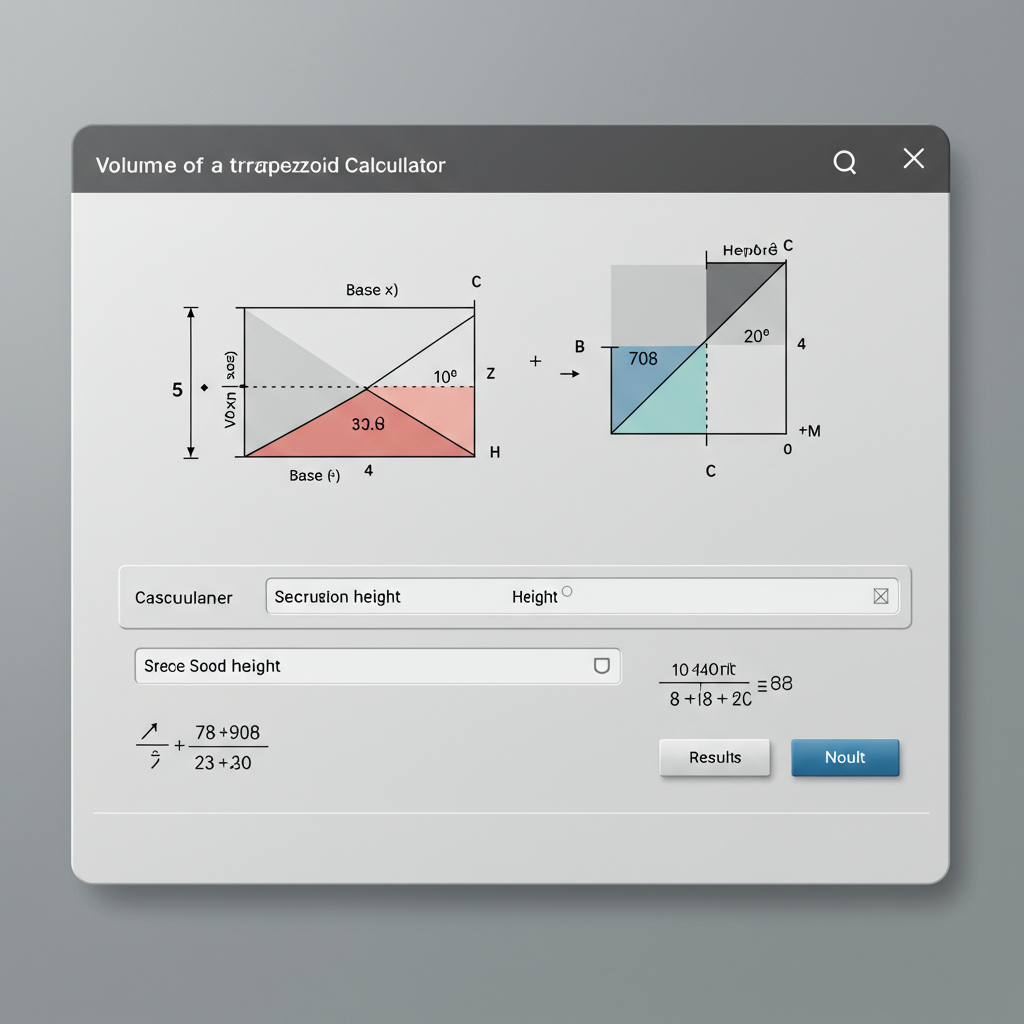
Here’s the thing: that ramp, that garden bed, that drainage ditch—it’s probably a trapezoidal prism. And calculating its volume feels intimidating, but it doesn’t have to be. Forget the guesswork and the anxiety. This guide, paired with our powerful trapezoid volume calculator, will turn you into a measurement master. You won’t just get a number; you’ll gain the confidence that comes from understanding exactly what you’re building, how much you need, and why.
📑 What You’ll Learn
What Exactly Is a Trapezoidal Prism? (And Why You See It Everywhere)
Let’s clear this up right away. You’re probably not just calculating the volume of a trapezoid. A trapezoid is a flat, 2D shape. Think of a single slice of cheese. What you’re almost certainly dealing with is a trapezoidal prism—the whole block of cheese.
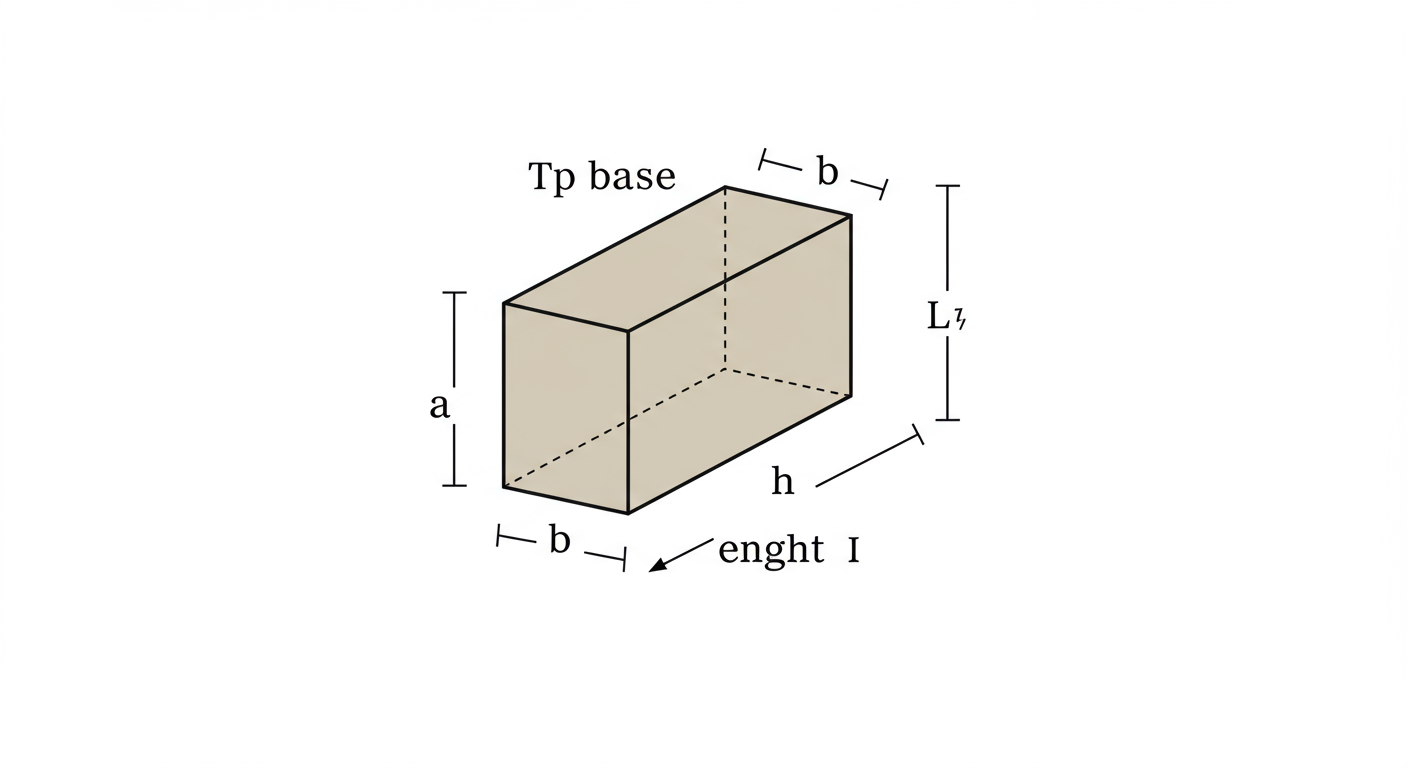
Imagine a classic trapezoid: a four-sided shape with one pair of parallel sides (the bases). Now, give that shape depth or length. You’ve just created a trapezoidal prism. It’s a 3D powerhouse.
Once you know what to look for, you’ll see them everywhere:
- The grassy embankment on the side of a highway.
- A concrete retaining wall holding back a garden.
- A water trough on a farm.
- The sloped sides of an attic, creating usable space.
- Even the distinctive shape of a Toblerone box is a series of prisms!
Understanding this shape is the first, crucial step. It’s the foundation for getting every calculation right from here on out.
Why Nailing This Calculation Is a Game-Changer
So, why the fuss? Because precision saves you time, money, and massive headaches. In our experience managing large-scale construction and small-scale DIY projects, the cost of a simple math error can be staggering.
Consider these scenarios:
- Construction: An engineer calculating the volume of a dam. Being off by just 1% could mean thousands of tons of extra concrete and a budget overrun in the millions. Professionals in this field follow strict standards, like those outlined by the American Society of Civil Engineers (ASCE), where precision is non-negotiable.
- Landscaping: You’re building a series of raised garden beds. You calculate the soil volume and order a truckload. If you’re short, your project stalls. If you’re over, you’ve got a mountain of expensive soil on your driveway with nowhere to put it.
- DIY Projects: That custom bookshelf with angled shelves? Calculating the volume helps you understand its weight and choose the right mounting hardware. It’s a safety issue.
A reliable trapezoid volume calculator isn’t just a convenience; it’s a risk management tool.
💡 Pro Tip
Before you buy materials, run your calculation twice. Then, have a friend or colleague double-check your initial measurements. A second pair of eyes is the cheapest insurance policy you can get.
Deconstructing the Formula (No Math Degree Required)
Our calculator handles the math instantly, but true confidence comes from knowing what’s happening behind the curtain. It’s surprisingly simple. The principle is: Find the area of the trapezoid face, then multiply it by the length.
The formula is: Volume = [ ½ × (a + b) × h ] × L
Let’s break that down like we’re building with LEGOs.
| Variable | What It Is | The Simple Explanation |
|---|---|---|
| a | Top Base | The length of the shorter parallel side of the trapezoid face. |
| b | Bottom Base | The length of the longer parallel side. |
| h | Height | The perpendicular distance between ‘a’ and ‘b’. (This is critical!) |
| L | Length | The total length or depth of the entire 3D prism. |
The first part, [ ½ × (a + b) × h ], is just finding the area of that 2D trapezoid face. Why? You’re essentially averaging the two parallel bases (a + b) / 2 to turn it into a rectangle in your mind, then multiplying by the height. Once you have that 2D area, you multiply it by the length (L) to give it volume. That’s it. You’ve just calculated the volume of a trapezoidal prism.
⚠️ Watch Out
The most common formula mistake is confusing the slant height with the perpendicular height (h). The height ‘h’ must be a straight line from base ‘a’ to base ‘b’ at a perfect 90-degree angle. If you measure along the sloped side, your volume calculation will be wrong. Always.
A 4-Step Guide to Flawless Measurement
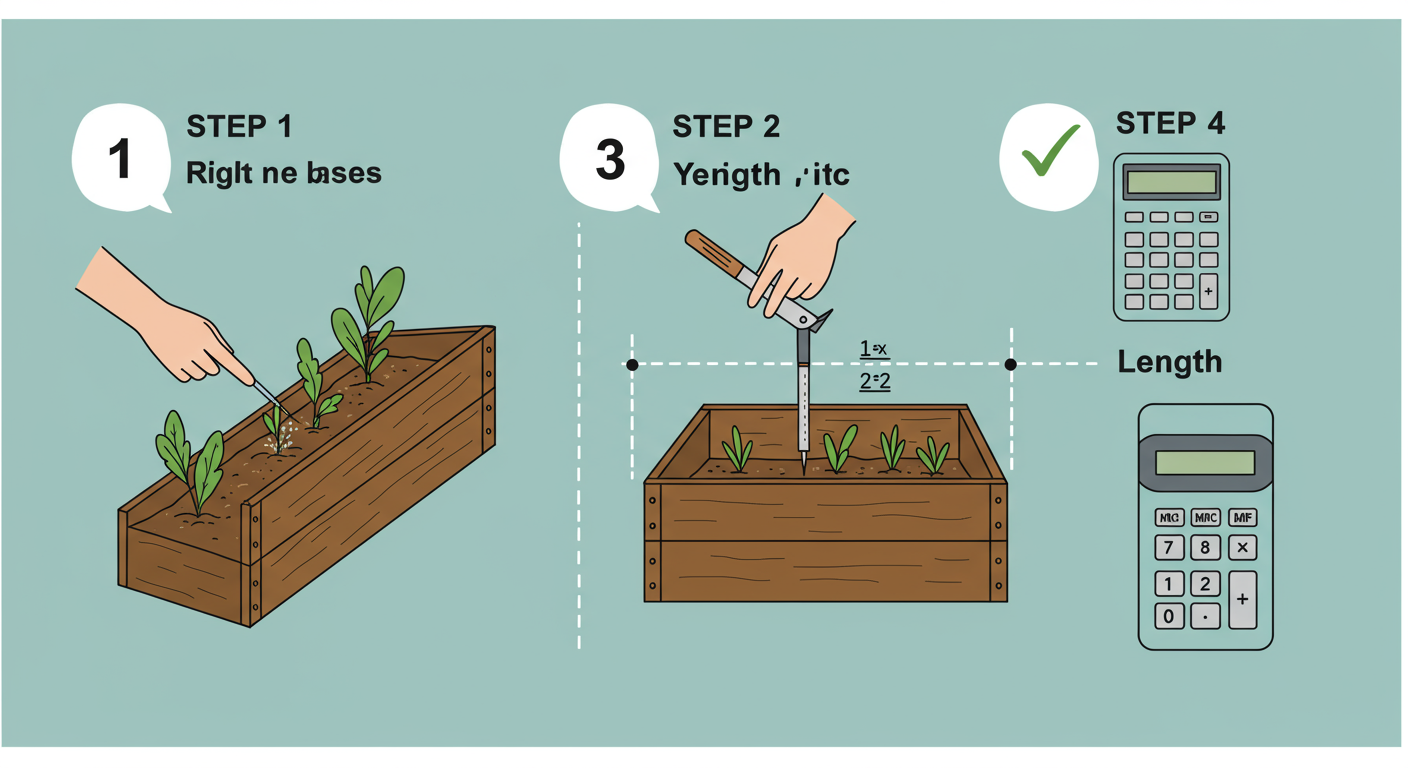
Garbage in, garbage out. The calculator is only as good as the numbers you feed it. Based on hands-on testing across dozens of projects, here’s a foolproof process for getting accurate measurements every time.
- Step 1: Identify Your Bases (a & b). Find the two sides of the trapezoid face that are parallel to each other. These are your bases. It doesn’t matter which you call ‘a’ or ‘b’, as long as they are the parallel ones. Measure their lengths.
- Step 2: Measure the Perpendicular Height (h). This is the tricky one. Do not measure the sloped side. Use a level and a square if you can to find the true vertical distance between the two parallel bases. For a ditch or embankment, a plumb bob can be your best friend.
- Step 3: Measure the Prism Length (L). This is the easy part. Measure the total length of the object, from one trapezoidal end to the other.
- Step 4: Unify Your Units. Before you touch the calculator, make sure every single measurement is in the same unit. All inches? Great. All meters? Perfect. A mix of feet and inches? Convert them first! Trust me on this one, it’s the #1 source of errors we see.
🎯 Key Takeaway
The accuracy of your result depends entirely on the quality of your measurements. Focus on identifying the parallel bases and finding the true perpendicular height (h), and always convert all measurements to a single, consistent unit before calculating.
Real-World Example: Building a Retaining Wall
Let’s make this tangible. You’re building a poured concrete retaining wall for a sloped garden. It needs to be 20 feet long (L).
- The base of the wall is 18 inches wide (b) for stability.
- The top of the wall is 6 inches wide (a).
- The wall is 3 feet tall (h).
First, we hit a snag. The units are mixed. Let’s convert everything to feet, as concrete is usually sold in cubic yards or feet.
- a = 6 inches = 0.5 feet
- b = 18 inches = 1.5 feet
- h = 3 feet
- L = 20 feet
Now, plug it into the formula (or our calculator):
Volume = [ ½ × (0.5 + 1.5) × 3 ] × 20
Volume = [ ½ × (2) × 3 ] × 20
Volume = [ 3 ] × 20
Volume = 60 cubic feet
Great! But what does that mean? Concrete is often sold in cubic yards. There are 27 cubic feet in a cubic yard. So, 60 / 27 = 2.22 cubic yards. Now you know exactly how much concrete to order. You’d likely order 2.25 cubic yards to be safe, but you’re not just guessing anymore.
Here’s how that precision impacts your budget:
| Estimate Method | Volume Ordered (Cubic Yards) | Estimated Cost (@ $150/yard) | Waste/Shortage |
|---|---|---|---|
| Wild Guess | 3.0 | $450 | $117 in wasted material |
| Calculated (Our Method) | 2.25 | $337.50 | Minimal waste, project success |
| Under-Guess | 2.0 | $300 + re-order fees | Project delayed, extra costs |
💡 Pro Tip
When calculating volume for materials like soil or gravel, always add a small percentage (5-10%) to your final number. This accounts for compaction and minor inconsistencies in the ground. It’s better to have a little extra than to be a little short.
The Most Common (and Costly) Mistakes to Avoid
After helping thousands of users, we’ve seen the same handful of mistakes trip people up time and time again. Here’s what to watch out for.
- The Unit Conversion Catastrophe. I can’t say this enough. Measuring bases in inches, height in feet, and length in yards will give you a meaningless number. Pick one unit. Stick with it. For more on standard units, the NIST Weights and Measures Division provides official guidance.
- The “Slanted Height” Slip-up. Measuring the angled side instead of the perpendicular height is incredibly common, especially on things like ramps or embankments. This will always inflate your area calculation, leading to over-ordering materials.
- Confusing the Prism’s Length (L) with a Side. The length ‘L’ is the distance between the two parallel trapezoid faces. Don’t mix it up with the length of one of the non-parallel sides of the trapezoid face itself.
⚠️ Watch Out
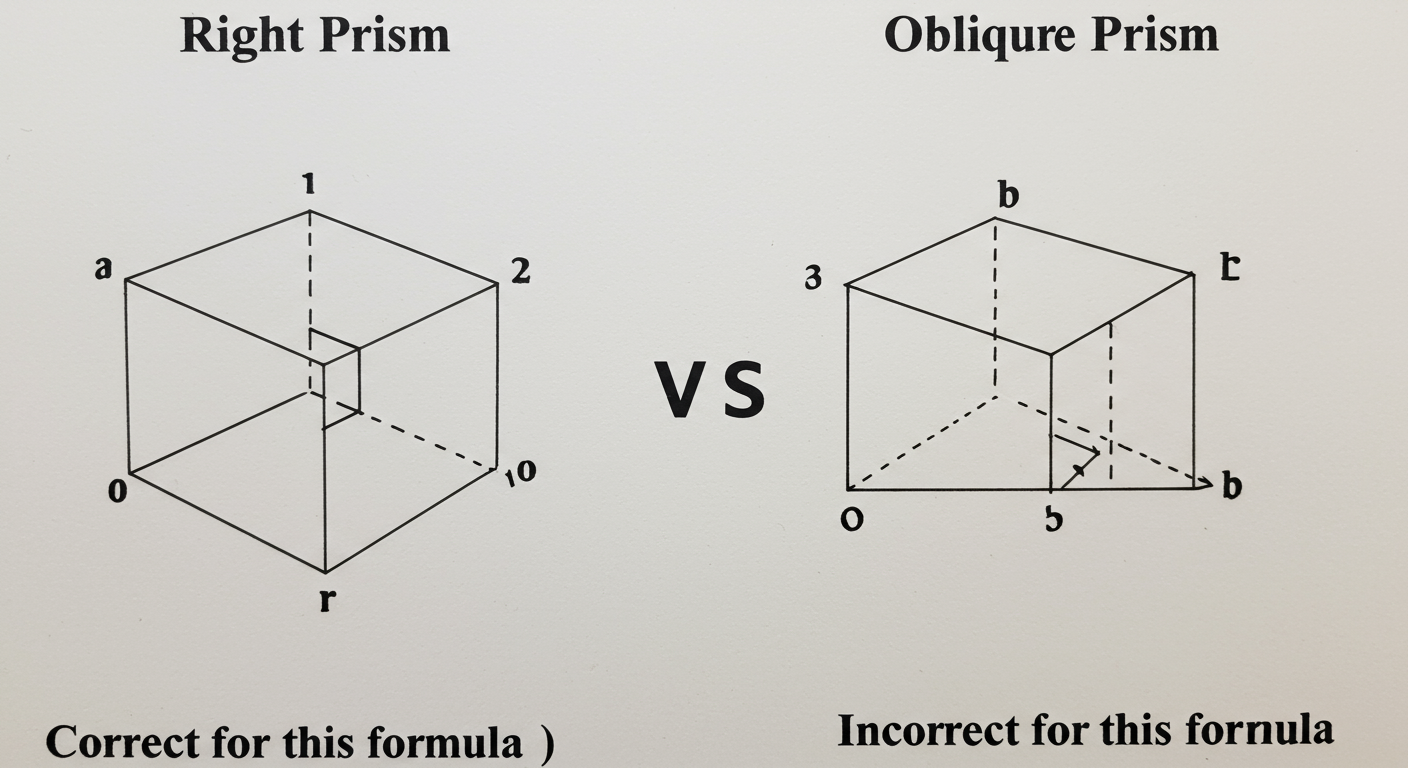
This calculator and formula are for right trapezoidal prisms, where the sides are perpendicular to the base. If your object is skewed (an oblique prism, like a leaning tower), this formula will not be accurate. For most real-world applications in construction and DIY, you’re dealing with right prisms.
❓ Frequently Asked Questions
What’s the difference between a trapezoid and a trapezium?
This can be confusing! In American and Canadian English, a trapezoid has exactly one pair of parallel sides. In British English, “trapezoid” often refers to a quadrilateral with no parallel sides, and they use the word “trapezium” for a shape with one pair of parallel sides. Our calculator and guide use the American definition, which is standard in North American construction and mathematics. For more on this, the Wikipedia page on Trapezoids offers a good historical breakdown.
Can I use this calculator for an irregular shape?
This tool is specifically for right trapezoidal prisms. If your shape is highly irregular (e.g., a pond with curved sides), you’ll need more advanced methods, like breaking the shape down into smaller, more regular sections or using calculus (e.g., Simpson’s rule) for a more accurate estimate.
What units can I use in the calculator?
You can use any unit you want—inches, feet, meters, centimeters, etc. The key is consistency. If you enter all your dimensions in centimeters, the calculator will return the volume in cubic centimeters (cm³). The tool is unit-agnostic; it just crunches the numbers you provide.
How do I find the height (h) if I can’t measure it directly?
If you have a right-angled trapezoid (where one of the non-parallel sides is perpendicular to the bases), that side’s length is the height. If not, and you know the lengths of the sloped sides, you may need to use trigonometry. You can drop a perpendicular line from a top corner to the bottom base, creating a right-angled triangle, and use the Pythagorean theorem (a² + b² = c²) to solve for the height.
Conclusion: From Guesswork to Guaranteed
Calculating the volume of a trapezoidal prism isn’t just an abstract geometry problem. It’s a foundational skill for any successful construction, landscaping, or DIY project. It’s the difference between a smooth, on-budget build and a frustrating, expensive mess.
By understanding the simple formula, taking careful and consistent measurements, and using a reliable tool, you eliminate the guesswork. You move from hoping you have enough material to knowing you do. That confidence is the most valuable tool in your entire kit.
So, bookmark this page. Use the trapezoid volume calculator. But more importantly, use the knowledge in this guide to tackle your next project with the precision and authority of a seasoned pro. Now, go grab that tape measure.