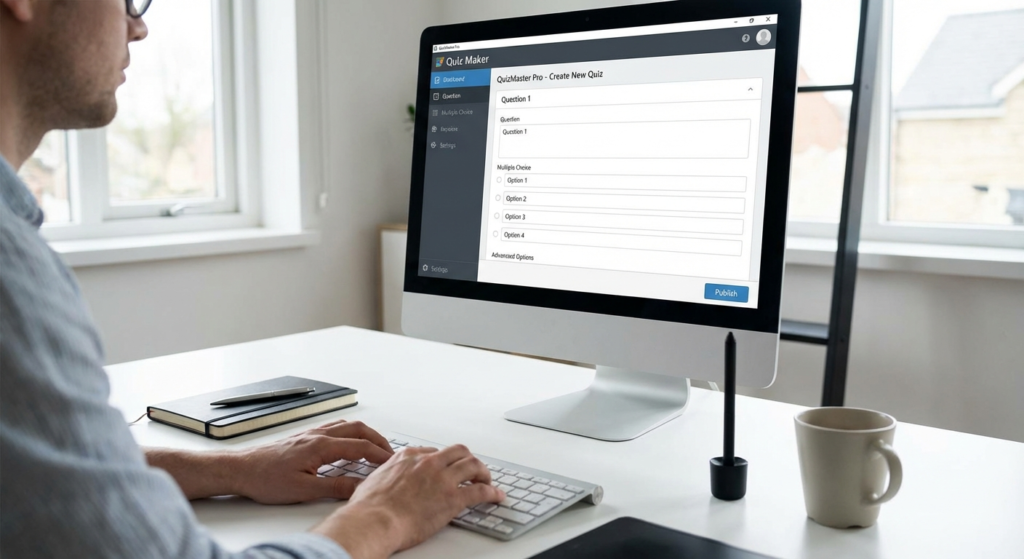
In the rapidly evolving landscape of digital marketing and education, capturing audience attention is harder than ever. Static content often fails to engage users who are constantly bombarded with information. This is where the strategic use of a quiz maker becomes a game-changer. Whether you are a marketer looking to generate leads, a teacher aiming to assess student progress, or a business owner trying to recommend the right products, interactive quizzes offer a dynamic solution.
A robust quiz maker is not just a tool for fun trivia; it is a sophisticated engine for data collection, user engagement, and personalized marketing. By transforming passive readers into active participants, you can increase time-on-site, lower bounce rates, and gather zero-party data that is invaluable for your business strategy. In this comprehensive guide, we will explore the multifaceted uses of quiz building software and how to leverage it for maximum impact.
Why Every Modern Business Needs a Quiz Maker
The psychology behind quizzes is simple: humans have an innate desire to learn more about themselves and test their knowledge. When you deploy a quiz maker on your website, you are tapping into this psychological trigger. Unlike standard contact forms which feel like a transaction, quizzes feel like a conversation.
Using a quiz maker allows you to segment your audience effectively. Instead of guessing what your visitors want, you can ask them directly through a series of engaging questions. The data collected allows for hyper-personalized follow-up campaigns, which significantly convert better than generic newsletters.
Boost Engagement
Interactive content generates 2x more conversions than passive content. Quizzes keep users glued to your page.
Data Collection
Gather insights on customer preferences, pain points, and knowledge gaps without being intrusive.
Social Sharing
People love sharing quiz results. A well-crafted quiz can go viral, bringing free traffic to your site.
1. Lead Generation: The Primary Use of a Quiz Maker
One of the most powerful applications of a quiz maker is lead generation. Traditional lead magnets like eBooks or whitepapers are still effective, but they often require a high commitment from the user to read. A quiz, however, offers instant gratification.
Marketers use “Lead Quizzes” to capture email addresses. The strategy is straightforward: offer valuable insights or a personality assessment, and ask for an email address to send the detailed results. Because the user has already invested time in answering the questions, they are highly likely to provide their contact information to see the outcome.
For example, a digital marketing agency might use a quiz maker to create a “Digital Health Check” assessment. At the end of the quiz, the user gets a score and the agency gets a qualified lead who is actively looking for help with their marketing.
2. E-Commerce Product Recommendations
Decision paralysis is a real issue for online shoppers. When faced with too many choices, customers often leave without buying anything. An e-commerce brand can solve this by using a product recommendation quiz maker.
Imagine a skincare brand. Instead of forcing a customer to browse through 50 different moisturizers, the brand can offer a “Find Your Perfect Skin Routine” quiz. The quiz maker processes answers regarding skin type, age, and concerns, and then dynamically displays the exact products the customer needs. This acts like a virtual personal shopper, significantly increasing conversion rates and average order value.
3. Educational Assessments and Training
Beyond marketing, the utility of a quiz maker in the educational sector and corporate training is immense. Teachers and trainers use these tools to create graded assessments that provide instant feedback to learners.
In a corporate setting, ensuring that employees understand new compliance regulations or software workflows is critical. A quiz maker can be used to build engaging tests that employees actually enjoy taking. This ensures knowledge retention and tracks progress over time. For remote teams, this is particularly useful.
If you are managing a distributed workforce, you might be interested in optimizing their environment. You can read more about this in our guide to the best productivity tools for remote teams, which often integrates well with training software.
Designing Engaging Questions for Your Quiz Maker Strategy
The success of your quiz depends entirely on the quality of your questions. When using a quiz maker, avoid dry, academic language unless it is strictly a certification exam. To maintain engagement, use a conversational tone.
- Keep it short: 7-10 questions is the sweet spot for engagement.
- Use visuals: Image-based questions often have higher completion rates.
- Be personal: Use words like “You” and “Your” to make the user feel seen.
Furthermore, the flow of the quiz matters. Start with easier questions to build momentum before moving to more complex ones. A good quiz maker will allow you to use “skip logic” or “branching logic,” where the next question changes based on the previous answer, creating a truly custom experience.
4. Employee Engagement and Internal Culture
Quizzes aren’t just for customers; they are excellent for internal team building. HR departments can use a quiz maker to create fun trivia about the company history, “get to know your colleagues” quizzes, or personality tests to help team members understand each other’s working styles.
By gamifying the internal culture, you foster a sense of community. This is especially vital for companies focusing on retention and employee satisfaction. When selecting tools for your internal workflow, it is essential to choose the right fit. Learn more about how to choose online tools for your workflow to ensure your quiz software integrates smoothly with your HR systems.
5. Audience Segmentation and Insights
Data is the new oil, and a quiz maker is the drill. When a user takes a quiz, they are voluntarily giving you data about their preferences, budget, timeline, and pain points. This is known as zero-party data, and it is more accurate than third-party cookies.
For instance, a travel agency could run a quiz titled “What’s Your Dream Vacation Style?” The results might categorize users into “Adventure Seekers,” “Luxury Travelers,” or “Budget Backpackers.” The agency can then push these segments into their CRM. The “Adventure Seekers” will receive emails about hiking trips, while the “Luxury Travelers” get offers for 5-star resorts. This level of segmentation is only possible through the strategic use of a quiz maker.
Personality Quizzes
“Which Superhero Are You?” – Great for viral sharing and brand awareness.
Scored Quizzes
“Test Your SEO Knowledge” – Ideal for establishing authority and expertise.
Assessment Quizzes
“Do You Need a New Roof?” – Perfect for service-based businesses to qualify leads.
6. Social Media Growth and Virality
We all remember the boom of Buzzfeed quizzes. That wasn’t an accident; it was a strategy. A quiz maker allows you to create highly shareable content. People love to share their results to show off their personality or intelligence to their peers.
To maximize this, ensure your quiz maker supports custom social sharing images. The result page should have a catchy headline like “I scored 100% on the Ultimate History Test! Can you beat me?” This challenges the user’s network, creating a viral loop that drives exponential traffic back to your website.
According to Content Marketing Institute, interactive content like quizzes generates significantly more engagement than static content, making it a staple for social media strategies.
Key Features to Look for in an Online Quiz Maker
Not all software is created equal. When selecting a quiz maker for your business, you need to ensure it has the right feature set to support your goals. Here is a breakdown of what to look for:
- Lead Capture Forms: The ability to gate results behind an email opt-in form.
- Integrations: Does it connect with Mailchimp, HubSpot, Zapier, or your specific CRM?
- Responsive Design: The quiz must look perfect on mobile devices, as that is where most users will access it.
- Analytics: You need detailed reports on drop-off rates, completion rates, and individual answers.
- Customization: The ability to remove branding and add your own logo, colors, and fonts.
Analyzing Data from Your Quiz Maker Dashboard
Once your quiz is live, the work isn’t done. You must analyze the data provided by your quiz maker. Look at the “drop-off points.” If 50% of users stop at question #4, that question is likely too confusing or too personal. Use this insight to refine the content.
Furthermore, analyze the results distribution. If everyone is getting the same result, your logic might be flawed. A balanced distribution suggests a well-calibrated quiz. Expert marketers, such as those at Neil Patel Digital, often emphasize that testing and tweaking interactive content is key to maintaining high conversion rates.
Conclusion
The use of a quiz maker extends far beyond simple entertainment. It is a versatile tool that spans lead generation, e-commerce sales, employee training, and audience segmentation. By providing value to the user in the form of self-discovery or knowledge testing, you earn the right to market to them.
Whether you are a small business owner or a marketing director at a large enterprise, integrating a quiz maker into your digital strategy can provide a competitive edge. It transforms your website from a static brochure into a dynamic, two-way conversation channel. Start building your first quiz today, and watch your engagement metrics soar.
Frequently Asked Questions
Personality quizzes are generally the best for lead generation because they are irresistible to users. People are naturally curious about themselves. Product recommendation quizzes are also highly effective for high-intent leads in e-commerce.
For marketing purposes, a quiz should ideally have between 7 to 10 questions. This is long enough to gather meaningful data but short enough to prevent user fatigue and drop-offs.
Absolutely. Many businesses use quiz makers for compliance training, skills assessments, and certification programs. Look for features like scoring logic, timers, and detailed reporting when choosing a tool for this purpose.
Promote your quiz through your social media channels, email newsletters, and as a popup on your website. You can also run paid ads to the quiz, as they often have a lower cost-per-click (CPC) than standard landing pages due to high engagement.
Most modern online quiz makers are designed to be user-friendly with drag-and-drop interfaces. You do not need coding knowledge to build a professional-looking and functional quiz.