

Here’s a brutal truth: Motivation is a fickle friend. It’s great on January 1st, but by January 17th—statistically known as “Quitter’s Day”—it usually ghosts you. We all have that gap. You know the one. The frustrating distance between the person you want to be (fit, wealthy, well-read) and the person you actually are at 8 PM on a Tuesday.
So, how do high performers bridge that gap? They don’t rely on willpower. They rely on systems.
Enter the habit tracker. It’s not just a trendy grid on Pinterest or a colorful app on your phone. It is a fundamental tool for behavioral engineering. In our experience working with productivity frameworks, a well-designed tracker acts as an external hard drive for your discipline. It provides immediate feedback, visual proof of your grind, and the subtle psychological shove you need when your couch looks more appealing than the gym.
If you’re tired of starting over, this guide is for you. We’re going to dismantle the “hustle culture” myths and show you exactly how to use tracking to build a life you don’t need to escape from.
📑 What You’ll Learn
The Neuroscience: Why Your Brain Loves Checkboxes
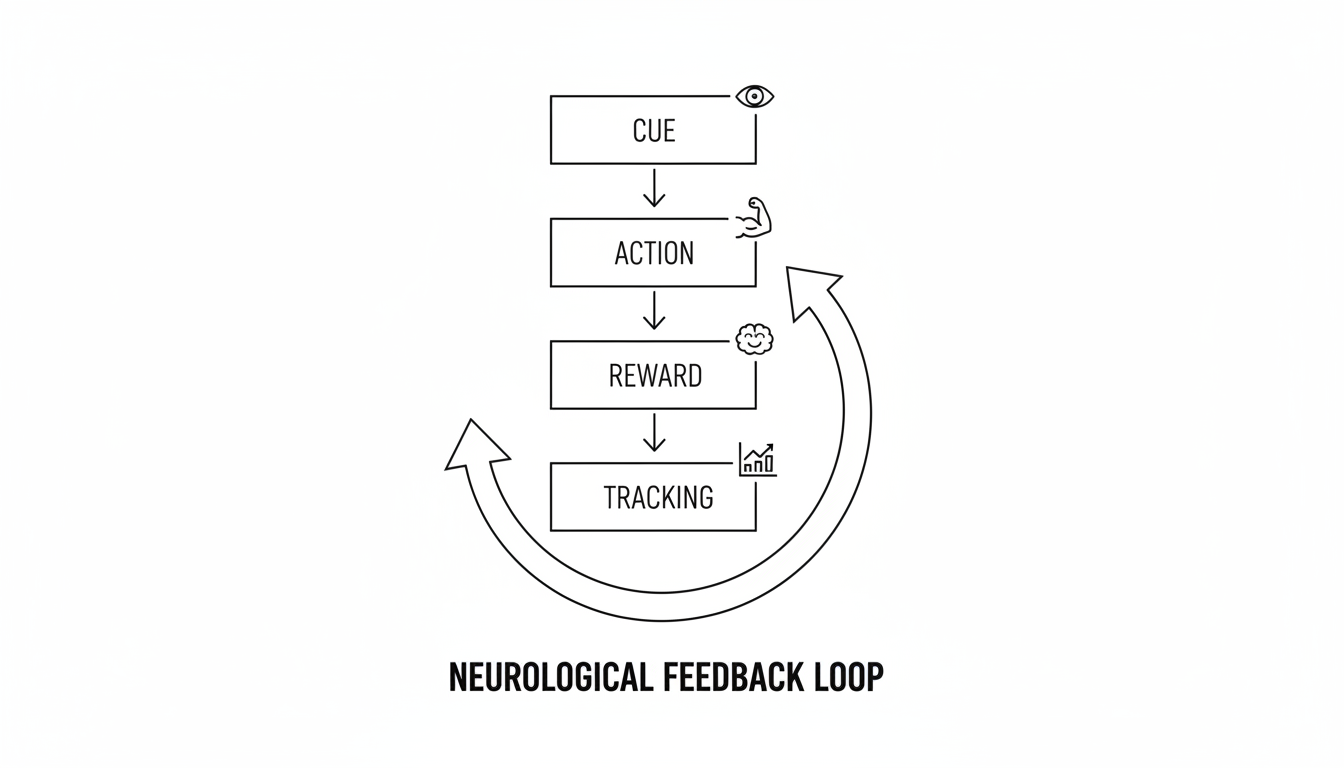
Let’s get technical for a second. Why does crossing off a simple box feel so oddly satisfying? It comes down to a feedback loop.
At its core, a habit tracker leverages the psychological principle of positive reinforcement. Every time you tick a box, your brain releases a micro-dose of dopamine. It’s a reward signal. You are essentially training yourself like a Pavlovian dog, but instead of a bell and food, it’s a checkbox and a feeling of accomplishment.
This creates a powerful cycle: Cue → Craving → Response → Reward.
Furthermore, the mere act of measurement changes behavior. In psychology, this is known as the Hawthorne Effect. When individuals know they are being observed—even if they are just observing themselves—their performance improves. You wouldn’t drive a car without a speedometer; trying to change your life without a tracker is just as reckless.
🎯 Key Takeaway
You don’t rise to the level of your goals; you fall to the level of your systems. A habit tracker isn’t a chore list—it’s a visual evidence log that proves you are becoming the type of person you claim to be.
Analog vs. Digital: Choosing Your Weapon
We see this debate all the time. Should you go old-school with a bullet journal or high-tech with an automated app? There is no “best” habit tracker—only the one you actually use. If the friction to open an app is too high, you won’t do it. If carrying a notebook is annoying, you’ll leave it at home.
Here is a breakdown based on our testing of various mediums:
| Feature | Analog (Journal/Paper) | Digital (Apps/Spreadsheets) |
|---|---|---|
| Primary Benefit | Tactile connection; better memory retention. | Data analytics, automation, and reminders. |
| Distraction Level | Zero. It’s just paper and ink. | High. You might open the app and end up on Instagram. |
| Flexibility | Infinite. You can draw, doodle, or write notes. | Limited to the app’s interface and features. |
| Best For… | People who want to disconnect and reflect. | Data nerds who want streaks and graphs. |
| Cost | Low (Notebook + Pen). | Variable (Free to Monthly Subscriptions). |
Our recommendation? If you are just starting, start with paper. The physical act of writing connects you to the intention. Once the habit is solid, migrate to digital for the analytics.
Step-by-Step: Setting Up Your System
Starting is easy. Maintaining is the beast. Many people overload their habit tracker on day one, trying to change their diet, sleep, workout, and reading habits simultaneously. This is a one-way ticket to burnout city.
Follow this proven framework to launch successfully:
- The Audit: List out everything you think you want to change. Now, cross out 80% of it. Keep only the top 3 priorities.
- Define the “Keystone”: Identify one habit that, if done, makes everything else easier. (e.g., If you sleep 8 hours, you don’t need caffeine, your mood is better, and you have energy to work out).
- Set the Bar Low: Make the habit so easy you can’t say no. Don’t track “Run 5 miles.” Track “Put on running shoes.”
- Visual Placement: Put your tracker where you can’t ignore it. On the fridge, your bathroom mirror, or your phone’s home screen.
💡 Pro Tip
The Two-Minute Rule: When starting a new habit, it should take less than two minutes to do. Read one page. Meditate for one minute. Fold one shirt. You are mastering the art of showing up, not the art of intensity.
High-ROI Categories to Monitor
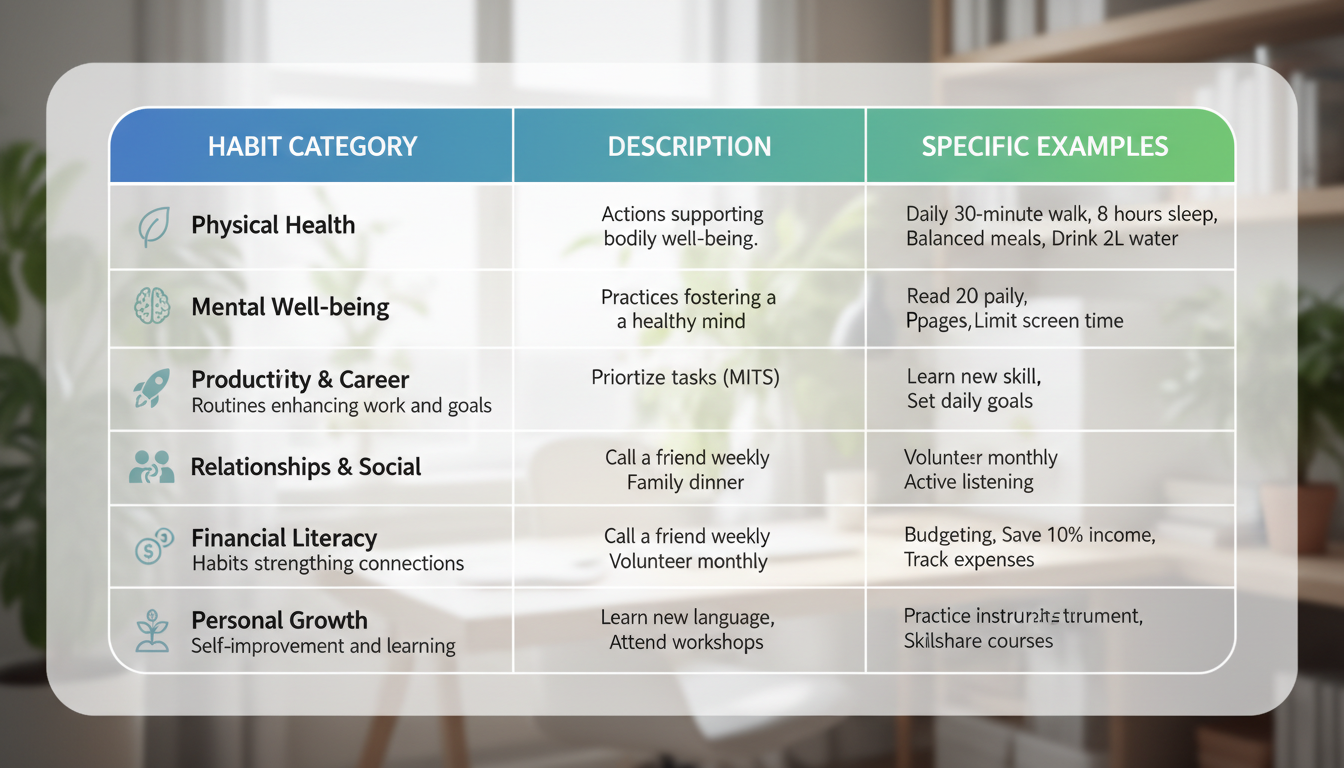
Not all habits are created equal. Some offer a much higher Return on Investment (ROI) for your quality of life. If you’re wondering what to populate your rows with, consider these pillars.
1. Mental Fitness & Cognitive Sharpness
We often track physical reps but ignore mental ones. Brain fog is a productivity killer. Tracking a daily mental workout is vital for long-term cognitive health. This doesn’t mean reading a textbook; it can be gamified.
For instance, you can challenge yourself daily with a Sudoku puzzle game. It’s a fantastic way to wake up your neurons without the doom-scrolling. Logging a “Daily Puzzle Solved” checkmark gives you a quick win before the workday even starts.
2. Financial Discipline
You can’t manage what you don’t measure. Tracking “No Spend Days” is popular, but tracking investments is where wealth is built. Consistency is just as important as the amount. Understanding the rhythm of the market is complex, but maintaining a habit of regular investment is simple.
If you are serious about this, you should explore best SIP strategies and market timing. Adding a row for “Weekly Investment Contribution” ensures you aren’t just saving, but growing.
3. Physical Health
Keep it simple here. Water intake (liters), steps (aim for 7k-10k), or sleep (7+ hours). Don’t overcomplicate it with “macros” unless you are an advanced athlete.
Advanced Strategies for Your Habit Tracker
Once you’ve mastered the basics, it’s time to level up. These are the strategies used by behavioral experts to make habits stick like superglue.
Habit Stacking
This concept, popularized by BJ Fogg and James Clear, involves pairing a new habit with a current one. The formula is: “After [Current Habit], I will [New Habit].”
- After I pour my coffee, I will meditate for 60 seconds.
- After I take off my work shoes, I will immediately put on my gym shoes.
Your habit tracker should reflect these pairs. It reduces the cognitive load of remembering when to do things.
The “Never Miss Twice” Rule
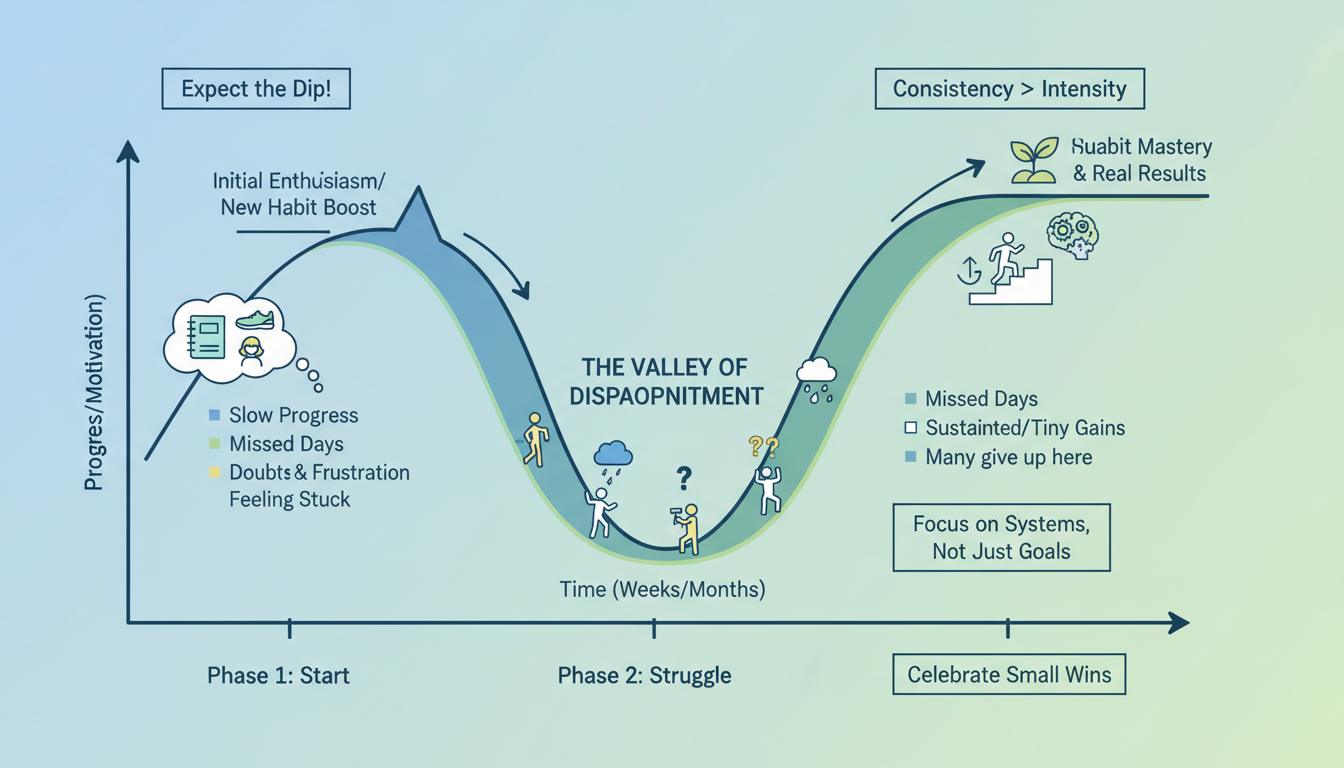
Perfection is the enemy of progress. You will miss a day. You’ll get sick, you’ll travel, or you’ll just be lazy. That’s fine. The danger isn’t the slip-up; it’s the spiral.
Make a pact with yourself: Never miss twice. If you miss Monday, Tuesday becomes non-negotiable. Missing one day is an accident; missing two is the start of a new, negative habit.
⚠️ Watch Out
The “False Progress” Trap: Don’t track things you already do automatically. If you brush your teeth every morning, putting it on your tracker is just vanity metrics to make yourself feel productive. Only track behaviors you are actively trying to build or modify.
Common Mistakes When Using a Habit Tracker
We’ve seen many enthusiastic starters quit after two weeks. Why? Usually, they fall into one of these traps.
| The Mistake | Why It Fails | The Fix |
|---|---|---|
| The “All or Nothing” | You miss one day and abandon the whole sheet. | Adopt the “Never Miss Twice” rule. |
| Vague Goals | “Get healthy” is not actionable. | Be specific: “Walk 15 mins after dinner.” |
| Tracking Too Much | Decision fatigue sets in quickly. | Limit to 3-5 active habits max. |
| Focusing on Streak | Creates anxiety rather than motivation. | Focus on total reps per month, not just the chain. |
❓ Frequently Asked Questions
How long does it really take to form a new habit?
Forget the “21 days” myth. Research from University College London suggests it takes anywhere from 18 to 254 days, with an average of about 66 days. A habit tracker helps you sustain effort during this “messy middle” period where the behavior isn’t automatic yet.
What is the best habit tracker app for 2024?
It depends on your style. Habitica is great if you like RPG games (gamification). Streaks is fantastic for Apple users who want a minimalist design. Notion is best if you want a fully customizable life operating system.
Should I feel guilty if I break my streak?
Absolutely not. Guilt is a terrible fuel for long-term change. View a missed day as data, not a character flaw. Ask yourself: “Why did I miss it?” (e.g., poor sleep, bad planning) and adjust your system for tomorrow.
Can I track negative habits (things to stop)?
Yes! This is often called “inverse tracking.” You can track “No Alcohol,” “No Sugar,” or “No Social Media before 9 AM.” Seeing a string of successful days can be incredibly empowering for breaking addictions.
Conclusion: Making the Habit Tracker Work for You
The ultimate goal of a habit tracker isn’t to fill a grid with perfect checkmarks. It’s to foster self-awareness. It acts as a mirror, reflecting your daily choices back to you without judgment.
Whether you choose a fancy app or a scratchpad, the magic isn’t in the tool—it’s in the commitment. By visualizing your progress, celebrating small wins, and identifying patterns, you transform abstract desires into concrete reality.
Here is your next step: Don’t wait for Monday. Pick one small habit today. Draw a box on a piece of paper. Do the habit. Check the box. It sounds simple, but that single checkmark is a vote for the person you are becoming.

