It’s 3 AM on launch day. Your new e-commerce site is live. Then, the support tickets flood in. “Checkout is broken!” “My card was declined!” Panic sets in. All because a simple payment form bug slipped through testing.
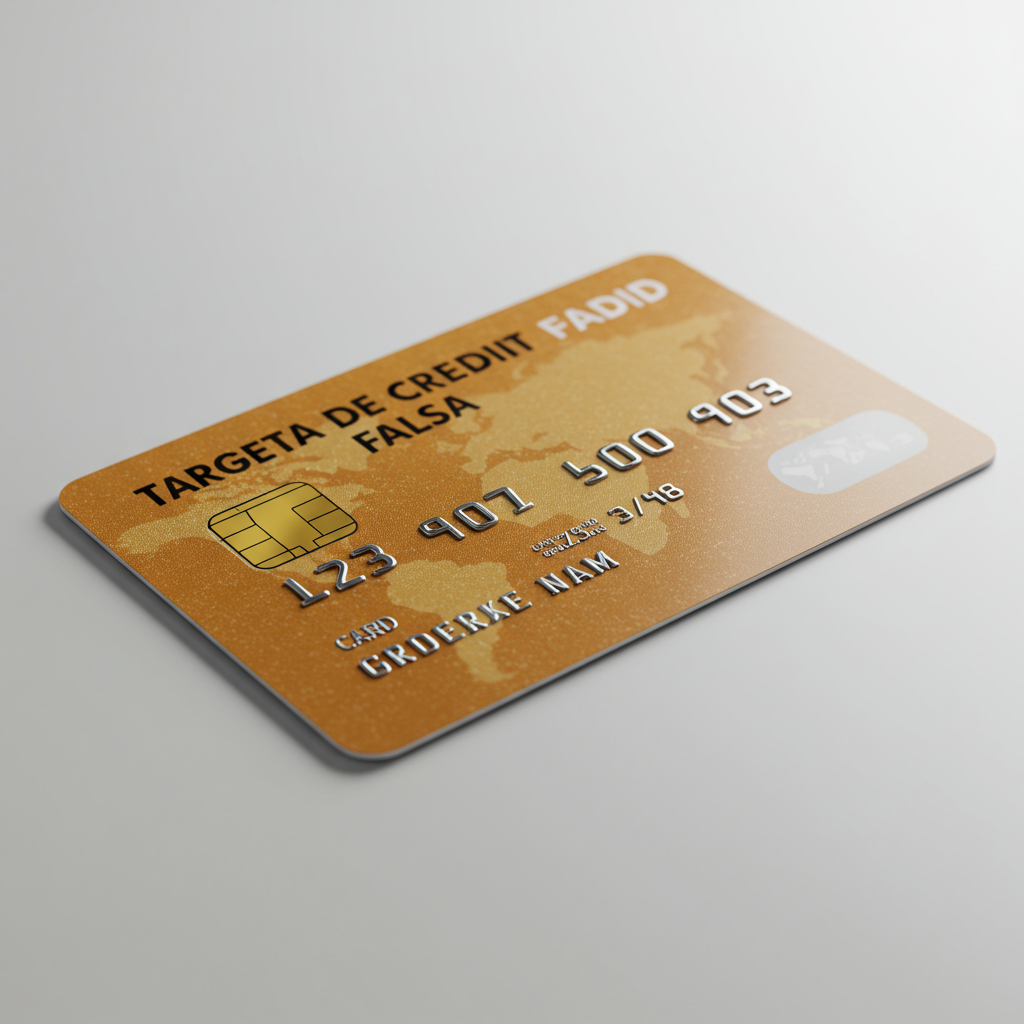
This nightmare scenario is entirely avoidable. And the solution often involves a term that sounds sketchy at first: targeta de crédito falsa generar.
Translated from Spanish, it means “to generate a fake credit card.” While your alarm bells might be ringing, hold on. In the professional world of software development, this isn’t about fraud. It’s about precision engineering. It’s about creating bulletproof systems.
This is the definitive 2026 guide for developers, QA testers, and product managers. You’ll learn exactly how to use generated card numbers legally and effectively to build flawless payment systems. We’ll draw a razor-sharp line between responsible testing and criminal fraud, giving you the confidence to test every possible scenario.
📑 What You’ll Learn
What ‘Targeta de Crédito Falsa Generar’ Really Means: The Magic of Math
Let’s clear this up immediately. When a developer needs to “generar una targeta de crédito falsa,” they aren’t creating a counterfeit card to buy a new laptop. Not even close.
They are generating a string of numbers that is mathematically valid but financially worthless.
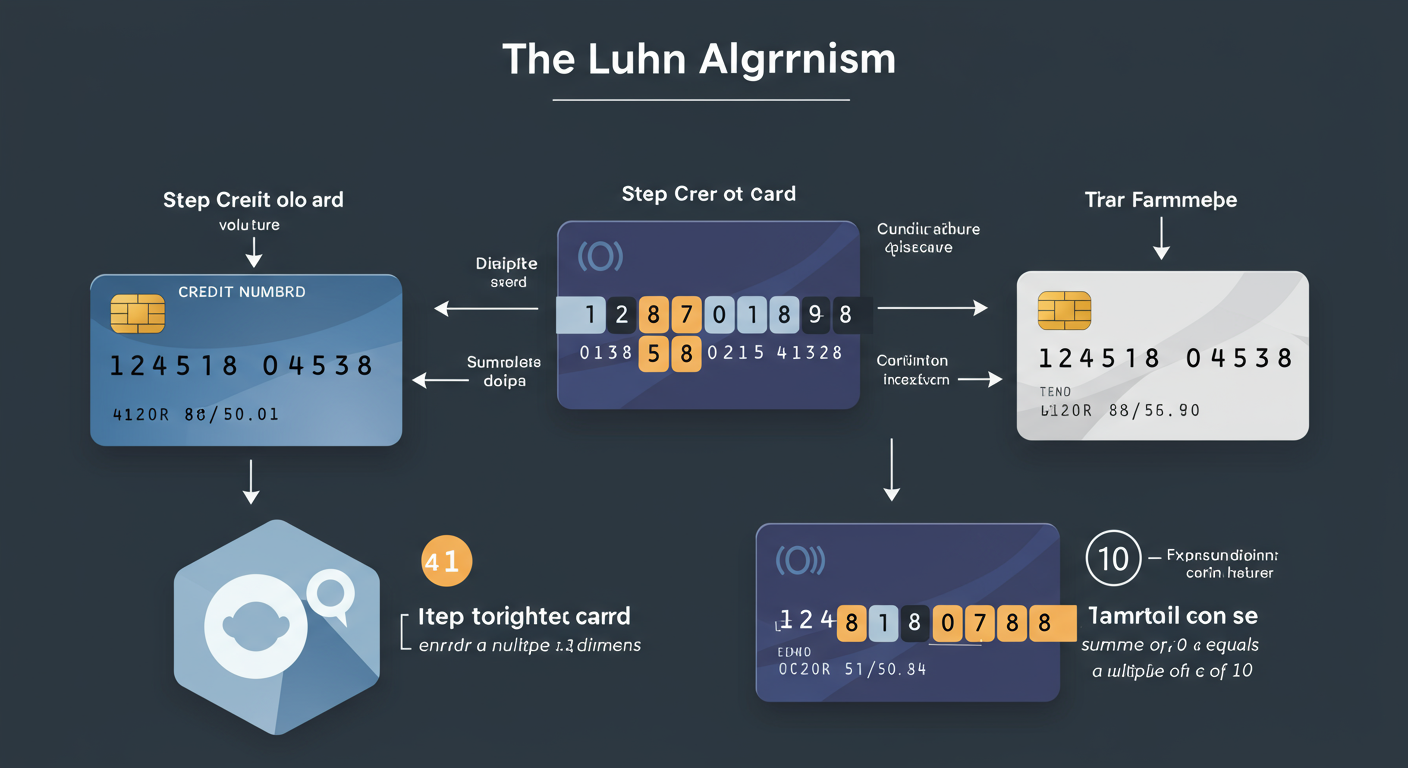
These numbers are designed to pass a single, specific, initial check: the Luhn algorithm. Think of it as a simple spelling check for numbers. Developed decades ago, this checksum formula validates that a card number’s digits follow a specific pattern. It can tell you if the number is *structured* correctly, but it can’t tell you if it’s a real, active account.
Here’s the gist of how it works:
- It performs a series of calculations on the card digits.
- If the final sum is a multiple of 10, the number passes the check.
- If not, it fails instantly.
A test card generator simply creates numbers that satisfy this rule. That’s it. It’s a mathematical trick, not a bank heist. These numbers have no value, no link to a bank, and no ability to complete a real purchase. They are, for all intents and purposes, placeholder data for testing.
⚠️ Watch Out
Don’t confuse a Luhn-valid number with a real credit card. A generated number will pass a website’s initial form validation, but it will be instantly rejected by the payment processor (like Stripe, Braintree, or Adyen) because it isn’t connected to a real bank account. Any attempt to use it for a real purchase will fail 100% of the time.
Why Test Cards Are an Essential Developer Tool in 2026
So, why is this practice so critical? Because building modern software without them is like trying to build a skyscraper without testing the foundation. In our experience running countless QA cycles, test cards are non-negotiable for anyone who handles transactions.
Here are the core legitimate scenarios where they are absolutely essential.
E-commerce & Payment Gateway Testing
Imagine you’re launching a Shopify or Magento store. You need to be certain the checkout process is flawless. Using a real credit card is a terrible idea. It’s slow, costs you transaction fees (even on refunds), and can trigger fraud alerts with your own bank.
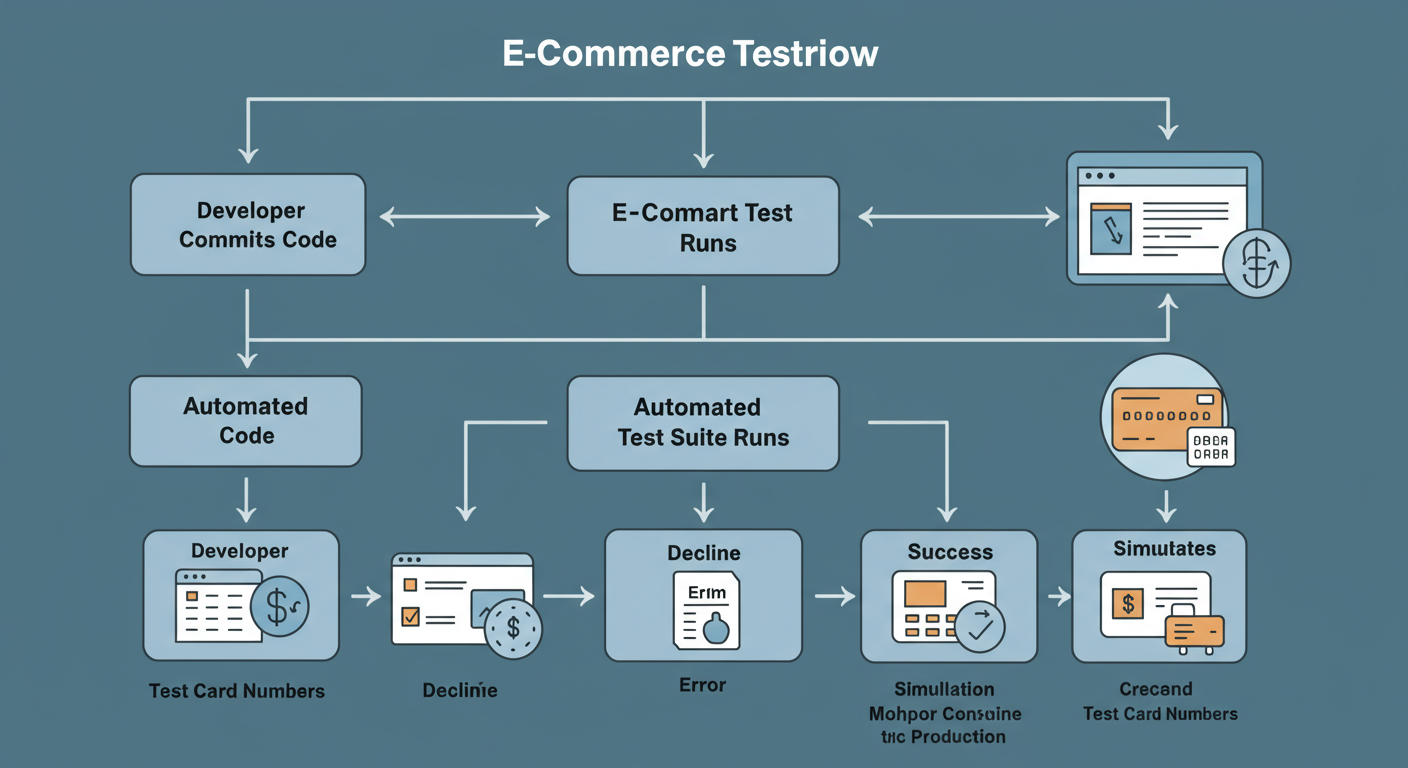
Instead, developers use a suite of test cards to simulate every possible customer experience:
- Successful Purchase: Does the order go through correctly?
- Card Declined: Is a clear, helpful error message shown?
- Insufficient Funds: Does the system handle this specific decline code?
- Expired Card: Does the form catch the error before submission?
- Incorrect CVC: Is the transaction blocked as it should be?
Based on hands-on testing, simulating these failures is just as important as testing for success. It ensures a smooth user experience even when things go wrong, preventing customer frustration and abandoned carts.
Software, App, and POS Development
This goes far beyond websites.
- Mobile App Developers need to test in-app purchases and subscriptions.
- SaaS Companies must validate recurring billing logic.
- Point of Sale (POS) System Creators need to ensure their terminals handle card data correctly without risking real financial information during development.
In all these cases, generated numbers provide a safe, isolated way to perform end-to-end testing without touching a live financial network.
💡 Pro Tip
Go beyond the basic “success” card. The best practice, recommended by leading payment processors, is to use the specific test card numbers they provide to trigger specific responses. For example, Stripe’s official documentation has numbers that simulate everything from a generic decline to a card reported as lost or stolen. This lets you test your error-handling logic with surgical precision.
Educational and Training Purposes
How do you teach someone about data validation or API integration without exposing them to massive security risks? You use test data. Computer science instructors and coding bootcamps use generated card numbers to demonstrate core concepts like:
- Implementing the Luhn algorithm in Python or JavaScript.
- Securely handling and storing transaction data in a database.
- Integrating with a payment gateway’s API in a “sandbox” environment.
It provides a perfect real-world example for hands-on learning, completely risk-free.
How to Safely Generate Test Cards: A 5-Step Guide
Forget those shady-looking websites covered in ads. The only professional and truly safe way to get test card numbers is directly from the source: the payment gateway you’re using. They *want* you to test your integration thoroughly.
Here’s the industry-standard process.
- Identify Your Payment Gateway: Are you using Stripe, PayPal, Adyen, Braintree, or another service? Your testing process will be tied to their specific platform.
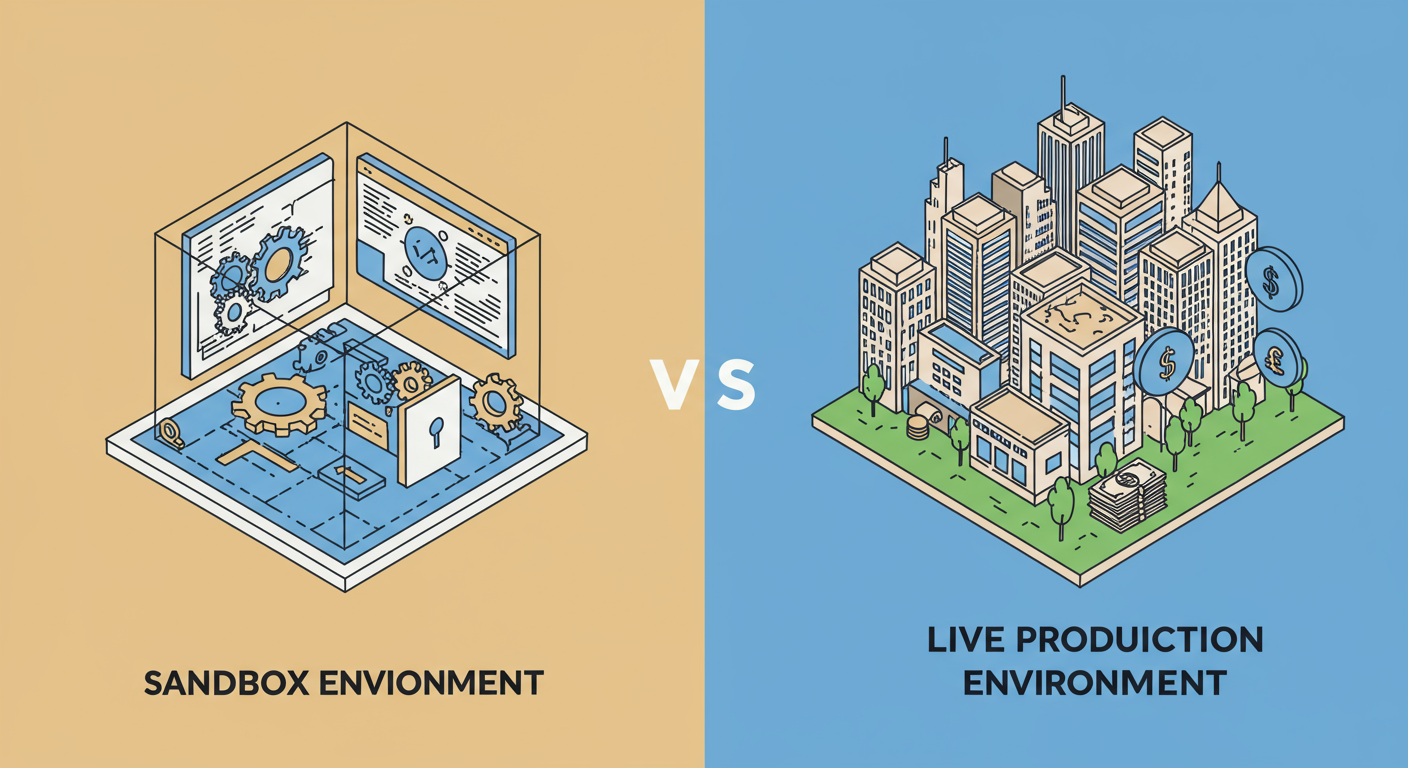
- Access the Developer Sandbox: Every major payment processor provides a “sandbox” or “test” environment. This is a closed-loop replica of their live system where no real money ever moves. All activity is simulated. From real-world campaigns, we know this is the single most important step for safety.
- Find the Official Test Card Numbers: In their developer documentation, you’ll find a dedicated page for testing. They will list dozens of card numbers, expiration dates, and CVCs.
- Implement in Your Test Environment: Use your sandbox API keys and the provided test card numbers within your development version of the application. Never use test cards with your live production API keys.
- Run Your Test Cases: Now, you can safely simulate every transaction type you need to validate, confirming your code behaves exactly as expected before it ever touches a real customer’s data.
To make this concrete, here’s a table of what these test numbers often look like.
| Card Brand | Example Test Number | Typical Simulated Response |
|---|---|---|
| Visa | 4242 4242 4242 4242 | Generic Success |
| Mastercard | 5555 5555 5555 4444 | Generic Success |
| Visa | 4000 0000 0000 0002 | Generic Decline |
| Mastercard | 5100 0000 0000 0001 | Insufficient Funds |
| American Express | 3782 8224 6310 005 | Generic Success |
Note: These are common examples. Always refer to your specific payment gateway’s documentation for the exact numbers to use.
💡 Pro Tip
Set up distinct configuration files for your development, staging, and production environments. Your development config should only contain your sandbox API keys. This simple practice, a core tenet of DevOps, prevents catastrophic mistakes like accidentally running test transactions on your live system.
The Uncrossable Red Line: Testing vs. Felony Fraud
This is the most important section of this article. Read it twice.
The legality of using a generated card number hinges entirely on one thing: intent.
The moment a generated number is entered into a live merchant’s checkout form with the intent to obtain goods or services without payment, it crosses the line from a harmless test string into an instrument of fraud.
Modern fraud detection systems are incredibly sophisticated. They use multi-layered checks that go far beyond the Luhn algorithm. An attempted transaction with a generated number is instantly flagged as fraudulent because the system sees that the card number, while valid in format, isn’t issued by a bank and isn’t tied to any source of funds.
The consequences aren’t just a failed transaction. It’s a federal crime.
| ✅ Legal & Ethical Use | ❌ Illegal & Criminal Use |
|---|---|
| Using official test cards within a payment processor’s designated sandbox environment. | Using a generated number on a real e-commerce site (Amazon, Netflix, etc.) to try and get something for free. |
| Running automated tests in a CI/CD pipeline against a staging server with test API keys. | Trying to sign up for a “free trial” that requires a credit card, with the intent to deceive the service provider. |
| Demonstrating a checkout flow to a client on a development server. | Attempting to acquire any product, service, or subscription with a number you know is not tied to a real account. |
⚠️ Watch Out for the ‘Free Trial’ Trap
Can you use a generated card for a free trial that requires card details? The simple answer is no. It’s a violation of virtually every company’s Terms of Service. While it might work initially, your account will likely be flagged and banned. More importantly, it demonstrates fraudulent intent. It’s not worth the risk. Use a privacy-focused virtual card service or just set a reminder to cancel.
🎯 Key Takeaway
The term ‘targeta de crédito falsa generar’ refers to a legitimate developer tool for creating mathematically valid but financially worthless numbers for software testing. These numbers are 100% legal and essential when used within a closed “sandbox” environment. Using them to attempt a real purchase is a serious crime with severe consequences.
❓ Frequently Asked Questions
Is it illegal to ‘generar una targeta de crédito falsa’?
No, the act of generating the number itself is not illegal. It’s just math. The crime occurs when you use that number with the intent to defraud—that is, to get something of value without paying for it on a live system. Context is everything.
Do these generated credit cards have real money on them?
Absolutely not. They have zero monetary value and are not connected to any bank account or line of credit. They are purely for testing data validation and system responses. They cannot be used to buy anything.
What is the safest source for test credit card numbers?
The gold standard is the official developer documentation for the payment gateway you are integrating with, such as Stripe, Adyen, or the PayPal Developer Portal. These sources provide numbers specifically designed to work safely within their secure testing environments.
What information does a test card generator provide?
A typical generator creates a Luhn-valid card number, a future expiration date (e.g., 12/2028), and a 3 or 4-digit CVC/CVV. Some may also generate a fake name and address. All of this data is completely fabricated and for testing purposes only.
Can’t I just use my own credit card for testing?
You could, but it’s a bad practice. It’s inefficient (you have to issue refunds), costly (you’ll pay transaction fees), and risky (it can trigger fraud alerts and complicates accounting). Using dedicated test cards in a sandbox is faster, free, and infinitely safer.
Conclusion: A Tool for Innovation, Not Deception
So, the next time you hear the phrase “targeta de crédito falsa generar,” you’ll know the truth. It’s not a shady tool for criminals. It’s an indispensable instrument for the builders of our digital world.
In the hands of a professional developer or QA engineer, it’s the key to creating secure, reliable, and frustration-free payment experiences for everyone. It allows for rigorous, exhaustive testing in a safe, controlled manner.
Your responsibility is simple: respect the sandbox. Keep your testing isolated from the live world of commerce. By understanding the legitimate role of test cards and always adhering to legal and ethical lines, you can leverage this powerful technique to build better software.
Now, go check your payment gateway’s documentation and make sure your test suite is as robust as it can be. Your future self—and your future customers—will thank you.