Let’s be honest. The SEO world is obsessed with Domain Authority (DA). We chase it, we report on it, we use it to justify our budgets. But what if I told you that focusing only on DA is like judging a boxer by their weight class alone? It tells you part of the story, but it completely misses their actual punching power.
That punching power, in the world of SEO, is pure link equity. And there’s one classic metric that measures it better than almost anything else: MozRank.
Too many marketers have forgotten about it. They see the 0-10 scale and dismiss it in favor of the shinier 0-100 scores of DA and PA. Big mistake. In our experience, understanding and using a MozRank checker is a secret weapon. It gives you a raw, unfiltered look at the link authority flowing into a specific page—the kind of insight that separates amateur guesswork from professional strategy.
This isn’t just another guide defining a metric. You’re about to learn the strategic frameworks we use to turn MozRank data into higher rankings, smarter link-building campaigns, and a rock-solid competitive edge.
📑 What You’ll Learn
- What is MozRank (And Why It Still Matters in 2026)
- MozRank vs. Page Authority vs. Domain Authority: The Critical Difference
- 5 Strategic Ways to Use a MozRank Checker Like a Pro
- Step-by-Step: A Competitive Analysis Using MozRank
- Interpreting Your Results: Common Pitfalls to Avoid
- Frequently Asked Questions
What is MozRank (And Why It Still Matters in 2026)
At its core, a MozRank Checker is a tool that calculates the link popularity of a single webpage (a URL). The metric itself, MozRank (MR), was one of Moz’s original creations, designed to mirror the principles of Google’s revolutionary PageRank algorithm. It’s a direct measure of link equity, or as old-school SEOs call it, “link juice.”
Think of every link pointing to your page as a vote. MozRank doesn’t just count the votes; it weighs them. It operates on two simple but powerful principles:
- Quantity: How many pages link to your target page?
- Quality: What is the MozRank of the pages that are linking to you?
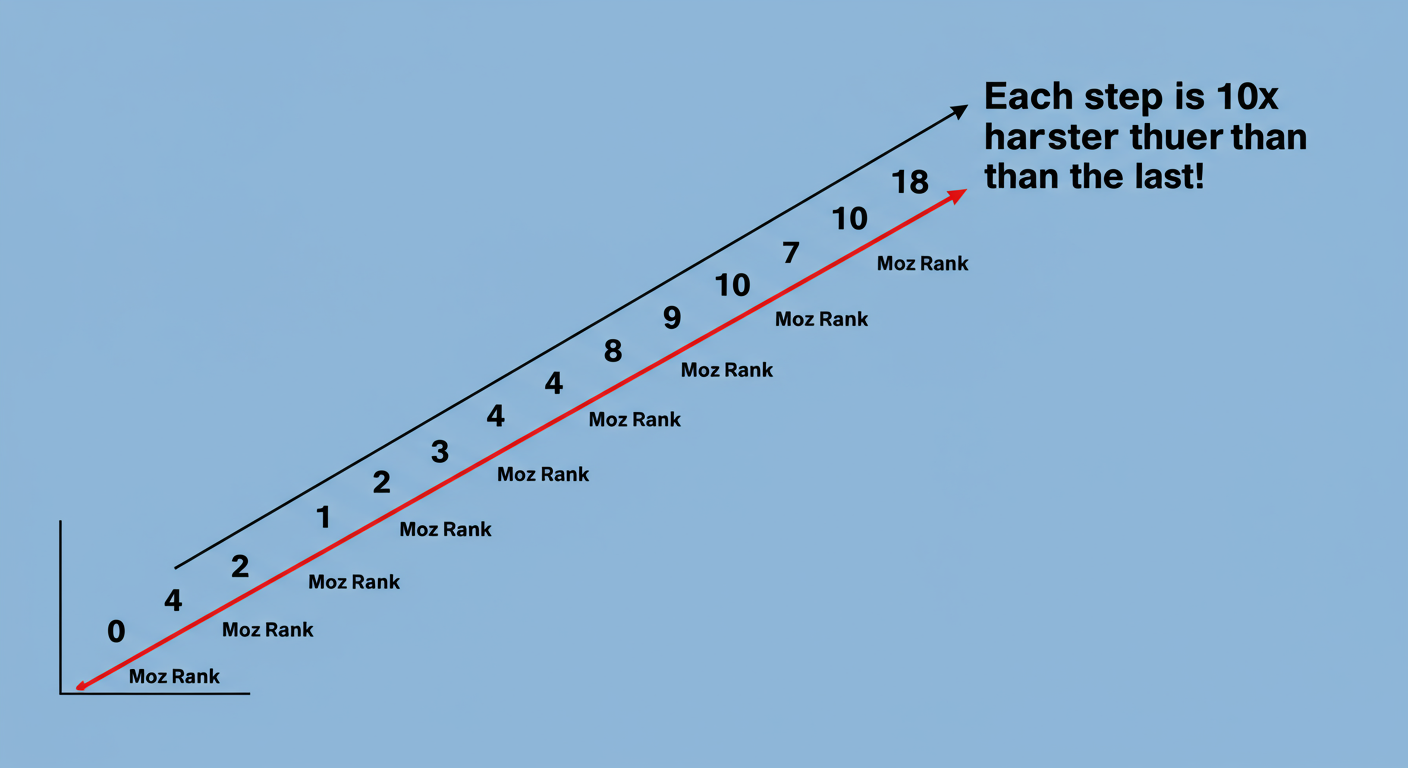
A single link from a page with a MozRank of 7 is exponentially more powerful than a hundred links from pages with a MozRank of 1. This is where the magic—and the confusion—happens. MozRank uses a logarithmic scale from 0 to 10.
What does that actually mean? It means the difference between a 2 and a 3 is tiny. But the difference between a 7 and an 8 is massive. Each point on the scale is roughly 10 times more powerful than the last. This is a critical concept to grasp.
A MozRank of 5 isn’t just “a bit better” than a 4. It’s a whole different league of authority. This logarithmic scale is why earning links from true authority sites has such a disproportionate impact on your SEO.
⚠️ Watch Out
Don’t confuse MozRank with Page Authority (PA) or Domain Authority (DA). They are related but measure fundamentally different things. Using them interchangeably is a common mistake that leads to flawed analysis. We’ll break this down next.
MozRank vs. Page Authority vs. Domain Authority: The Critical Difference
I’ve seen countless reports where marketers mix these metrics up. It’s an easy mistake, but one that can derail your strategy. They all come from Moz, they all measure “authority,” but they answer different questions.
Let’s clear this up once and for all.
| Metric | Scope | Scale | What It Actually Measures |
|---|---|---|---|
| MozRank (MR) | Single Page (URL) | 0-10 (Logarithmic) | Pure Link Popularity. It measures the raw quantity and quality of links pointing to one page. Think of it as the “potential energy” from links. |
| Page Authority (PA) | Single Page (URL) | 0-100 (Logarithmic) | Predicted Ranking Strength. It takes MozRank and combines it with 40+ other factors to predict how well that specific page will rank. It’s a more holistic, predictive score. |
| Domain Authority (DA) | Entire Domain | 0-100 (Logarithmic) | Overall Website Strength. It aggregates the authority signals (like PA) from all pages across your entire domain to predict the site’s overall ranking potential. |
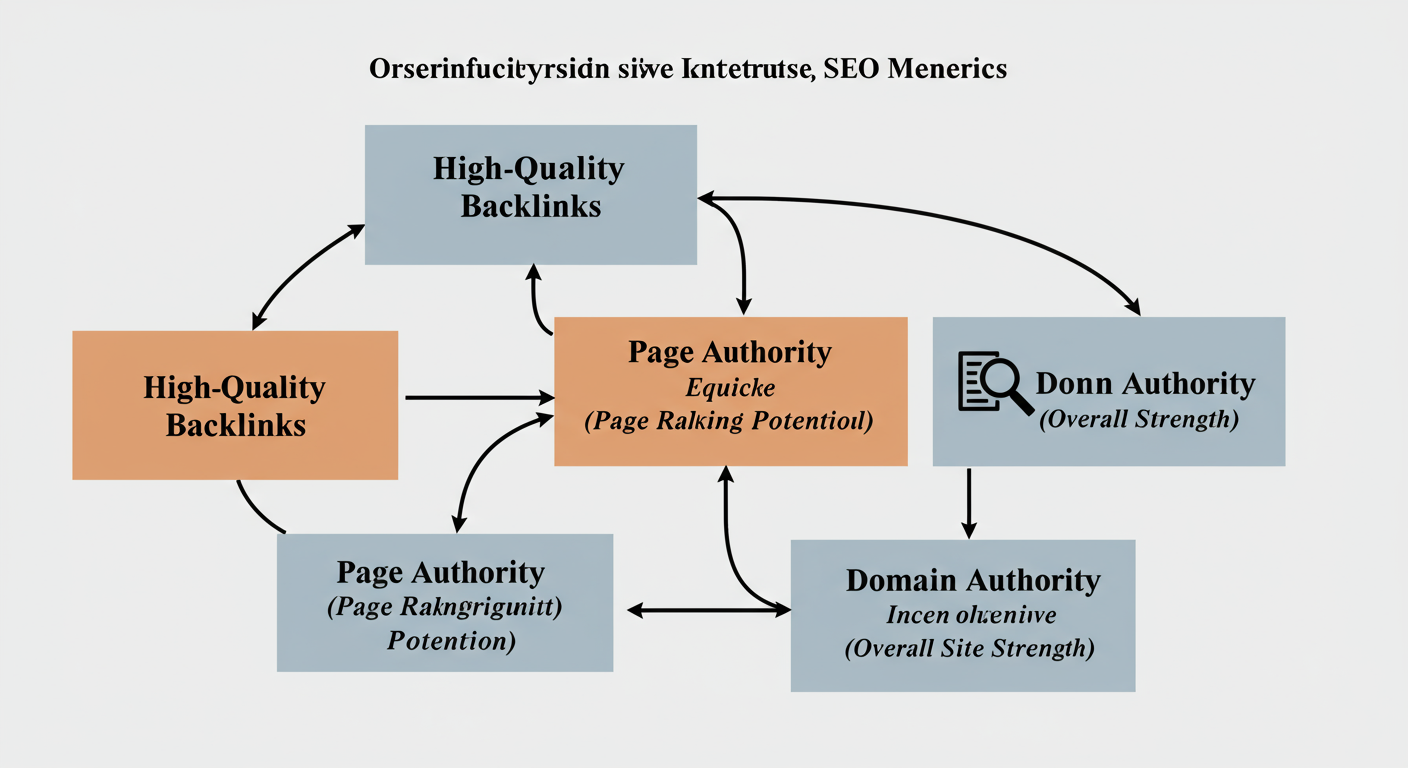
Here’s the key: MozRank is an input, while PA and DA are outputs.
A high MozRank on your page is a strong signal that will contribute to a higher Page Authority. A high Page Authority on many pages across your site will, in turn, contribute to a higher Domain Authority. They work together in a hierarchy. By focusing on MozRank, you’re strengthening the very foundation of your site’s authority.
5 Strategic Ways to Use a MozRank Checker Like a Pro
Okay, enough theory. How do you actually use this thing to get results? A MozRank checker isn’t just for vanity checks. Based on hands-on testing in real-world campaigns, here are five ways to integrate it into your workflow.
1. Perform Surgical Competitor Analysis
You’re targeting a high-value keyword. You see the top 3 results are all DA 80+ giants. It’s easy to feel defeated. But DA is a domain-level metric. What really matters is the authority of the *specific page* that’s ranking.
Run the exact URLs of the top 5 ranking pages through a MozRank checker. You might find that the #1 result has a MozRank of 6, but the #2 and #3 results only have a MozRank of 4. This is your opening. It tells you the link authority bar for that specific keyword isn’t as high as the domain-level metrics suggest. You now have a tangible, page-level target to aim for.
2. Vet Link Prospects and Avoid Wasted Effort
Your team is doing outreach for guest posts or resource page links. They come back with a list of 50 potential sites. How do you prioritize?
Most people just look at the site’s DA. That’s a start, but it’s not enough. You aren’t getting a link from the homepage; you’re getting a link from a specific blog post or resources page. Use a MozRank checker on the *exact page* where your link would live. A link from a page with MR 4 on a DA 30 site is often more valuable than a link from a page with MR 1 on a DA 60 site. This simple check helps you focus your efforts on opportunities that will actually move the needle.
💡 Pro Tip
When prospecting, always ask: “Which page on this site gets the most organic traffic and has the most backlinks?” That’s often a blog post or resource that has accumulated authority over time. Getting a link from that page is a goldmine, and checking its MozRank will confirm its value.
3. Uncover Your Internal “Link Equity Powerhouses”
Some pages on your own site are magnets for backlinks. An old blog post, a free tool, or an industry study you published years ago might have a surprisingly high MozRank without you even realizing it.
Use a tool like Moz’s Link Explorer or Ahrefs to find the pages on your site with the most referring domains. Check the MozRank of these top pages. You’ve just found your internal powerhouses. Your next step? Ensure these high-MR pages are linking internally to your most important commercial pages (your “money pages”). This is one of the fastest and most overlooked ways to pass authority and boost the rankings of pages that drive revenue.
4. Diagnose Sudden Ranking Drops
A key page that has ranked well for months suddenly plummets. Panic sets in. Is it a Google update? A technical issue? A penalty?
Before you go down a rabbit hole, do a quick diagnostic. Check the page’s MozRank. If it has dropped significantly since your last check, it’s a strong indicator that you’ve lost one or more high-value backlinks. This immediately narrows your investigation. You can then use a backlink tool to see which valuable links were lost and focus your efforts on reclaiming them, rather than guessing at a hundred other potential causes.
5. Measure the True ROI of Your Link Building
How do you prove your link-building campaign is working? Tracking the number of links built is a vanity metric. Tracking DA is too slow and broad. Tracking MozRank is perfect.
For a target page, record its MozRank, Page Authority, and keyword rankings at the start of a campaign. After a quarter of building high-quality, relevant links, measure them again. Showing a direct increase in MozRank provides concrete proof that your efforts are successfully increasing the page’s foundational link equity, which is a leading indicator of future ranking improvements.
| Metric | Before Campaign | After Campaign | What It Means |
|---|---|---|---|
| Target Page MozRank | 2.8 | 4.1 | ✅ Success! We significantly increased the page’s raw link equity. |
| Target Page Authority | 25 | 34 | ✅ The increased link equity is translating into higher predicted ranking strength. |
| Keyword #1 Rank | 18 | 9 | ✅ The authority boost is directly impacting SERP performance. |
🎯 Key Takeaway
Stop focusing only on broad domain metrics. A MozRank checker gives you a granular, page-level view of pure link equity. This allows you to set realistic targets, prioritize high-impact actions, and prove the value of your off-page SEO work with precision.
Step-by-Step: A Competitive Analysis Using MozRank
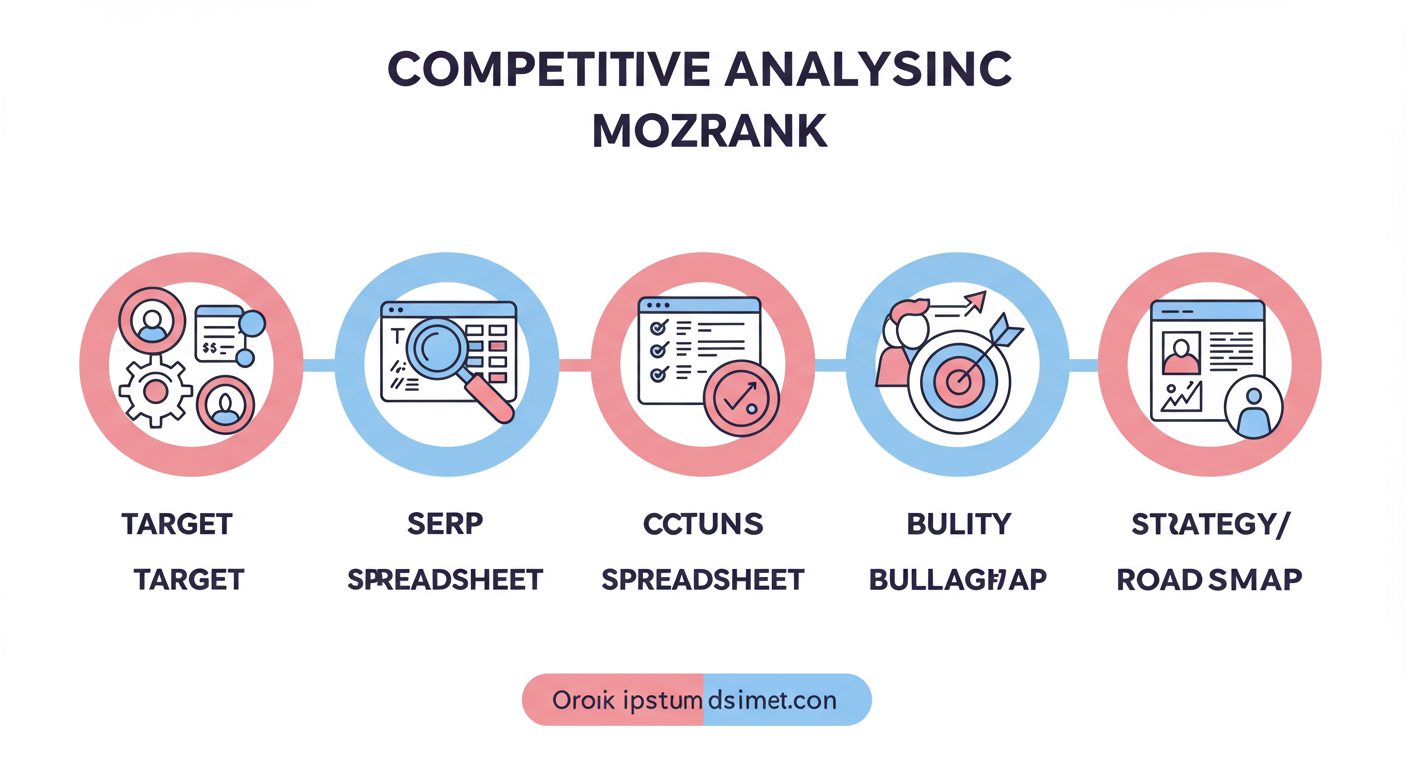
Let’s put this into a simple, repeatable process. Here’s how to analyze the link authority needed to rank for a target keyword.
- Identify Your Target: Choose one primary keyword you want to rank for (e.g., “small business accounting software”).
- Analyze the SERP: Google your keyword in an incognito window. Copy the URLs of the top 5 organic results (ignore ads, featured snippets for this analysis).
- Gather the Data: Use a bulk MozRank checker or check each URL individually. Record the MozRank for each of the top 5 pages in a spreadsheet.
- Find the “Real” Target: Calculate the average MozRank of the top 5 pages. This is your baseline. More importantly, look for the lowest MozRank in the top 5. This is your minimum viable authority target. If the average is 5.5 but one page is ranking with a 4.2, you know it’s possible to break in without matching the top dog.
- Formulate a Strategy: Your goal is now clear: build enough high-quality, relevant backlinks to your target page to meet or exceed that minimum MozRank score. You’ve just turned a vague goal (“rank for X”) into a specific, measurable task.
Interpreting Your Results: Common Pitfalls to Avoid
A tool is only as good as the person using it. Trust me on this one, I’ve seen these mistakes cost teams months of wasted effort. Avoid these common pitfalls when you’re analyzing MozRank.
⚠️ Watch Out: The Relevance Trap
A MozRank checker quantifies authority, but it can’t qualify relevance. A link from a high-MR page about dog training is nearly worthless for your SaaS finance blog. According to industry-leading best practices, topical relevance is paramount. Always prioritize a link from a relevant MR 3 page over an irrelevant MR 5 page.
Pitfall #1: Obsessing Over the Number in a Vacuum
MozRank is a single data point, not the entire story. Google’s algorithm considers hundreds of factors, from content quality and user experience to site speed and topical depth. A page with a high MozRank but thin, unhelpful content won’t rank for long. Use MozRank to guide your off-page strategy, not as an excuse to ignore everything else.
Pitfall #2: Comparing Apples to Oranges
A MozRank of 4 is fantastic in a low-competition niche. It’s terrible in the hyper-competitive legal or finance industries. The score is only meaningful in context. The only comparison that matters is your page’s MozRank versus the MozRank of the pages *currently ranking* for your desired keyword.
💡 Pro Tip
Track your competitors’ key pages over time. If you see their MozRank steadily increasing, you know they have an active link-building campaign. This is a powerful competitive intelligence signal that tells you it’s time to ramp up your own efforts before you fall behind.
❓ Frequently Asked Questions
Is MozRank still relevant in 2026?
Yes, absolutely. While it’s one of Moz’s original metrics, its purpose—to measure raw link equity—is timeless. In an age of complex, blended metrics, MozRank’s purity is its strength. It provides a clean signal of link popularity that is a crucial component of any serious backlink analysis, complementing metrics like DA and PA perfectly.
What is a “good” MozRank score?
There’s no universal “good” score. It’s all relative. A good MozRank is one that is competitive for your target keyword. The best practice is to analyze the MozRank of the top-ranking pages for that keyword. Your goal is to reach or, ideally, surpass their average score.
How do I improve my MozRank?
You improve a page’s MozRank by earning high-quality backlinks. The key is to acquire links from pages that are not only topically relevant but also have a high MozRank themselves. Remember the logarithmic scale: one link from an MR 6 page will have a much greater impact than ten links from MR 1 pages. Quality trumps quantity, every time.
How often does MozRank update?
Moz updates its massive link index periodically, which means MozRank scores are also refreshed on a regular cycle. Based on Moz’s documentation, this typically happens every few weeks. You won’t see changes in real-time, but it’s frequent enough to track the progress of a link-building campaign on a month-to-month basis.
Can I check MozRank for free?
Yes, several free tools and browser extensions function as a MozRank checker. Moz’s own free MozBar for Chrome is a popular option for checking individual URLs. While paid tools offer bulk analysis and historical data, the free options are perfect for quick spot-checks and competitor analysis.
Conclusion: Your Compass for Link Authority
In the noisy world of SEO metrics, MozRank remains a signal of pure, unadulterated link authority. It’s not a vanity metric. It’s not a predictor of overall success. It’s a diagnostic tool. A compass.
By using a MozRank checker strategically, you move beyond the vague goal of “getting more backlinks” and into the realm of precision engineering. You can set clear targets based on your competition, focus your resources on links that deliver real power, and measure the direct impact of your off-page SEO efforts.
So, the next time you’re planning an SEO campaign, don’t just glance at Domain Authority and call it a day. Dig deeper. Check the MozRank of the pages you’re competing against. Check the MozRank of your link prospects. Use it to find the hidden power in your own site.
Your clear next step? Take one of your most important target keywords, run the top 5 ranking URLs through a MozRank checker, and see what the *real* authority bar is. You might be surprised at how achievable it is.