Picture this: you’ve found the perfect, powerful phrase for your new tattoo. Something epic. Something that connects you to history. You want it in Anglo-Saxon, the language of Beowulf and Viking-age kings. You pop it into an online “translator,” get your result, and head to the tattoo parlor. A week later, a linguistics student points out your “Shield of the Gods” tattoo actually says “Cheese of the Tuesday.”
It’s a nightmare scenario I’ve seen play out in different forms countless times. Here’s the hard truth: you can’t just “translate” to Anglo-Saxon like you can to Spanish or French. The language, more accurately called Old English, is a beautiful, dead beast with grammatical traps at every turn.
But don’t despair. It is possible to get an accurate and meaningful translation. You just need the right map.
This isn’t another generic list of links. This is your definitive 2026 battle plan. We’ll cut through the noise and show you exactly how to approach translation, what tools to trust, what mistakes to avoid, and when you absolutely need to call in an expert. By the end of this, you’ll have the confidence to bring your Old English project to life—correctly.
📑 What You’ll Learn
- Why You Can’t Just ‘Google Translate’ Old English
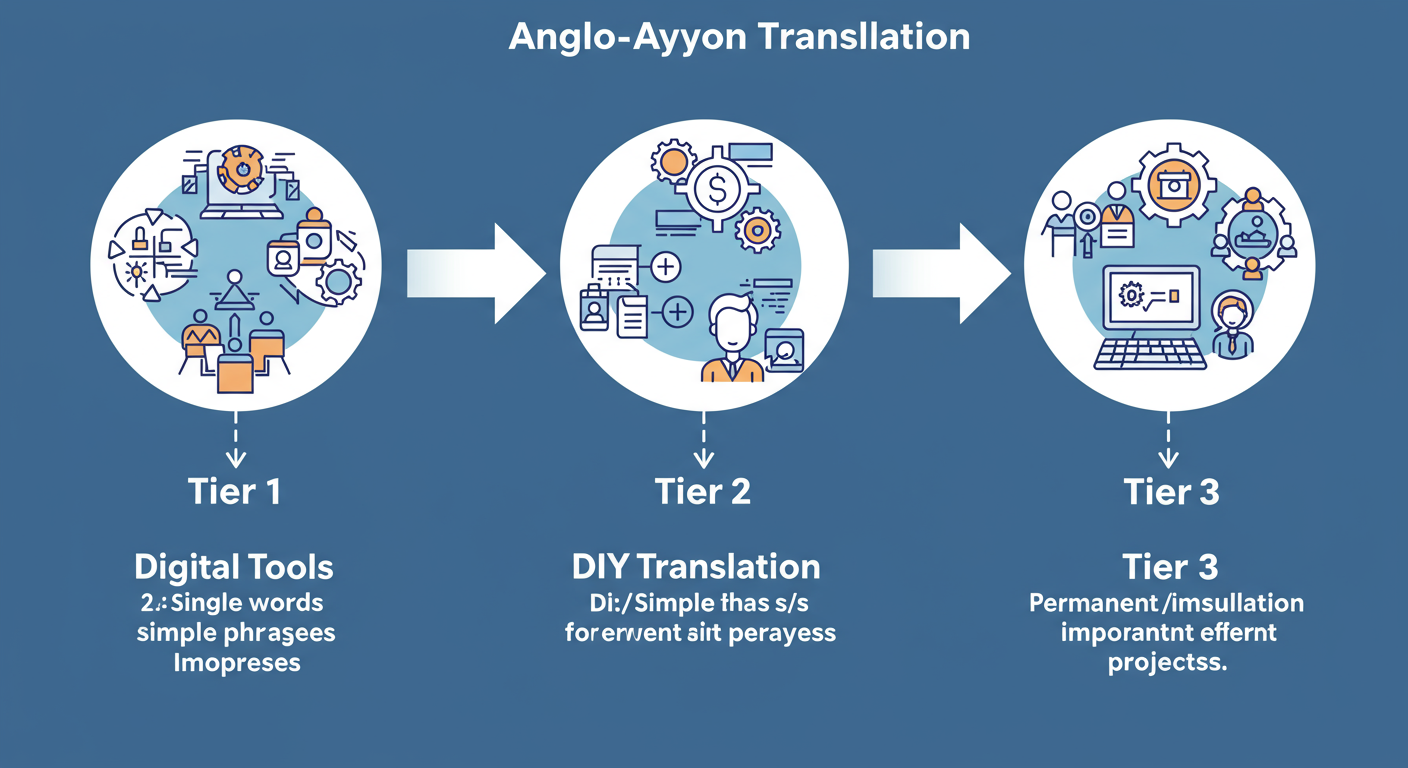
- The 3 Tiers of Anglo-Saxon Translation
- Tier 1: The Digital Toolkit (For Quick Lookups)
- Tier 2: The DIY Approach (A Step-by-Step Guide)
- Tier 3: The Expert Route (For Guaranteed Accuracy)
- Beyond Words: Kennings, Culture, and Context
- Frequently Asked Questions
First, Why You Can’t Just ‘Google Translate’ Old English
Before we get to the “how,” we need to understand the “why not.” Why don’t services like Google Translate support Old English? It’s not because they haven’t thought of it. It’s because the language is fundamentally different from Modern English in ways that break modern translation algorithms.
Old English is an inflected language, much like Latin, German, or Russian. This means the endings of words change to show their function in a sentence. Modern English relies almost entirely on word order. Look at the chaos this creates.
A simple phrase like “the good king” has dozens of potential forms in Old English depending on the context. Is the king doing something (nominative case)? Is something being done to him (accusative case)? Is he being given something (dative case)? Is something his (genitive case)?
Let’s break it down.
| Grammatical Feature | Modern English Example | Old English Reality |
|---|---|---|
| Case System | “The king sees the warrior.” (Word order shows who sees whom) | Nouns, pronouns, and adjectives change endings. Se cyning geseah þone beorn. The endings matter more than the order. |
| Grammatical Gender | Nouns are neuter (‘it’) unless they refer to people. | All nouns have gender. ‘Shield’ (scield) is masculine, ‘ship’ (scip) is neuter, and ‘sun’ (sunne) is feminine. This affects articles and adjectives. |
| Articles (‘The’) | One word: ‘the’. Simple. | Over a dozen forms (se, sēo, þæt, þone, þā, þǣre, þæs, þǣm…) depending on the noun’s gender, case, and number. |
| Vocabulary | Words for ‘computer’, ‘democracy’, ‘anxiety’. | No direct equivalents. Translating modern concepts requires creative, and often subjective, solutions called neologisms. |
Modern translation AI learns from a massive corpus of existing human translations. For Old English, that corpus is tiny, ancient, and poetically complex. The AI simply doesn’t have enough data to learn the intricate web of grammatical rules. Relying on an automated tool is a recipe for disaster.
⚠️ Watch Out
Never translate modern concepts directly. Words like ‘internet,’ ‘freedom’ (in the modern democratic sense), or ’empowerment’ have no one-to-one equivalent. Trying to find a direct word will result in a translation that is either nonsensical or carries a completely different historical meaning.
The 3 Tiers of Anglo-Saxon Translation: A Practical Framework
Okay, so it’s complicated. But not impossible. Based on our experience helping people with these requests, we’ve broken down the process into three tiers, based on your needs and desired accuracy. Think of it as choosing your weapon for battle: you don’t bring a dagger to a siege.
Tier 1: The Digital Toolkit (For Single Words & Curiosity)
If you’re just curious about what a single word looks like in Old English—say, ‘wolf’ or ‘sword’—online dictionaries are your first stop. These are not translators; they are lexical databases. You look up a word, and they give you the Old English equivalent(s) along with crucial grammatical information.
Your Go-To Resource: The undisputed champion is the Bosworth-Toller Anglo-Saxon Dictionary. An online version of the most comprehensive Old English dictionary ever compiled, it’s an essential tool. It provides definitions, gender, and examples from real texts.
How to Use It Effectively:
- Look up your Modern English word. For ‘sword’, you’ll find sweord (a neuter noun) and bill (a masculine noun).
- Pay attention to the grammatical info. Knowing sweord is neuter is critical for later steps.
- Check the context. Bosworth-Toller often provides citations from literature, helping you understand how the word was actually used. Was it a poetic word? A common one?
💡 Pro Tip
When using Bosworth-Toller, don’t just grab the first word you see. Old English often had multiple words for one of ours. For ‘warrior’, you might find beorn, cempa, hæleþ, or secg. Each has a slightly different flavor. Reading the definitions and example sentences helps you pick the one that best fits the tone you’re aiming for.
Tier 2: The DIY Approach (A Step-by-Step Guide for Enthusiasts)
Ready to get your hands dirty? If you have a simple phrase and a bit of patience, you can attempt a manual translation. This gives you a much higher degree of accuracy for things like short mottos or captions. It’s a rewarding puzzle.
Let’s translate a classic phrase: “The warrior’s shield”.
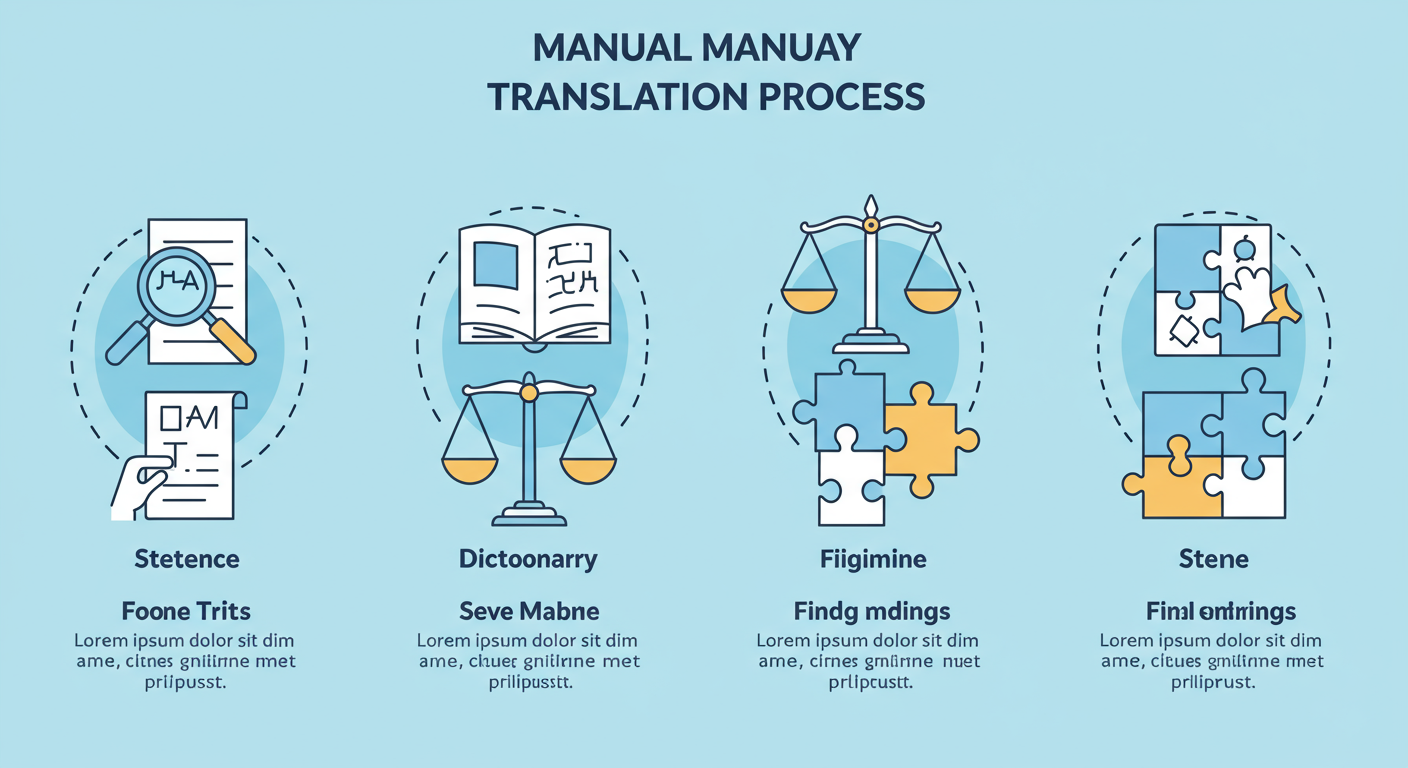
- Break Down and Simplify: The phrase is “the shield of the warrior.” This structure helps clarify the grammar. “Shield” is the main subject, and “of the warrior” shows possession.
- Look Up the Nouns: Using Bosworth-Toller, we find:
- ‘Shield’ is scield (masculine noun).
- ‘Warrior’ is cempa (masculine noun).
- Determine the Case for Each Noun:
- Scield is the subject of the sentence, so it’s in the nominative case.
- Cempa is possessive (“of the warrior”), so it needs to be in the genitive case.
- Find the Correct Articles and Endings: This is the crucial step.
- The article ‘the’ for a nominative masculine noun (scield) is se.
- The noun cempa is a “weak” masculine noun. In the genitive singular, its ending changes to -an. So, cempa becomes cempan.
- Assemble the Phrase: Now, we put the pieces together. The structure is often “The shield of the warrior.” In Old English, word order can be flexible, but a standard construction would be: Se scield þæs cempan. Wait, where did þæs come from? That’s the genitive form of ‘the’ for a masculine noun! So, “the shield of the warrior” is se scield þæs cempan. A more poetic version might be just cempan scield (“warrior’s shield”).
See? Every single word is a decision. It requires careful work, but it’s achievable for simple phrases.
Tier 3: The Expert Route (For Permanent & Important Translations)
When the stakes are high, don’t guess. For a tattoo, a family crest, a published novel, or any commercial project, you must consult an expert. Period. The risk of getting it wrong is too great, and the nuances are too deep for a beginner to catch.
Here’s where to find reliable help:
- Academic Communities: The r/oldenglish subreddit is a fantastic resource. It’s populated by students, enthusiasts, and actual professors of Old English who are often generous with their time for translation requests.
- University Departments: Contacting the linguistics or medieval studies department of a university can be a good move. A professor or grad student might be willing to help for a small fee or point you to a trusted professional.
- Professional Translators: For commercial work, hire a professional. Look for translators who explicitly list Old English or historical Germanic languages as a specialty. They are rare, but they exist.
💡 Pro Tip
When asking for help on a forum like r/oldenglish, be polite and provide context! Don’t just post “translate ‘live, laugh, love’.” Instead, say, “I’m looking for a phrase for a personal art project that captures the idea of ‘finding joy in companionship.’ I was thinking something along the lines of…” This gives experts the context they need to provide a culturally and linguistically appropriate translation.
To give you a clearer picture, here’s how the three tiers stack up.
| Translation Tier | Best For | Accuracy Level | Effort / Cost |
|---|---|---|---|
| Tier 1: Digital Tools | Single words, general curiosity, initial research. | Low (for phrases), High (for word lookup). | Low / Free |
| Tier 2: DIY Translation | Simple phrases, personal mottos, learning the language. | Medium (High risk of small errors). | Medium / Free |
| Tier 3: Expert Consultation | Tattoos, novels, family crests, commercial projects. | Very High / Scholarly. | Varies (from free community help to paid professional rates). |
⚠️ Watch Out
The Rune Trap is a common pitfall. Many people want their translation written in runes (the Anglo-Saxon futhorc). The correct process is: Modern English -> Old English -> Runic Transliteration. Never, ever transliterate Modern English words directly into runes. You’ll end up with gibberish that’s phonetically wrong and historically nonsensical.
Beyond Words: Kennings, Culture, and Context
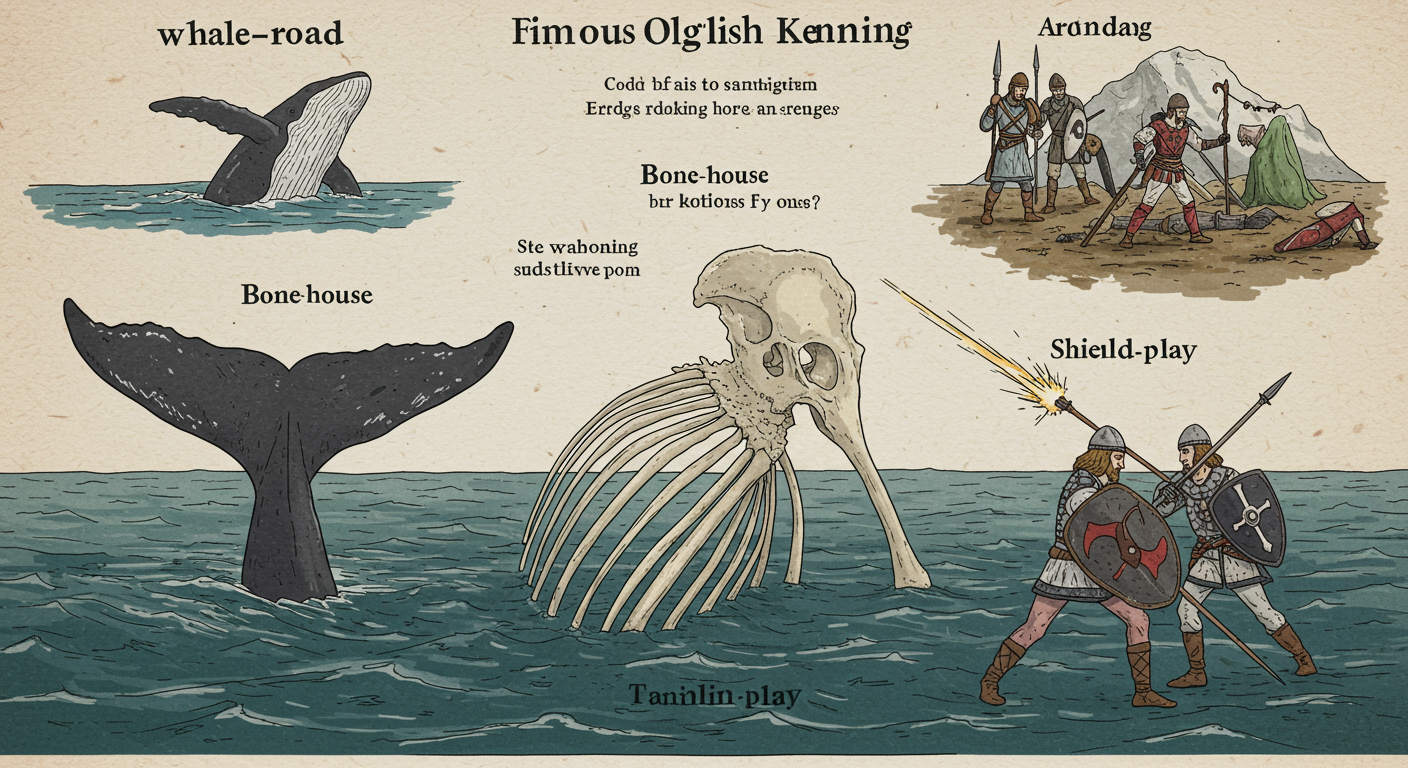
A truly great translation captures the spirit of the language, not just the words. Old English poetry, for example, is famous for its use of kennings: compound metaphorical expressions. A literal translation misses this magic entirely.
- The sea wasn’t just the sea; it was the hronrād (whale-road).
- A battle wasn’t just a battle; it was a lindplega (shield-play).
- The body wasn’t just the body; it was the bānhūs (bone-house).
Choosing the right word means understanding the culture. As the British Library highlights, the relationship between a lord (hlāford, literally ‘loaf-warden’) and his retainer (þegn) was the bedrock of their society, and this is reflected everywhere in the language. A good translation respects this context.
Trust me on this one, understanding these cultural elements is what separates a dry, academic translation from one that feels alive and authentic.
🎯 Key Takeaway
To translate to Anglo-Saxon accurately, you must abandon the idea of a simple word-for-word swap. The key is to identify the grammatical function of every word in your phrase and then find the correct Old English form using reliable dictionaries. For anything permanent or important, always seek verification from an expert.
❓ Frequently Asked Questions
Is Anglo-Saxon the same as Old English?
Yes, for the most part. “Old English” is the term preferred by linguists because it accurately positions the language as an early form of English. “Anglo-Saxon” technically refers to the people, but it’s widely and acceptably used to describe their language, art, and culture.
Can I get a tattoo in Old English?
Absolutely, but this falls squarely into our Tier 3 category. Because it’s permanent, you MUST get the translation verified by multiple knowledgeable sources. The r/oldenglish subreddit is an excellent place to post your desired phrase and the translation you’ve attempted. Let the community check your work before the needle ever touches your skin.
What’s the best online Old English translator?
There isn’t one. No automated tool can handle Old English grammar correctly. The best resource is the online Bosworth-Toller Anglo-Saxon Dictionary, which is a dictionary, not a translator. It gives you the raw materials and grammatical information you need to build a translation yourself.
How do I pronounce Old English?
It’s very different from Modern English. For instance, the ‘c’ in cyning (king) is pronounced like a ‘ch’ sound. Vowels are also different. Many university websites, like the Linguistics Research Center at UT Austin, have guides and audio recordings to help you learn the basics of Old English pronunciation.
What dialect of Old English should I use?
For almost all non-academic purposes, you should use Late West Saxon. This was the dialect of King Alfred the Great and became the literary standard for most of the Anglo-Saxon period. It’s the most well-documented and is the default for nearly all learning resources and dictionaries.
Your Journey into the Past Begins Now
Translating to Anglo-Saxon is more than a linguistic exercise; it’s a bridge to a forgotten world. It’s a way to connect with the epic stories and stark realities that forged the English language. It’s a challenge, for sure. But it’s not an insurmountable one.
You now have the framework to do it right. Start small. Use the digital tools to satisfy your curiosity. If you feel bold, try the DIY method on a simple phrase and see the grammatical puzzle come together. And for the love of all that is historic, if you’re putting it on your body, ask an expert.
Embrace the complexity. Respect the history. And you’ll be well on your way to creating something not just beautiful, but authentic.