
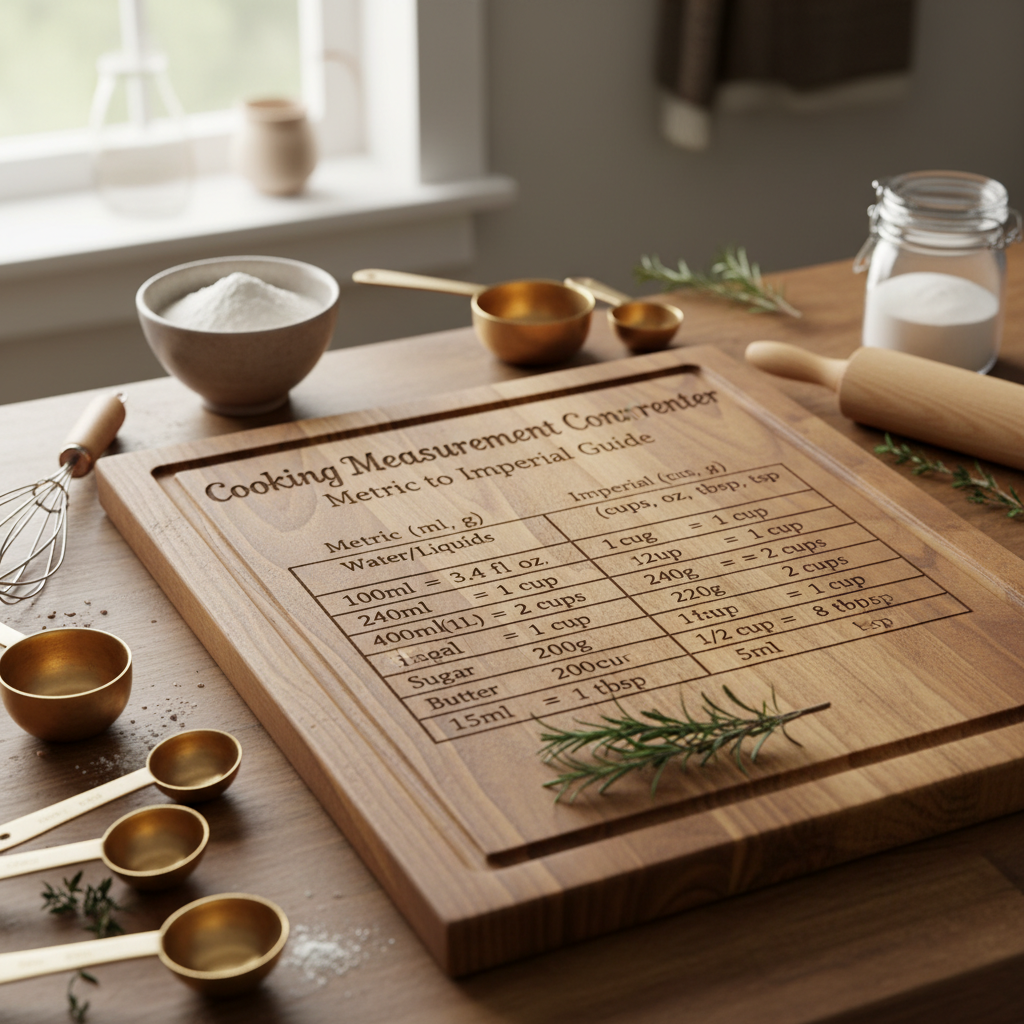
The joy of cooking often involves exploring international recipes, but nothing halts creativity faster than encountering measurement systems you aren’t familiar with. For home cooks in India, where the Metric system reigns supreme, deciphering American or older British Imperial recipes can feel like translating a foreign language. Accuracy is paramount in baking and complex dishes; a slight miscalculation can ruin the final result.
This comprehensive guide serves as your definitive cooking measurement converter metric imperial india resource. We will break down the essential conversions, provide actionable tips for adapting recipes, and ensure you achieve perfect results every time, whether you are dealing with grams, ounces, milliliters, or fluid ounces.
Mastering the Fundamentals: Why Every Cook Needs a Reliable Cooking Measurement Converter Metric Imperial India
The culinary world is divided primarily between two measurement giants: Metric and Imperial. The Metric system (using grams, kilograms, liters, and milliliters) is based on powers of ten, making calculation straightforward. It is the standard across most of the world, including India and continental Europe.
Conversely, the Imperial system, predominantly used in the United States (often referred to as US Customary Units), relies on less intuitive fractions and units like cups, ounces, pounds, and fluid ounces. When a recipe calls for 8 fluid ounces of milk, but your kitchen scale only reads grams, having a reliable conversion method is non-negotiable.
The Core Challenge: Volume vs. Weight
One of the biggest pitfalls in conversion is confusing volume (like cups or milliliters) with weight (like grams or ounces). While 1 cup of flour does not weigh the same as 1 cup of water, recipes often use both measurements interchangeably, especially in older Imperial texts. Always prioritize weight measurements (grams) when converting for baking, as they offer superior accuracy.
“In cooking, especially baking, precision is not a suggestion; it’s a requirement. Conversion errors often stem from confusing the density of ingredients.”
The Definitive Cooking Measurement Converter: Volume and Weight
Let’s dive into the essential conversions you need daily. We’ll start with volume, crucial for liquids and dry goods measured in cups, and then move to weight, which is critical for consistency.
Volume Quick Reference: Cups to Milliliters (Metric)
This table uses the standard US cup (236.6 mL), which is the most common measurement found in international recipes. Note that Australian and Canadian cups are slightly different, but the US standard is most prevalent in online recipes.
- 1 Cup (US): 240 milliliters (mL) (rounded)
- 1/2 Cup (US): 120 mL
- 1/4 Cup (US): 60 mL
- 1 Fluid Ounce (fl oz): Approximately 30 mL
- 1 Liter (L): 4.2 Cups (approx.)
Weight Quick Reference: Ounces to Grams (Metric)
Weight conversions are crucial for ingredients like flour, sugar, butter, and meat. Always use a digital scale for the most accurate results when using this cooking measurement converter metric imperial india guide.
- 1 Ounce (oz): 28.35 grams (g)
- 4 Ounces (1/4 lb): 113.4 g
- 8 Ounces (1/2 lb): 226.8 g
- 1 Pound (lb): 453.6 g
- 1 Kilogram (kg): 35.27 oz (2.2 lbs)
Small Unit Conversions: Spoons to Milliliters
These smaller measurements are used for leavening agents, spices, and extracts. Maintaining accuracy here prevents overpowering flavors or failed rises.
- 1 Teaspoon (tsp): 5 mL
- 1 Tablespoon (TBSP): 15 mL (or 3 tsp)
- 1/2 Teaspoon: 2.5 mL
- 1/4 Teaspoon: 1.25 mL
Beyond Volume and Weight: Temperature and Specialized Conversions
While volume and weight are the most common conversion hurdles, temperature is equally important, particularly when adapting baking recipes. Most Metric countries, including India, use Celsius (C), while Imperial recipes often use Fahrenheit (F).
Converting Oven Temperatures: Celsius to Fahrenheit and Back
Baking is a science, and oven temperature must be precise. Converting between Celsius and Fahrenheit requires a simple formula, but having a quick reference table is faster and minimizes errors.
The formula for conversion is: C = (F – 32) * 5/9 or F = C * 9/5 + 32.
Common Oven Temperature Conversions
- 250°F (Very Low) = 120°C
- 300°F (Low) = 150°C
- 350°F (Moderate) = 175°C
- 400°F (Hot) = 200°C
- 450°F (Very Hot) = 230°C
Boiling/Freezing Points
- Boiling Point of Water: 212°F / 100°C
- Freezing Point of Water: 32°F / 0°C
- Room Temperature (approx.): 68°F / 20°C
Practical Tips for Flawless Recipe Adaptation Using Your Cooking Measurement Converter Metric Imperial India
Conversion tables are useful, but applying them practically requires strategy. Here are essential tips for seamlessly adapting international recipes into the Metric system used widely in India.
- Weigh Dry Ingredients: If a recipe gives measurements in cups (Imperial), always look for or calculate the corresponding weight in grams (Metric). A cup of flour can vary significantly based on how it’s packed, but 120g of flour is always 120g. Standard conversion references, like those provided by the USDA, often provide density guidelines for common ingredients.
- Round Sensibly: While converting 1 cup (236.6 mL) to 236.6 mL is mathematically correct, it’s impractical in a busy kitchen. For liquids, rounding to the nearest 5 mL or 10 mL (e.g., 240 mL) is usually acceptable and makes measuring easier, especially when using a standard measuring jug.
- Be Wary of Butter Conversions: Butter often comes in sticks (Imperial) or blocks (Metric). One US stick of butter is typically 4 ounces, which converts to 113 grams. Ensure you are not confusing volume ounces (fluid ounces) with weight ounces when dealing with fats.
- Utilize Digital Tools: For complex conversions or large batch cooking, using an online Volume Converter can save time and prevent calculation errors.
Common Measurement Mistakes to Avoid
Even with the best converter, small errors can creep in. Recognizing these common pitfalls will elevate your cooking precision:
Mistake 1: Confusing US and UK Imperial
The US fluid ounce and the British Imperial fluid ounce are different. The US fluid ounce is slightly smaller. Always assume the recipe uses US Customary Units unless explicitly stated otherwise, as these dominate online global cooking content.
Mistake 2: Measuring Liquids in Dry Cups
Liquid measuring cups have spouts and are designed for reading at eye level. Dry measuring cups are designed to be leveled off. Using the wrong type of cup, even in the Metric system, can introduce minor volume errors.
Mistake 3: Packing Dry Ingredients
Unless the recipe specifically says ‘packed,’ dry ingredients like flour should be spooned lightly into the measuring cup and leveled off. If you are converting a recipe that relies on inaccurate cup measurements, always switch to the corresponding weight in grams for reliability.
Precision Cooking: Tools and Techniques for the Modern Chef
Achieving consistent results relies not just on knowing the conversion factors but also on having the right equipment. Investing in a few key tools can make the transition between Metric and Imperial seamless, establishing a powerful cooking measurement converter metric imperial india system right on your countertop.
Digital Kitchen Scale (Essential)
A digital scale is the single most important investment. Look for one that can switch instantly between grams, ounces, pounds, and milliliters. This eliminates the need for manual weight conversion entirely.
Metric Measuring Cups and Spoons
Even if you are converting, having a set of measuring cups and spoons clearly marked in milliliters (mL) helps verify your conversions and ensures standard Metric volumes are used for Indian recipes.
Oven Thermometer
Conversion is pointless if your oven temperature is inaccurate. Use an independent oven thermometer to ensure your oven is truly hitting the converted Celsius temperature, compensating for potential calibration issues.
Understanding the science behind temperature measurement is also beneficial. The National Institute of Standards and Technology (NIST) provides excellent resources detailing the standards for units of measurement, reinforcing the importance of accuracy in temperature control for safe and successful cooking.
Adapting Recipes for Density: Beyond Basic Conversions
While basic conversions handle liquids easily, adapting dry ingredients requires factoring in density. Since the weight of 1 cup of flour (approximately 120g) differs vastly from 1 cup of brown sugar (approximately 200g), relying on a general 1:1 conversion for all dry goods is a major mistake.
When encountering an Imperial recipe that lists ingredients only by volume (cups), consult a reliable ingredient density chart to find the precise Metric weight. For example, if a recipe calls for 1 cup of all-purpose flour, you should measure 120 grams in your Indian kitchen, rather than relying solely on volume.
Furthermore, consider the ingredients themselves. Indian recipes often use ingredients like atta (whole wheat flour) or specialized spices that might require slight adjustments in volume compared to standard Western all-purpose flour, even after conversion. Always use the converted weight, then adjust liquids slightly based on the texture of your local ingredients.
Conclusion: Seamless Transition with the Right Cooking Measurement Converter Metric Imperial India Guide
Navigating the transition between the Imperial and Metric systems doesn’t have to be a source of stress. By arming yourself with this comprehensive cooking measurement converter metric imperial india guide, focusing on weight measurements (grams) for dry ingredients, rounding sensibly, and using the correct tools, you can confidently tackle any international recipe.
Accuracy in the kitchen leads to consistency and better results. Embrace precision, and let the world of global cuisine open up to your Indian kitchen.
FAQs
Since the density of flour varies, the most common standard conversion for 1 cup of all-purpose flour (Imperial) is 120 grams (Metric). Always use a kitchen scale to measure grams for dry ingredients rather than relying on volume cups, as packing can drastically change the weight.
Fluid ounces (fl oz) measure volume, typically used for liquids, while weight ounces (oz) measure mass. They are not interchangeable. For instance, 8 fluid ounces of water weighs 8 ounces, but 8 fluid ounces of honey weighs significantly more due to higher density. Always check the context of the recipe.
Yes. A standard tablespoon (TBSP) is internationally recognized as 15 milliliters (mL) in the Metric system, which is standard across India. A teaspoon (tsp) is 5 mL. This consistency makes small-scale measurements straightforward.
When converting Fahrenheit to Celsius, it is generally safer to round slightly down or stick to the nearest standard oven setting (e.g., 175°C instead of 177°C). Ovens often run slightly hot, and rounding down slightly helps prevent overbaking or burning, especially in delicate recipes like cakes and pastries.
Cups are often used for larger volumes of common liquids (like milk or water), whereas fluid ounces are used for smaller, more precise liquid measurements, such as extracts or specific amounts of oil. Both are volume measurements in the Imperial system.
Read Also:
- Mastering Website Trust Building: The Essential Guide to the About Us Page Generator
- Image Metadata Editor
- JSON to YAML
- Meta Tag Generator Tools: How to Create Optimized Meta Descriptions
- 10 Proven Ways a Habit Tracker Can Revolutionize Your Productivity in 2025
- Web Stories
- Comprehensive Guide to the BMI Chart for Men with Age: Understanding Your Health Metrics – Visual Story

