
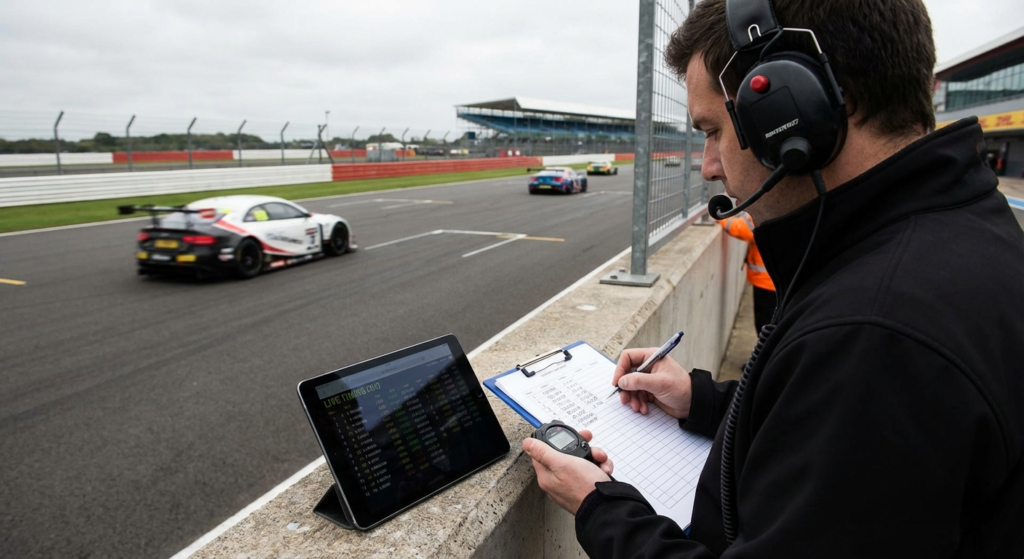
Speed is a liar. It feels fast when the wind is rushing past your helmet or your lungs are burning at mile 20, but the clock? The clock never lies.
In 2026, the difference between a podium finish and “also-ran” status isn’t just raw talent—it’s data. Whether you’re tracking a Porsche 911 GT3 on a track day, pacing a sub-3-hour marathon, or analyzing swim splits, the ability to accurately calculate lap times is the foundation of performance engineering.
I’ve spent years analyzing telemetry data, and here’s the hard truth: without precise timing, you aren’t training; you’re just exercising. You need to know exactly where you’re gaining tenths of a second and where you’re bleeding time.
This isn’t just a basic math lesson. We are going to break down the physics, the cutting-edge 2026 tech, and the manual calculations that every serious athlete needs to master.
📑 What You’ll Learn
The Psychology of Precision: Why Guessing Fails
Why do we obsess over this? Because human perception is flawed. In my experience working with amateur racers, a driver will often feel they drove a “faster” lap because they were sliding the car or braking late. In reality? That chaos usually makes them slower.
When you calculate lap times with precision, you strip away the emotion. You get raw, actionable feedback. It allows you to:
- Manage Resources: Predict fuel burn or energy expenditure (glycogen stores for runners).
- Validate Setup Changes: Did stiffening the rear suspension actually help, or did it just make the ride harsher?
- Build Consistency: The goal isn’t one “hero lap.” It’s the ability to hit the same tenth of a second, ten laps in a row.
🎯 Key Takeaway
Speed is subjective; time is objective. You cannot improve what you do not measure. Accurate lap timing transforms your training from a guessing game into a scientific process.
The Physics: How to Calculate Lap Times Manually
Before we get into the fancy apps and AI-driven tools of 2026, you need to respect the math. Batteries die. GPS signals drift. The formula $Time = Distance / Speed$ is eternal.
Here is the step-by-step process to calculate lap times when all you have is distance and average speed.
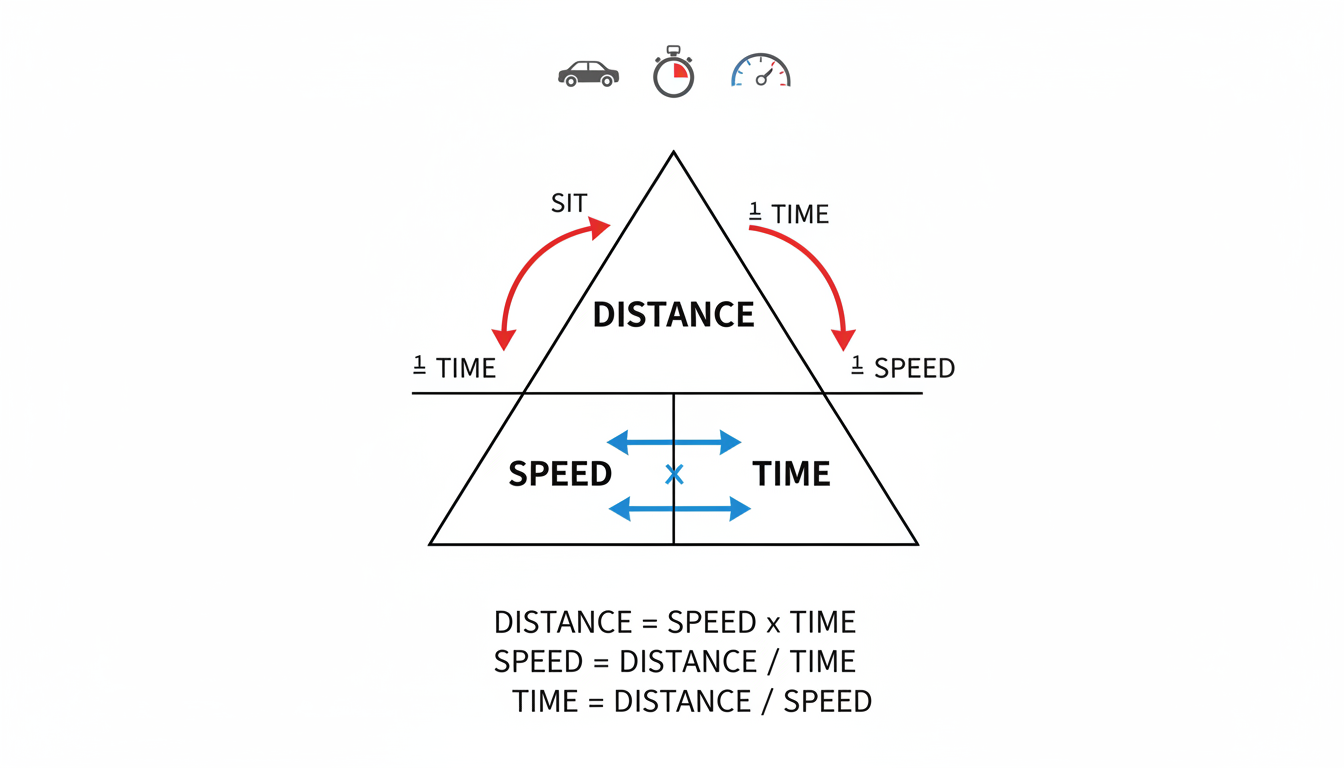
Step-by-Step Calculation Guide
Let’s say you are analyzing a telemetry log where a car averaged 92 MPH over a 2.4-mile circuit.
- The Division: Divide Distance by Speed.
2.4 miles / 92 mph = 0.02608 hours. - The Minute Conversion: Multiply the hours by 60.
0.02608 * 60 = 1.5652 minutes. - The Second Conversion: This is where people mess up. You have 1 minute and 0.5652 of a minute. You need to turn that decimal into seconds.
0.5652 * 60 = 33.91 seconds. - The Result: Your lap time is 1:33.91.
💡 Pro Tip
Always keep your units consistent. If your track distance is in kilometers, your speed must be in km/h. Mixing miles and kilometers is the quickest way to ruin your data analysis.
Tech Stack: GPS vs. Transponders vs. Stopwatches
Not all timing methods are created equal. In 2026, consumer tech has largely caught up to professional equipment, but there are still nuances. Here is how the options stack up.
| Method | Accuracy | Cost | Best For |
|---|---|---|---|
| Manual Stopwatch | +/- 0.20s | Low | Coaches, casual observation, backup timing |
| Smartphone GPS (1Hz) | +/- 0.10s | Medium | Casual track days, amateur runners |
| External GPS (10Hz/25Hz) | +/- 0.01s | High | Serious racers, data analysis |
| AMB Transponder | +/- 0.001s | Very High | Official race sanctioning, professional events |
The 1Hz vs. 10Hz Problem
This is critical. Most smartphones update their GPS position once per second (1Hz). If you are driving at 100 mph, you travel roughly 146 feet in one second. That means your phone might “guess” where the finish line was within a 146-foot window.
To accurately calculate lap times for motorsport, you need an external GPS receiver (like a Garmin Catalyst or RaceBox) that updates at 10Hz (10 times per second) or 25Hz. This shrinks the margin of error from 146 feet down to just a few feet.
⚠️ Watch Out
Avoid using standard fitness watches for high-speed motorsport timing. The smoothing algorithms used for running pace often get confused by the high G-forces and rapid acceleration of a race car, leading to inaccurate lap data.
Sector Analysis: Finding “Free” Time
If you only look at the total lap time, you’re looking at a “vanity metric.” The real speed is hidden in the sectors.
Modern tracks are divided into sectors (usually three). By comparing your Sector 1, Sector 2, and Sector 3 times against your previous laps—or a competitor’s—you can pinpoint exactly where you are losing time. Maybe you are the fastest driver in the straight-line Sector 1, but you’re overslowing for the technical corners in Sector 2.
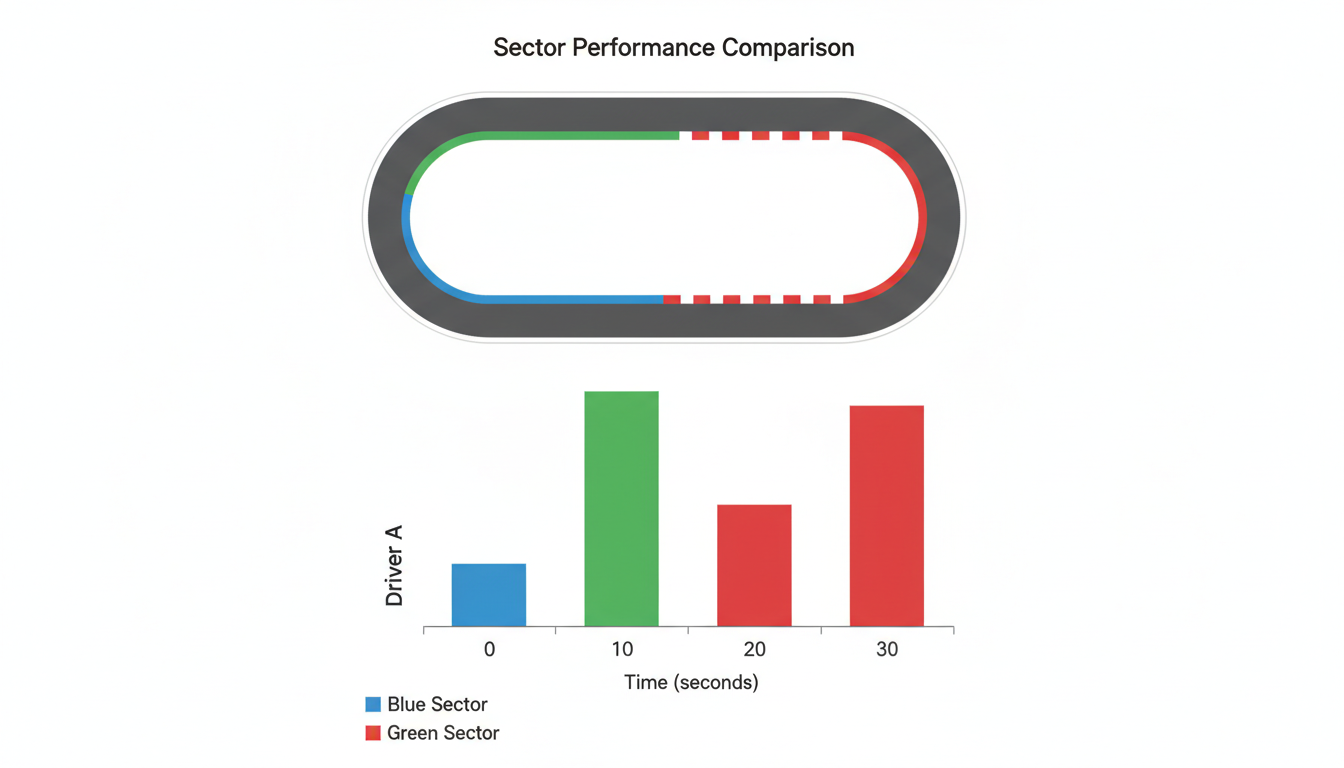
According to telematics principles, breaking a complex loop into smaller segments allows for granular optimization that isn’t possible when looking at the aggregate data.
Sport-Specific Strategies
🏎️ Motorsports: The Delta
In racing, we use a “Delta Timer.” This is a live feed on your dash that compares your current lap to your best lap in real-time. If the number is green (negative), you are faster. If it’s red (positive), you are slower. This provides instant feedback on whether a different racing line worked.
🏃 Running: The Negative Split
Runners use lap timing to manage energy. The “Negative Split” strategy involves running the second half of the race faster than the first. By calculating your splits per mile, you ensure you don’t “fly and die” (start too fast and collapse later).
🏊 Swimming: The Pace Clock
Swimmers don’t usually have GPS. They rely on the analog pace clock. If you are swimming “on the top” (leaving when the hand is at 60), and you touch the wall at 45, your lap is 45 seconds. It requires mental math while hypoxic—a skill in itself.
The “Ideal Lap” Theory
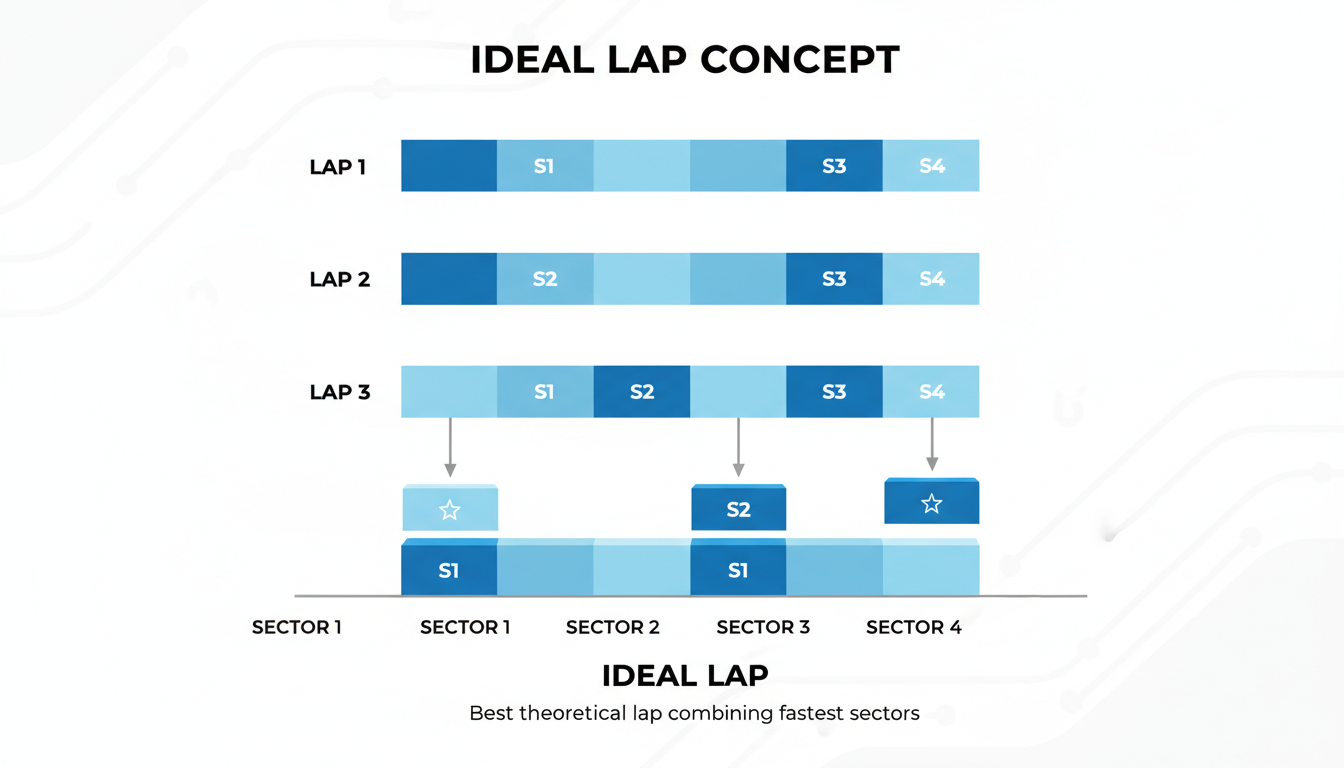
This is my favorite metric. Most data logging software will calculate lap times based on your “Theoretical Best” or “Ideal Lap.”
The software takes your best Sector 1 from Lap 3, your best Sector 2 from Lap 8, and your best Sector 3 from Lap 12. It combines them to show you what time you could achieve if you strung your best performances together.
The Formula:
Ideal Lap = Best S1 + Best S2 + Best S3
If your Actual Best is 1:45.0 and your Ideal Best is 1:43.5, you have 1.5 seconds of potential speed already inside you—you just need to be more consistent.
Common Mistakes That Ruin Your Data
I’ve seen entire race weekends wasted because of bad data practices. Here is what to avoid:
- The “Out Lap” Error: Never include your first lap (leaving the pits) or your “In Lap” (entering the pits) in your average pace calculations. They skew the data massively.
- GPS Drift: Tall buildings, trees, and tunnels block satellite signals. If you see a lap time that is 5 seconds faster than your average with no explanation, check the map trace. If the line goes through a building, it’s a glitch.
- Inconsistent Triggers: If you are timing manually, you must pick a sharp landmark (a shadow, a cone, a line). Using a vague reference point like “the braking zone” introduces human error.
For a deeper dive into the physics of motion and time measurement, Khan Academy’s physics module offers an excellent refresher on the fundamental relationships between velocity and time.
Conclusion: Data is the New Horsepower
Learning how to calculate lap times is about more than just bragging rights. It is the feedback loop that drives improvement. Whether you are using a $10 stopwatch or a $2,000 telemetry system, the principle remains the same: measure, analyze, adjust, repeat.
Don’t just drive or run blindly. Start tracking your sectors. Look at your theoretical best. Use the data to force yourself to be smoother, more consistent, and ultimately, faster. The track is open—go set a new personal best.
❓ Frequently Asked Questions
What is the formula to calculate lap time from speed?
The formula is Time = Distance / Speed. Remember to convert the resulting decimal hours into minutes and seconds for a usable lap time.
Why is my GPS lap timer inaccurate?
Standard smartphones use 1Hz GPS chips (updating once per second). For high-speed racing, this is too slow. You need an external GPS receiver running at 10Hz or 25Hz for precision.
What is a “rolling lap” vs. a “standing start”?
A standing start includes the time it takes to accelerate from 0 mph. A rolling lap (or flying lap) measures the time when the vehicle is already at full speed crossing the start line. Rolling laps are always faster.
How do I calculate splits in running?
Most modern running watches (Garmin, Apple Watch) do this automatically via GPS. To do it manually, note your total time at each mile marker and subtract the previous mile’s total time.
Where can I find official rules on timing?
For track and field, World Athletics provides the global standards for timing accuracy and equipment requirements.