
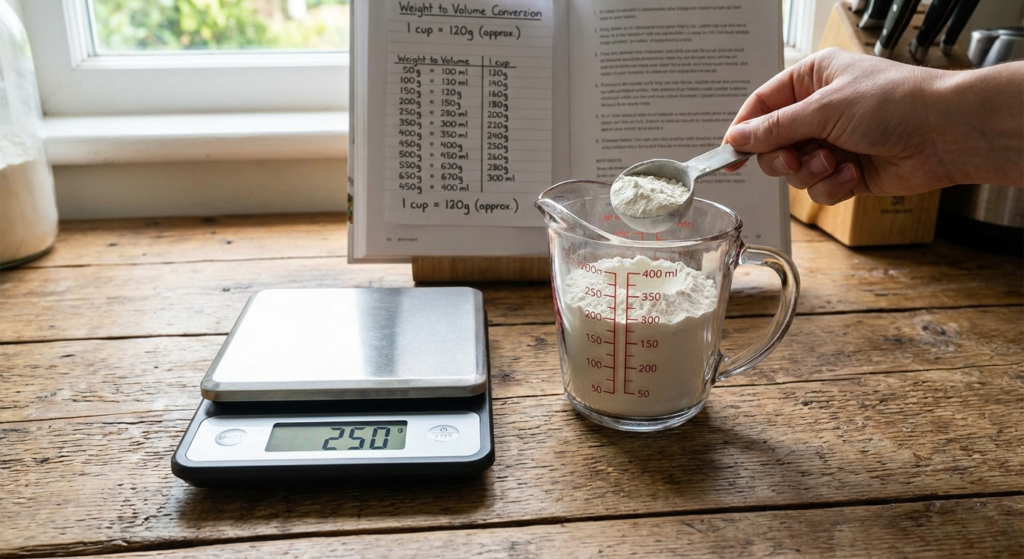
Picture this: You’re deep in a complex sourdough recipe, hands covered in flour. The recipe calls for 500 grams of water, but your scale just died, and all you have is a measuring cup. Or maybe you’re an e-commerce owner staring at a shipping manifest, trying to figure out why a lightweight box of pillows costs a fortune to ship.
Here’s the reality. The ability to convert weight to volume isn’t just high school physics homework; it’s a critical skill that separates amateur bakers from pros and profitable businesses from money-pits.
In 2026, precision is everything. Whether you’re dealing with the density of gluten-free flour blends or calculating Dimensional Weight for international logistics, guessing doesn’t cut it anymore. I’ve spent years managing content for culinary and logistics brands, and I’ve seen simple conversion errors cost companies thousands of dollars—and ruin countless birthday cakes.
In this guide, we aren’t just swapping numbers. We’re going to break down the science, the math, and the practical applications so you never have to second-guess a measurement again.
📑 What You’ll Learn
The Science: Why 1kg Doesn’t Equal 1 Liter
Let’s get the physics out of the way first. It’s actually pretty cool once you get it.
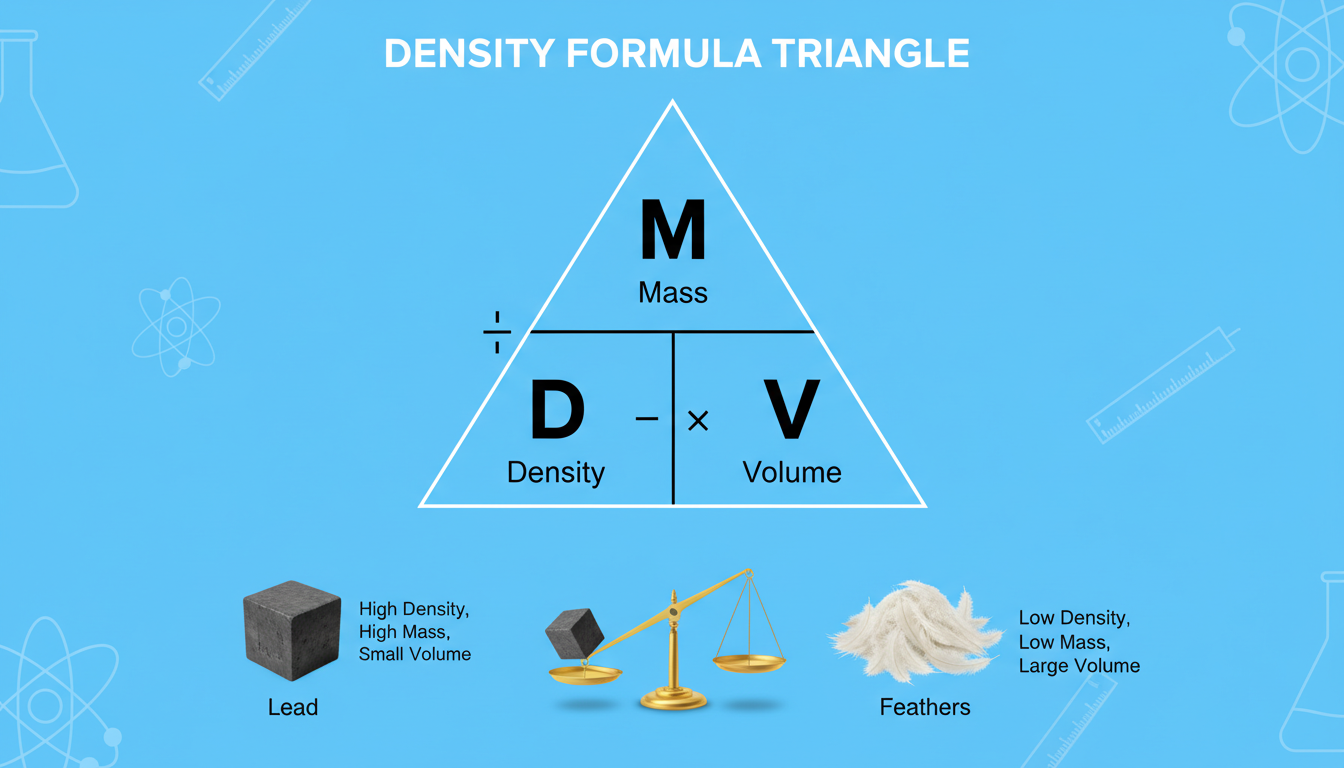
The biggest mistake people make is assuming weight and volume are interchangeable. They aren’t. Weight (mass) measures how heavy something is. Volume measures how much space it takes up. The missing link? Density.
Think about it like this: A cup of lead shot and a cup of marshmallows have the exact same volume (one cup). But if you drop them on your foot, you’re going to notice a massive difference in weight. That’s density in action.
To convert weight to volume accurately, you must know the density of the substance. The formula is simple but non-negotiable:
Volume = Mass / Density
If you are measuring water, you’re in luck. Water has a density of 1 g/mL. So, 100 grams of water is exactly 100 milliliters. Easy, right? But the moment you switch to oil, flour, or steel, that 1:1 ratio falls apart.
Mastering Culinary Conversions
In my experience working with professional chefs, the “cup” is the enemy of consistency. A cup of flour can weigh anywhere from 120g to 150g depending on how hard you pack it. That 30g difference is enough to turn a light, airy cake into a dense brick.
When you need to convert weight to volume in the kitchen, you are usually dealing with ingredients that have vastly different densities. Butter is lighter than water (that’s why it floats). Honey is much heavier.
💡 Pro Tip
Stop Scooping! If you must use volume (cups) for flour, use the “Spoon and Level” method. Spoon the flour into the cup until it overflows, then level it off with a knife. Scooping directly packs the flour down, adding up to 20% more weight than the recipe intends.
Common Ingredient Conversion Table
I’ve compiled this table based on standard kitchen averages. Keep in mind that humidity and brand variations can slightly alter these numbers.
| Ingredient | Density (approx) | 1 Cup (Volume) equals… | Why it matters |
|---|---|---|---|
| Water | 1.00 g/mL | 237 grams | The baseline. 1:1 ratio. |
| All-Purpose Flour | 0.53 g/mL | 120 – 125 grams | Very light. Highly compressible. |
| Granulated Sugar | 0.85 g/mL | 200 grams | Denser than flour. Don’t swap 1:1. |
| Honey / Molasses | 1.42 g/mL | 340 grams | Extremely dense. A little weighs a lot. |
| Vegetable Oil | 0.92 g/mL | 218 grams | Lighter than water. |
The Logistics Factor: Dimensional Weight
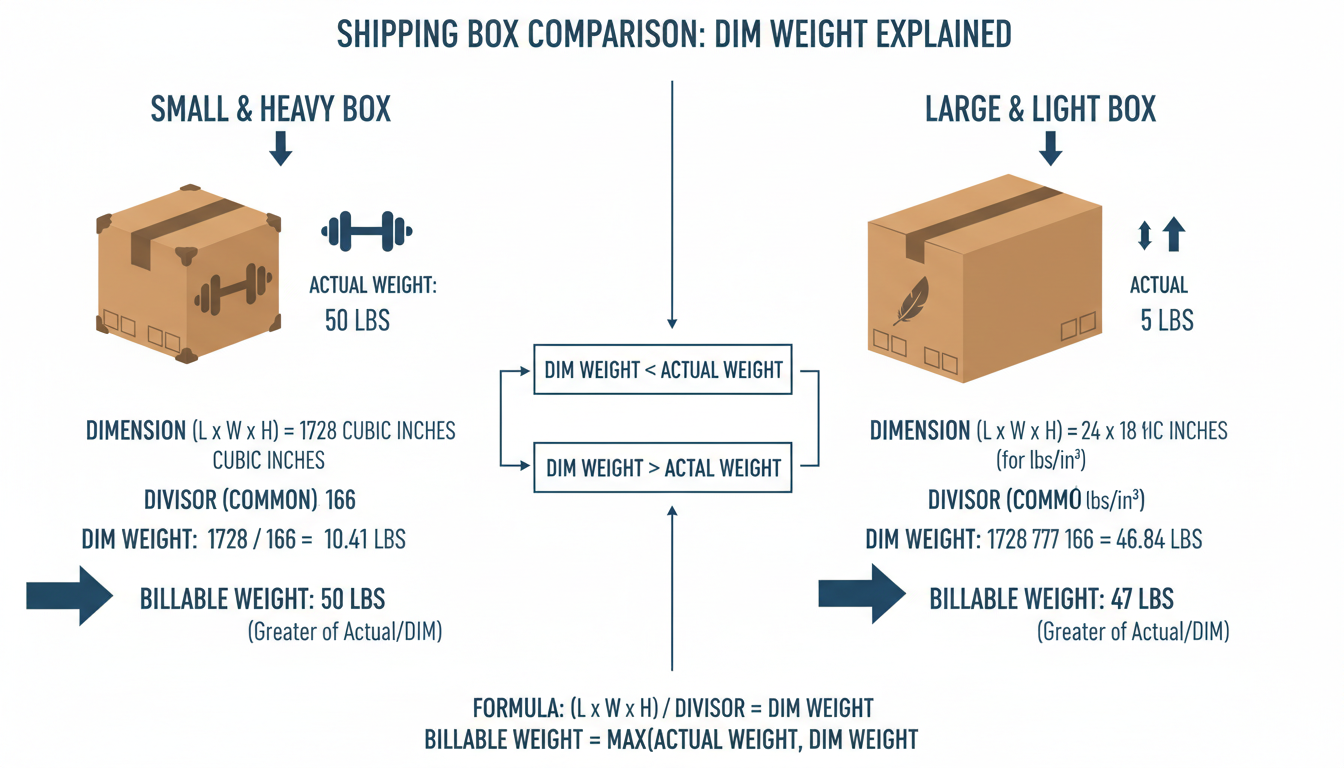
Let’s pivot to business. If you ship products, understanding how to convert weight to volume directly impacts your profit margins. Carriers like FedEx, UPS, and DHL don’t just care about how heavy your box is; they care about how much space it steals from their truck.
This is called Dimensional Weight (DIM Weight).
If you ship a large box full of bubble wrap, it’s light (actual weight), but it takes up a lot of room (volume). The carrier will charge you for the volume, not the weight. This is often referred to as the “air tax.”
⚠️ Watch Out
The Divisor Changed! In recent years, carriers have lowered the “DIM Divisor” (often to 139). This means you pay more for bulky, lightweight packages than you used to. Always check the current year’s rate sheet for your specific carrier.
How to Calculate DIM Weight
- Measure Length, Width, and Height in inches.
- Multiply them to get Cubic Volume ($L times W times H$).
- Divide by the carrier’s divisor (usually 139 for daily rates).
- Compare this number to the actual scale weight. You pay for whichever is higher.
Step-by-Step Calculation Guide
You don’t need a PhD to do this, but you do need a calculator. Here is the foolproof workflow I use when I need to convert measurements manually.
Scenario: You have 500 grams of olive oil, and you need to know how many milliliters that is.
- Identify the Mass: You have 500g.
- Find the Density: A quick search on a reputable site like NIST or a culinary database tells us olive oil is approx 0.92 g/mL.
- Apply the Formula: $Volume = Mass / Density$.
- Calculate: $500 / 0.92 = 543.47$.
- Result: You have roughly 543 mL of oil.
Notice that 500g of oil takes up more space than 500g of water? That’s because it’s less dense.
🎯 Key Takeaway
Volume and Weight are not the same. To convert accurately, you must know the density of your material. For water, 1g = 1mL. For everything else, use the formula: Volume = Mass ÷ Density.
The Imperial vs. Metric Headache
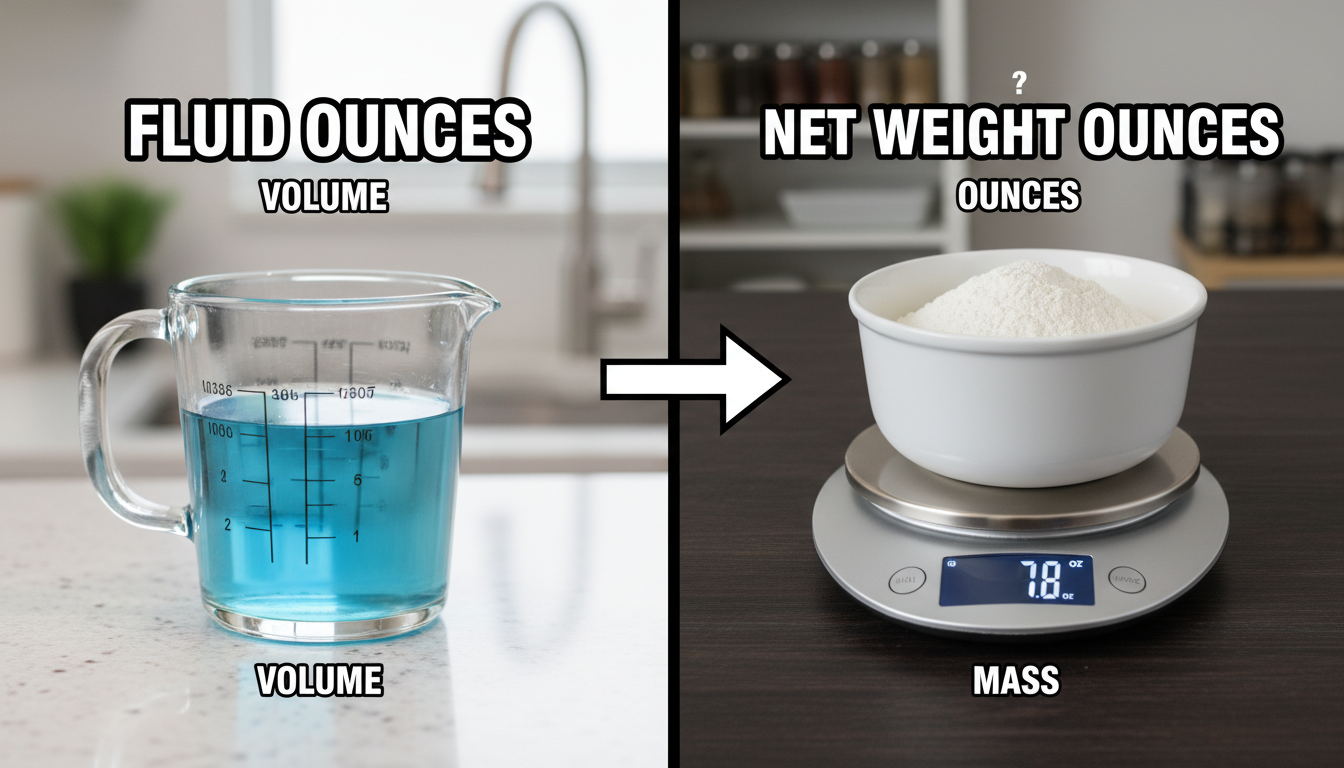
Here is where things get messy. If you are in the US, you are fighting a battle against terminology. The Imperial system uses the word “ounce” for two completely different things.
- Ounce (oz): A unit of weight (Mass).
- Fluid Ounce (fl oz): A unit of volume (Space).
This causes endless confusion. 8 fluid ounces of water weighs roughly 8.34 ounces. Close enough, right? But 8 fluid ounces of honey weighs about 12 ounces. If a recipe calls for “8 oz of honey,” you need to know if they mean a cup (volume) or a weight measurement.
Metric is Your Friend
Trust me on this one: whenever possible, convert everything to Metric (grams and milliliters) first. The math is cleaner, the density charts are easier to find, and you avoid the “ounce” trap entirely. Leading scientific institutions and culinary schools, like the Culinary Institute of America, rely on metric for this exact reason.
Frequently Asked Questions
❓ Frequently Asked Questions
Does 1 kg always equal 1 liter?
No. This is only true for water at 4°C. For other substances, density changes the volume. 1 kg of gold is much smaller than 1 liter, while 1 kg of feathers is huge.
How do I convert weight to volume for melted butter?
Melted butter has a density of roughly 0.911 g/mL. If you have 100g of butter, divide by 0.911 to get roughly 109 mL. It is slightly lighter than water.
Why do US recipes use cups instead of grams?
It’s historical. Early American settlers didn’t have access to precise scales, so volume-based “cup” measurements were more practical. However, modern professional baking is shifting almost entirely to weight for accuracy.
What is Specific Gravity?
Specific Gravity is a ratio comparing a substance’s density to water. If a substance has a specific gravity of 2.0, it is twice as dense as water. This is commonly used in brewing and automotive industries.
Is there an app to convert weight to volume?
Yes, many apps exist, but be careful. Ensure the app allows you to select the specific ingredient (e.g., “rolled oats” vs. “steel cut oats”) because the density varies significantly.
Conclusion
Learning to convert weight to volume might seem like a dry technical skill, but it’s actually a superpower in the kitchen and the warehouse. It bridges the gap between “good enough” and “perfect.”
Whether you are trying to get that sourdough hydration just right or trying to stop FedEx from overcharging you for shipping air, the principles are the same. Respect the density, watch out for the “ounce” trap, and when in doubt, use a scale.
Ready to take your precision to the next level? Start by buying a decent digital scale—it’s the best $20 investment you’ll make this year. For more deep dives into measurement standards, check out the resources at Wikipedia’s Density entry for a broader scientific perspective.

