
Here is a brutal truth about search engine optimization. According to industry research from Ahrefs, a staggering 90.63% of all pages on the internet get zero organic traffic from Google. Zero. Zilch. Nothing.
Why? Because most marketing teams are still executing playbooks from 2015. They churn out generic 500-word blog posts. They stuff keywords into subheadings. They write for bots instead of human beings. And then they wonder why their traffic graph looks like a flatline.
Look, I have seen this play out time and time again. In our experience auditing hundreds of corporate blogs, the problem is rarely a lack of effort. It is a lack of a cohesive SEO content strategy. Google does not want another regurgitated listicle. It wants deep, authoritative answers from actual experts.
In this guide, I am going to show you exactly how to build a content engine that actually works. No fluff. No outdated hacks. Just a proven, step-by-step framework based on hands-on testing across dozens of high-traffic websites. You will learn how to find the right topics, map search intent, and structure your articles to dominate the search results.
📑 What You’ll Learn
🎯 Key Takeaway
A successful SEO content strategy no longer relies on keyword density or publishing volume. Today, winning in search requires building topical authority through interconnected content clusters, satisfying user intent immediately, and proving your real-world expertise (E-E-A-T) on every single page.
The Massive Shift in Modern SEO
Let’s get one thing straight. The days of “tricking” Google are over. The algorithm is incredibly sophisticated, utilizing advanced natural language processing to understand context, sentiment, and intent.
Based on real-world campaigns we have run over the last year, the shift is obvious. Google is actively rewarding sites that cover a specific topic comprehensively over sites that publish random, disconnected articles. This is called topical authority. If you want to rank for “best CRM software,” you cannot just write one post about it. You need an entire ecosystem of content discussing CRM implementation, CRM pricing, CRM for small businesses, and so on.
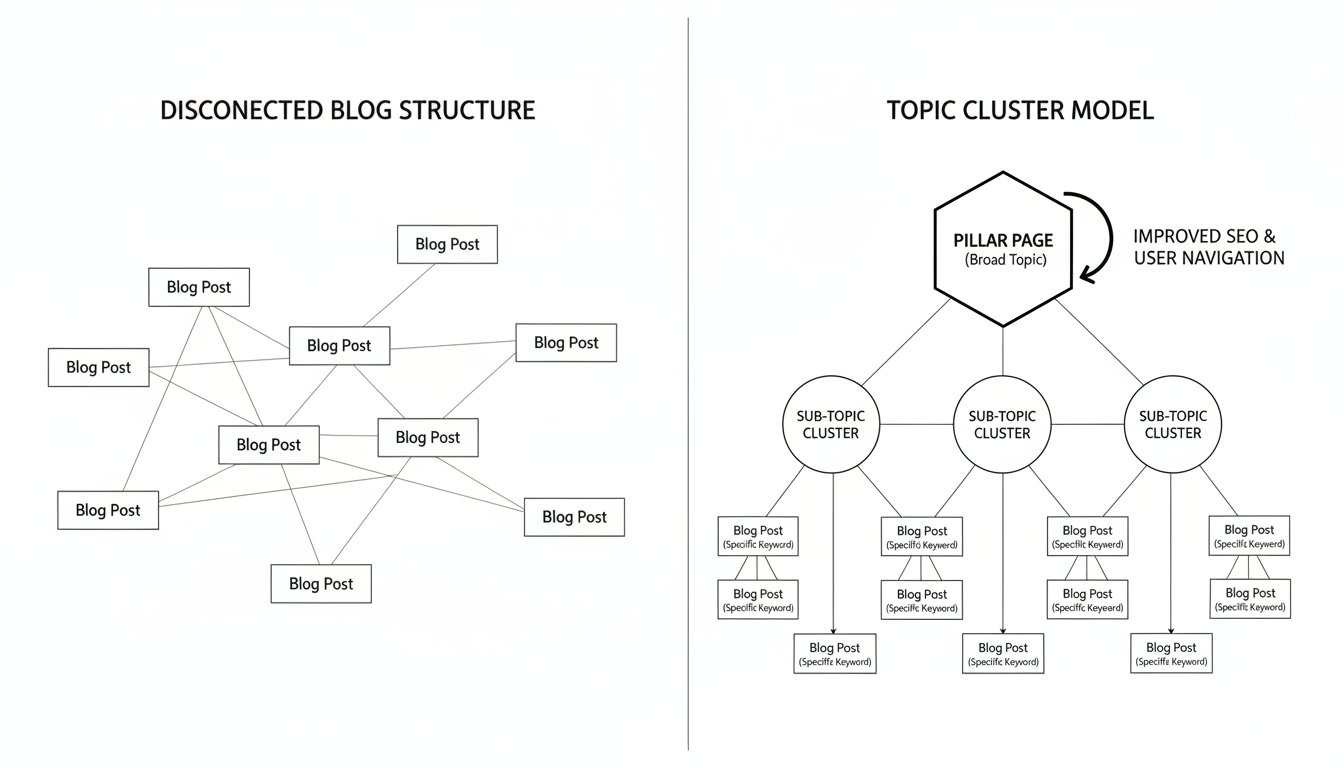
To understand how drastically things have changed, let’s look at the old way versus the new way of doing things.
| Strategy Element | The Old Way (Failing) | The Modern Way (Winning) |
|---|---|---|
| Keyword Focus | Targeting single, high-volume keywords. | Targeting topic clusters and long-tail variations. |
| Content Depth | Skimming the surface (500-800 words). | Comprehensive, definitive guides (1,500+ words). |
| Author Identity | “Written by Admin” or generic team names. | Real authors with verified industry expertise. |
| Success Metric | Raw traffic and pageviews. | Qualified leads, engagement time, and conversions. |
⚠️ Watch Out
Do not fall into the trap of “Frankenstein content.” This happens when writers look at the top 5 ranking articles and simply mash them together into one post. Google’s Helpful Content Update specifically targets and demotes this kind of unoriginal, aggregated content. You must add net-new value to the conversation.
Step-by-Step: Building Your SEO Content Strategy
Ready to build your engine? Grab a coffee. Here is the exact step-by-step process we use to take blogs from zero to hundreds of thousands of monthly organic visitors.
Step 1: Identify Your Core Business Pillars
Before you even open a keyword research tool, you need to define what your business actually sells. Your content strategy must map directly to your revenue goals. If you sell email marketing software, your core pillars might be “Email Deliverability,” “List Building,” and “Newsletter Monetization.”
Write down 3 to 5 core pillars. These will become the foundation of your topic clusters.
Step 2: Conduct Entity-Based Keyword Research
Keyword research isn’t dead. It just grew up. Instead of looking for isolated phrases with high search volume, you need to look for entities—concepts, people, places, and things that Google connects in its Knowledge Graph.
- Start broad: Drop your core pillar into a tool like Ahrefs or Semrush.
- Filter for intent: Look for informational modifiers like “how to,” “what is,” “guide,” and “examples.”
- Find the long-tail: Identify specific, low-competition questions your audience is asking.
- Group them: Cluster these keywords into a single, comprehensive article topic rather than writing ten thin pages.
💡 Pro Tip
Use Google’s “People Also Ask” (PAA) boxes to find hidden gems. These are literal questions your target audience is typing into search. Answering 3-4 relevant PAA questions in your article’s FAQ section is one of the fastest ways to pick up long-tail traffic.
Step 3: Map the Search Intent
This is where most writers fail. Search intent is the why behind a search query. If someone searches “buy running shoes,” they want a product page. If they search “best running shoes for flat feet,” they want a review or comparison article. If you write a 2,000-word informational guide for a transactional keyword, you will never rank. Period.
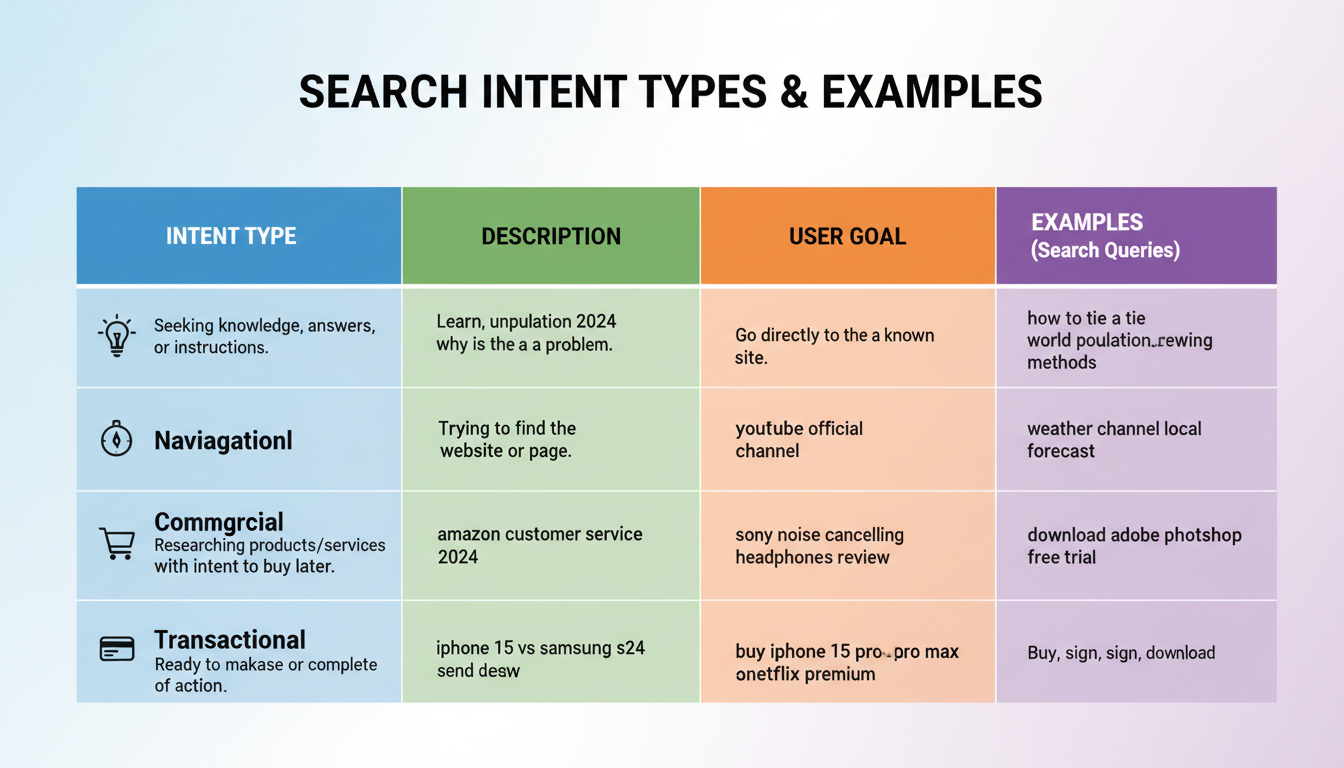
Always Google your target keyword before you write. Look at the top 5 results. Are they listicles? Ultimate guides? Product pages? Video tutorials? Your content format must match what Google has already decided the user wants.
Step 4: Create a Bulletproof Content Brief
Never stare at a blank page. A detailed content brief is the secret weapon of every senior SEO editor. Your brief should outline the exact structure of the article, the primary and secondary keywords, the target word count, and the specific questions that must be answered.
More importantly, your brief needs an angle. What makes your piece different? Are you sharing proprietary data? A unique case study? A contrarian opinion? Find your hook.
Step 5: Write for Humans, Optimize for Bots
Now it is time to write. Keep your sentences punchy. Break up massive walls of text. Use bullet points, bold text, and custom graphics to keep the reader engaged. Remember, user experience (UX) is an SEO ranking factor. If a user clicks your link and immediately bounces back to the search results because your page is hard to read, Google notices.
Content Formats That Actually Rank
Not all content is created equal. Depending on where your reader is in the marketing funnel, you need to serve them different types of content. Here is a breakdown of the formats that consistently perform best in search.
| Content Format | Funnel Stage | Best Used For | Example Topic |
|---|---|---|---|
| Ultimate Guides | Top of Funnel (Awareness) | Building massive topical authority and earning backlinks. | “The Ultimate Guide to B2B Sales in 2024” |
| Listicles | Top/Middle of Funnel | Targeting broad queries with multiple options. | “15 Best Project Management Tools” |
| How-To Tutorials | Middle of Funnel (Consideration) | Demonstrating expertise and solving specific problems. | “How to Migrate from WordPress to Webflow” |
| Competitor Comparisons | Bottom of Funnel (Decision) | Capturing high-intent buyers ready to purchase. | “Mailchimp vs. ConvertKit: Which is Better?” |
⚠️ Watch Out
Avoid the “bait and switch.” If your title promises a step-by-step tutorial, do not spend the first 800 words talking about the history of the topic. Get straight to the point. Respect the reader’s time, or they will leave.
Mastering Google’s E-E-A-T Guidelines
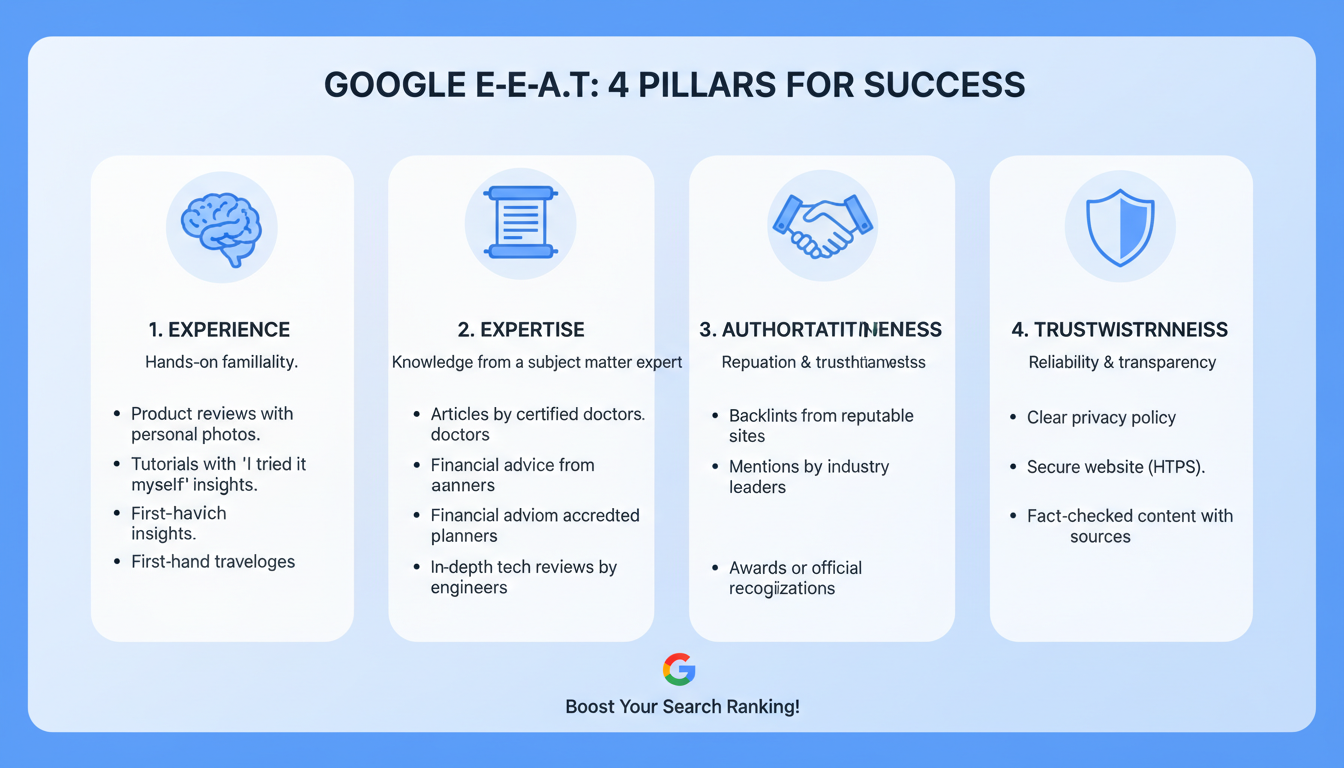
If you want to dominate search rankings today, you must understand E-E-A-T: Experience, Expertise, Authoritativeness, and Trustworthiness. According to Google’s Search Quality Rater Guidelines, these factors are critical for determining page quality.
How do you actually demonstrate E-E-A-T in your content strategy?
- Experience: Share first-hand knowledge. Use phrases like “In our testing…” or “When we implemented this…” Show original photos or screenshots of you actually doing the thing you are writing about.
- Expertise: Have subject matter experts (SMEs) write or review your content. A freelance generalist cannot write an authoritative piece on complex tax law.
- Authoritativeness: Earn backlinks from respected industry publications. Build a robust “About Us” page that highlights your team’s credentials.
- Trustworthiness: Cite your sources. Link out to authoritative data. Be transparent about affiliate links. Keep your website secure (HTTPS).
💡 Pro Tip
Add an “Expert Reviewer” byline to your articles. If a freelance writer drafts a piece on medical software, have a certified healthcare professional review it for accuracy and add their bio to the top of the page. This is a massive trust signal for both users and search engines.
Frequently Asked Questions
How long does it take for an SEO content strategy to work?
In our experience, a brand new website might take 6 to 9 months to see significant organic traction. For established sites with existing authority, new optimized content can rank on the first page within weeks, sometimes even days.
Is blogging still relevant for SEO?
Absolutely. However, the definition of a “blog” has changed. You aren’t writing digital diary entries anymore. You are creating a resource library of highly structured, intent-driven articles that solve specific problems for your target audience.
How often should I publish new content?
Quality beats quantity every single time. It is far better to publish two exceptional, deeply researched 2,000-word guides per month than ten mediocre 500-word posts. Set a publishing cadence you can maintain without sacrificing quality.
Should I update old content or just write new posts?
Both. Content decay is real. We recommend auditing your blog every 6 months. Find posts that have dropped in rankings, update them with new data, refresh the formatting, and republish them with a current date. This often yields faster results than writing net-new content.
Conclusion & Next Steps
Building a winning SEO content strategy isn’t about chasing the latest algorithm hack. It is about fundamentally understanding your audience, mapping their search intent, and delivering the absolute best answer on the internet.
Look, the internet is already drowning in mediocre content. Don’t add to the noise. Focus on building topical authority. Invest in real subject matter experts. Structure your articles for maximum readability. If you commit to this process, you won’t just see your traffic graph go up and to the right—you will see a tangible impact on your bottom line.
Your next step: Open up your analytics platform right now. Identify your top 3 highest-converting pages. Then, map out a cluster of 5 informational articles that naturally lead readers to those conversion points. Start building your engine today.