
We have all been there. You just finished a phenomenal dinner with friends. The wine was flowing, the stories were hilarious, and the atmosphere was perfect. Then, the server drops the black leather folder on the table. The music seems to stop. Suddenly, your relaxing evening turns into a high-stakes math exam.
You stare at the receipt: $143.67. You fumble for your phone, frantically searching for a reliable tip calculator while trying to remember if you are supposed to tip on the tax or just the subtotal. Tipping is a massive part of the service industry, yet it consistently causes anxiety for millions of diners every single day.
Look, knowing the exact tip calculation formula isn’t just about being generous. It is about social grace, fairness to service workers, and keeping your own budget intact. While pulling up a digital tip calculator is the fastest route to an answer, understanding the actual mechanics behind the math gives you total confidence in any situation. From splitting a massive group bill to navigating tricky international customs, this guide breaks down exactly how to handle gratuity without breaking a sweat.
📑 What You’ll Learn
The Core Tip Calculation Formula Explained
Before you rely entirely on an app, you need to understand the basic math. Why? Because technology fails. Phones die. And sometimes, whipping out a screen in the middle of a fancy business lunch just looks tacky.
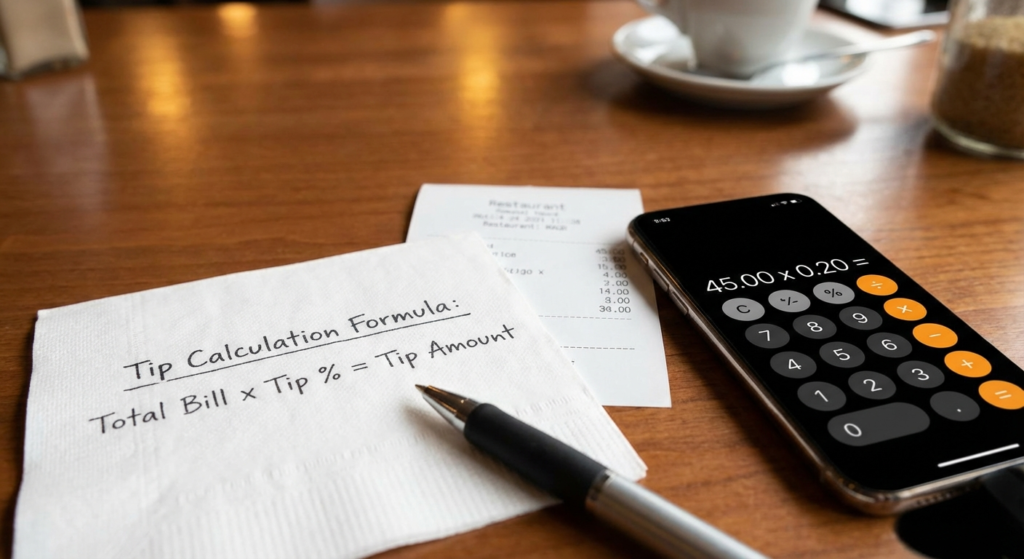
The fundamental tip calculation formula is incredibly straightforward: Bill Amount × Tip Percentage = Tip Amount. Once you have that number, you simply add it to the original bill to get your grand total.
But let’s be honest. Nobody wants to multiply $87.42 by 0.18 in their head. In my years covering hospitality trends, I’ve found that the best mental tip calculator relies on the “10% Rule.” Here is exactly how to do it.
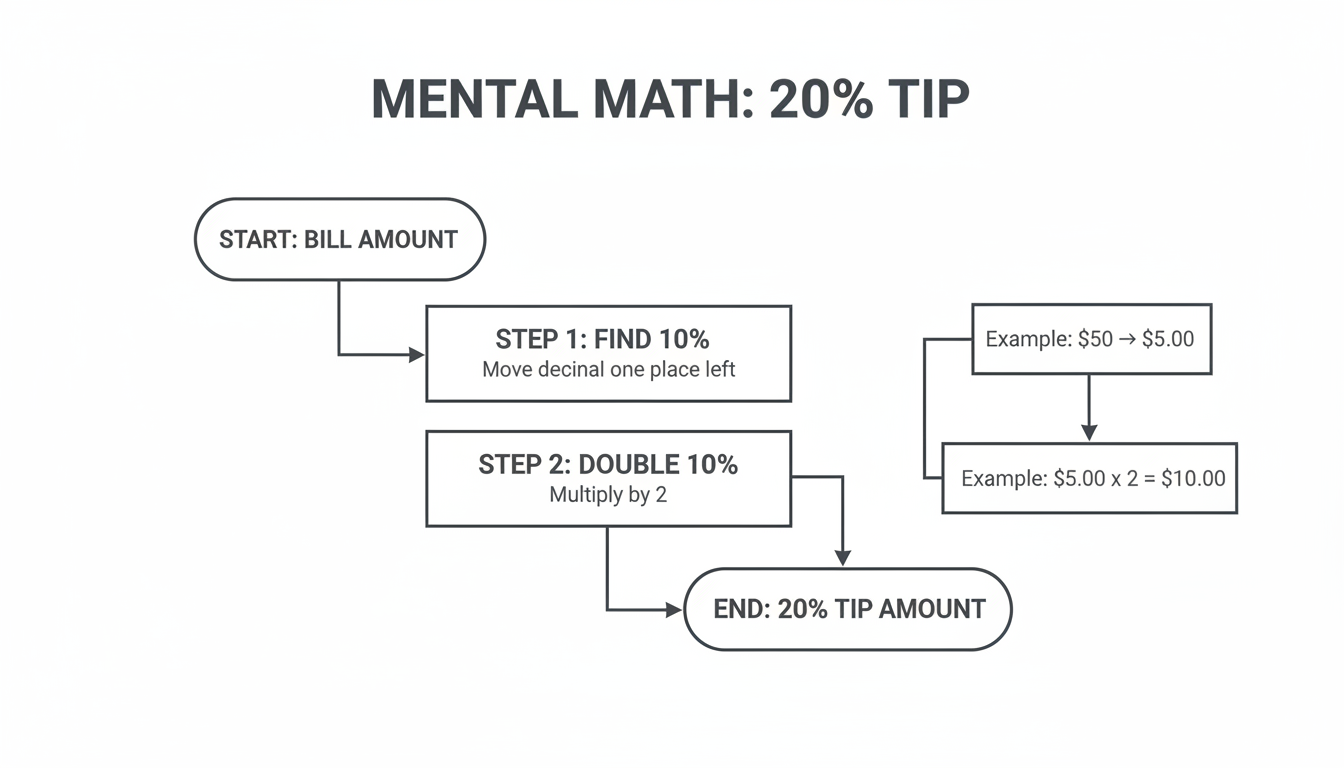
Step-by-Step Guide to Mental Tip Math
- Find the 10% baseline: Take your total bill and move the decimal point one spot to the left. If your bill is $65.00, your 10% baseline is $6.50.
- Double it for 20%: Want to leave a standard, solid tip? Just multiply that baseline by two. ($6.50 × 2 = $13.00).
- Find 15% if needed: Take your 10% baseline ($6.50) and add half of it ($3.25). Your 15% tip is $9.75.
- Round up for ease: Don’t stress over pennies. Round your final tip to the nearest whole dollar to make the math cleaner for both you and the server.
While mental math is a great party trick, precision matters when you are dealing with corporate expenses. If you are tracking meals for company reimbursement, your numbers need to be flawless. Just as a business owner might rely on an Online GST Invoice Generator to keep their tax records perfectly compliant, using a dedicated digital tip calculator ensures your expense reports match your corporate card statements down to the exact cent.
💡 Pro Tip
If you are paying with cash, always hand the tip directly to the server if possible, or leave it clearly visible on the table. This ensures the person who actually served you receives the money immediately.
The Great Debate: Pre-Tax vs. Post-Tax
This is easily the most fiercely debated topic in the restaurant world. When you punch numbers into your tip calculator, which number are you supposed to use? The subtotal before the government takes its cut, or the final total at the bottom of the receipt?
Let’s settle this right now. According to etiquette authorities like the Emily Post Institute, you should calculate your tip based on the pre-tax subtotal.
Think about it logically. Taxes go straight to the local and state government. The server doesn’t see a dime of that money. When you tip on the post-tax amount, you are essentially paying a gratuity on a government fee. If you live in a city with a high hospitality tax (like Chicago or Los Angeles, where taxes can exceed 10%), tipping on the total artificially inflates your gratuity significantly.
⚠️ Watch Out
Many modern point-of-sale (POS) systems—those little tablets the server flips around to face you—automatically calculate their suggested tip percentages based on the post-tax total. Always double-check the math if you want to stick to the traditional pre-tax etiquette.
That being said, tipping on the final total is becoming increasingly common. From my own experience working in the service industry during college, I can tell you that servers absolutely notice and appreciate guests who tip on the post-tax amount. It is a generous gesture, but it is not a strict requirement.
Standard Gratuity Rates by Industry
Your tip calculator is useless if you don’t know what percentage to input. The 20% rule applies beautifully to sit-down restaurants, but what about your barber? The valet? The person delivering your groceries in the pouring rain?
Different industries have entirely different expectations based on their wage structures and the level of personalized labor involved. Here is a definitive breakdown of what you should be tipping across various services.
| Service Provider | Standard Tip Percentage | When to Tip More |
|---|---|---|
| Restaurant Server | 15% – 20% | Exceptional service, large groups, or if you occupy the table for 2+ hours. |
| Bartender | 20% (or $1-$2 per drink) | Complex craft cocktails that take several minutes to build. |
| Hair Stylist / Barber | 15% – 25% | Last-minute squeeze-ins, major color corrections, or holiday appointments. |
| Food Delivery | 15% – 20% (Min $5) | Bad weather, heavy items, or confusing apartment complexes. |
| Rideshare / Taxi | 10% – 15% | Driver helps with heavy luggage or navigates terrible traffic smoothly. |
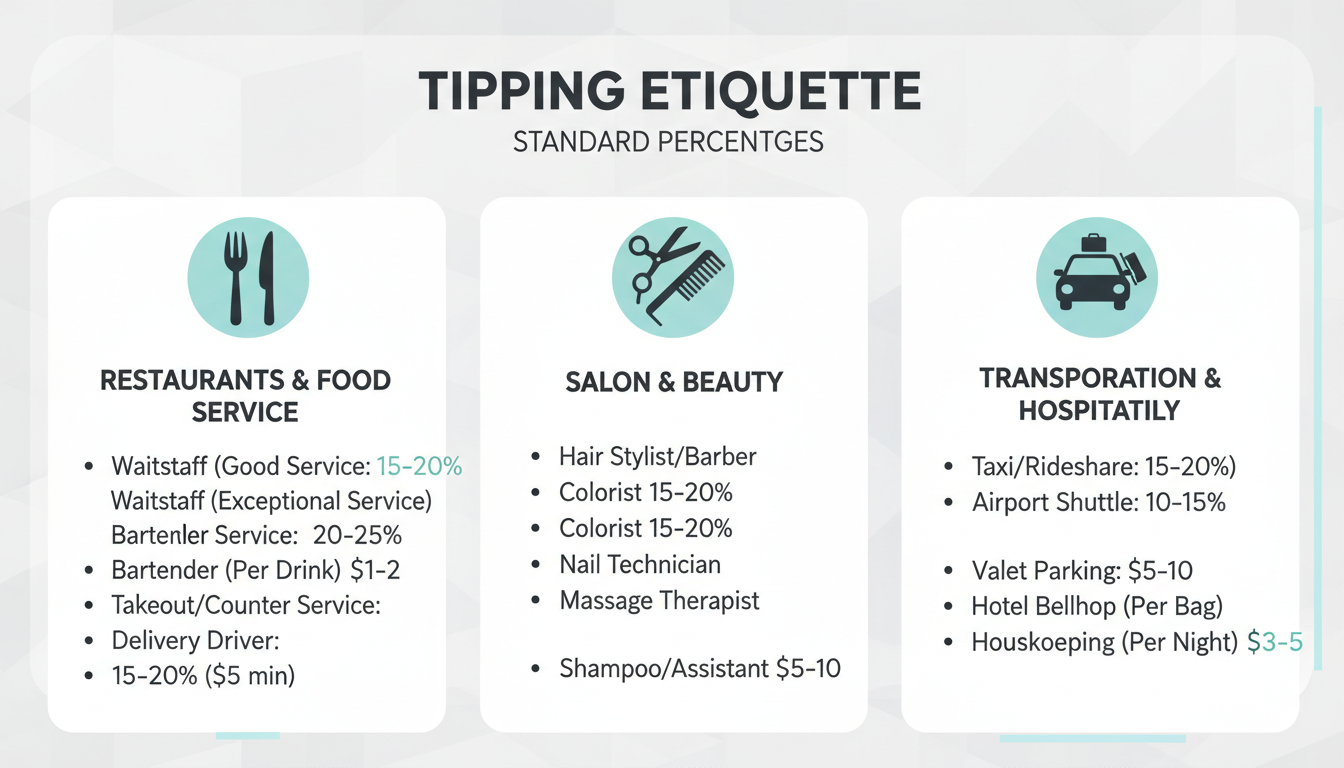
Notice how food delivery has a minimum dollar amount attached? That is crucial. If you order a $12 sandwich, a 20% tip is only $2.40. That driver still spent 20 minutes driving to the restaurant, waiting for your food, and driving to your house. In these cases, ditch the strict percentage and tip a flat minimum of $5 to respect their time.
Global Tipping: Don’t Insult Your Waiter
One of the fastest ways to spot an American tourist abroad is by watching how they pay the bill. We are so conditioned to use a tip calculator to find that magic 20% number that we blindly apply it everywhere we go. This is a massive mistake.
Tipping culture is deeply tied to a country’s labor laws. In the United States, the federal minimum wage for tipped employees is shockingly low (often just $2.13 an hour). The tip isn’t a bonus; it is their actual salary. But cross a border, and the rules flip entirely.
Based on extensive travel and international etiquette research, here is how tipping varies around the world.
| Region / Country | Tipping Expectation | Cultural Context |
|---|---|---|
| United States & Canada | 15% – 20%+ | Mandatory in practice. Workers rely on tips to make a living wage. |
| Western Europe (France, Italy) | Round up or 5-10% | Service is usually included by law (“service compris”). Extra is just a small thank you. |
| Japan & South Korea | 0% (Do not tip) | Tipping is often considered rude or insulting. Good service is simply expected as part of the job. |
| Australia & New Zealand | 10% for great service | Hospitality workers are paid a high minimum wage. Tipping is appreciated but never expected. |
I learned this the hard way in Tokyo. I left a generous tip on the table after a fantastic sushi dinner, only to have the waiter chase me down the street thinking I had accidentally forgotten my change. It was mortifying. Always research local customs before you travel, and adjust your tip calculator settings accordingly.
🎯 Key Takeaway
Never assume American tipping standards apply internationally. In many parts of Europe, service is already baked into the menu price, and in countries like Japan, leaving extra money can actually offend the staff. Always check local customs before paying the bill.
How to Split the Bill Without Losing Friends
The complexity of tipping increases exponentially with every person you add to the table. If you are dining with a group of eight, simply handing the server eight different credit cards and asking them to “split it evenly” is a logistical nightmare. It slows down service for the entire restaurant.
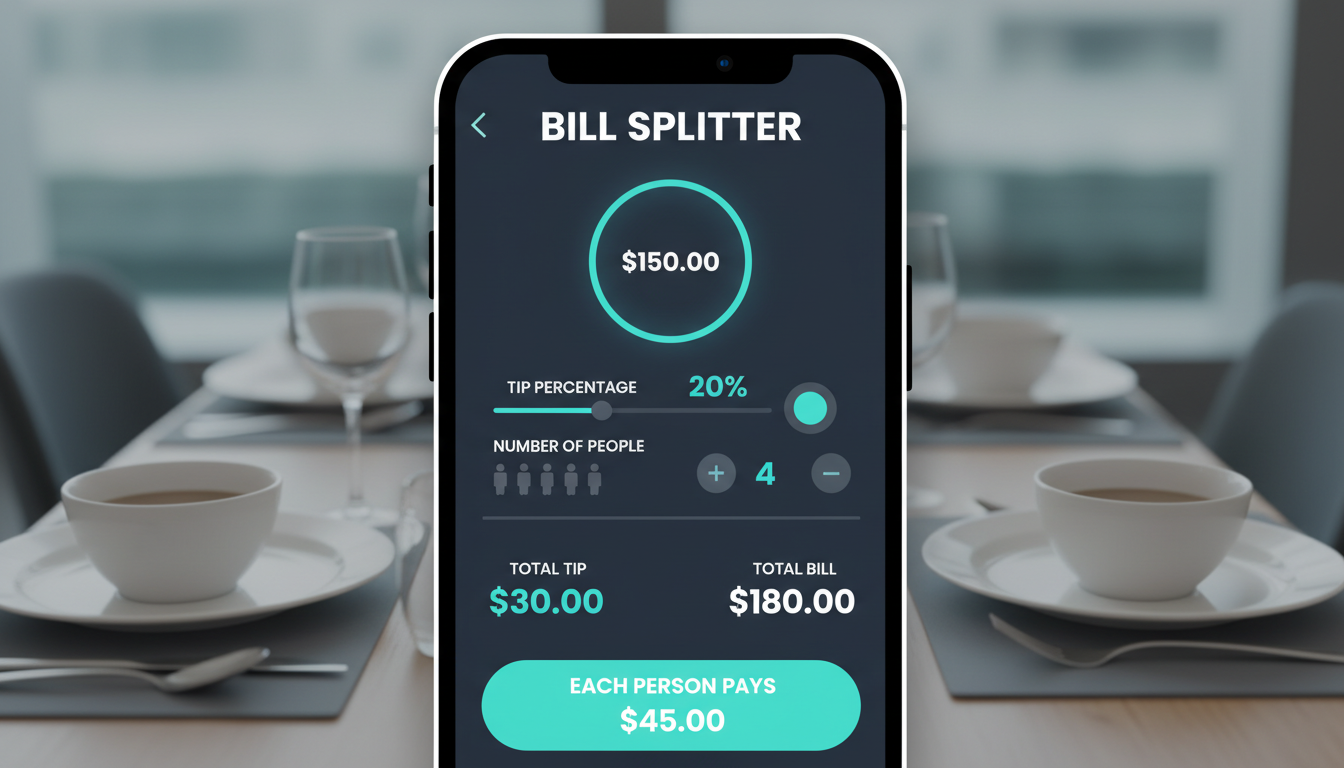
This is where a digital tip calculator truly shines. Most modern apps have a built-in split function. You enter the total bill, select your tip percentage, and tell the app how many people are paying. It instantly spits out the exact amount each person owes.
But what if the split isn’t even? What if your friend ordered a side salad and tap water, while you ordered a ribeye steak and three martinis? Splitting that bill evenly down the middle is a great way to ruin a friendship.
In these scenarios, you need to calculate by item. Figure out your specific subtotal, add your portion of the tax, and then apply the tip calculation formula to your specific amount. While you wouldn’t pull out a Bar Chart Generator at the dinner table to prove who owes what, keeping the math transparent prevents resentment.
⚠️ Watch Out
Beware the “Auto-Gratuity” trap. Many restaurants automatically add an 18% to 20% tip for parties of six or more. Always scan your receipt for terms like “Service Charge” or “Gratuity Included” before you run your tip calculator. Otherwise, you might end up tipping 40% by mistake.
Advanced Tipping Scenarios
Running the numbers through a tip calculator gives you a baseline. But being a truly excellent patron requires nuance. Real-world dining throws curveballs that a simple math equation can’t solve. Here is how to handle the tricky stuff.
1. Using Coupons and Gift Cards
This is a classic mistake. Let’s say you have a “Buy One, Get One Free” coupon. Your bill comes out to $20, but the actual value of the food you ate was $40. You must calculate your tip based on the original $40 amount. The server still carried the same amount of plates, refilled the same amount of water, and did the exact same amount of work. Don’t penalize them just because you found a good deal.
2. Camping at the Table
Restaurants operate on tight margins, and servers make money through table turnover. If you finish your meal at 7:00 PM but sit there chatting until 9:30 PM, you are preventing that server from seating a new party and earning another tip. If you plan to “camp” at a table, you need to compensate the server for their lost real estate. Add an extra 10% to 15% to your final tip.
3. Expensive Bottles of Wine
If you order a $300 bottle of wine, do you really need to tip $60 just for the server to pull a cork? Industry experts are divided on this. Some argue that 20% is 20%, regardless of the item. However, a widely accepted compromise is to tip standard on the food, and a flat fee (usually $15 to $20 per bottle) for expensive wine service, unless a dedicated sommelier spent significant time guiding your selection.
Conclusion
Mastering the tip calculation formula is about so much more than just crunching numbers. It is a blend of basic mathematics, cultural awareness, and simple human empathy. While doing the math in your head is a great skill to have, using a reliable tip calculator removes the guesswork, ensures accuracy for your budget, and guarantees the service staff is compensated fairly.
The next time that leather folder lands on your table, you won’t need to panic. You know the rules. You know the etiquette. Now, take a second to download a dedicated calculator app to your phone, or simply memorize the 10% baseline rule. Getting the math right is the absolute best way to say “thank you” for a great meal.
❓ Frequently Asked Questions
Is it rude to use a tip calculator at the table?
Not at all. In fact, it is incredibly common. Servers would much rather you take 30 seconds to use an app and tip accurately than guess the math in your head and accidentally under-tip them. Just be discreet about it.
Should I tip on the total including tax?
Strict etiquette dictates that you should calculate your tip based on the pre-tax subtotal. Taxes are government fees, not restaurant revenue. However, tipping on the post-tax total is a generous practice that is becoming increasingly common.
What is the standard tip for genuinely bad service?
If the service was objectively terrible (rude behavior, ignoring the table), dropping the tip to 10% sends a clear message. However, ensure the bad experience was actually the server’s fault. Don’t penalize the waiter for a slow kitchen or undercooked food.
Do I need to tip for takeout orders?
While not strictly mandatory like sit-down service, leaving a 10% tip for takeout is highly recommended. Restaurant staff still have to take your order, box the food, ensure condiments are included, and bag everything up securely.
How do I handle tipping at a buffet?
Even though you are getting your own food, servers at buffets are constantly clearing heavy plates, wiping down tables, and refilling drinks. A standard tip of 10% of the total bill, or $2-$3 per person, is the industry expectation.
Read Also:
- 10 Proven Ways to Master Your Rank Tracker for SEO Dominance
- 7 Steps to Master Profits With a Crypto ROI Calculator
- Text to Handwriting in 2026: The Ultimate AI & Font Guide
- Grams to Quarts Conversion: The Ultimate 2026 Kitchen Guide
- How to Change Case in Word (5 Pro Methods for 2026)
- cm to hh Conversion: The Ultimate Guide for Equestrians (2026)
- Your Website’s Silent SEO Killer 2026
- SE Ranking Review (2026): The Unbiased Truth for SEOs
- Hertz to Watts in 2026: The Expert Guide to How They Relate
- Linear Yard vs. Yard: Your 2026 Guide
- This Pipe Mistake Costs Thousands in 2026
- Unlock Image SEO with AI in 2026
- Tenths to Inches Calculator: 5 Pro Tips for Flawless Precision (2026)