
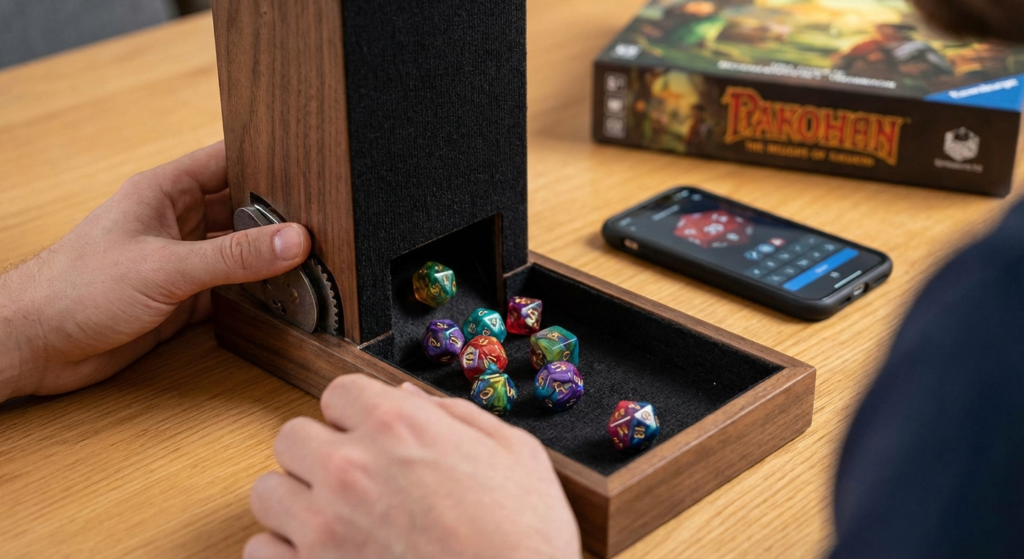
In a world increasingly driven by digital convenience, the humble cube with dots has undergone a significant transformation. While the tactile satisfaction of throwing physical dice remains nostalgic, the dice roller has emerged as an indispensable tool for gamers, educators, and professionals alike. Whether you are a Dungeon Master orchestrating an epic campaign or a teacher trying to explain probability, understanding the versatility of a virtual dice roller is essential.
The dice roller is no longer just a random number generator; it is a sophisticated engine capable of complex calculations, massive batch rolls, and fair decision-making. In this comprehensive guide, we will explore the myriad uses of these tools, how they function, and why they have become a staple in modern digital toolkits. Let’s dive into the mechanics and magic of the digital roll.
Understanding the Mechanics of a Modern Dice Roller
At its core, a dice roller is a software program designed to simulate the rolling of one or more dice. However, the technology behind it is far more fascinating than simple animation. These tools utilize Pseudo-Random Number Generators (PRNGs) or, in high-end security cases, True Random Number Generators (TRNGs) to ensure that every outcome is as unpredictable as a physical toss.
Why does this matter? In competitive gaming or statistical analysis, the integrity of the dice roller is paramount. If a pattern emerges, the tool becomes useless. Modern algorithms ensure that whether you are rolling a standard six-sided die (d6) or a twenty-sided polyhedral (d20), the distribution of results remains statistically uniform.
Furthermore, digital rollers allow for operations that are physically impossible. Have you ever tried to roll a 100-sided die physically? It rolls like a ball and rarely stops clearly. A digital dice roller handles this instantly, providing a clear, indisputable result.
The Mathematics Behind the Dice Roller
The reliability of a dice roller relies heavily on number bases and algorithms. Just as we convert different values in computing, these tools translate binary code into the integers we see on the screen. For those interested in how computers handle different numerical systems, understanding the underlying logic is key. You can explore how different numerical systems interact using a number base convertor, which highlights the complexity of digital translation.
Why Every RPG Gamer Needs a Reliable Dice Roller
Tabletop Role-Playing Games (TTRPGs) like Dungeons & Dragons and Pathfinder have seen a massive resurgence. With this growth comes the need for efficiency. A dice roller speeds up combat significantly. Instead of manually adding up 12d6 for a wizard’s fireball spell, a digital tool calculates the total instantly.
Here are the primary advantages for gamers:
- Speed: Instant calculations for complex damage formulas.
- Privacy: DMs can make "secret rolls" without players seeing the outcome.
- Accessibility: No need to carry heavy bags of dice to a session.
- Customization: Create custom dice with unique symbols or weighted probabilities for homebrew games.
Customizing Your Dice Roller for Dungeons & Dragons
Advanced dice roller applications allow players to save macros. A rogue can have a button specifically for "Sneak Attack" that automatically adds the dexterity modifier and proficiency bonus. This level of automation allows players to focus more on the role-playing aspect and less on the arithmetic.
Educational Benefits: Using a Dice Roller in the Classroom
Teachers are constantly looking for engaging ways to present dry material. A dice roller is a fantastic visual aid for teaching mathematics, specifically probability and statistics. It removes the chaos of physical dice flying across the classroom while ensuring every student can see the results on a smartboard.
Probability Lessons
Use a dice roller to simulate 1,000 rolls instantly. This allows students to analyze the distribution of sums (like the bell curve of rolling two dice) without spending hours manually tossing cubes.
Gamified Learning
Turn quizzes into games. Assign different question categories to numbers 1 through 6. Roll the die to determine which topic a student must answer, adding an element of chance and excitement.
Classroom Management
Struggling to pick a student for a task fairly? Assign every student a number and use a dice roller to select a volunteer randomly, eliminating accusations of favoritism.
Dice Roller vs. Physical Dice: A Comprehensive Comparison
Is digital always better? Not necessarily. There is a tactile joy in physical dice that a screen cannot replicate. However, when purely analyzing utility and function, the dice roller often comes out on top for specific scenarios. Let’s break down the comparison.
For purists, the sound of dice clattering on a wooden table is part of the ritual. However, for remote play via platforms like Roll20 or Discord, the dice roller is the only viable option. It bridges the gap between friends separated by oceans.
Physical Dice
- Pros: Tactile satisfaction, collectible aesthetic, no battery required.
- Cons: Can be lost, expensive to buy in bulk, slower to calculate totals, limited by physics (can’t roll a d1000 easily).
Digital Dice Roller
- Pros: Instant math, unlimited dice quantity, impossible shapes (d7, d30), free or low cost, log history available.
- Cons: Lacks tactile feel, requires a device/power, dependency on internet or software.
Innovative Uses of a Dice Roller for Productivity
Decision fatigue is a real phenomenon affecting professionals and creatives. Sometimes, the best way to move forward is to introduce controlled randomness. The use of a dice roller in productivity methodologies is an emerging trend.
Imagine you have six tasks on your to-do list, all of equal importance. You are stuck analyzing which one to start. Assign each task a number and let the dice roller decide. This method, often called "Gamifying Productivity," forces you into action, bypassing the procrastination caused by over-analysis.
This concept of calculated risk and random sampling isn’t just for daily tasks; it applies to financial strategies as well. While you shouldn’t gamble with your savings, understanding probability is crucial for investment. For those looking to build wealth steadily without relying on the "roll of the dice" in the stock market, exploring SIP strategies without market timing can provide a structured alternative to randomness.
The Future of the Virtual Dice Roller
As technology advances, so too does the humble dice roller. We are beginning to see the integration of Augmented Reality (AR) and Virtual Reality (VR). Imagine wearing VR glasses and seeing 3D dice roll onto your physical table, interacting with your environment while being digitally generated.
Furthermore, blockchain technology is being integrated into some high-stakes dice roller applications to prove "fairness." By recording the seed of the random number generator on a public ledger, developers can prove that the outcome was not manipulated—a feature critical for online contests and competitive gaming.
For more on the history and standardization of dice, you can visit Wikipedia’s comprehensive entry on Dice.
Conclusion
The use of a dice roller extends far beyond simple gaming. It is a tool of convenience, education, and efficiency. Whether you are calculating damage for a dragon in Dungeons & Dragons, teaching a room full of students about bell curves, or simply trying to decide what to eat for dinner, these digital tools provide a fair, fast, and accessible solution.
As we move further into 2025, the blend of physical tradition and digital innovation will continue to evolve. Embracing the dice roller doesn’t mean abandoning the physical cubes we love; rather, it enhances our ability to play, learn, and decide in an increasingly fast-paced world. Next time you need a random number, save the wrist strain and let the algorithm do the work.
Frequently Asked Questions (FAQs)
Yes, reputable online dice rollers use Pseudo-Random Number Generator (PRNG) algorithms. While technically deterministic at a code level, the complexity makes them unpredictable for human users, effectively rendering them random for gaming and general use.
Absolutely. A dice roller is an excellent substitute if you have lost the original dice for a board game or if you are traveling and want to save space. Many apps allow you to customize the die faces to match specific games.
The “best” depends on your needs. For simple rolls, Google’s built-in roller is sufficient. For complex campaigns involving character sheets and modifiers, platforms like D&D Beyond or Roll20 offer integrated dice rollers that calculate stats automatically.
Creating a weighted die typically requires a programmable dice roller or a custom script where you assign probability ranges to specific numbers (e.g., assigning 50% probability to the number 6). This is useful for game design testing but should not be used in competitive play.
On a physical table, yes. On a digital dice roller, the limit is usually defined only by the processing power of your device. You can easily roll hundreds or even thousands of dice simultaneously to generate large-scale statistical data.
Read Also:
- µg/L to PPB: Your 2026 Water Safety Guide
- Supercharge Your SEO with Meta Tags in 2026
- Get Paid Faster in 2026: Invoice Smarter
- Upper and Lower Case Alphabet: The Ultimate Guide for 2026
- Lead Time Calculator: 7 Ways to Master Your Operations in 2026
- Your Crypto Profits Aren’t Real in 2026
- Tenths to Inches Calculator 2026: The Ultimate Conversion Guide
- Yandex Image Search: The 2026 Pro Guide
- Create Pro Bar Graphs Free in 2026
- µg/L to PPB: Your 2026 Conversion Secret
- Slash Load Times in 2026
- SoundCloud Downloads: Your Safe 2026 Guide
- Unlock 2026 Efficiency: Master Lead Time