
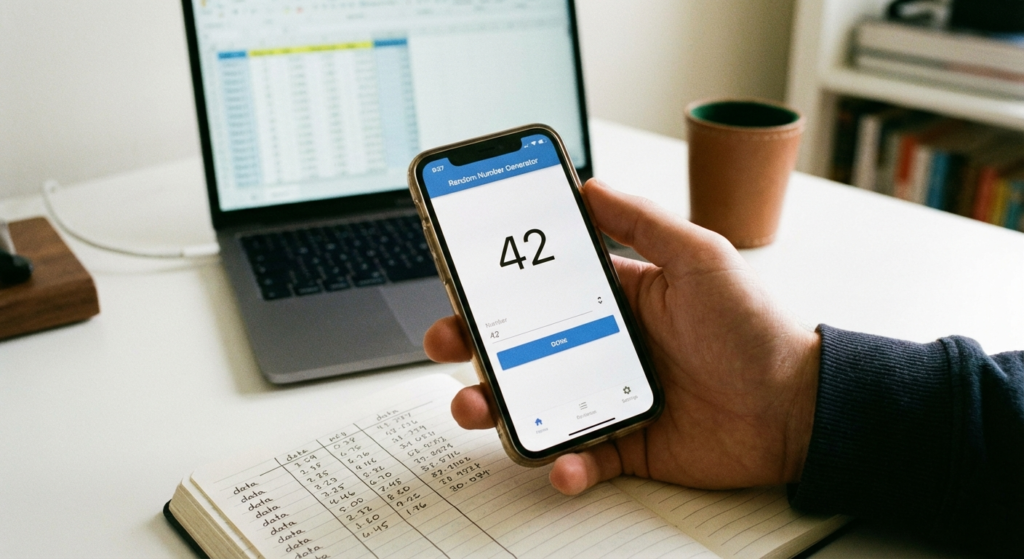
Have you ever stopped to consider the silent force shaping our digital world, dictating everything from the security of your online banking to the unpredictability of your favorite video game? It’s the Random Number Generator (RNG), and it’s far more critical than most people realize. I’ve spent years studying the impact of RNGs across various industries, and I can tell you firsthand, understanding how they work is essential in today’s tech-driven society.
We often take for granted that the digital systems we rely on are secure and fair. But behind the scenes, RNGs are constantly working to introduce the element of chance, making systems unpredictable and resistant to manipulation. In this comprehensive guide, I’ll walk you through the mechanics, types, and vital applications of the Random Number Generator. You’ll gain a deep understanding of how this technology impacts your daily life, and I’ll even share some insights that most people in the industry don’t know.
Understanding the Random Number Generator
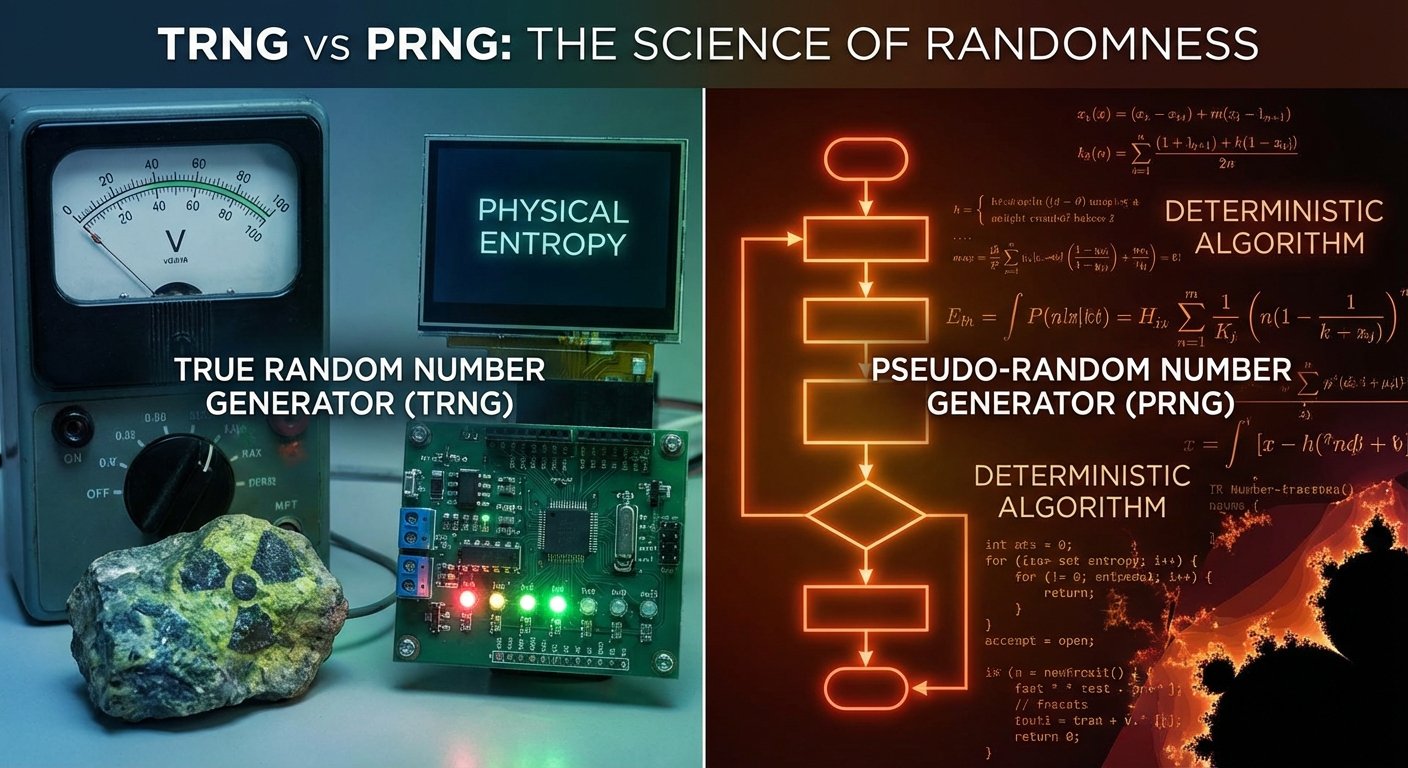
At its core, a Random Number Generator is a system designed to produce a sequence of numbers that lacks any discernible pattern. The challenge? Computers are inherently logical machines, designed to follow instructions. Achieving true randomness, therefore, is a surprisingly complex endeavor. This is where the two primary categories of RNGs come into play: True Random Number Generators (TRNGs) and Pseudo-Random Number Generators (PRNGs).
To effectively understand the use of Random Number Generator technology, it’s crucial to differentiate between these two types. A TRNG relies on physical phenomena – such as atmospheric noise, radioactive decay, or even the thermal noise within a resistor – to generate numbers. These sources of entropy are considered truly random because they are based on unpredictable physical processes. In contrast, a PRNG uses mathematical formulas to produce sequences that appear random but are, in fact, deterministic. If you know the starting point (the “seed”), you can predict the entire sequence.
True Random Number Generator (TRNG)
TRNGs are the gold standard when it comes to randomness. They harness the power of unpredictable physical phenomena to generate truly random numbers. Think of it like this: instead of flipping a perfectly balanced coin (which would be deterministic), you’re observing the decay of a radioactive atom – an event governed by the laws of quantum mechanics and inherently unpredictable.
- Source: Physical entropy (Heat, Noise, Quantum events)
- Use Case: High-security cryptography, sensitive data encryption, lotteries.
- Speed: Generally slower due to reliance on physical events. The process of measuring and converting physical phenomena into digital numbers takes time.
- Common Examples: Measuring radioactive decay, atmospheric noise, thermal noise in circuits, quantum phenomena.
The primary advantage of TRNGs is their unpredictability. Because they are based on physical processes, they are resistant to algorithmic attacks that can compromise PRNGs. However, they are also more expensive and slower than PRNGs, making them unsuitable for all applications.
Pseudo-Random Number Generator (PRNG)
PRNGs are the workhorses of the digital world. They use mathematical algorithms to generate sequences of numbers that appear random. While not truly random, a well-designed PRNG can produce sequences that pass rigorous statistical tests for randomness, making them suitable for a wide range of applications.
- Source: Mathematical Algorithms (Mersenne Twister, Linear Congruential Generator, Xorshift)
- Use Case: Simulations, Video Games, AI training, statistical sampling.
- Speed: Extremely fast and efficient for generating large datasets. This is because the underlying algorithms are computationally simple.
- Common Examples: Mersenne Twister, Linear Congruential Generator (LCG), Xorshift algorithms.
Here’s the deal: PRNGs are deterministic. If you know the seed value and the algorithm, you can predict the entire sequence. However, for many applications, this isn’t a problem. The sequences are long enough and complex enough that they appear random to anyone who doesn’t know the seed. Furthermore, modern PRNGs are designed to be cryptographically secure, meaning that it’s computationally infeasible to reverse-engineer the seed from the output.
Why the Random Number Generator is Vital for Security
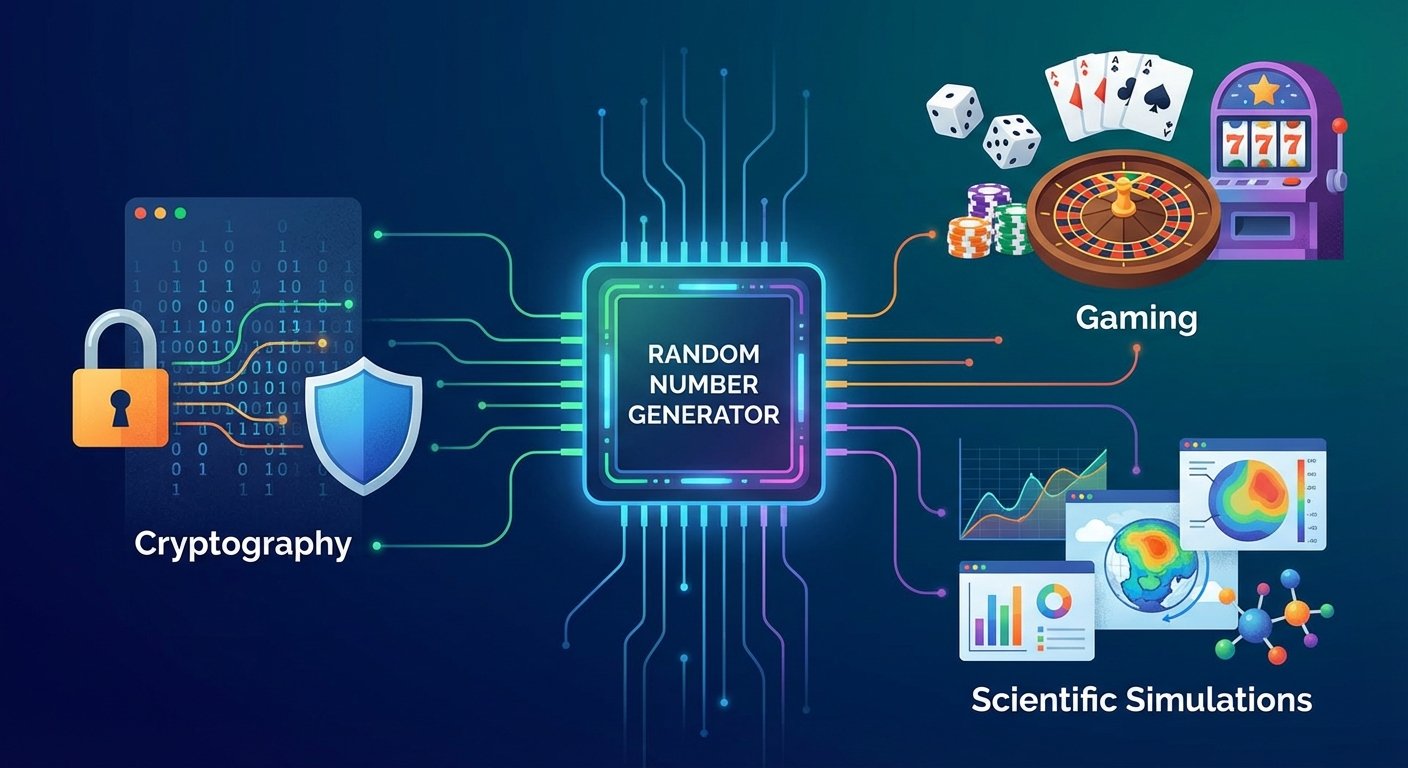
The most critical application of a Random Number Generator is in the field of cryptography. Think about it: every time you log into your email, make an online purchase, or access sensitive data, your information is protected by encryption. And at the heart of encryption lies the generation of keys – secret codes that scramble and unscramble your data. These keys must be unpredictable. If a hacker can guess the key, they can decrypt your data and access your personal information. This is where the quality of the Random Number Generator becomes a matter of digital life and death.
Cryptographically Secure Pseudo-Random Number Generators (CSPRNGs) are a specialized type of PRNG designed to meet the stringent requirements of cryptography. They must not only pass statistical tests for randomness but also withstand reverse-engineering attacks. In other words, even if an attacker knows a portion of the output sequence, they should not be able to predict future values or recover the seed. Without a robust Random Number Generator, protocols like SSL/TLS (which secure the web) would crumble, leaving our online communications vulnerable to eavesdropping and manipulation.
“Cryptography is the science of secrets, and randomness is the ink with which those secrets are written.”
For example, when generating a session key for a secure connection, the system might consider various sources of entropy, such as the exact millisecond of the clock, the movement of the mouse, and specific hardware interrupts, to seed the Random Number Generator. This ensures that no two sessions are ever alike, even if they occur within a short period.
The Role of the Random Number Generator in Blockchain
In the world of cryptocurrency and blockchain, randomness is paramount. It’s essential for selecting validators (the individuals or entities responsible for verifying transactions) and securing wallets (the digital containers that hold your cryptocurrency). A compromised Random Number Generator in a crypto wallet can lead to the generation of predictable private keys, allowing attackers to sweep funds and steal your digital assets. High-profile hacks in the past, such as the 2014 Bitcoin heist at Mt. Gox, have been attributed to weak RNG implementations, highlighting the critical necessity of high-entropy sources and robust cryptographic practices. According to a report by Chainalysis in 2020, over $1.7 billion in cryptocurrency was lost due to security breaches, many of which exploited weaknesses in random number generation.
The Random Number Generator in Gaming and Entertainment
If you’re a gamer, you’ve likely praised or cursed the “RNG gods.” In gaming, the Random Number Generator is the engine of unpredictability, the force that keeps games fresh, replayable, and fair. It’s what makes every playthrough a unique experience, even if you’re playing the same game over and over again.
- Procedural Generation: Games like Minecraft or No Man’s Sky use a Random Number Generator to create vast, unique worlds. By using a specific “seed,” the generator creates terrain, flora, and fauna that didn’t exist before. This allows developers to create virtually infinite worlds without having to manually design every detail.
- Loot Systems: When you defeat a boss, the item you receive is determined by a Random Number Generator. Developers assign probabilities to items (e.g., a 1% chance for a legendary sword), and the RNG “rolls the dice.” This creates a sense of excitement and anticipation, as players never know what they’re going to get.
- Card Shuffling: In online poker or blackjack, the fairness of the game relies entirely on the Random Number Generator ensuring that the deck is shuffled without any bias. This prevents players from predicting the order of the cards and ensures that everyone has an equal chance of winning.
It’s important to note that in gaming, developers often use PRNGs because speed is more important than perfect unpredictability. However, the logic must still be complex enough so players cannot predict the outcome easily. Game developers often tweak the PRNG algorithms to create specific gameplay experiences. For example, they might use a weighted RNG to increase the likelihood of certain events occurring at specific times.
Just as developers use tools to structure their code, like an H1-H6 tag extractor to organize content, game designers use RNG algorithms to organize chaos into engaging gameplay mechanics.
Scientific Research and the Random Number Generator
Beyond entertainment and security, the scientific community relies heavily on the use of Random Number Generator methodology for simulations. This is particularly true for Monte Carlo simulations, which are used to model the probability of different outcomes in a process that cannot easily be predicted due to the intervention of random variables. These simulations are essential for understanding complex systems and making predictions about their behavior. According to a 2018 report by the National Science Foundation, Monte Carlo simulations are used in a wide range of scientific disciplines, including physics, chemistry, biology, and engineering.
Scientists use these generators to simulate complex physical systems, such as:
- Weather Forecasting: Predicting weather involves chaotic variables. RNGs help simulate thousands of possible scenarios to find the most likely forecast. By running multiple simulations with slightly different initial conditions, meteorologists can estimate the range of possible outcomes and assess the uncertainty in their predictions.
- Nuclear Physics: Simulating the path of neutrons through shielding materials requires millions of random decisions to approximate real-world behavior. This is crucial for designing safe and effective nuclear reactors and for understanding the behavior of nuclear weapons.
- Financial Modeling: Analysts use the Random Number Generator to simulate market volatility and assess risk in investment portfolios. By running thousands of simulations with different market scenarios, they can estimate the potential losses and gains associated with different investment strategies.
For these calculations to be accurate, the precision of the underlying algorithms is paramount. Scientific simulations often require RNGs with extremely long periods – meaning they won’t repeat the same sequence of numbers for a very long time. Otherwise, the simulations could be skewed by the repeating patterns, leading to inaccurate results. Much like how you need exact inputs to calculate age in years, months, and days, scientific simulations require an RNG with a long “period” to ensure the reliability of the results.
Everyday Applications of Random Number Generators
You might be surprised to learn how often you interact with a Random Number Generator in daily life outside of tech-heavy fields.
Random Sampling in Statistics
When pollsters conduct a survey, they cannot ask everyone in a country their opinion. Instead, they select a sample. To ensure this sample is representative and free from bias, a Random Number Generator is used to select participants from a population database. This eliminates human bias in the selection process and ensures that the results of the survey are more likely to reflect the opinions of the entire population. According to the Pew Research Center, random sampling is a fundamental principle of survey research, and it’s essential for obtaining accurate and reliable results.
Art and Music
Generative art is a growing field where artists use algorithms to create visual pieces. A Random Number Generator dictates color palettes, brush strokes, and geometric shapes, resulting in unique, computer-assisted masterpieces. Similarly, in music production, “humanizing” a drum beat involves using an RNG to slightly alter the timing and velocity of hits, making a digital beat sound like it was played by a real drummer. This adds a layer of realism and expressiveness to digital music, making it sound more natural and less robotic.
Challenges and Future of the Random Number Generator
Despite their utility, generating true randomness is an ongoing challenge. As computers become faster, the ability to predict PRNGs increases. Quantum computing poses a significant threat to current encryption standards, which may render older RNG methods obsolete. Quantum computers, with their ability to perform complex calculations at speeds far exceeding those of classical computers, could potentially break the cryptographic algorithms that rely on PRNGs. This is a major concern for the security community, and it’s driving research into new and more robust RNG methods.
The future lies in Quantum Random Number Generators (QRNGs). These devices leverage the inherent unpredictability of quantum mechanics – such as the collapse of a photon’s wave function – to generate numbers that are theoretically impossible to predict. Companies and governments are currently investing heavily in this technology to secure the next generation of the internet. QRNGs offer the promise of truly random numbers that are immune to algorithmic attacks, providing a much higher level of security than PRNGs. According to a report by Quantum Business Insights in 2023, the global QRNG market is expected to reach $17.8 billion by 2030.
For more on the standards of randomness and security, the National Institute of Standards and Technology (NIST) provides extensive guidelines on approved random number generation methods.
Furthermore, innovative companies like Cloudflare have utilized creative physical sources, such as walls of lava lamps, to generate entropy for their Random Number Generator systems, proving that the quest for randomness can be both high-tech and visually fascinating.
Conclusion
The Random Number Generator is a fundamental pillar of modern computing. From securing your credit card information to creating immersive gaming worlds and advancing scientific discovery, its applications are endless. As technology evolves, so too will the methods we use to generate these numbers, moving from mathematical formulas to quantum physics. Understanding the use of Random Number Generator technology gives us a greater appreciation for the complex, invisible systems that keep our digital lives running smoothly and securely. The next time you play a video game, make an online purchase, or simply browse the web, take a moment to appreciate the silent force of randomness that’s working behind the scenes to make it all possible.
Frequently Asked Questions
A TRNG (True Random Number Generator) uses physical phenomena like atmospheric noise to generate numbers, making it truly unpredictable. A PRNG (Pseudo-Random Number Generator) uses mathematical algorithms. While PRNGs are faster, they are technically deterministic and can be repeated if the seed value is known.
Yes, specifically Pseudo-Random Number Generators (PRNGs). If an attacker can determine the “seed” number used to start the algorithm, they can predict every subsequent number. This is why secure systems use TRNGs or Cryptographically Secure PRNGs.
RNG ensures that games are not repetitive. It controls loot drops, enemy behavior, map generation, and critical hit chances, ensuring that every playthrough offers a unique experience.
Computers often rely on external inputs to simulate randomness. They might use the current time in milliseconds, mouse movements, or thermal noise from the hardware as a “seed” to feed into an algorithm, creating a sequence that appears random to humans.
Theoretically, Quantum Random Number Generators (QRNGs) are considered “perfect” because they rely on quantum physics, which is inherently random. However, for most general applications, a high-quality PRNG is sufficient and more efficient.
One common mistake is using a PRNG for cryptographic purposes without understanding its limitations. Another mistake is using a weak seed value, which can make the RNG predictable. It’s also important to choose an RNG that is appropriate for the specific application. For example, a simple LCG might be fine for a game, but it’s not suitable for a financial simulation.
Read Also:
- 7 Proven Strategies to Master Your Life Using a Habit Tracker
- Password Generator: Your Best Defense Against Cyber Threats
- Master Any Online Converter Tool: The Ultimate 2024 Guide
- 10 Ways to Maximize Results with a QR Code Generator
- Master the TIFF to PDF Converter: The Ultimate 2026 Guide
- Your 2026 Guide to Image SEO