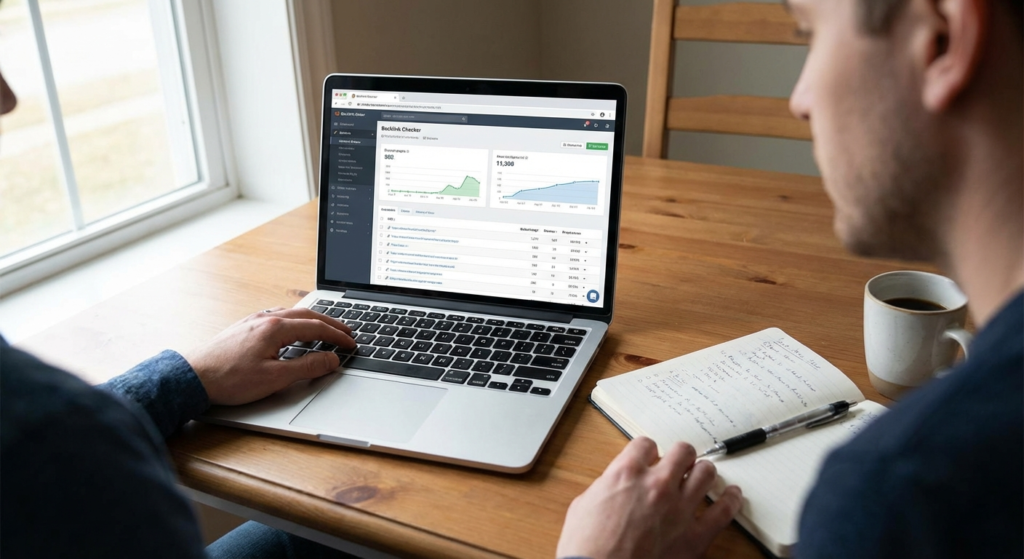
Want to dominate Google? Here’s the thing: you absolutely *need* to understand backlinks. In the cutthroat world of Search Engine Optimization (SEO), data isn’t just king – it’s the entire royal family. And a **backlink checker**? That’s your scepter. Seriously, if you’re aiming for those top spots, knowing who links to you (and your rivals) is non-negotiable.

Backlinks are still a HUGE ranking factor. They’re like votes of confidence from other sites, telling Google your content rocks. But not all votes are equal, right? A solid **backlink checker** lets you peek behind the scenes, giving you insights to shape your entire marketing game plan.
Whether you’re an SEO pro or just starting out, mastering a **backlink checker** can make or break your page one dreams. This guide? It’s gonna show you how to use these tools to spy on competitors and protect your site from nasty spam. Let’s get started.
What is a Backlink Checker and Why is it Essential?
Okay so, a **backlink checker** is basically a tool that crawls the web to find all the links pointing to a specific website or page. It gathers data, showing you how many links you have and their quality. But it does a lot more than just count ’em.
Modern SEO tools give you a ton of info about these links. Domain Authority (DA), anchor text, content relevance, DoFollow or NoFollow – you name it. Why does this matter? Because one killer link from a trusted news site is worth way more than a million crummy directory links.
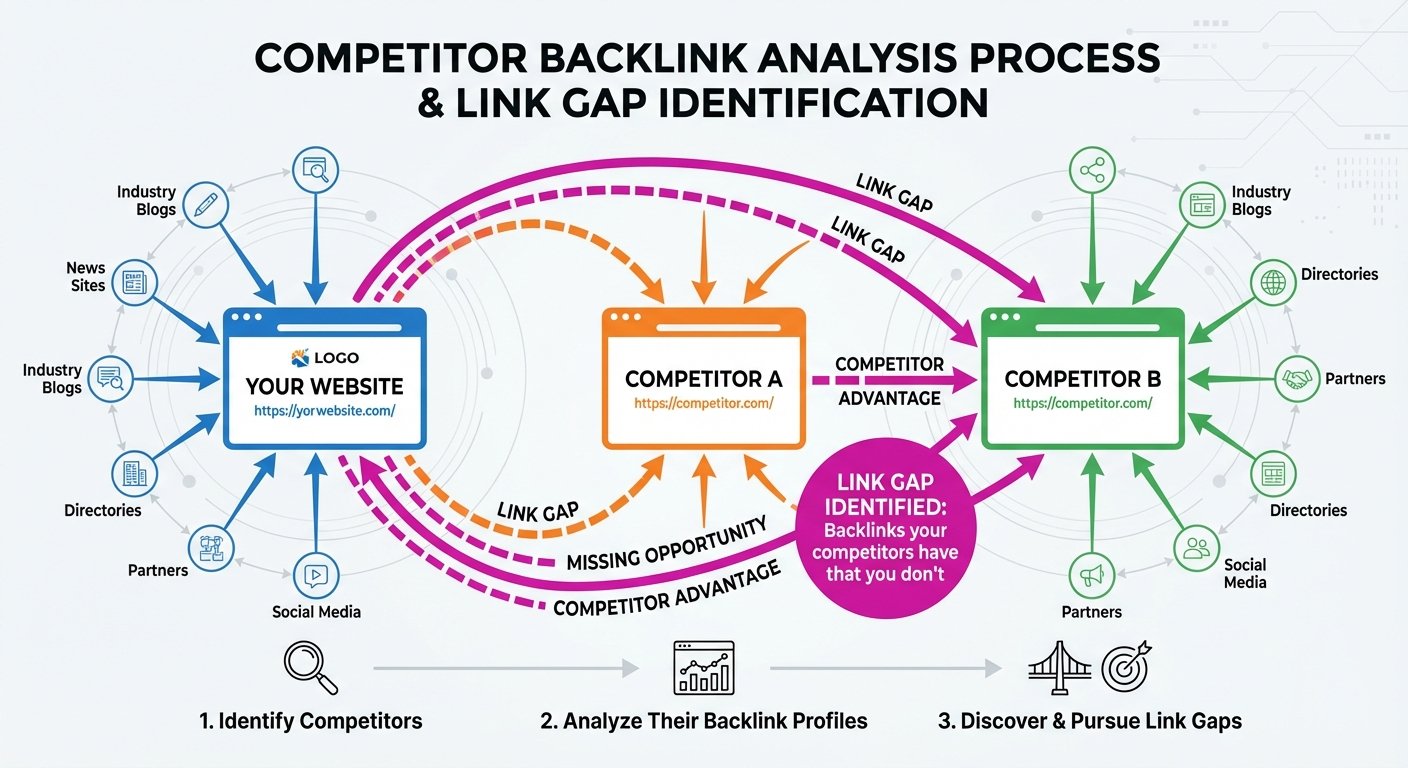
Link Auditing
See who’s linking to your site to understand your off-page SEO strength.
Competitor Analysis
Reverse-engineer your competitors’ link strategies to find new opportunities.
Risk Management
Spot and disavow toxic links that can hurt your rankings and trigger Google penalties.
How to Use a Backlink Checker for Competitor Analysis
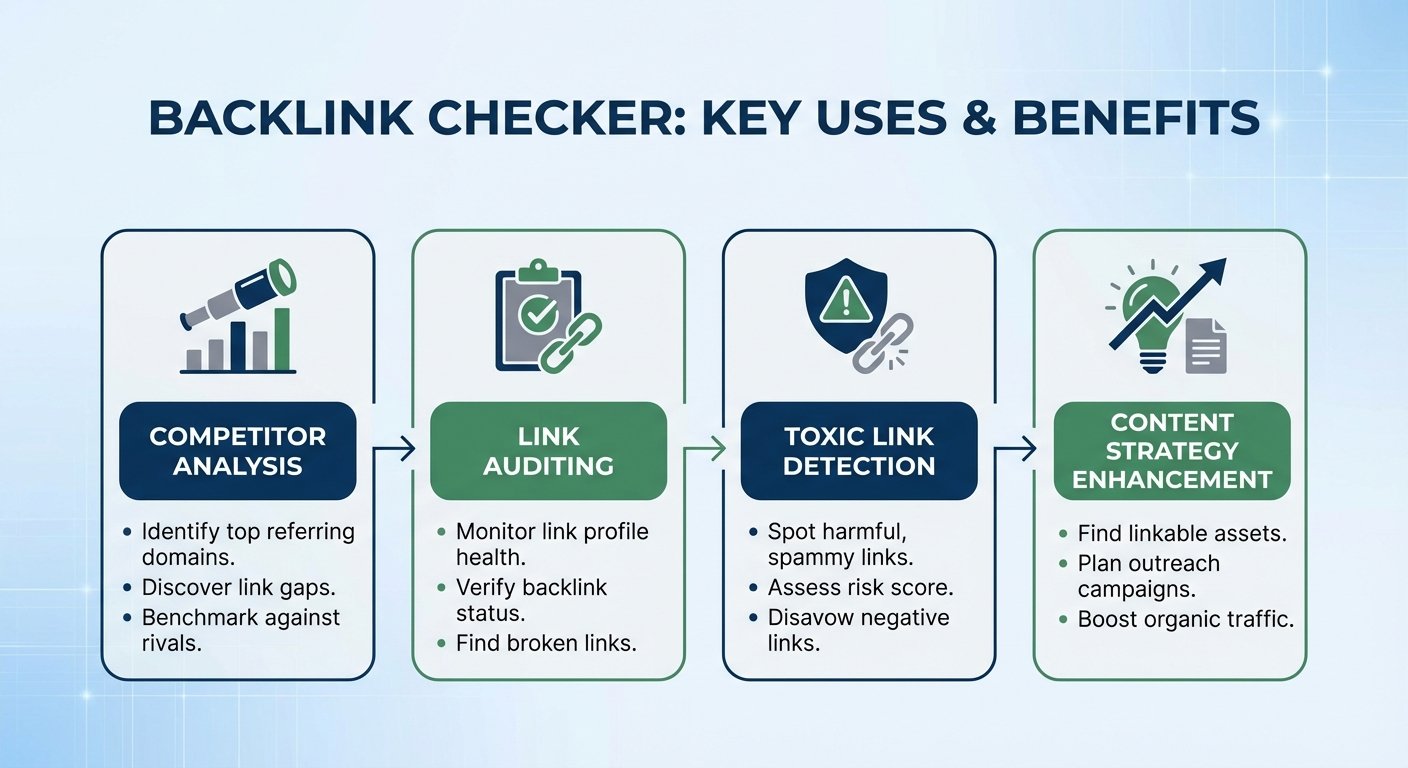
One of the coolest things you can do with a **backlink checker**? Spy on your competitors. If they’re outranking you, chances are their backlink game is stronger. Analyzing their profile is key to closing the gap.
Pop your competitor’s URL into the **backlink checker**. What patterns do you see? Are they getting shout-outs on specific blogs? Are they listed in resources you didn’t even know existed? Guest posting on high-authority sites?
Identifying Link Gaps
A “link gap” analysis? It’s where you compare your backlink profile to your top competitors. Most tools show you the overlap: sites linking to them but *not* to you. These are goldmines. Since they’ve already linked to similar stuff, they’re way more likely to link to you if you offer them awesome content.
Evaluating Link Quality with a Backlink Checker
Here’s the deal: quality beats quantity, every time. A lot of beginners obsess over the number of backlinks. Google’s way smarter now. It cares about relevance and authority. A **backlink checker** helps you judge the quality of your links.
When you look at your report, pay attention to those authority metrics (DA, DR, TF – whatever your tool calls them). A link from a high-authority site gives you more “link juice”. Also, check the referring domain’s traffic. A link from a dead site? Useless. A link from a thriving community? Now we’re talking.
Investing in the right tools is a must. Free options exist, but premium tools often have deeper historical data and faster crawling. Should you spend money? Read our guide on free vs paid online tools worth money for the breakdown.
Safeguarding Your SEO: Spotting Toxic Links
Not all attention is good. Links from spammy or malicious sites can seriously hurt you. It’s called “negative SEO”, and it can be accidental or a deliberate attack. A **backlink checker** is your first line of defense.
Monitoring Anchor Text Ratios
Another thing to watch in your **backlink checker**? Anchor text distribution. Anchor text is the clickable text in a link. If 90% of your links say “best running shoes” (exact match keyword), it looks fishy to Google. A healthy profile has a mix of branded anchors, naked URLs, and generic stuff (like “click here”). Your tool should visualize this, making sure your profile looks natural.
For Google’s official take on link schemes, check their official spam policies.
Using a Backlink Checker to reclaim Lost Links
Link rot happens. Pages move, disappear, or get updated, and links break. A **backlink checker** can help you find these “lost” backlinks – links you *used* to have.
Once you find ’em, reach out to the site owner. If the link broke because your page went 404, fix it or suggest a redirect. If they updated their content, politely ask if there’s room for your updated, awesome resource. It’s easier than getting a brand new link because you already have a relationship.
Lost Link Recovery
Find recently vanished links and contact webmasters to get them back.
Broken Link Building
Find broken links on other sites, make better content, and ask them to link to you instead.
Enhancing Content Strategy with Backlink Data
Your **backlink checker** also gives you content strategy clues. Which pages on your site (or your competitor’s) get the most links? That tells you what kind of content people value. Usually, it’s data studies, infographics, free tools, or in-depth guides.
Visual content, for example, is super linkable. If competitors are getting links with great images or videos, think about upgrading your own visuals. Tools for managing these assets are essential. If you’re looking at YouTube competitors, use a free YouTube thumbnail downloader to see what visual styles grab attention and links.
The Role of Authority in Ranking
Building authority takes time, right? According to Moz, Domain Authority is relative, not absolute. You don’t need a perfect score; just a higher one than your competitors. Regular use of a **backlink checker** lets you track this, proving your SEO ROI.
Conclusion
SEO can feel like navigating a maze blindfolded. A **backlink checker**? It’s your map, helping you steer your website towards better rankings and visibility. From competitor research to spotting spam and finding lost links, this tool is super useful.
Remember, SEO is a marathon, not a sprint. Regularly checking your profile with a good **backlink checker** helps you stay ahead of algorithm updates and competitor moves. Using the data these tools give you, you can turn guesswork into a precise strategy, driving more traffic and sales.
Frequently Asked Questions
For active websites, check your backlinks at least weekly. This helps you catch negative SEO early and track your outreach success.
Yep, while it can’t delete links from other sites, it identifies toxic links so you can create a “disavow file.” You then submit this to Google to ignore those links.
Free tools give you a snapshot, but they limit the number of links they crawl or the data they show. For serious SEO, paid tools offer more comprehensive and up-to-date info.
A DoFollow link is a normal link that lets search engines follow it to your site. It passes authority (link juice) and helps your SEO, unlike NoFollow links which tell search engines not to count the link.
Backlink quantity isn’t everything. Quality matters more. They might have tons of low-quality, spammy links, while you have fewer but better links from authoritative sources. On-page SEO and content quality also matter a lot.