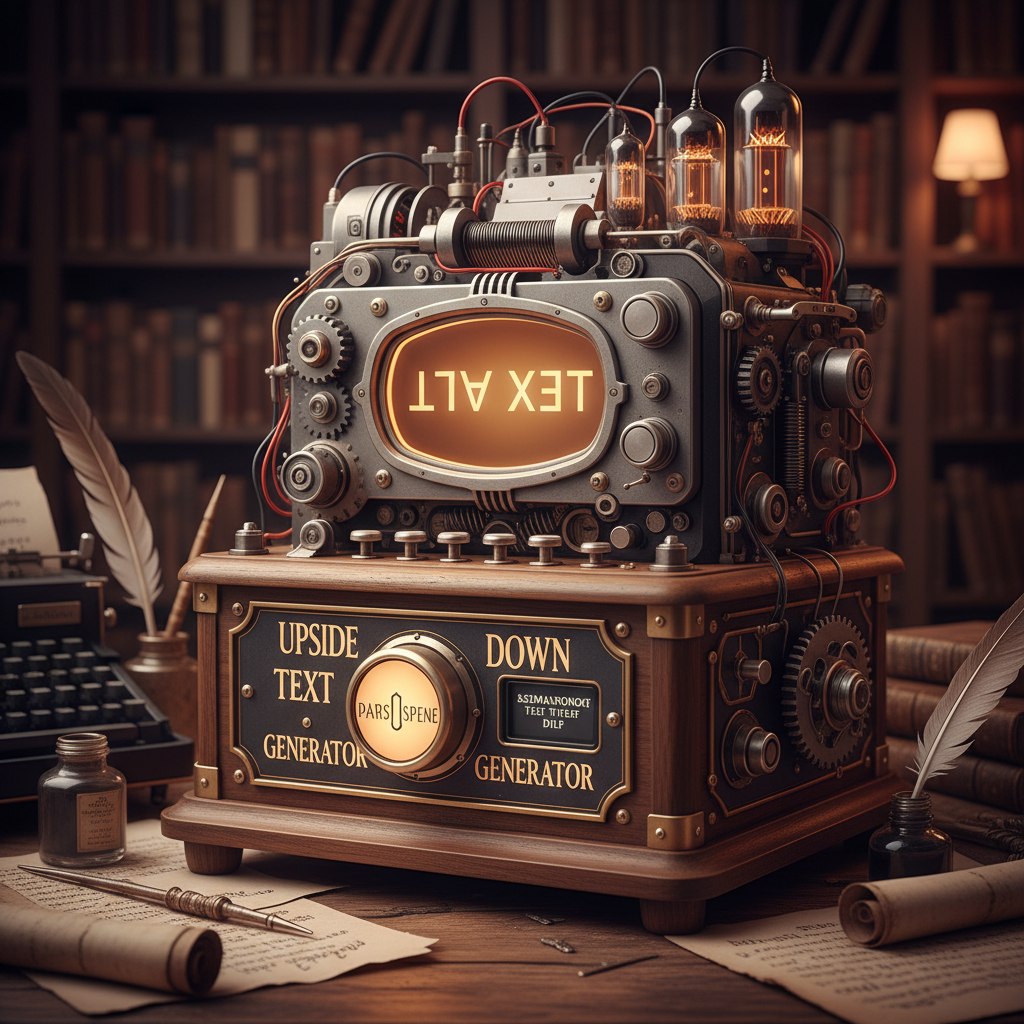
Unlocking Creativity with the Upside Down Text Generator
In the vast landscape of digital communication, standing out is paramount. While standard fonts and capitalization serve their purpose, sometimes you need a touch of rebellion or whimsy to grab attention. This is where the magic of an upside down text generator comes into play. It’s more than just a novelty; it’s a creative tool that allows users to instantly transform plain text into a mirrored, inverted version, perfect for social media bios, unique passwords, or just adding a visual twist to your messages.
If you’ve ever wondered how people manage to type messages that look like they’ve been flipped 180 degrees, the answer lies in Unicode and specialized online tools. These generators don’t actually rotate the text; rather, they substitute standard characters with unique, pre-defined symbols that resemble their inverted counterparts. Understanding the mechanism behind text flipping is the first step toward mastering this fun and functional tool.
What Exactly is Upside Down Text?
At its core, upside down text is a stylistic transformation achieved through the use of standardized Unicode symbols. Unlike traditional text formatting (like bold or italics, which are controlled by HTML or CSS), flipped text is composed of entirely different characters that are rendered universally across most modern devices and platforms.
When you type a phrase like “Hello World,” and run it through an upside down text converter, the output is something like “pןoɹM oןןǝH.” Notice how each letter retains its readability but is visually inverted. This inversion is crucial for creating content that bypasses standard text filters or simply serves as a unique visual element.
The Science Behind Flipped Text
The ability to generate unique character sets, including those used for upside down text, is rooted in the Unicode Standard. Unicode is an international encoding standard that defines nearly every character and symbol used in modern computing, including mathematical symbols, phonetic alphabet characters, and special Latin characters.
Many characters used in text flipping are drawn from specific Unicode blocks, such as those related to mathematical notation or specific historical scripts. For instance, the letter ‘a’ might be replaced by ‘ɐ’ (a phonetic symbol). Since these are recognized, standardized characters, they display consistently without requiring special fonts or plug-ins.
“Unicode provides a unique number for every character, no matter what the platform, no matter what the program, no matter what the language.” – The Unicode Consortium
Why Use an Upside Down Text Generator?
While the aesthetic appeal is undeniable, the utility of generating upside down text extends far beyond simple novelty. From enhancing online visibility to creating quirky design elements, these tools offer practical benefits for digital users.
Stand Out on Social Media
Use flipped text in your Instagram bio, TikTok captions, or Twitter feed to instantly catch the eye of scrollers. It breaks the visual monotony of standard fonts and increases engagement rates.
Creative Password Hints
Some users employ flipped text as a memorable, yet difficult-to-guess, hint for complex passwords. Since the text is non-standard, it adds a layer of obfuscation.
Design and Branding Elements
Graphic designers often use text transformations for logos, watermarks, or artistic titles, giving a brand a distinctive, edgy look without resorting to complex image manipulation.
Gaming and Usernames
In online gaming communities, unique usernames are highly prized. Flipped or stylized text allows players to secure memorable handles that might otherwise be unavailable.
How to Generate Upside Down Text Quickly and Easily
The process of converting standard text is remarkably straightforward, thanks to user-friendly online tools. You don’t need any technical knowledge; just a few clicks are all it takes to transform your message.
The best generators, such as the upside down text tool, offer instant conversion and easy copying functionality. Here is the typical step-by-step process:
- Locate the Tool: Navigate to a reputable online upside down text generator.
- Input Your Text: Type or paste the text you wish to invert into the input box. This can be anything from a single word to a long paragraph.
- Generate the Output: The tool instantly processes the input, replacing standard characters with their Unicode counterparts.
- Copy and Paste: Copy the resulting flipped text from the output box. It is now ready to be pasted into any compatible application, such as social media platforms, email clients, or documents.
Making Your Social Media Posts Stand Out
One of the most popular uses for this tool is elevating social media presence. Consider this scenario: a standard call-to-action is easily overlooked, but adding an element of visual surprise can significantly boost click-through rates. For example, instead of writing “Check out our new blog post,” you could use: “¡ʇsod ƃoןq ʍǝu ɹno ʇno ʞɔǝɥƆ.”
This technique is particularly effective on platforms like Instagram and Twitter, where character limits and rapid scrolling demand immediate attention. However, it is always wise to reserve these stylistic elements for impactful phrases, ensuring the core message remains accessible.
Applications of Upside Down Text Across Different Platforms
While Unicode provides universal compatibility, the execution and display of flipped text can vary slightly depending on the platform. Understanding these nuances ensures your inverted text looks exactly as intended, whether you are drafting a professional email or decorating a gaming profile.
Instagram & TikTok
Perfect for bios, story highlights, and comments. These platforms fully support Unicode characters, allowing for highly creative profile customization. It’s a great way to differentiate your brand voice.
Twitter (X)
Excellent for short, impactful tweets. Since Twitter focuses on rapid text consumption, the visual interruption provided by flipped text helps messages gain visibility in crowded feeds.
WhatsApp & Telegram
Used for quirky status updates or sending secret, stylized messages to friends. Compatibility is high, but extreme use might frustrate recipients who prioritize quick reading.
Blogging Platforms (WordPress, Medium)
Often used for visual headers, pull quotes, or decorative section breaks within longer articles. Ensure that its use complements, rather than detracts from, the overall content readability.
Beyond the Flip: Exploring Other Text Transformations
The concept of using Unicode substitutes to create visually unique text styles isn’t limited to just flipping. Many generators offer a variety of transformations, including bubble text, tiny text, and stylistic fonts that mimic cursive or gothic scripts. These tools operate on the same principle: mapping standard characters to unique Unicode symbols.
Exploring these alternative text styles can further enhance your digital toolkit. For those interested in expanding their knowledge of online resources and digital utilities, investigating related online calculators and guides can provide deeper insights into leveraging web-based tools for productivity and creativity.
The Difference Between Upside Down Text and Mirror Text
It is important to distinguish between “upside down text” and “mirror text.”
- Upside Down Text: Involves rotating characters 180 degrees (e.g., “A” becomes “ɐ”). The reading direction remains left-to-right, but the characters are inverted.
- Mirror Text: Involves reversing the order of the letters (e.g., “Hello” becomes “olleH”) and sometimes flipping the characters horizontally (which is less common with Unicode and more often achieved with CSS or specialized graphics).
The upside down text generator specifically focuses on the 180-degree character rotation, maintaining the correct word order for relative readability.
Ensuring Readability and Accessibility
While stylized text is visually appealing, content creators must consider accessibility. Screen readers and certain assistive technologies may struggle to accurately interpret Unicode symbols that are used purely for visual styling, as they are not standard alphabetical characters.
Therefore, it is recommended to use upside down text sparingly, primarily for decorative elements or short, attention-grabbing phrases, rather than for conveying essential information. Always provide the core content in standard, accessible font formats.
Furthermore, some Unicode characters used in text flipping are not perfectly symmetrical. They are approximations. The specific rendering of these characters can depend heavily on the operating system and the font installed on the user’s device. For a comprehensive look at how different Unicode symbols are displayed, resources from authoritative sources like the Web Accessibility Initiative (WAI) are invaluable.
Choosing the Best Upside Down Text Tool
With numerous generators available online, how do you choose the one that offers the best experience? The key lies in speed, reliability, and the breadth of character support. A high-quality tool should prioritize efficiency and user experience.
Instant Conversion Speed
The tool must process text instantly, regardless of length. Delays frustrate users and defeat the purpose of a quick utility.
Character Coverage
A superior generator supports not only the full Latin alphabet (A-Z, a-z) but also numbers (0-9) and common punctuation marks, ensuring comprehensive flipping capabilities.
Easy Copy Functionality
Look for a simple ‘Copy to Clipboard’ button. The process should be one-click, eliminating the need for manual text selection.
Mobile Responsiveness
Since much stylized text is generated for social media on the go, the tool must function seamlessly and reliably on mobile browsers.
Using specialized text generators allows digital creators to inject personality and intrigue into their content. By leveraging the vastness of the Unicode system, these tools provide a simple yet powerful way to transform ordinary text into something extraordinary.
According to research into digital typography, unique text styling, when used thoughtfully, can increase brand recall by up to 40% compared to generic formatting. This emphasizes the strategic value of tools that offer creative deviation from the norm. (Source: Smashing Magazine – Typography Section).
Conclusion
The upside down text generator is a fantastic utility for anyone looking to add flair, distinction, and novelty to their digital communications. By converting standard text into visually inverted Unicode symbols, these tools offer immediate creative flexibility for social media, design, and personalized messaging. While rooted in the technical standards of Unicode, the application is purely artistic and attention-grabbing. Remember to use this unique formatting strategically—it’s a powerful tool for standing out, but moderation ensures the continued readability of your most important messages. Start experimenting today and turn your content “on its head.”
FAQs
Search engines like Google primarily read the underlying Unicode characters. While the text is composed of recognized symbols, excessive use of non-standard formatting is not recommended for core SEO content, as it can sometimes be interpreted as gibberish or spam, potentially hurting relevance. Use standard text for primary keywords and context.
The display variation is due to the different fonts installed on your devices. Although the Unicode character code is the same, the font rendering engine on your specific operating system (iOS, Android, Windows) dictates the exact visual design and symmetry of that character, leading to minor visual differences.
Yes, you can, as most modern email clients support Unicode. However, use caution, as some overly stylized or unusual characters might trigger spam filters or appear broken to recipients using older or very niche email platforms. Test the subject line thoroughly before sending a large campaign.
The generator works perfectly for the basic Latin alphabet (English and many European languages). However, languages that use different scripts (like Cyrillic, Arabic, or logograms like Chinese) will not have corresponding inverted Unicode characters, and the generator will only flip the Latin characters it recognizes.
Yes, the vast majority of online upside down text generators are completely free to use. They are simple utilities that require minimal resources to run and are provided as helpful tools for digital creativity.
Read Also:
- The Definitive Guide on How to Create Robots.txt for WordPress SEO Success
- Mastering the Flip: How an Upside Down Text Generator Works and Why You Need It
- Optimizing Your Gains: Using a Daily Protein Intake for Muscle Growth Calculator
- Mastering Real Growth: How to Calculate SIP Returns with Inflation for True Wealth Assessment
- The Ultimate Guide to Convert Photo to Pencil Sketch Online Free: Tools, Techniques, and Tips
- 7 Reasons to Use a Retirement Calculator for Your Future
- 7 Powerful Ways a Compound Interest Calculator Can Transform Your Finances