Introduction: Why Strong Passwords Are Your First Line of Defense
In the digital age, your password is the primary gatekeeper to your finances, communications, and personal data. Yet, millions of people still rely on easily guessable sequences like “123456” or “password.” The reality is that automated hacking tools can test billions of combinations per second. A weak password is not just a vulnerability; it’s an invitation for trouble. Understanding how to create a strong password examples is no longer optional—it is fundamental digital hygiene.
The consequences of a security breach can range from minor inconvenience to catastrophic identity theft. In 2024, security experts emphasize that password strategy must evolve beyond simple complexity rules. We need length, uniqueness, and modern management techniques.
“Security is a journey, not a destination. And the first step on that journey is a truly strong, unique password for every critical service.”
Mastering the Fundamentals of How to Create a Strong Password Examples
For years, the standard advice centered on forcing complexity: capital letters, numbers, and symbols. While these elements are still important, the modern consensus, heavily influenced by organizations like the National Institute of Standards and Technology (NIST), prioritizes length above all else. A longer password exponentially increases the time required for a brute-force attack.
Length and Entropy: The Key to Unbreakable Passwords
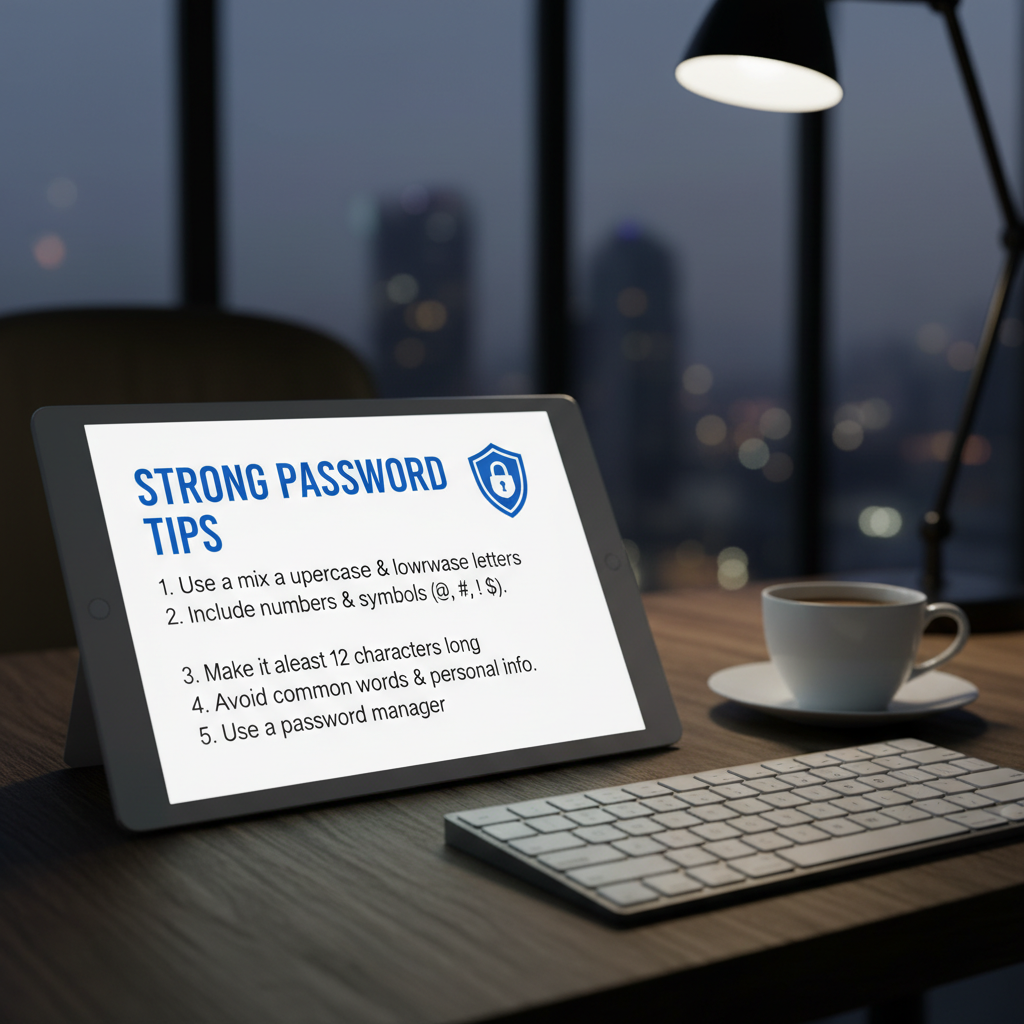
When considering how to create a strong password examples, length is king. Current recommendations suggest a minimum of 12 characters, and ideally 16 or more, especially for primary accounts like email or banking. Entropy refers to the randomness and unpredictability of the password. High entropy means the password is hard to guess.
Length Matters Most
A 16-character phrase, even if it uses common words, often has higher entropy than an 8-character complex string, simply because the number of potential combinations is vastly larger.
Complexity Remains Vital
Always mix character types: uppercase (A-Z), lowercase (a-z), numbers (0-9), and symbols (!@#$%^&*). This ensures maximum character space utilization.
The Time Factor
An 8-character password might be cracked instantly by modern tools, while a 14-character password containing mixed characters can take centuries.
Practical Strategies: How to Create a Strong Password Examples Using Unique Techniques
Creating long, complex passwords that are also memorable seems like a paradox, but it is achievable through strategic methodologies. Forget substituting ‘a’ with ‘@’; these simple substitutions are easily predicted by modern cracking algorithms.
1. The Passphrase Method (Recommended)
Instead of a single complex word, use a sequence of unrelated words. This creates a long, high-entropy string that is easy for you to recall but virtually impossible for a computer to guess. This is one of the best how to create a strong password examples strategies available today.
- Example:
Giraffe-Balloon-Coffee-PurpleTrain!(29 characters) - Why it works: The words are randomly chosen and unrelated, making dictionary attacks useless. Adding spaces, hyphens, and a symbol or two further enhances security.
2. The Acronym Method
Choose a memorable sentence or lyric and use the first letter of each word, incorporating punctuation and numbers from the original phrase.
Original Sentence: “I went to the store on May 1st, 2024, and bought 3 apples!”
Password: IwtTsOM1,24&b3a!
Passphrase Method Summary
Focuses on length and memorability. Ideal for primary accounts where high security is non-negotiable. Easy to generate and recall without writing down.
Acronym Method Summary
Focuses on structured complexity derived from a personal memory. Useful for services that restrict maximum password length but still require complexity.
Avoiding the Pitfalls: What NOT to Do
Knowing what constitutes a strong password is only half the battle; avoiding common traps is equally important. Many security breaches occur because users recycle passwords or use easily accessible personal information.
- Do Not Use Personal Information: Avoid names, birthdays, pet names, addresses, or phone numbers. This information is often easily gathered from public social media profiles.
- Do Not Use Sequential or Repeating Characters: Sequences like ‘abcd’, ‘1234’, or repetitions like ‘aaaa’ are instantly flagged and tested by cracking software.
- Do Not Use Dictionary Words: Passwords composed solely of dictionary words (e.g., ‘summerhouse’) are weak, even if they are long, because they are the first targets of dictionary attacks.
- Do Not Recycle Passwords: This is perhaps the most critical error. If one service is breached, every other account using that same password is now compromised. Every account must have a unique password.
Advanced Strong Password Tips: Beyond Simple Creation
Creating a strong password is just the starting point. Managing dozens of unique, complex passwords across various services requires tools and additional security layers.
The Non-Negotiable Tool: The Password Manager
It is humanly impossible to remember 50 unique, 16-character passwords. This is where a robust password manager becomes essential. A manager encrypts and stores all your credentials behind a single, extremely strong master password. Many managers also include built-in Password Generator features, ensuring that the passwords created are truly random and high-entropy.
Zero-Knowledge Architecture
Ensure the manager uses zero-knowledge encryption, meaning only you can access the vault, not the company providing the service.
Cross-Platform Sync
The manager should seamlessly sync across all your devices (desktop, mobile, tablet) for easy access and updating.
Auditing & Monitoring
Look for features that audit your existing passwords for weaknesses, identify reused passwords, and alert you if credentials appear in known data breaches.
The Essential Security Layer: Multi-Factor Authentication (MFA)
Even the most complex password can be bypassed if it is stolen via phishing or keylogging. Multi-Factor Authentication (MFA), sometimes called Two-Factor Authentication (2FA), acts as a critical second barrier. It requires a second form of verification that only you possess.
According to CISA (Cybersecurity and Infrastructure Security Agency), implementing MFA reduces the risk of account takeover dramatically. It ensures that even if a criminal knows your strong password, they cannot log in without access to your physical token, phone, or biometrics. You should enable MFA on every service that supports it, especially email, banking, and critical cloud services. Learn more about MFA best practices from authoritative sources like CISA.
Establishing a Secure Password Routine
A strong password strategy requires ongoing maintenance. It’s not enough to set a strong password once; you must integrate security into your daily digital routine.
When and How Often Should I Change My Passwords?
The traditional advice of changing passwords every 90 days has largely been debunked by security experts. Forced frequent changes often lead users to choose weaker, predictable passwords (e.g., adding ‘2’ instead of ‘1’ to the end of the old password).
Modern guidelines suggest that if you are using unique, complex passwords generated by a password manager, you only need to change them immediately if:
- A service you use announces a data breach.
- You suspect malicious activity on your account.
- You accidentally entered your password on a phishing site.
- You are decommissioning a password manager or device.
If you are not using a password manager and are relying on human-generated passwords, periodic review (every 6–12 months) of your most critical accounts is still advised.
The Role of Dictionary and Rainbow Table Attacks
To fully grasp how to create a strong password examples, it helps to understand the threats. Attackers use ‘dictionary attacks’ (trying every word in the dictionary, sometimes with common substitutions) and ‘rainbow tables’ (pre-computed hash values of common passwords).
A passphrase consisting of four unrelated words (e.g., ‘cat-stapler-mountain-ocean’) defeats both these methods because the combined phrase does not exist in a standard dictionary or rainbow table. This highlights why modern security favors long, random combinations over short, complex ones.
For more detailed technical guidelines on password security and authentication standards, you can refer to the official documentation from the National Institute of Standards and Technology (NIST).
Conclusion: Securing Your Digital Future
Creating and maintaining strong passwords is the bedrock of modern cybersecurity. By prioritizing length, using unique passphrases or random sequences, and leveraging the power of a password manager, you move from being an easy target to a well-defended fortress. Remember, the goal is high entropy and zero repetition. Implement Multi-Factor Authentication today, choose a reliable Password Manager, and utilize the robust techniques discussed to ensure your digital life remains private and secure.
FAQs
Generally, a simple, long password (16+ characters) is significantly better than a complex, short one (8 characters). Length provides exponential protection against brute-force attacks, outweighing the minor benefit of forcing complexity into a short string. However, the best approach is a long password that incorporates complexity (a strong passphrase).
Current expert consensus suggests that mandatory frequent password changes (e.g., every 60 or 90 days) are counterproductive, as they encourage users to choose predictable variations. Instead, focus on using unique, high-entropy passwords for every service, and only change them immediately if a specific account is compromised or suspected of being breached.
The single biggest mistake is password reuse. Using the same password across multiple platforms means that if one site suffers a data leak, all your accounts are immediately vulnerable. Every critical service (email, banking, social media) must have a unique, strong password.
While length is paramount, special characters are highly recommended as they increase the character space, boosting the password’s entropy and making it harder for simple dictionary attacks or rainbow tables to guess. Aim for at least one or two symbols and numbers in addition to mixed-case letters.
Password managers typically include advanced generation tools that create truly random strings of specific lengths (e.g., 20 characters), incorporating maximum complexity (mixed case, numbers, symbols). Since these are difficult to remember, the manager securely stores and autofills them for you, ensuring you use a unique, high-entropy password for every login without needing to recall the string yourself.
Read Also:
- Maximizing Returns: A Comprehensive Guide to Post Office FD Interest Rates 2025 Calculator and Schemes
- Maximizing Savings: Using the Income Tax Calculator New Regime vs Old Regime for FY 2024-25
- The Essential Pregnancy Weight Gain Chart Month by Month: A Comprehensive Guide for Expectant Mothers in India
- The Definitive Guide: How to Calculate ROI on Marketing Campaigns Effectively
- 7 Ways a Compound Interest Calculator Accelerates Your Wealth
- How to Use a Crypto ROI Calculator: 7 Essential Steps for Smart Investing
- Master Username Generator Tools: 7 Strategies for a Pro Online Identity
- Your Ultimate Username Guide for 2026
- Your 2026 Secret SEO Weapon: Meta Tags
- 7 Proven Strategies to Master Your Life Using a Habit Tracker – Visual Story