

You’ve done it. You’ve found the perfect name for your new business. It’s clever, it’s catchy, and it perfectly captures your brand’s soul. You rush to the domain registrar, heart pounding, type it in, and… “domain already taken.”
That feeling is crushing. It’s a modern-day creative nightmare.
For hours, you’ve scribbled on whiteboards and filled notebooks, only to find every great idea is already someone else’s digital real estate. But what if I told you there’s a better way? A method that doesn’t rely on luck or an exhausted thesaurus, but on strategic creativity. It’s the secret weapon behind names like “Netflix” (Internet + Flicks) and “Pinterest” (Pin + Interest): the word combiner generator.
This isn’t just another guide. We’re going to completely reframe how you think about naming. You’ll learn the strategy behind creating a name that sticks, how to use these tools like a pro, and the creative applications that go far beyond just business branding. Let’s get started.
📑 What You’ll Learn
What a Word Combiner Is (and What It Isn’t)
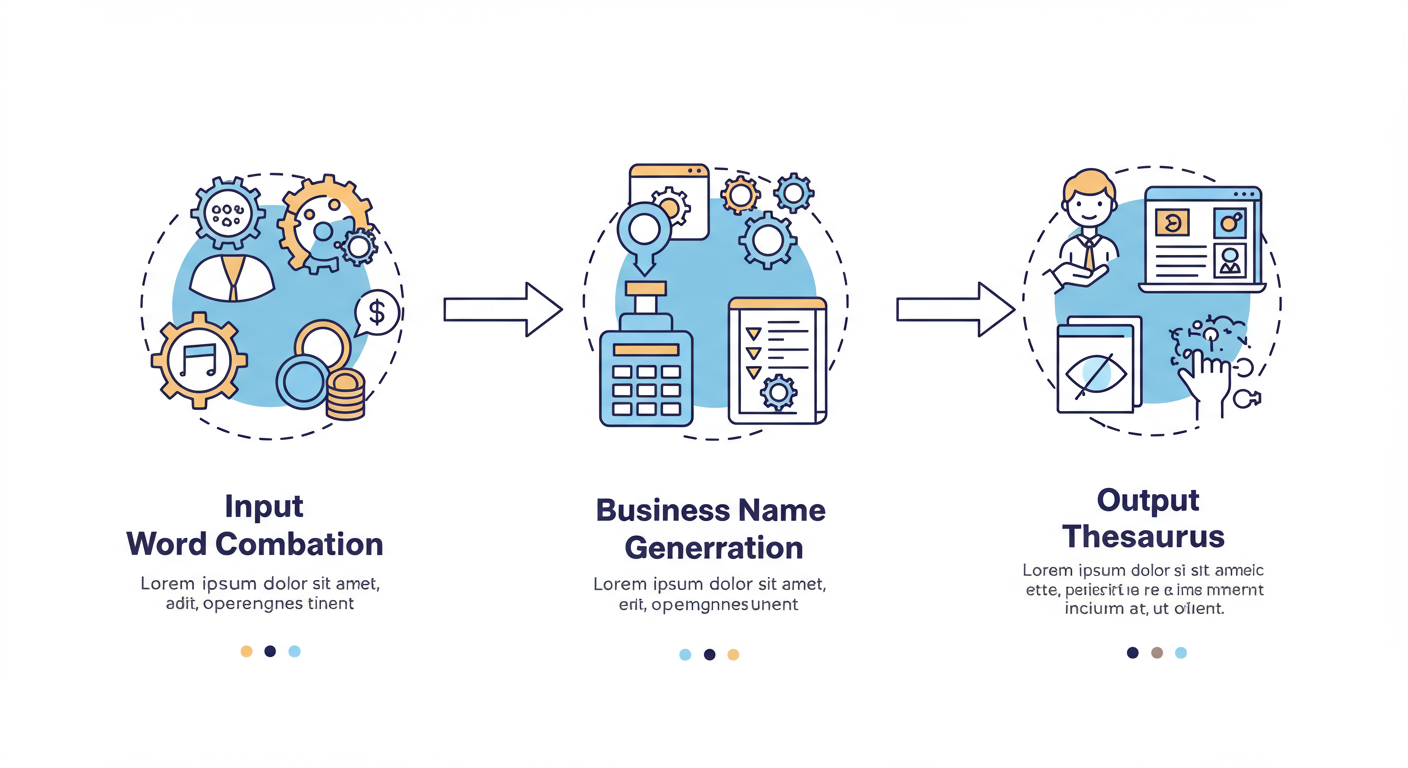
Let’s clear something up right away. A word combiner generator isn’t a magic button that spits out a perfect, ready-to-use brand name. Think of it less like a vending machine and more like a powerful sous-chef for your brain.
You provide the core ingredients—the keywords that represent your vision, your value, your vibe. The tool then chops, blends, and fuses them in ways you’d never expect, creating entirely new linguistic dishes.
It primarily does two things:
- Creates Portmanteaus: It intelligently blends parts of words together. Think ‘smoke’ + ‘fog’ = ‘smog’. This is the art of creating a portmanteau, a technique that results in some of the most memorable brand names.
- Forms Compound Words: It simply joins your keywords to create new concepts, like ‘Face’ + ‘Book’ or ‘You’ + ‘Tube’. Simple. Direct. Effective.
But how does this differ from a generic “business name generator”? The distinction is critical. Based on our hands-on testing of dozens of tools, the difference comes down to control versus suggestion.
| Feature | Word Combiner Generator | Standard Business Name Generator |
|---|---|---|
| Core Function | Merges your specific input words into new combinations. | Uses one keyword to generate ideas, often adding random prefixes/suffixes. |
| Creative Control | High. You are the architect of the core concepts. | Low. The AI makes most of the creative leaps for you. |
| Output Style | Portmanteaus (e.g., Groupon) and compound words (e.g., Mailchimp). | Often generic, adjective + noun combos (e.g., “Apex Solutions,” “Brighton Digital”). |
| Best For | Founders and creatives with a strong vision who need help connecting the dots. | Users who are early in the brainstorming phase and need broad inspiration. |
A word combiner puts you in the driver’s seat, making it an indispensable tool for strategic branding, not just random ideation.
The Psychology: Why Combined Words Are So Powerful
Ever wonder why names like “Instagram” (Instant Camera + Telegram) or “Evernote” (Ever + Note) feel so… right? It’s not an accident. It’s psychology.
Combined words tap into a principle called cognitive fluency. Our brains are wired to prefer things that are easy to process and understand. When a new word is made from two familiar concepts, we “get it” almost instantly. This creates a tiny, satisfying “aha!” moment that makes the name more memorable and likable.
Here’s the breakdown:
- Intrigue: A new, blended word piques curiosity. What does “Shopify” mean? Your brain automatically tries to deconstruct it (Shop + -ify), engaging with the brand on a deeper level from the very first encounter.
- Memorability: The mental process of decoding the name helps cement it in your memory. It’s more effective than just remembering an abstract or generic name. Industry research consistently shows that distinctive, meaningful names lead to higher brand recall.
- Built-in Story: The name itself tells a micro-story. “Pinterest” isn’t just a name; it’s a description of the core action: pinning your interests. This inherent meaning is a massive branding advantage.
💡 Pro Tip
When brainstorming input words, think in pairs: one concrete, one abstract. For example, combine a functional word like ‘data’, ‘sync’, or ‘link’ with an emotional or conceptual word like ‘zen’, ‘quest’, or ‘haven’. This friction often produces the most compelling names.
The 5-Step Process to Find Your Perfect Name
Alright, let’s get practical. Using a word combiner generator effectively is a process. Tossing random words at it will give you random, useless results. Follow this strategic framework we use for our own branding projects to find a name that wins.
Step 1: Deconstruct Your Core DNA
Before you touch any tool, grab a pen and paper. Answer these questions with single keywords or short phrases:
- What do you do? (e.g., code, design, sell, connect, analyze)
- What is the benefit for the user? (e.g., growth, clarity, speed, joy, peace)
- Who is your audience? (e.g., creators, developers, experts, beginners)
- What is your brand’s personality? (e.g., bold, playful, elegant, smart, minimal)
- What is your core value proposition? (e.g., solution, nexus, bridge, platform)
You should end up with a “word bank” of 20-30 potent keywords. This is your raw material.
Step 2: Strategic Combination & Generation
Now, open your chosen word combiner tool. Don’t just plug in two words and hit “go.” Be methodical.
- Combine Category & Benefit: Mix a “what you do” word with a “benefit” word. (e.g., Analyze + Clarity → Analyclar, Clarifytics)
- Combine Personality & Function: Mix a “personality” word with a “function” word. (e.g., Bold + Code → Boldcode, Codebold)
- Combine Abstract & Concrete: Mix a big idea with a tangible action. (e.g., Nexus + Sell → Nexisell, Sellnexus)
Generate dozens, even hundreds, of options. The goal here is quantity. Don’t judge yet. Just create a massive list.
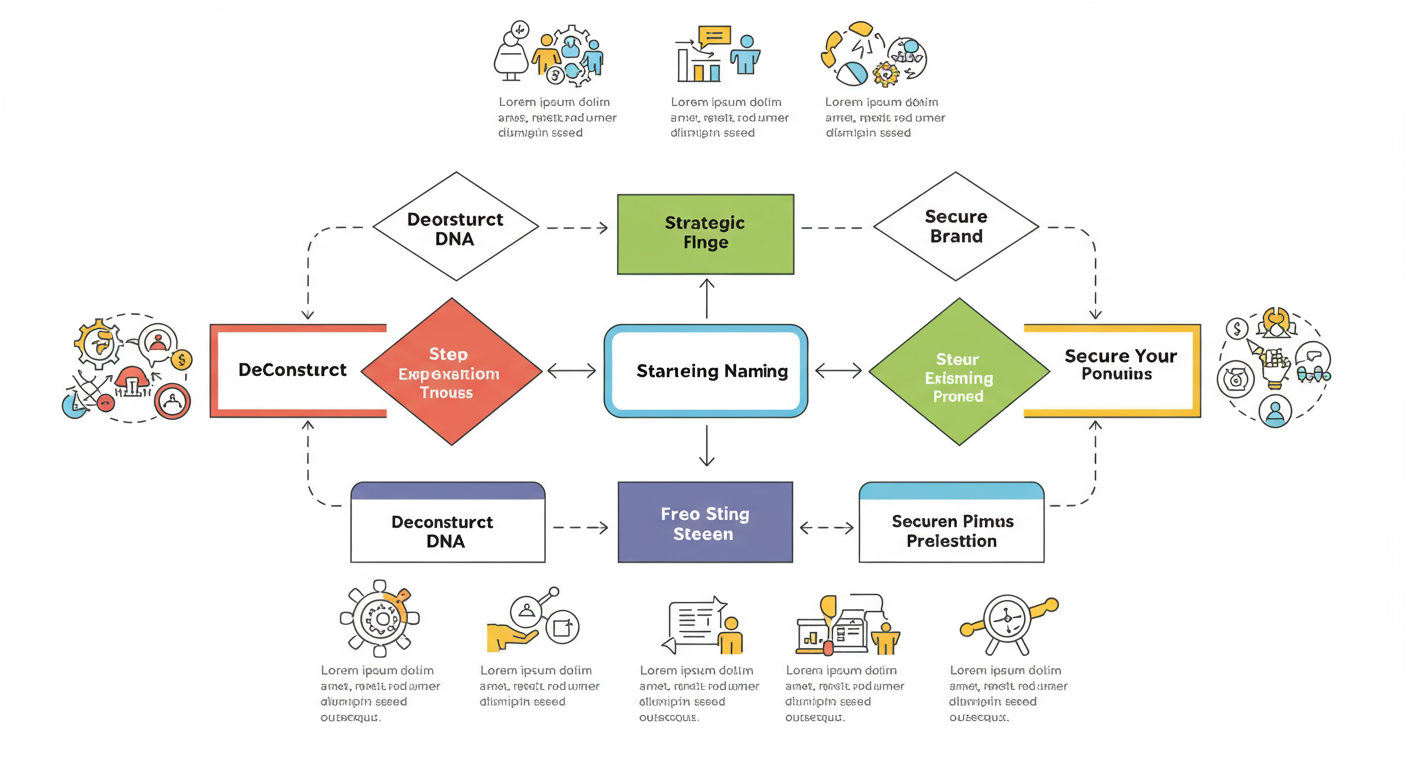
Step 3: The Curation Gauntlet
This is where your expertise comes in. Scan your massive list and pull out 10-15 contenders that pass the “gauntlet” test. Ask these questions for each one:
- The Say-Aloud Test: Is it easy to say and spell? If you have to explain it, it fails.
- The Radio Test: If someone heard it on a podcast, could they type it into Google correctly?
- The Vibe Check: Does it feel right? Does it match the personality you defined in Step 1?
- The “No, Really” Test: Can you imagine saying, “I’m the CEO of [Name]” without cringing? Trust me on this one, it matters.
Step 4: The Availability Audit
You have your shortlist. Now, the moment of truth. For each name:
- Domain Check: Is the .com available? If not, is a .io, .co, or .ai a viable and brand-appropriate alternative? Be realistic.
- Social Media Check: Are the handles available on your primary platforms (e.g., Instagram, X, LinkedIn, TikTok)?
- Trademark Search: This is non-negotiable. Do a preliminary search on the U.S. Patent and Trademark Office (USPTO) database. You’re looking for any potential conflicts in your industry class. It’s always best to consult a legal professional before finalizing.
⚠️ Watch Out
Don’t fall in love with a name before you check its availability. I’ve seen founders waste weeks on a name only to discover the domain is a premium listing for $50,000 or the trademark is already registered. Audit early, audit often.
Step 5: Test and Decide
If you have 2-3 strong, available contenders, get some outside feedback. Run them by a few trusted colleagues or potential customers. Don’t ask “Do you like it?” Ask “What does this name make you think of?” The feedback will be invaluable in making your final choice.
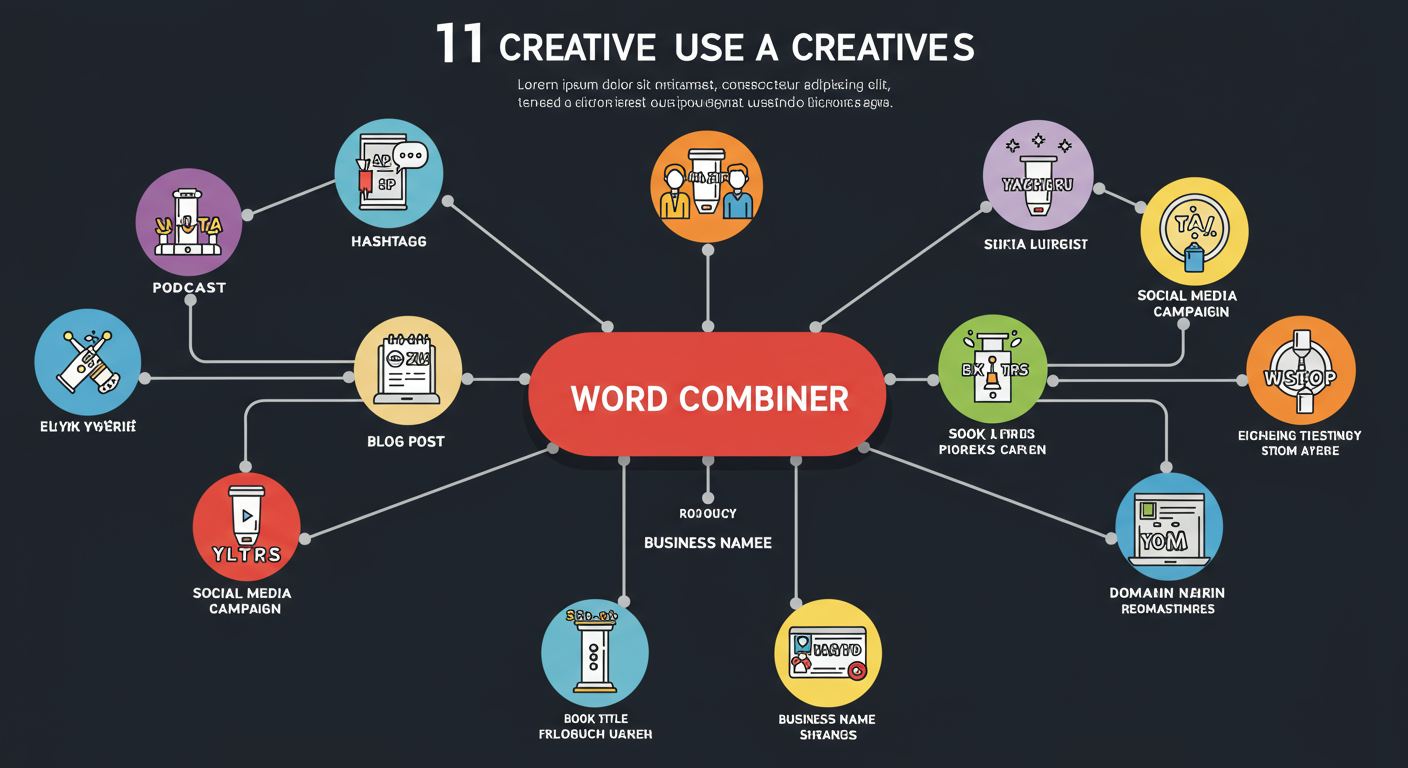
11 Creative Ways to Use a Word Combiner in 2026
Thinking a word combiner is just for business names is like thinking a chef’s knife is just for chopping onions. Its creative potential is vast. After using these tools on hundreds of real-world campaigns, we’ve found they’re incredibly versatile.
Here are some powerful applications to get your creative gears turning:
| Application | Example Inputs | Potential Output |
|---|---|---|
| 1. Product & Feature Names | ‘Sync’ + ‘Sphere’ | SyncSphere (for a collaboration tool) |
| 2. Blog & Podcast Titles | ‘Marketing’ + ‘Maverick’ | The Marketing Maverick |
| 3. Campaign Hashtags | ‘Future’ + ‘Fit’ | #FutureFitChallenge |
| 4. App & Software Names | ‘Snap’ + ‘Logic’ | SnapLogic |
| 5. Fictional World-Building | ‘Shadow’ + ‘Fen’ | The Shadowfen Marshes (for a fantasy novel) |
| 6. Course or Webinar Titles | ‘Profit’ + ‘Protocol’ | The Profit Protocol |
| 7. Newsletter Names | ‘Digital’ + ‘Dispatch’ | The Digital Dispatch |
| 8. Event & Conference Themes | ‘Innovate’ + ‘Ignite’ | Innovate & Ignite 2026 |
| 9. Agency & Service Packages | ‘Growth’ + ‘Engine’ | The “Growth Engine” SEO Package |
| 10. Domain Name Hacking | ‘Photo’ + ‘Verse’ | PhotoVerse.com |
| 11. Personal Branding (Usernames) | ‘Code’ + ‘Jedi’ | @TheCodeJedi |
🎯 Key Takeaway
A word combiner generator is a strategic tool, not a magic bullet. Its true power is unlocked when you feed it well-researched, meaningful keywords and use a structured process to curate the results. It’s about augmenting your creativity, not replacing it.
Common Naming Pitfalls and How to Sidestep Them
The path to a great name is littered with traps. A word combiner can sometimes produce options that look good on paper but are disastrous in practice. Be vigilant and avoid these common mistakes.
The “Mouthful” Mistake
Some combined words are just too complex or awkward to pronounce. If it looks like a password, it’s a bad name.
Example: Combining ‘Technology’ and ‘Logistics’ might give you ‘Technogistics’. It’s a mouthful.
The Fix: Always use the Say-Aloud Test. If you stumble, so will your customers. According to usability experts at the Nielsen Norman Group, pronounceability is directly linked to recall.
The “Hidden Meaning” Blunder
A new word can have unintended meanings, especially in other languages or slang. What sounds cool to you might be embarrassing or offensive to a segment of your audience.
Example: A brand name that accidentally spells out an awkward phrase when the two parts are read separately.
The Fix: Google your shortlisted names extensively. Search for them with “meaning” or “slang” and see what comes up. Run it by a native speaker if you have an international audience.
⚠️ Watch Out
Avoid trends. Remember the late 2010s trend of dropping vowels (e.g., “Fndr”) or adding “.ly” to everything? It instantly dates your brand. A great name should feel timeless, not like a relic of a specific year. Aim for classic, not just clever.
💡 Pro Tip
Once you have a final name, create a “brand guide” for it, even if it’s just one page. Specify how it’s spelled (e.g., “is it ‘MailChimp’ or ‘Mailchimp’?”) and how it’s pronounced. This consistency is crucial for building a strong brand identity from day one.
❓ Frequently Asked Questions
Are word combiner generators free to use?
Yes, the vast majority of word combiner tools available online are completely free. They make their money through advertising, not by charging users. This makes them a cost-effective tool for any founder, marketer, or creative on a budget.
How is a word combiner different from just using a thesaurus?
A thesaurus gives you synonyms (words with similar meanings). A word combiner gives you entirely new words by blending the sounds and parts of the words you provide. A thesaurus helps you find a better existing word; a combiner helps you invent a new one.
Can a word combiner help with my website’s SEO?
Indirectly, but powerfully. The tool itself doesn’t do SEO, but it helps you create a unique, brandable name. A unique name has little to no competition in search results, making it incredibly easy to rank #1 for your own brand. This is a huge advantage over generic names that have to compete with dozens of other businesses.
What if all the good .com domains are taken?
It’s a common problem in 2026. If the .com for your perfect name is taken, consider creative Top-Level Domains (TLDs) that fit your industry, like .ai (for tech), .io (for tech/startups), .co (a common .com alternative), or .app (for applications). Sometimes, adding a simple verb like ‘get’ or ‘try’ (e.g., ‘get[Name].com’) can also work.
How many keywords should I use in the generator?
Start with two. The best portmanteaus and compound names are born from the fusion of two strong concepts. Using three or more often results in clunky, confusing, and unmemorable names. Focus on the powerful pairing of two core ideas.
Conclusion: Stop Brainstorming, Start Building
The perfect name isn’t found; it’s built. And a word combiner generator is one of the best power tools for the job. It pushes you past the obvious, breaks you out of creative ruts, and systematically uncovers names that are not just clever, but also strategic, memorable, and—most importantly—available.
You no longer have to stare at a blank page, waiting for inspiration to strike. By following the strategic process—defining your DNA, combining with intent, curating ruthlessly, and auditing everything—you can transform the frustrating art of naming into a reliable science.
So, go ahead. Take your core concepts, feed them into the machine, and see what new possibilities you can create. Your next great name is waiting to be discovered.

