
Imagine this: you meticulously measure your room for new carpet. You calculate you need 120 square feet. The store quotes you a great price—just $6 per foot. You do the math (120 x $6 = $720) and place the order. But when the bill arrives, it’s for $72. A tenth of the price. A happy mistake? Not quite. You just got lucky.
The salesperson quoted you $6 per linear foot, not per square foot. This tiny, one-word difference is the secret language of builders, suppliers, and savvy DIYers. It can save you from catastrophic budget errors or, as in this case, lead to wild confusion.
So, what’s the real story with the linear foot to feet conversion? It’s simpler than you think, but the implications are huge.
This article isn’t just a definition. It’s a masterclass in measurement clarity. You’ll learn not just what a linear foot is, but why it matters, where you’ll see it, and how to use it to budget your projects like a seasoned pro. No more confusion. No more costly errors.
📑 What You’ll Learn
The Simple Answer to the Linear Foot to Feet Question
Let’s get this out of the way immediately. The conversion from a linear foot to a foot is the easiest one you’ll ever do.
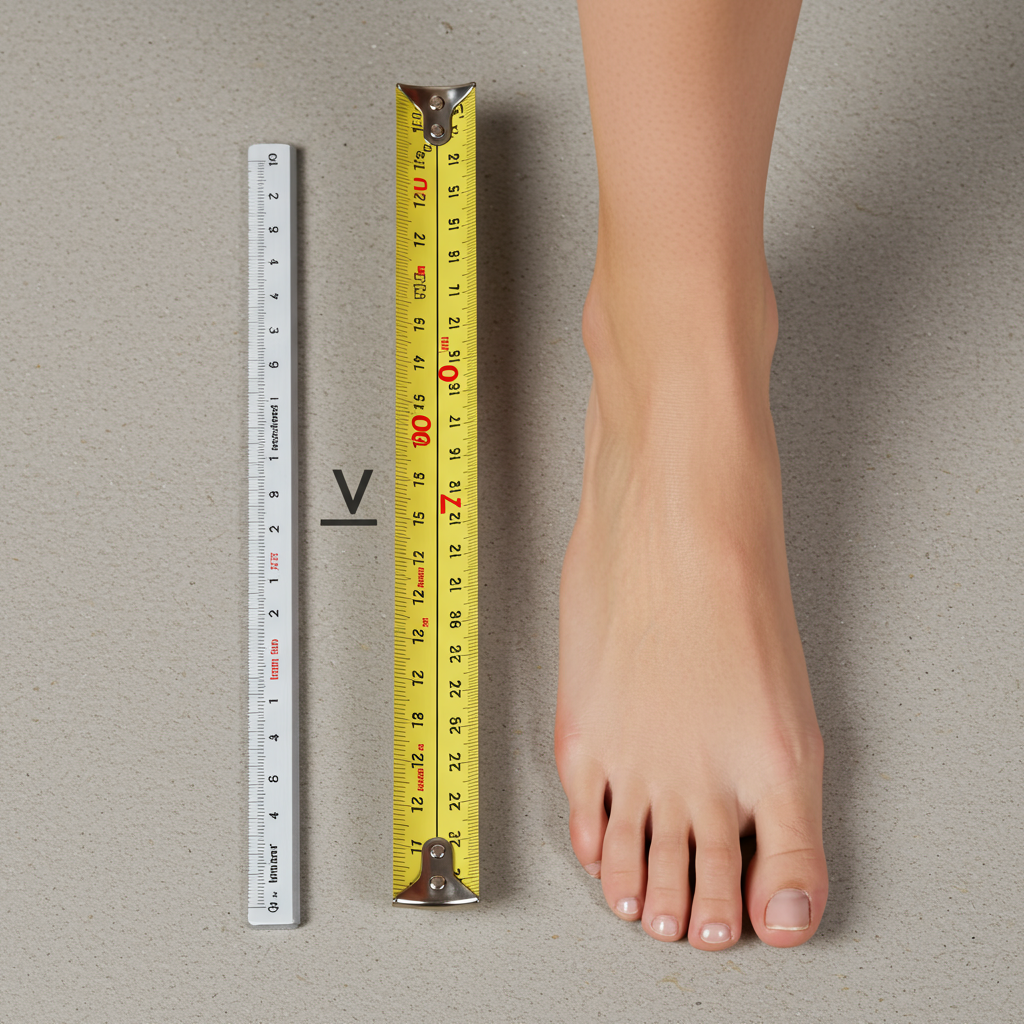
One linear foot is exactly equal to one foot.
That’s it. It’s a 1:1 ratio. A 10-foot-long pipe is 10 linear feet long. A wall that is 20 feet long requires 20 linear feet of baseboard trim. There’s no complex formula. No hidden math.
So, if they’re the same, why does the term “linear foot” even exist? That’s the real question. The word “linear” isn’t there to change the length. It’s there to add critical, money-saving context.
Think of it as a clarifying adjective. When a professional says “linear foot,” they are sending a crystal-clear signal: “We are only talking about the length. Ignore the width and thickness for this measurement.” This precision is what separates a smooth, on-budget project from a logistical nightmare.
Why “Linear” is a Million-Dollar Word in Project Planning
The term “linear foot” exists to prevent a collision between different types of measurements. In construction, shipping, and manufacturing, you’re constantly dealing with materials that have length, width (area), and depth (volume). Using “linear foot” isolates one dimension—length—to ensure everyone is speaking the same language.
It’s the difference between ordering a “10-foot” piece of carpet and getting a 10-foot long, 1-foot wide runner versus a 10-foot long, 12-foot wide roll. Both are “10 feet” long, but they are wildly different in size and cost.
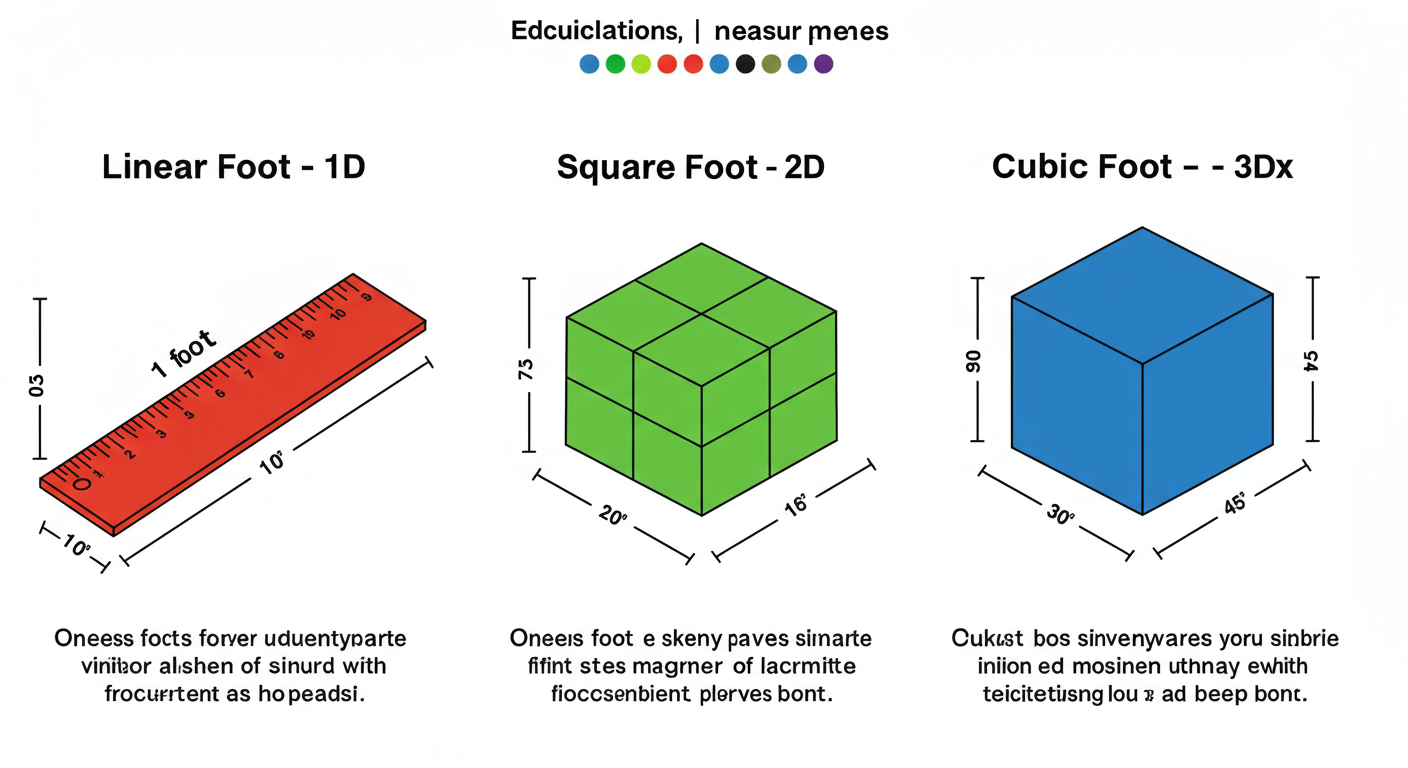
Here’s how these measurement types stack up in practice.
| Measurement Type | Dimensions Measured | Primary Use Case | Example |
|---|---|---|---|
| Linear Foot (LF) | Length Only (1D) | Pricing materials sold in rolls or by length. | A 16-foot piece of crown molding is 16 LF. |
| Square Foot (SF) | Length × Width (2D) | Calculating the area a material will cover. | A 10′ x 12′ room has 120 SF of floor space. |
| Cubic Foot (CF) | Length × Width × Height (3D) | Measuring the volume an object occupies. | A 2′ x 2′ x 2′ box has a volume of 8 CF. |
From our experience managing large-scale building projects, ambiguity is the enemy. A purchase order that just says “100 feet of insulation” is useless. Is that 100 linear feet of a 16-inch wide batt? Or 100 square feet of spray foam? The first is a specific quantity; the second is an area to be covered. The term “linear foot” eliminates this dangerous guesswork.
💡 Pro Tip
When getting quotes, always ask: “Is that price per linear foot, per square foot, or per unit?” Getting this in writing on your quote or invoice is a simple step that provides total clarity and protects you from “misunderstandings” later.
Real-World Scenarios: Where Linear Feet Reign Supreme
You’ll encounter this term far more often than you think. Knowing where to expect it makes you a smarter consumer. Here are the most common battlegrounds where understanding the linear foot to feet concept is non-negotiable.
Construction & Building Materials
This is the heartland of the linear foot. When you’re at a lumberyard or home improvement store, materials sold by length are priced this way. It’s how contractors order with precision.
- Lumber: You need 150 feet of 2×4 studs for framing. You’ll order 150 linear feet. The price is for the length, regardless of the 2×4 dimensions.
- Piping & Conduit: A plumber calculating a new water line measures the total path in feet and orders that exact amount in linear feet of PEX or copper pipe.
- Trim & Molding: To install crown molding, you measure the perimeter of the room. If it’s 54 feet around, you buy 54 linear feet of molding (plus a little extra for cuts!).
Fencing & Landscaping
Planning a fence? Your primary measurement is the total length of the property line you want to enclose. This is your linear footage.
A fence company will quote you a price per linear foot. A higher price for a 6-foot privacy fence versus a 4-foot picket fence, for sure, but the quantity is always based on the line it follows. If you need to fence a 200-foot perimeter, you’re buying 200 linear feet of fencing material.
Retail & Textiles
Ever bought fabric? It comes on a bolt with a fixed width (e.g., 45″ or 60″). You don’t buy it by the square foot. You tell the clerk how many yards or feet you want, and they measure it along the length of the bolt. You’re buying by the linear yard or linear foot, even though you receive a 2D piece of cloth.
3 Costly Measurement Mistakes That Can Wreck Your Budget
Understanding the definition is easy. Avoiding the real-world traps is what separates the amateurs from the pros. I’ve seen these three mistakes cost people thousands of dollars on projects.
1. The Linear Foot vs. Board Foot Booby Trap
This is a classic, especially when buying hardwood. While a linear foot measures only length, a board foot is a unit of volume. It’s used for pricing lumber, particularly hardwoods where thickness and width vary.
One board foot is a piece of wood measuring 12″ long x 12″ wide x 1″ thick (a total of 144 cubic inches). A long, thin board could have the same board-foot volume as a short, thick one. According to industry standards upheld by organizations like the Woodworking Network, this is the primary unit for most rough-sawn hardwood.
⚠️ Watch Out
Never assume the price for hardwood is per linear foot. A piece of oak priced at “$12 per board foot” can be vastly more expensive than a piece of pine at “$3 per linear foot.” Always clarify the unit of sale before you buy.
| Attribute | Linear Foot | Board Foot |
|---|---|---|
| Measures | Length (1D) | Volume (3D) |
| Common Use | Softwoods (pine, fir), trim, pipes | Hardwoods (oak, maple, cherry) |
| Calculation | Simple length measurement | (Length’ × Width” × Thickness”) / 12 |
| Example | An 8-foot 2×4 is 8 linear feet. | An 8-foot 2×4 is 5.33 board feet. |
2. The “Just Multiply” Square Foot Catastrophe
This is the most common DIY mistake. You cannot directly convert linear feet to square feet without knowing the width of the material. They measure fundamentally different things: a line versus a surface.
The formula is simple, but often forgotten in the moment:
Area (in Square Feet) = Length (in Linear Feet) × Width (in Feet)
Forgetting this leads to massive under-buying. If you need to cover a 10′ x 20′ (200 sq ft) deck area, you can’t just buy 200 linear feet of decking. It doesn’t work that way.
3. Ignoring the “Unit of Sale”
Some materials aren’t sold by length or area at all—they’re sold by the piece, the box, or the pallet. Tile is a perfect example. It’s almost always sold by the box, with each box covering a specific square footage (e.g., 14.5 sq ft per box). Ordering “50 square feet” of tile might mean you get 4 boxes, totaling 58 sq ft, because you can’t buy a partial box. The National Institute of Standards and Technology (NIST) works to standardize measurements, but the unit of sale is a business practice you must always confirm.
🎯 Key Takeaway
The conversion from linear foot to feet is 1:1. The real challenge isn’t the math; it’s understanding the context. “Linear” is a code word for “length only,” used to prevent confusion with area (square feet) and volume (board feet), which have massive financial implications.
Step-by-Step: How to Calculate Materials Using Linear Feet
Let’s put this into a practical, can’t-mess-it-up process. Here’s how to calculate how many linear feet of material you need to cover a specific area, like a deck or a wall.
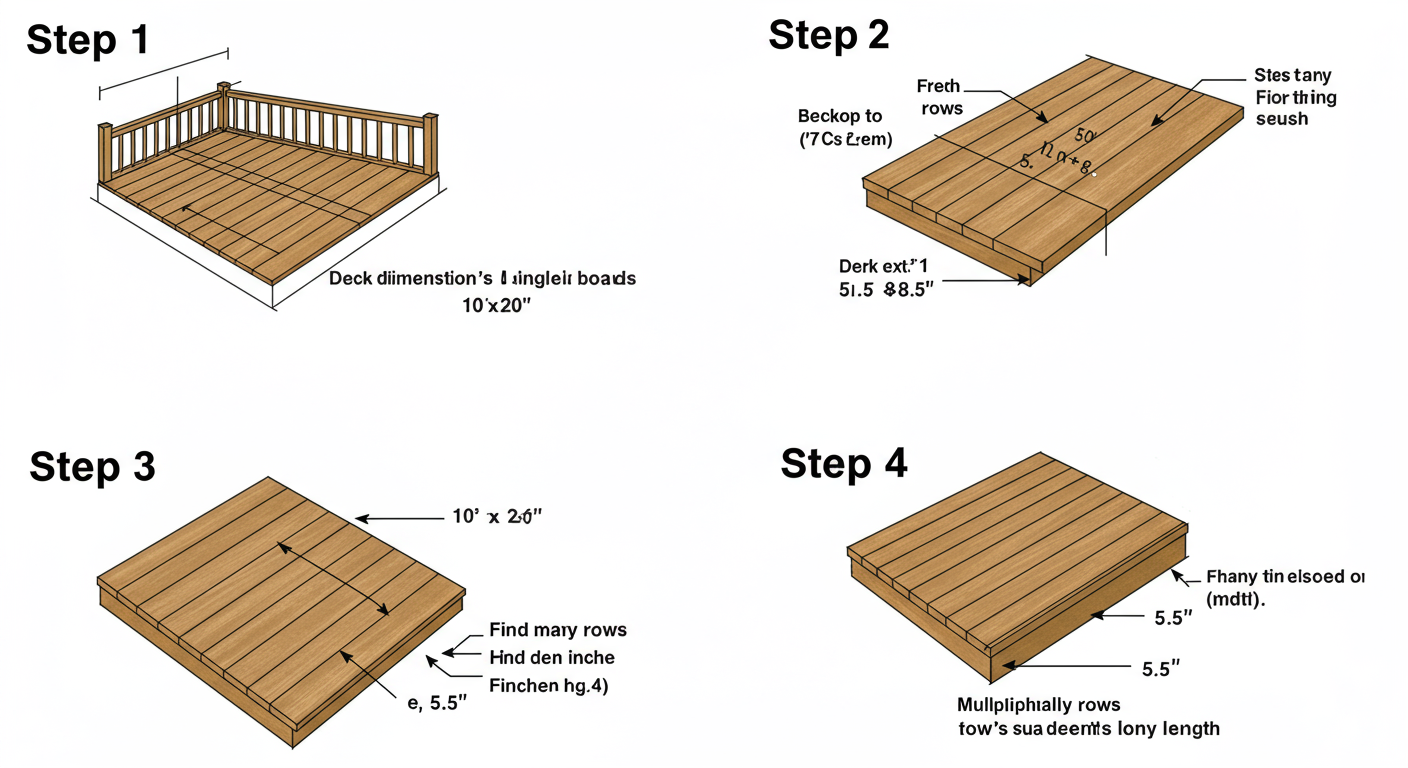
Scenario: You’re building a deck that is 16 feet long and 10 feet wide. You’re using standard deck boards that are 5.5 inches wide.
- Convert All Measurements to Feet. Your deck board width is 5.5 inches. To use it in our calculation, convert it to feet: 5.5 ÷ 12 = 0.458 feet.
- Determine the Number of Rows Needed. Divide the total width of the area by the width of a single board.
10 feet (deck width) ÷ 0.458 feet (board width) = 21.83
You can’t have 0.83 of a row, so you must round up. You will need 22 rows of deck boards. - Calculate Total Linear Feet. Multiply the number of rows by the length of each row.
22 rows × 16 feet (deck length) = 352 linear feet. - Add a Waste Factor. Based on hands-on testing and industry best practices, always add 10-15% for cuts, mistakes, and unusable board ends.
352 × 1.10 (for 10% waste) = 387.2 linear feet.
You need to purchase approximately 388 linear feet of decking to complete your 16’x10′ deck. See? By breaking it down, you get an exact number to take to the lumberyard.
💡 Pro Tip
When buying materials like flooring or decking, always buy from the same batch or lot number. Slight variations in color or texture can occur between production runs, and mixing them can create a visibly patchy look on your finished project.
❓ Frequently Asked Questions
Is a linear foot bigger than a foot?
No, they are exactly the same length. One linear foot is 12 inches, just like a standard foot. The word “linear” is used to clarify that you are only measuring length, not area or volume.
How do you calculate linear feet?
You simply measure the length. If you use a tape measure and an object is 8 feet long, it is 8 linear feet. No further calculation is needed unless you are trying to determine how many linear feet of a material are needed to cover a specific area (see our step-by-step guide above).
Why is it called a linear foot?
It’s called a “linear” foot to distinguish it from a square foot (which measures a 2D area) and a cubic foot (which measures a 3D volume). The term comes from the Latin word linearis, meaning “belonging to a line.” For a foundational understanding of the unit itself, the Wikipedia page on the foot unit provides excellent historical context.
How many linear feet are in a square foot?
This is a trick question. You can’t convert linear feet to square feet directly because they measure different dimensions (length vs. area). To calculate square feet, you must multiply the length (in linear feet) by the width (in feet).
What’s the most important thing to remember about linear feet?
The most important thing is to always be aware of the unit of sale. When a price is given “per foot,” always ask for clarification: “Is that per linear foot, square foot, or board foot?” This simple question can save you from significant budget overruns.
Conclusion: From Confused to Confident
The linear foot to feet puzzle isn’t a puzzle at all. It’s a lesson in communication. While the conversion is a simple 1:1, the term “linear foot” is a powerful tool for precision in any project.
You now know that “linear” means length-only. You know to watch out for the board foot and square foot traps. And you have a step-by-step method for calculating exactly how much material your next project requires. You’re no longer just a DIYer; you’re an informed project manager.
Your next step? The next time you’re planning a project, walk into the hardware store with confidence. Look at the pricing signs. When you see “$2.50 / LF,” you won’t be confused. You’ll know exactly what it means, what you’re paying for, and how to order the right amount. That’s real project power.