
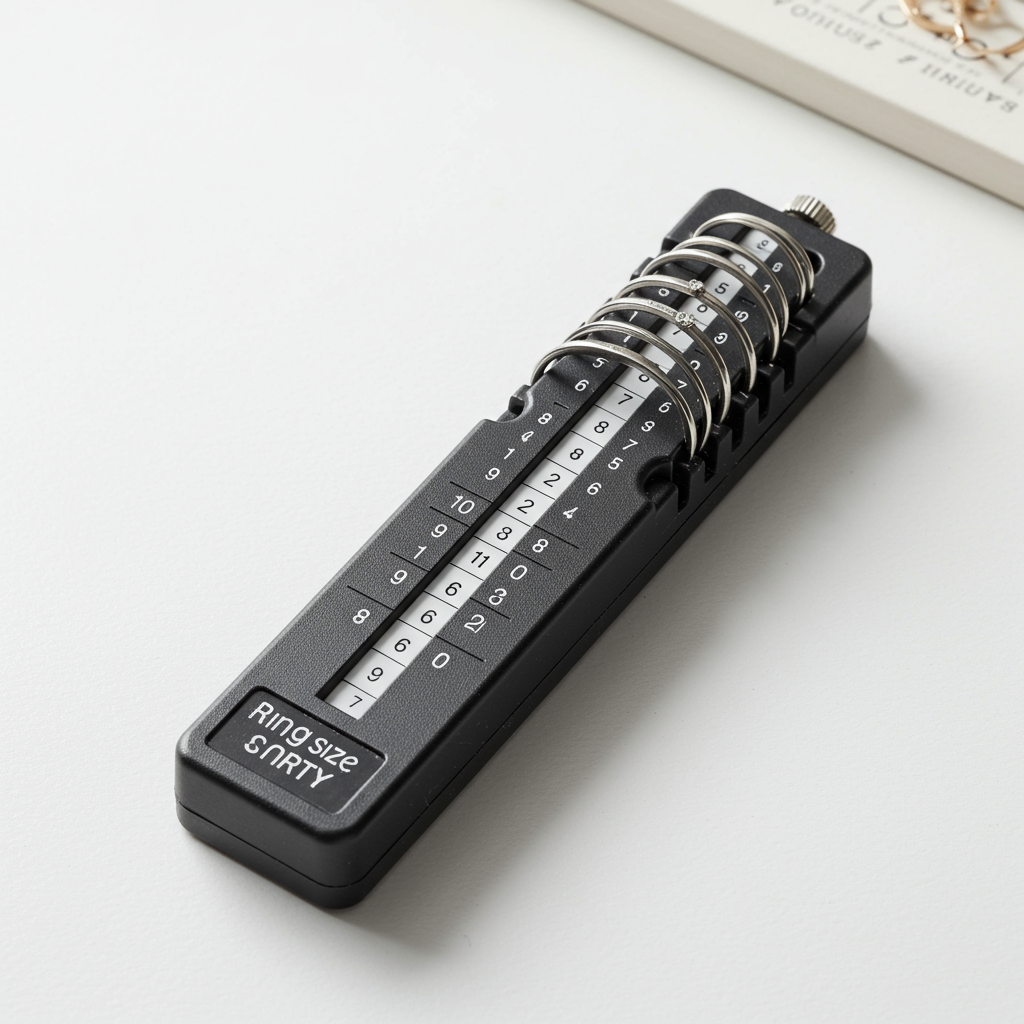
You found it. The perfect ring. After hours of scrolling, it’s staring back at you from the screen—the one that feels like you. You click “Add to Cart,” your heart does a little flutter, and you wait. When the package finally arrives, you tear it open, and… it gets stuck on your knuckle. Or worse, it slides on so easily you know it’ll fly off with the first enthusiastic wave.
That sinking feeling? It’s completely avoidable.
Look, buying rings online shouldn’t be a gamble. This isn’t just another guide. This is your complete playbook for mastering ring sizing in 2026. We’re going to turn you from a hopeful guesser into a sizing expert. You’ll learn how to measure your finger with surprising accuracy at home, decode confusing international charts, and understand the subtle details (like band width) that make all the difference. Let’s make sure your next ring fits like it was made for you. Because it should.
📑 What You’ll Learn
Why “Close Enough” Is a Costly Mistake
Getting your ring size right is about so much more than just comfort. An ill-fitting ring is a recipe for frustration, extra costs, and even heartbreak. I’ve seen it play out countless times: a beautiful engagement ring that has to be sent away for weeks to be resized, or a one-of-a-kind vintage find that simply can’t be altered.
Here’s why precision is non-negotiable:
- Security: This is the big one. A loose ring is a lost ring waiting to happen. For something as precious as a wedding band or a family heirloom, the risk is just too high. You want to wear it with confidence, not constantly check if it’s still there.
- Comfort & Health: You’ll be wearing this piece for hours, maybe every day. A ring that’s too tight can restrict circulation, cause your finger to swell, and lead to painful skin irritation. A ring that’s too loose will spin and slide, becoming a constant, maddening distraction.
- The Resizing Trap: “I’ll just get it resized.” It’s a common thought, but it’s not always simple or cheap. Resizing can cost anywhere from $50 to $150+, depending on the metal and complexity. More importantly, not all rings can be resized.
⚠️ Watch Out
Many popular modern rings cannot be resized. Eternity bands (with stones all the way around), tension-set rings, and rings made from alternative metals like tungsten, titanium, or ceramic are typically impossible to alter. Buying the correct size from the start is your only option.
Taking 10 minutes to get an accurate measurement isn’t a chore; it’s an investment in your peace of mind and your wallet.
🎯 Key Takeaway
An accurate ring size prevents loss, ensures daily comfort, and saves you from the unexpected cost and hassle of resizing. For many modern ring designs and materials, getting the size right the first time is the only way to guarantee a perfect fit.
Your At-Home Sizing Toolkit: 3 Proven Methods
Before you can use any ring size converter, you need a baseline measurement. The good news? You can get a remarkably accurate reading right at home. Based on our hands-on testing, the “Existing Ring Method” is the gold standard for DIY, but the other two work well if you’re careful.
Here’s a breakdown of your options:
| Method | Accuracy | What You’ll Need | Best For |
|---|---|---|---|
| 1. The Existing Ring Method | High ⭐⭐⭐ | A well-fitting ring, a hard ruler (mm) | Finding the size of a specific finger when you already have a perfect-fitting ring for it. |
| 2. The String/Paper Method | Medium ⭐⭐ | Non-stretchy string or paper, a pen, a ruler (mm) | Getting a good estimate when you don’t have a reference ring. Requires careful technique. |
| 3. The Printable Sizer Method | High ⭐⭐⭐ (if printed correctly) | A printer, a credit card (for scale) | A reliable option that mimics professional tools, but only if printed at exactly 100% scale. |
Step-by-Step Guide to Measuring Your Finger
Ready to find your number? Pick a method and follow these steps precisely. For best results, measure 2-3 times to confirm your finding.
Method 1: The Existing Ring Method (Most Accurate)
- Find a ring that fits the intended finger perfectly. It should slide over the knuckle with slight resistance but sit comfortably at the base.
- Place the ring on a flat surface.
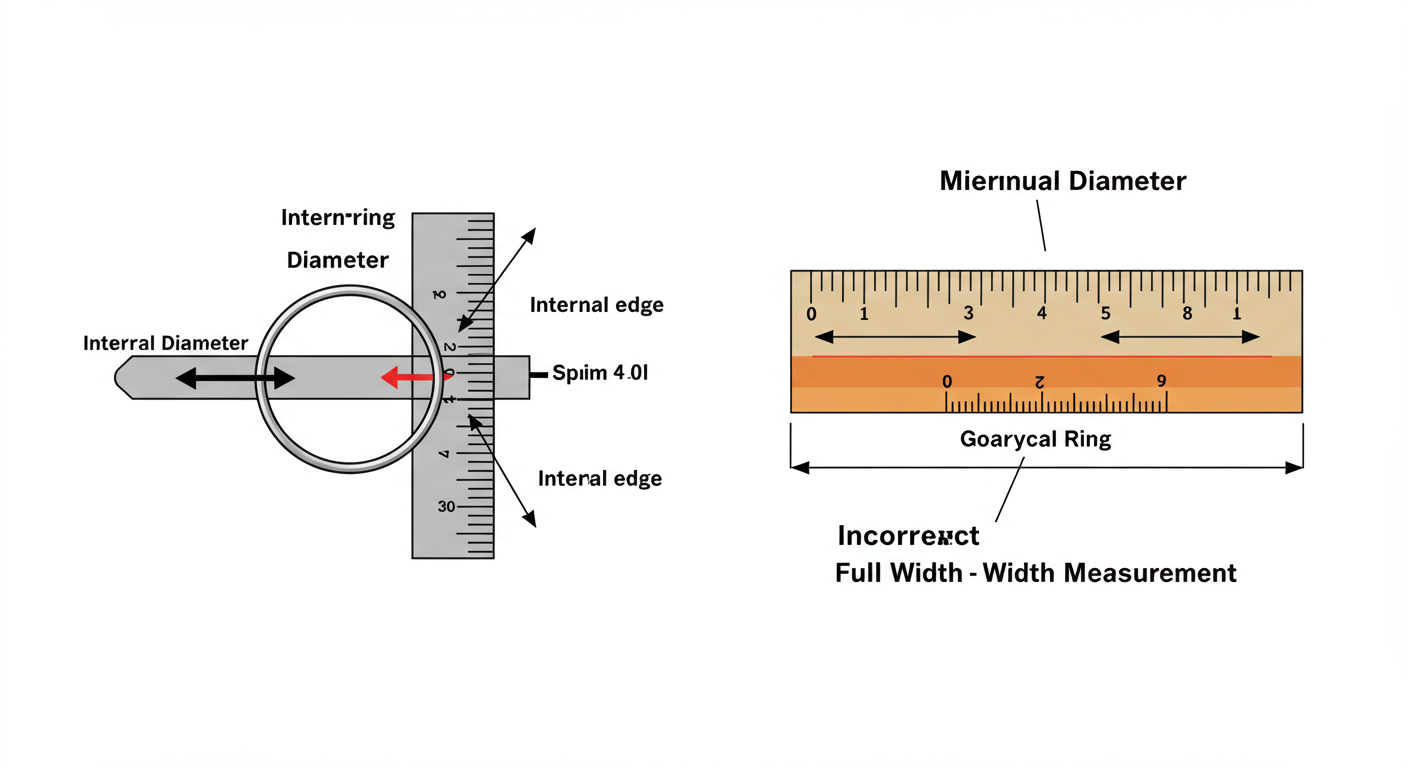
- Using a ruler with millimeter markings, carefully measure the internal diameter of the ring. This is the distance from one inside edge to the other, straight across the center.
- Write down this measurement in millimeters (e.g., 17.3 mm). You’ll use this with the converter chart below.
Method 2: The String or Paper Method
- Cut a thin strip of paper or a piece of non-stretchy string.
- Wrap it snugly around the base of your finger, right where the ring will sit. It needs to be snug, but not tight.
- Use a fine-tip pen to mark the exact spot where the paper or string overlaps to form a complete circle.
- Unwrap the paper/string and lay it flat against a ruler. Measure the distance from the end to your mark in millimeters. This is your finger’s circumference.
- Use this measurement with the converter chart to find your corresponding size.
⚠️ Watch Out
The biggest mistake people make here is using a material that stretches, like yarn or a rubber band. This will always give you an incorrect, larger size. Stick to paper or dental floss for a more reliable measurement.
The Sizing Secrets Most People Don’t Know
A number is just a number. True fit comes from understanding two more crucial factors that jewelers always consider: band width and band profile.
Secret #1: Band Width Changes Everything
This is the single most overlooked aspect of ring sizing. A wider band has more surface area touching your skin, creating more friction and a tighter feel. It’s like wearing a wide belt versus a thin one—the wider one feels much more restrictive.
The Rule of Thumb: For any ring band 6mm or wider, you should seriously consider going up a half-size (0.5 US) from your standard measurement. For very wide bands (8mm+), you might even need a full size larger.
In our experience, this simple adjustment prevents the vast majority of sizing issues with statement rings and men’s wedding bands.
Secret #2: “Comfort Fit” vs. “Standard Fit”
Not all rings are shaped the same on the inside. This interior profile dramatically affects how the ring feels on your finger.
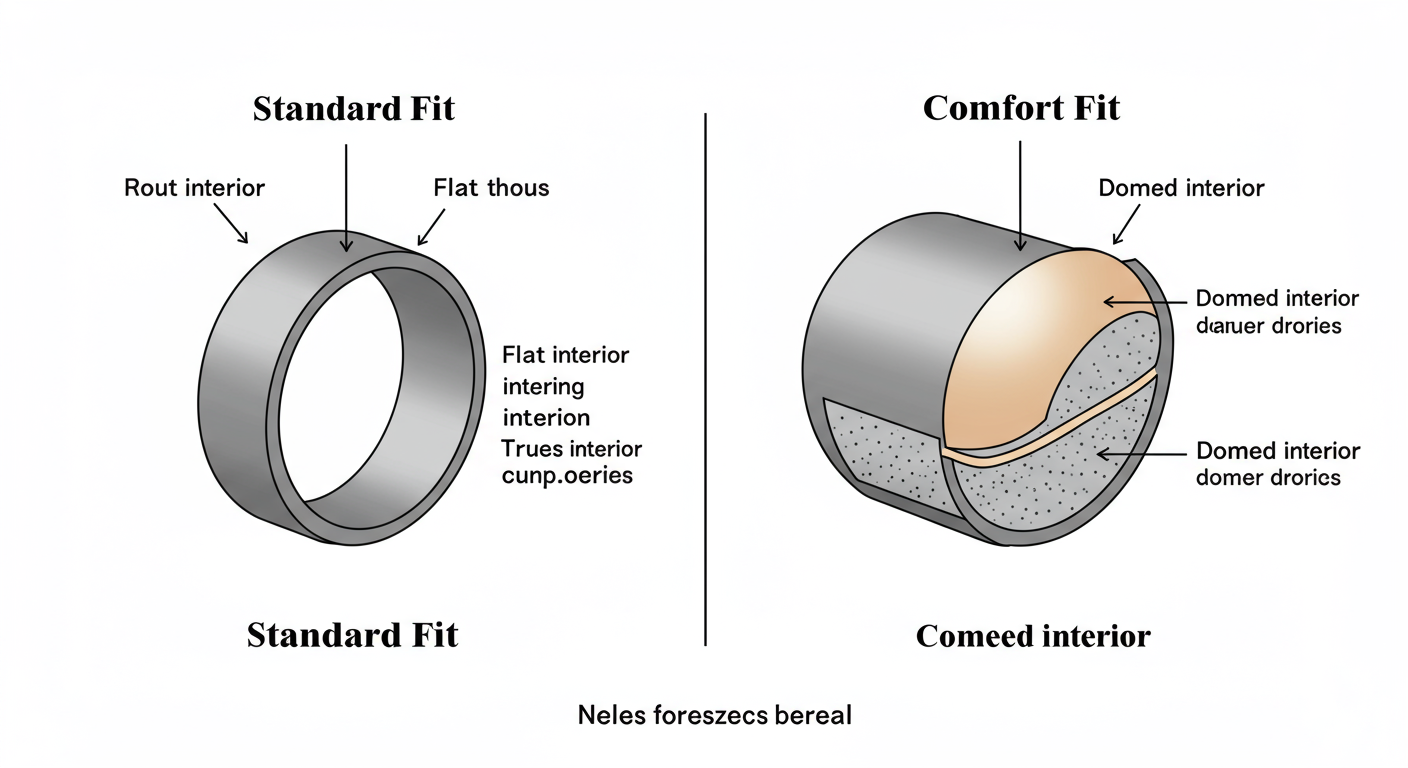
- Standard Fit: The inside of the ring is flat, like a pipe. It has full contact with your finger. Most traditional, delicate rings use this fit.
- Comfort Fit: The inside of the ring is slightly domed or curved. This reduces the surface area touching your skin, allowing it to slide over the knuckle more easily and feel less constricting. Many modern wedding bands use this design.
A comfort fit ring may feel a bit looser than a standard fit ring of the exact same size. While you usually don’t need to size down, it’s something to be aware of, especially if you’re on the cusp between two sizes.
💡 Pro Tip
Your fingers change size! For the most accurate reading, measure your finger at the end of the day when it’s at its largest. Avoid measuring when you’re cold (fingers shrink) or right after a hot shower (fingers swell). Room temperature is your friend.
Cracking the Code: The Ultimate International Ring Size Converter
You’ve measured your finger in millimeters, but the website you’re on lists sizes like “7,” “N ½,” or “54.” Welcome to the confusing world of international ring sizing. There is no single global standard, which is why a reliable ring size converter is essential for global shopping.
The main systems you’ll encounter are:
- US/Canada: A numerical scale (e.g., 5, 5.5, 6) used across North America.
- UK/Australia: An alphabetical scale (e.g., J, K, L) that can be very confusing without a chart.
- European (ISO 8653): The most logical system, where the size is simply the inner circumference in millimeters (e.g., a size 54 ring has a 54mm circumference). This standard is officially defined by the International Organization for Standardization.
- Japan/Asia: A different numerical system that doesn’t align with US or European standards.
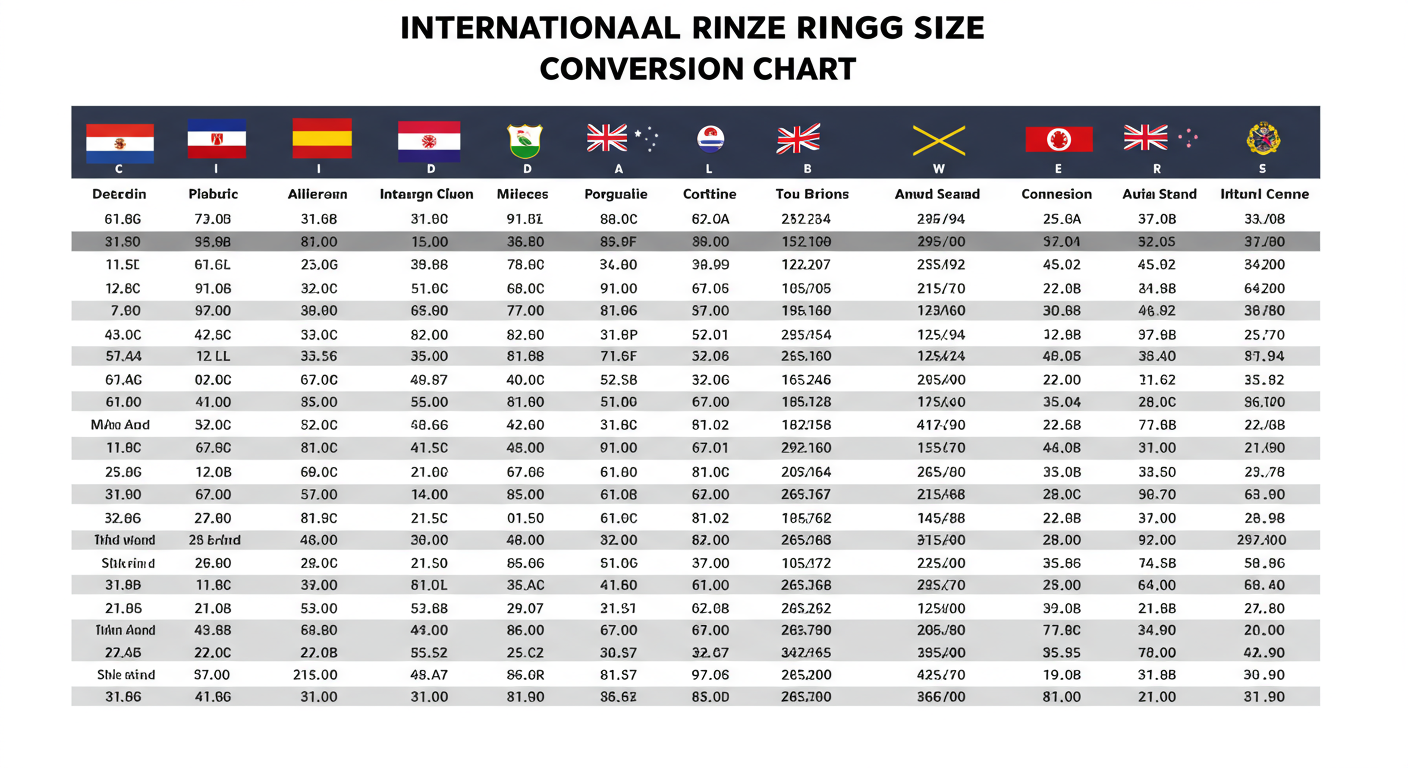
Use the comprehensive chart below to translate your measurement into any system. Find your measurement in millimeters (either diameter or circumference) and look across the row to find its global equivalents.
International Ring Size Conversion Chart (2026)
| Diameter (mm) | Circumference (mm) | US / Canada | UK / Australia | Europe (ISO) | Japan |
|---|---|---|---|---|---|
| 14.9 | 46.8 | 4 | H ½ | 47 | 7 |
| 15.7 | 49.3 | 5 | J ½ | 49 | 9 |
| 16.5 | 51.9 | 6 | L ½ | 52 | 11 |
| 17.3 | 54.5 | 7 | N ½ | 55 | 14 |
| 18.1 | 57.0 | 8 | P ½ | 57 | 16 |
| 19.0 | 59.5 | 9 | R ½ | 60 | 18 |
| 19.8 | 62.1 | 10 | T ½ | 62 | 20 |
| 20.6 | 64.6 | 11 | V ½ | 65 | 23 |
| 21.4 | 67.2 | 12 | X ½ | 67 | 25 |
| 22.2 | 69.7 | 13 | Z+1 | 70 | 27 |
💡 Pro Tip
When in doubt, contact the seller. Many brands, especially smaller artisans, may have unique sizing quirks. A quick email asking, “I have a finger circumference of 57mm, what size do you recommend for your 8mm wide band?” can save you a world of trouble.
Your Pre-Purchase Final Checklist
You’re armed with knowledge. Before you click that “buy” button, run through this quick final checklist to ensure a flawless purchase.
- Did you measure the correct finger? Your dominant hand is often a half-size larger. Measure the exact finger you’ll wear the ring on.
- Did you account for band width? If the ring is 6mm or wider, have you considered sizing up by a half-size?
- Have you confirmed the seller’s sizing system? Are their “Size 8” rings US, UK, or another standard? Check their FAQ or product description.
- What’s the return and resizing policy? Know your options before you buy. Can the ring be returned for a different size? Do they offer resizing?
- Have you read reviews? Check if other customers mention sizing. Comments like “runs small” or “fits true to size” are pure gold. For more on this, the Gemological Institute of America (GIA) offers excellent consumer advice.
❓ Frequently Asked Questions
What is the most accurate way to measure ring size at home?
By far, the most accurate method is measuring the internal diameter (in millimeters) of a ring that already fits you perfectly. If you don’t have one, using a printable sizer from a trusted source—and ensuring you print it at 100% scale—is the next best thing.
Do wide band rings really fit differently?
Yes, absolutely. It’s a matter of physics. A wider band (6mm+) covers more of your finger, creating more friction and a tighter feel. We always recommend going up at least a half-size (US) for wide bands to ensure a comfortable fit.
Is my ring size the same on both hands?
Probably not. Most people find the fingers on their dominant hand are slightly larger—often by about a half-size—than on their non-dominant hand. Always measure the specific finger on the hand where you intend to wear the ring.
What’s the difference between a ‘comfort fit’ and ‘standard fit’ ring?
A ‘standard fit’ ring is flat on the inside, while a ‘comfort fit’ ring is domed. This curvature means less of the ring’s metal touches your skin, allowing it to slide on more easily and feel less constricting. Many modern wedding bands use a comfort fit.
Can all rings be resized?
No. While rings made of gold, silver, and platinum can typically be resized, many cannot. Eternity bands (with gems all around) and rings made of hard alternative metals like tungsten, titanium, or ceramic usually cannot be altered. It’s crucial to check this before buying, as you can learn from resources like Wikipedia’s overview of ring sizing.
Conclusion: Shop with Confidence, Wear with Joy
The perfect ring isn’t just about style—it’s about a fit so seamless you forget you’re even wearing it. You no longer have to cross your fingers and hope for the best when ordering online. You now have the tools, the charts, and the insider knowledge to get it right every single time.
You know how to measure accurately, how to account for band width, and how to translate sizes from a shop in London to a designer in Tokyo. That’s power. So go find that perfect ring. Measure with care, buy with confidence, and wear it with the joy that comes from a perfect fit.