
You found it. The perfect poster. Maybe it was a vintage concert print you snagged online, a stunning piece from an artist on Etsy, or a stylish graphic from IKEA. It’s a 50×70 cm masterpiece, and you can’t wait to get it on your wall. But then you hit the American hardware store, and it all falls apart. All you see are frames in inches—20×28, 18×24, 24×36. Suddenly, your excitement turns to confusion. What size do you actually need?
You’re not alone. This is one of the most common frustrations in the framing world. But don’t worry. You’re about to become an expert.
This isn’t just another conversion calculator. We’re going to walk you through the exact dimensions, expose the common “20×28 inch trap” that catches so many people, and give you the insider knowledge to choose the perfect frame, mat, and style. By the end of this, you’ll frame your art with total confidence.
📑 What You’ll Learn
The Exact Conversion (and the Common Trap to Avoid)
Let’s cut right to the chase. The math is simple, but the details are everything. The universal conversion factor, set in stone, is 1 inch = 2.54 centimeters.
Here’s how that applies to your 50×70 cm to inches frame:
- Width: 50 cm ÷ 2.54 = 19.685 inches
- Height: 70 cm ÷ 2.54 = 27.559 inches
For practical purposes, this is almost always rounded to 19.7 x 27.5 inches. This is the number you need to remember. It’s precise. It’s correct. It’s the key to a perfect fit.
⚠️ Watch Out
The biggest mistake we see people make is buying a standard 20×28 inch frame. It sounds close, right? It’s not. A 20×28 inch frame is significantly larger, and your 50×70 cm print will “float” inside with ugly gaps around the edges. Always look for the specific 19.7 x 27.5 inch measurement or a frame explicitly labeled for 50×70 cm artwork.
To make it crystal clear, here’s a breakdown of the critical size differences:
| Measurement Type | Width | Height | Notes |
|---|---|---|---|
| Metric (Your Art) | 50 cm | 70 cm | This is the size of your print. |
| Exact Imperial Conversion | 19.685″ | 27.559″ | The precise mathematical conversion. |
| Correct Frame Size (US) | 19.7″ | 27.5″ | This is the frame opening you need. |
| The Common “Trap” Size | 20″ | 28″ | Too large! Will leave a ~1/3″ gap on all sides. |
Why 50×70 cm is a Global Standard You Didn’t Know You Owned
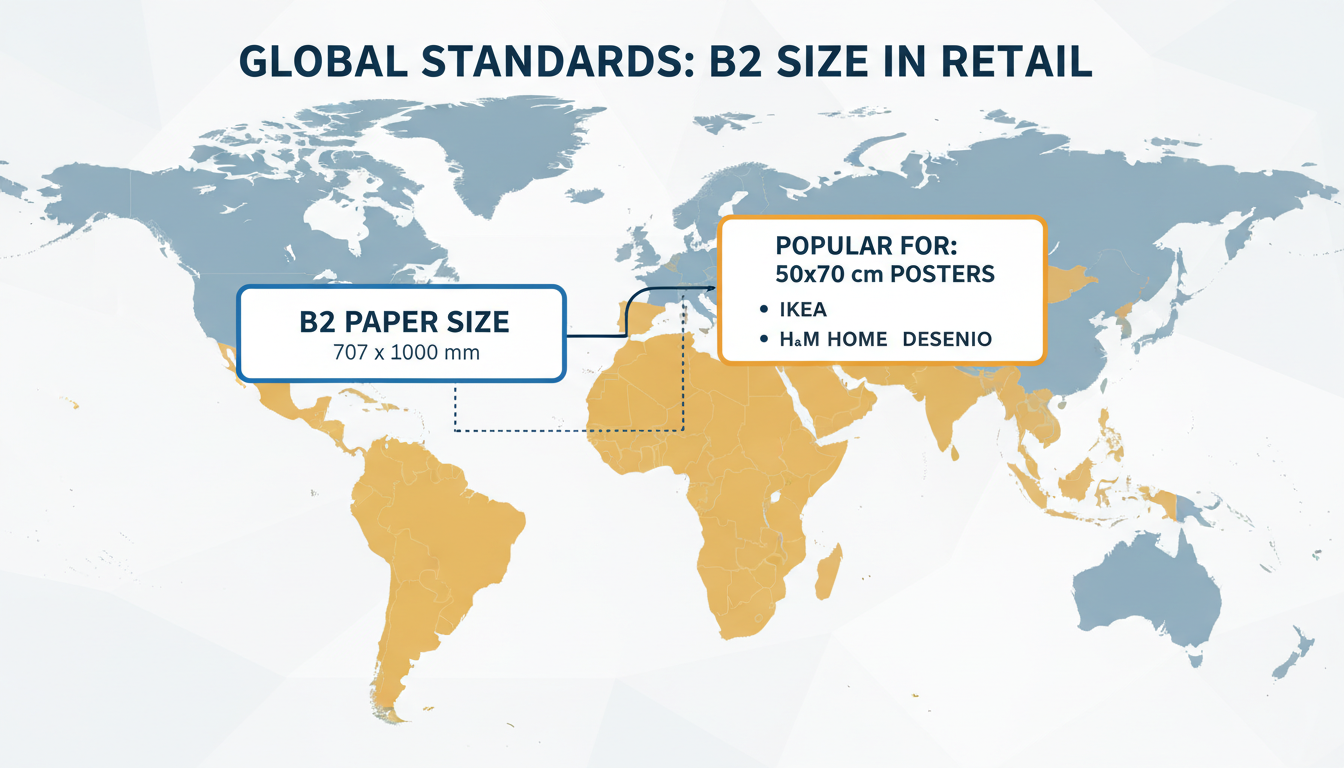
Ever wonder why this specific size is so common, especially from European retailers? It’s not random. The 50×70 cm dimension is directly tied to the ISO 216 international paper standard, which governs paper sizes like A4 and A3 worldwide. Specifically, 50×70 cm is nearly identical to the B2 paper size (500 x 707 mm).
This makes it the default choice for a massive amount of printed media outside the United States:
- Professional concert and event posters
- Fine art prints from international artists
- Large-scale photography
- Mass-market decor prints from global giants like IKEA
Its 5:7 aspect ratio is incredibly versatile and aesthetically pleasing for both portrait and landscape orientations. It’s large enough to be a statement piece over a couch but not so massive it overwhelms a standard room. It’s the goldilocks of poster sizes.
💡 Pro Tip
While most 50×70 cm and B2 frames are interchangeable, a true B2 print is 7mm (about 1/4 inch) taller. If you have a valuable B2 print, double-check the frame’s internal dimensions. Based on our hands-on testing, some budget frames have very little wiggle room and might be too snug for a true B2 piece.
Your Step-by-Step Guide to Flawless Framing in 2026
Okay, you’ve got the conversion down. Now for the fun part: making your art look like it was professionally framed. This is where you elevate your piece from a simple poster to true wall decor. Follow these steps, and you can’t go wrong.
Step 1: Measure Your Artwork (The Right Way)
I can’t stress this enough: never trust the size printed on the label. I’ve seen “50×70 cm” prints that are off by a quarter-inch or more. Always measure it yourself with a quality steel tape measure.
- Lay your artwork on a clean, flat surface.
- Measure the width from edge to edge. Write it down.
- Measure the height from edge to edge. Write it down.
- Measure twice to be certain. Seriously.
This single action will save you from 90% of all framing headaches.
Step 2: The Big Decision: To Mat or Not to Mat?
A mat (or “mount”) is the cardboard border between the art and the frame. It’s not just for decoration; it protects the art from touching the glass and gives it visual breathing room. Your choice here dictates the entire look and the size of the frame you’ll ultimately buy.
| Feature | Full-Bleed (No Mat) | Matted Look |
|---|---|---|
| The Vibe | Modern, bold, minimalist, impactful. | Classic, elegant, professional, gallery-style. |
| Best For | Graphic posters, band posters, modern photography. | Fine art prints, watercolors, valuable photos, traditional art. |
| Frame Size Needed | A 50×70 cm (19.7×27.5″) frame. | A much larger frame (e.g., 70×100 cm or 24×36″). |
| Pros | Cost-effective, simple, lets the art speak for itself. | Adds perceived value, protects the art, helps it stand out. |
| Cons | Art touches the glass, can feel cramped, less formal. | More expensive, requires a larger frame and wall space. |
Step 3: Choose Your Frame Material and Style
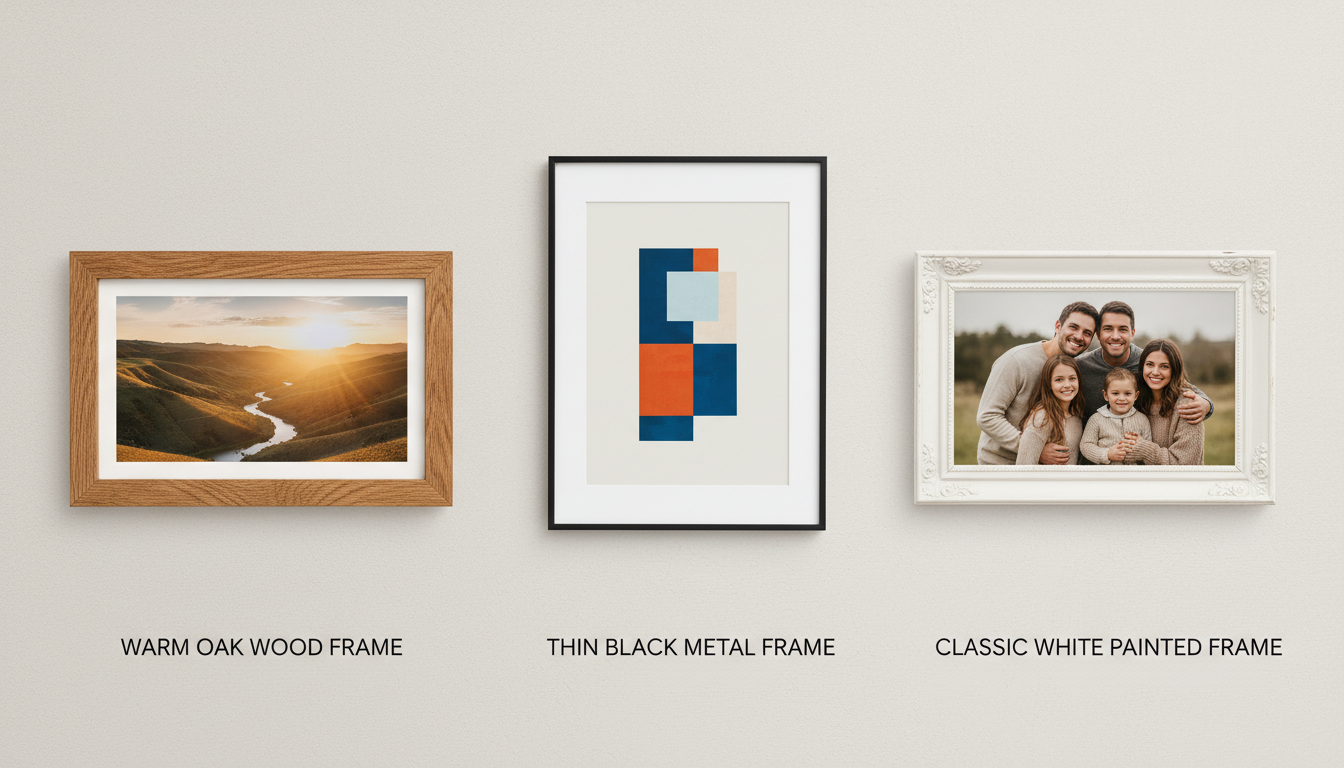
The frame itself is the final piece of the puzzle. Its material and width should complement both the artwork and your room’s decor. Think of it as the final punctuation mark.
- Natural Wood (Oak, Walnut): Perfect for adding warmth. Great for nature photography, traditional art, and creating a cozy, Scandinavian, or rustic feel.
- Metal (Aluminum): The go-to for a modern, industrial, or minimalist look. Thin black, silver, or gold profiles are ideal for black-and-white photos, architectural prints, and bold graphics.
- Painted Wood/Polcore: The most versatile option. A simple black or white frame is a timeless choice that works with almost anything. It lets the artwork be the star.
Step 4: Don’t Forget the Glazing!
The “glass” in a frame is called glazing. You have options, and your choice matters for both clarity and protection.
- Standard Glass: Clear and scratch-resistant, but heavy and can shatter.
- Acrylic (Plexiglass): Lighter, shatter-proof (great for shipping and homes with kids), and often comes with better UV protection.
- Anti-Reflective/Museum Grade: The premium choice. It minimizes glare and offers up to 99% UV protection. According to preservation experts at institutions like the Library of Congress, UV protection is critical for preventing fading in any valuable or sentimental piece.
🎯 Key Takeaway
The exact conversion for a 50×70 cm frame is 19.7 x 27.5 inches—do not buy a 20×28″ frame. After confirming your art’s size, your most important decision is choosing between a full-bleed look (in a 50×70 frame) or a matted look (in a much larger frame) to achieve a professional result.
Common Framing Disasters and How to Sidestep Them
I’ve seen it all in my years of working with content about home decor. A few simple oversights can turn your exciting project into a major frustration. Here’s what to watch for.
Disaster #1: The Disappearing Signature
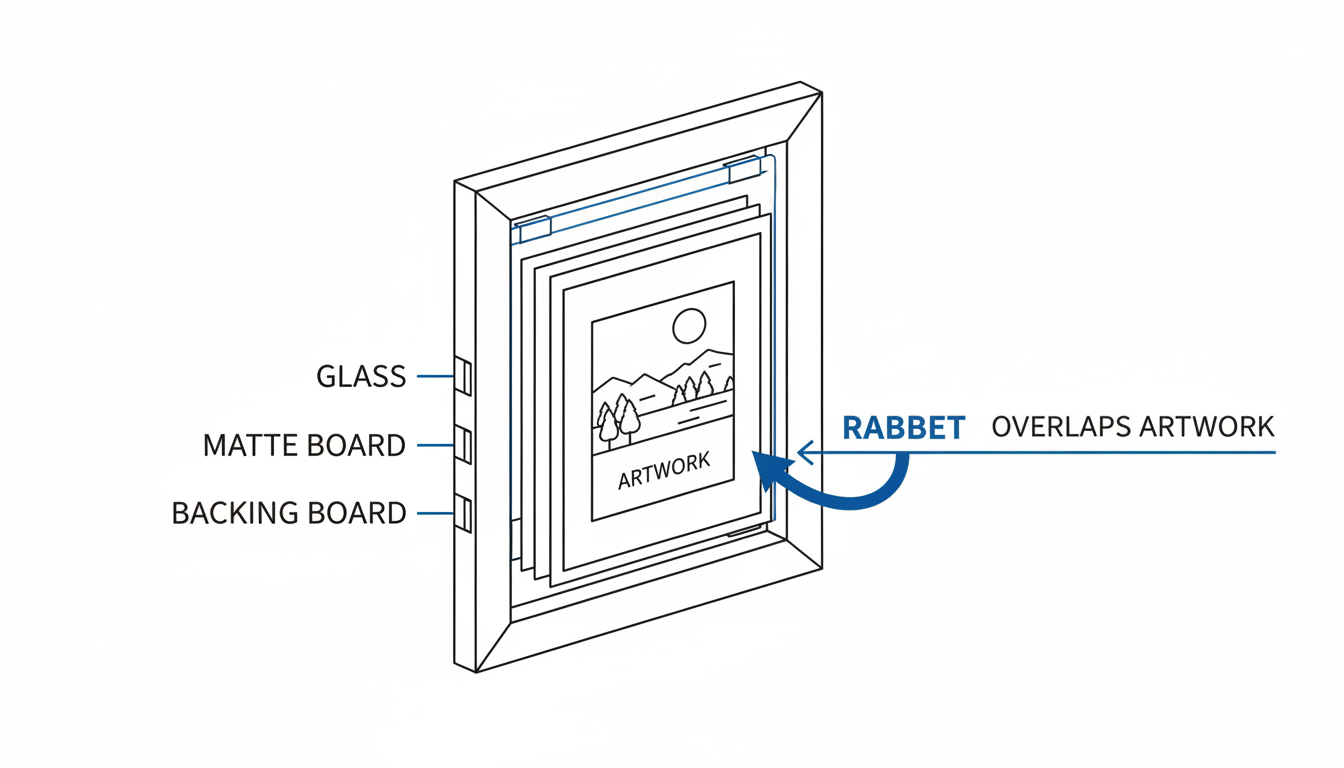
Every frame has an inner lip (called a “rabbet”) that holds everything in. This lip typically covers about 1/4 inch (5-6 mm) of your artwork on all sides. If your print has a signature, text, or a critical detail right at the very edge, it will be hidden! Always account for the rabbet.
Disaster #2: The Fading Masterpiece
You hung your beautiful print opposite a sunny window. A year later, the vibrant colors look washed out and dull. This is UV damage, and it’s irreversible. If the art is important to you or gets any direct sunlight, investing in UV-protective acrylic is non-negotiable. Leading museums like the Tate use it for a reason—it’s the best defense against fading.
⚠️ Watch Out
Be wary of extremely cheap, off-the-shelf frames. From real-world experience, they often come with flimsy cardboard backing that can warp, weak hanging hardware that can fail, and poor-quality acrylic that scratches easily and offers zero UV protection. It’s often worth spending $15-20 more for a frame that will actually protect your art and last for years.
Disaster #3: Confusing Art Size with Outer Dimensions
Remember, the 50×70 cm (19.7×27.5″) size refers to the artwork the frame holds, not the final size of the frame on your wall. A frame with a 2-inch wide profile will have final outer dimensions of roughly 23.7 x 31.5 inches. Always check the “outer dimensions” in the product description before planning your gallery wall.
💡 Pro Tip: Try “Floating” Your Art
For a high-end, contemporary look, consider “floating” your print. This involves using spacers to create a gap between the artwork and the glazing, making the art appear to levitate within the frame. It’s a fantastic alternative to a traditional mat for modern pieces and requires a frame that is slightly larger than your art.
❓ Frequently Asked Questions
What is 50×70 cm in inches for a picture frame?
A 50×70 cm print requires a frame with an opening of approximately 19.7 x 27.5 inches. This is the precise conversion you should look for when shopping in the US.
Is 50×70 cm a standard frame size?
Yes, it’s a huge international standard, especially in Europe and Asia, because it corresponds to the B2 paper size defined by the International Organization for Standardization. You’ll find it easily at global retailers like IKEA or online frame shops.
Will a 20×28 inch print fit in a 50×70 cm frame?
No, it will be too big. A 20×28 inch print is larger than 50×70 cm (19.7×27.5 inches). You would have to trim over a quarter-inch off every side of your print, which is rarely a good idea.
Can I put a mat in a 50×70 cm frame with my 50×70 cm art?
No, that’s not possible. The art itself takes up the entire space in a frame of the same size. To use a mat with your 50×70 cm art, you must buy a larger frame (like 60×80 cm, 70×100 cm, or 24×36 inches) and have a mat cut with an opening for your art.
What’s a good mat size for a 50×70 cm print?
For a 50×70 cm (19.7×27.5″) print, a common choice is to use a frame around 70×100 cm (approx. 27.5×39.4″). This would give you a generous 10 cm (or 4-inch) mat border on all sides, creating a very professional, high-impact look.
Frame Your Art with Confidence
See? Not so complicated after all. That 50×70 cm print isn’t a problem—it’s an opportunity to create a stunning focal point in your home. The journey from a rolled-up poster to a beautifully finished piece on your wall is now clear.
Remember the core lessons:
- The Magic Numbers: Your target is a 19.7 x 27.5 inch frame.
- Measure First: Trust your tape measure, not the label.
- Mat or No Mat: Decide on the style you want before you shop.
- Protect Your Investment: Don’t skimp on a quality frame and UV-protective glazing.
Now, go grab that tape measure. Your walls are waiting.