

Let’s be honest. When you hear “8am to 5pm,” what do you picture? A beige cubicle? A soul-crushing commute? The slow, agonizing tick of a clock that seems to mock your very existence? For many, the traditional workday feels less like a framework for success and more like a nine-hour prison sentence.
But what if I told you that’s the wrong way to look at it? What if the 8am to 5pm schedule, often dismissed as an industrial-age relic, is actually a secret weapon for achieving deep, focused work and reclaiming your personal life? It’s true. The problem isn’t the clock; it’s the lack of a game plan.
This isn’t another list of generic tips like “drink more water.” This is a masterclass in transforming your 8-to-5. You’re about to learn how to architect your day like a top performer, turning rigid hours into a powerful advantage that boosts your output and protects your sanity. Forget just surviving. It’s time to thrive.
📑 What You’ll Learn
The 8-to-5 Paradox: Why It’s Both Hated and Highly Effective
The 8am to 5pm workday gets a bad rap in 2026. In a world buzzing with talk of four-day workweeks and asynchronous remote teams, a fixed schedule can feel painfully outdated. And some of the criticism is fair. The rigid structure can clash with our natural energy cycles (our chronotype), and the daily commute often feels like a colossal waste of time and energy.
But here’s the paradox: that same rigidity is also its greatest strength. When managed correctly, the 8-to-5 provides something incredibly rare in our “always-on” culture: clear, predictable boundaries. It creates a container. A dedicated time for professional focus, and just as importantly, a defined end point where you can—and should—completely switch off.
From our experience coaching hundreds of professionals, the ones who struggle most with burnout aren’t those on a fixed schedule, but those with “flexible” schedules that have bled into every waking hour. The 8-to-5 forces a separation that is essential for long-term mental health and sustainable performance.
| Common Perception of the 8-to-5 | High-Performer’s Reality |
|---|---|
| A rigid cage that stifles creativity. | A predictable container for deep, uninterrupted work. |
| A source of constant stress and burnout. | A tool for creating a hard boundary between work and life. |
| Eight hours of reactive firefighting. | A structured day architected for proactive, high-impact tasks. |
| A relic of the past. | A proven framework for collaboration and team synchronicity. |
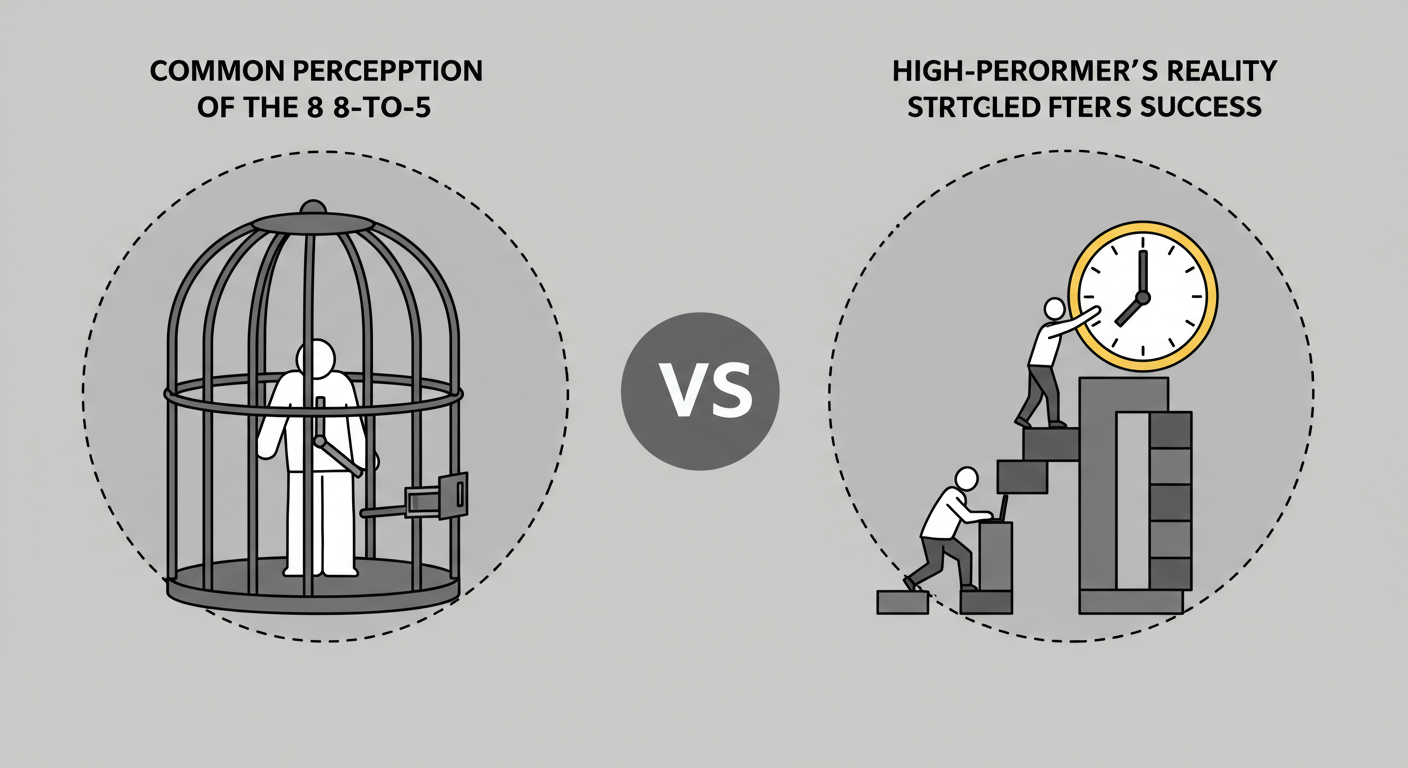
The Mindset Shift: From Prison to Playground
Before we get into tactics, we need to address the mental game. If you view your workday as a chore to be endured, you’ve already lost. The most successful people we’ve worked with don’t just tolerate their schedule; they leverage it.
Stop seeing 8am as the start of your sentence. Start seeing it as “game time.” It’s the moment you step onto the field to do what you do best. This simple reframing shifts your brain from a passive, reactive state to an active, engaged one. Your nine-hour block isn’t something that happens to you; it’s a resource that you control.
Your schedule doesn’t define your productivity. Your systems do. The 8am to 5pm workday is just the canvas; you are the artist.
⚠️ Watch Out
Beware of “fake productivity.” This is the trap of being busy for eight hours straight—answering every email instantly, attending every meeting—but accomplishing nothing of real value. The goal isn’t to fill the hours; it’s to make the hours count.
Your Step-by-Step Blueprint for Mastering the 8-to-5
Ready to take control? A structured day requires a structured plan. Don’t just show up and see what happens. Follow this blueprint to architect your day for peak performance and well-being.
Step 1: The “First Hour” Launch (8am – 9am)
The first hour of your workday is the most critical. It sets the trajectory for everything that follows. Do not—I repeat, do not—open your email inbox. That’s like letting a hundred people shout their to-do list at you first thing in the morning. Instead, use this golden hour to:
- Review Your Plan: Look at the 2-3 most important tasks you identified the day before. These are your “must-wins.”
- Tackle a Small Win: Complete one small, meaningful task in the first 20 minutes. This creates momentum and a feeling of accomplishment.
- Block Your Calendar: Proactively block out 1-2 hour chunks for “Deep Work” on your main priorities. This protects your time from meeting requests.
Step 2: The Deep Work Block (9am – 12pm)
This is your prime time. Your brain is fresh, and your willpower is high. This block is for your most cognitively demanding work—the stuff that actually moves the needle. Writing a report, coding a feature, developing a strategy. Turn off notifications. Close unnecessary tabs. Put your phone in a drawer. This is sacred time.
💡 Pro Tip
Invest in a pair of quality noise-canceling headphones. Based on hands-on testing in busy offices, they are the single best tool for creating a “bubble of focus.” Pair them with instrumental music, binaural beats, or even white noise to signal to your brain (and your colleagues) that you’re in deep work mode.
Step 3: The Strategic Midday Reset (12pm – 1pm)
Your lunch break isn’t for catching up on emails. It’s a biological necessity for cognitive performance. The American Psychological Association highlights that breaks are crucial for preventing burnout. To truly reset:
- Change Your Scenery: Physically leave your desk. Eat in a breakroom, a park, or anywhere but your workspace.
- Get Some Sunlight: Even 10-15 minutes of natural light can significantly boost mood and alertness.
- Disconnect Digitally: Listen to a podcast, read a book, or just eat mindfully. Give your eyes and brain a screen break.
Step 4: Conquer the Afternoon (1pm – 4pm)
The post-lunch slump is real. Don’t fight it with sugar and excessive caffeine. Work with your body’s natural rhythm. This is the perfect time for “shallow work”:
- Batch-process emails: Handle your inbox in one or two dedicated 30-minute blocks.
- Attend meetings: Schedule collaborative sessions when your creative energy is naturally lower.
- Administrative tasks: Filing expenses, organizing files, planning for tomorrow.
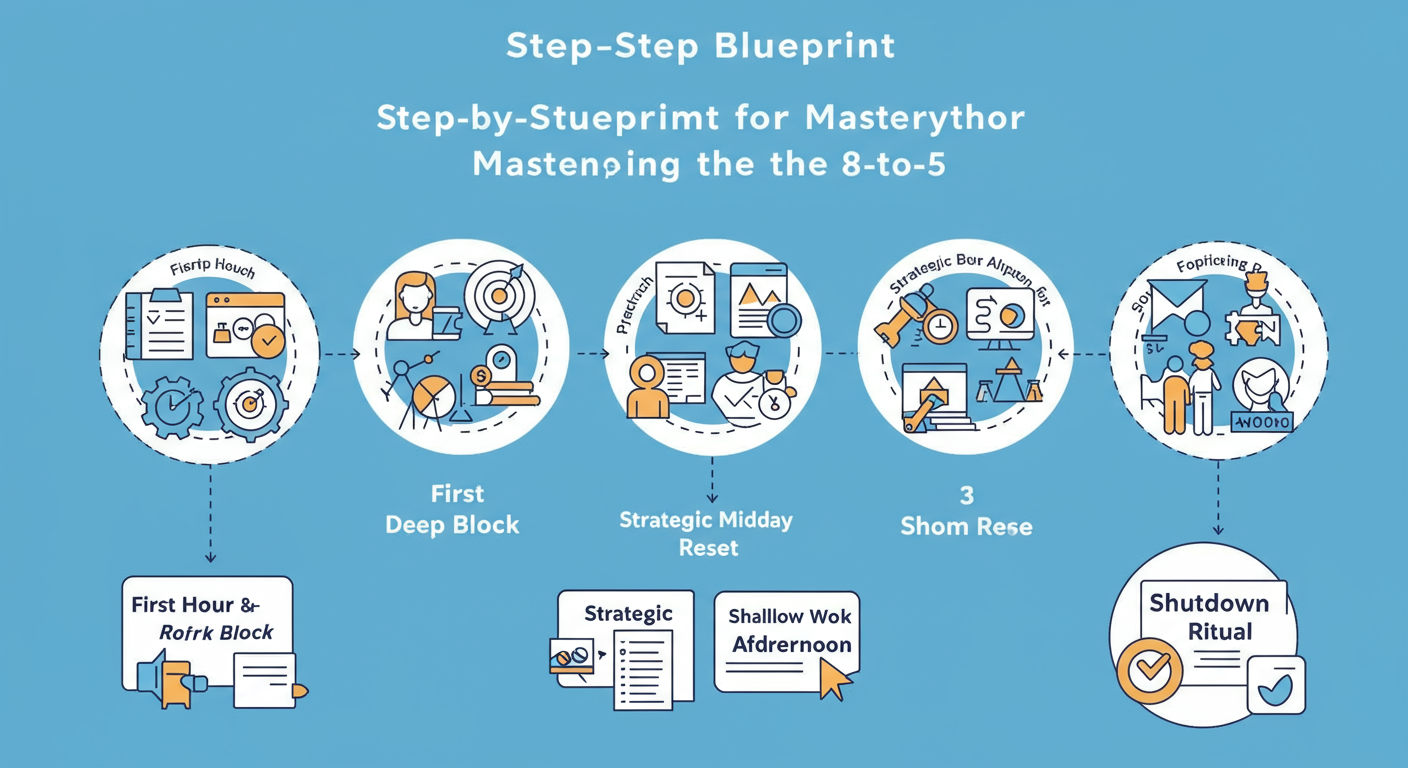
Step 5: The “Shutdown Complete” Ritual (4pm – 5pm)
How you end your day is just as important as how you start it. A clear shutdown ritual is the key to leaving work at work. In the last 20-30 minutes of your day, perform these three actions:
- Review and Plan: Quickly review what you accomplished. Identify the 2-3 most important tasks for tomorrow. This kills the “Sunday scaries” every single day.
- Organize Your Space: Tidy your physical and digital desktops. A clean slate for tomorrow reduces morning friction.
- Declare “Shutdown Complete”: Say the phrase out loud. Close your laptop. Log off. This verbal cue creates a powerful psychological boundary. You are done.
🎯 Key Takeaway
The 8am to 5pm workday isn’t an obstacle; it’s a container. By intentionally designing your day with a blueprint—from a focused launch to a definitive shutdown—you transform those nine hours from a source of dread into a framework for peak performance and a balanced life.
Which Productivity Framework Is Right for You?
Within your daily blueprint, you can use specific frameworks to manage your tasks. But not all are created equal. Here’s a quick comparison based on what we’ve seen work in real-world campaigns.
| Framework | Core Concept | Best For | Watch Out For |
|---|---|---|---|
| The Pomodoro Technique | Work in 25-min sprints with 5-min breaks. | Highly distractible people; breaking down large, daunting projects. | The constant breaks can interrupt deep creative flow for some. |
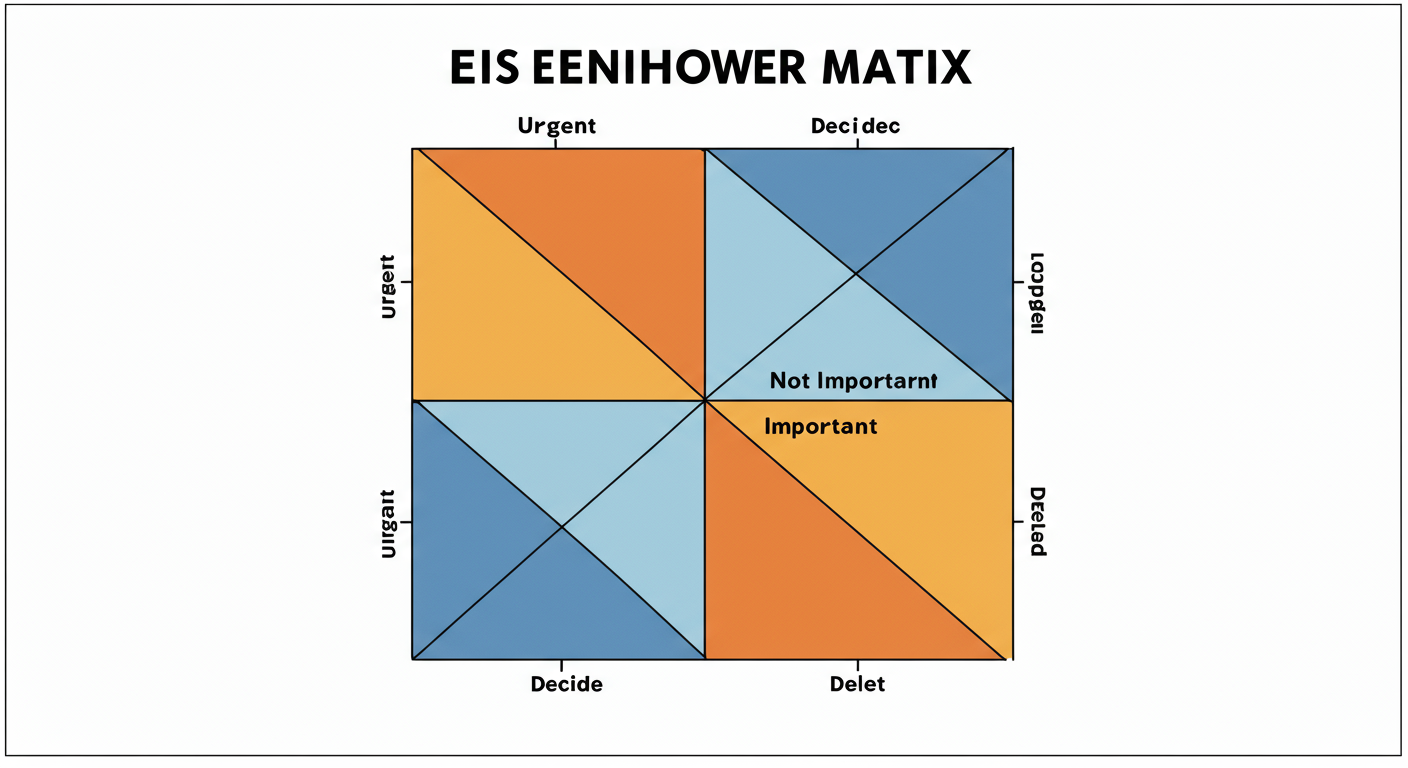
| The Eisenhower Matrix | Categorize tasks by Urgency vs. Importance (Do, Decide, Delegate, Delete). | Leaders and managers juggling many inputs; prioritizing a chaotic to-do list. | It requires discipline to actually “Delete” or “Delegate” tasks. |
| Eat That Frog | Tackle your biggest, most important task first thing in the morning. | Procrastinators; ensuring the most critical work gets done no matter what. | Can be demoralizing if the “frog” is too big to finish in one morning. |
Turning Your Commute from a Liability to an Asset
For many, the biggest “con” of the 8-to-5 is the commute. It’s dead time, right? Wrong. It’s found time, if you use it wisely.
- Morning Commute (Transition In): Don’t check work email. Use this time to prime your brain. Listen to an industry podcast, an audiobook on skill development, or simply plan your day in your head. It’s your personal pre-game show.
- Evening Commute (Transition Out): This is your decompression chamber. Listen to music, a fiction audiobook, or call a friend (hands-free, of course). The goal is to arrive home mentally refreshed and disconnected from the office.
⚠️ Watch Out
Avoid the “hustle culture” trap of trying to work during your entire commute. The goal isn’t to squeeze more work into your day; it’s to create a mental buffer zone. Using your commute for decompression is often a more productive long-term strategy than answering a few extra emails.
💡 Pro Tip
Create a “Shutdown Complete” playlist for your evening commute. When you hit play, it’s a non-negotiable signal to your brain that the workday is over. After a few weeks of this, the habit becomes automatic, and the stress of the day will start to melt away with the first song.
While the 8am to 5pm workday is still a cornerstone of many industries, the conversation around work is evolving. As publications like Harvard Business Review note, the focus is shifting from hours logged to results delivered. But even in a flexible future, the principles of structure, focus, and boundaries you master in an 8-to-5 schedule will remain your greatest professional assets.
❓ Frequently Asked Questions
Is the 8am to 5pm workday bad for your health?
It can be, but it doesn’t have to be. The risks come from a sedentary lifestyle, a long and stressful commute, and a poor work-life balance. By following the blueprint—taking a real lunch break, moving your body, and having a hard stop at 5pm—you can make it a very healthy and sustainable routine.
Why is “9 to 5” a more common phrase?
They essentially describe the same thing: an eight-hour workday. “9 to 5” typically implies an eight-hour block including an unpaid lunch, meaning you’re at work for eight hours. “8 to 5” more explicitly accounts for a nine-hour block that includes an eight-hour shift plus a one-hour unpaid lunch. The core concept is the same.
How can I stay focused when my office is full of distractions?
Focus is a skill you have to train. Start with noise-canceling headphones as a universal “do not disturb” sign. Block out “focus time” on your shared calendar so colleagues know not to interrupt you. And practice working in short, intense bursts (like the Pomodoro Technique) to build your concentration muscle.
What if my boss expects me to be available after 5pm?
This requires a conversation about expectations. The key is to frame it around performance. Explain that protecting your evening rest time allows you to be more focused, productive, and creative from 8am to 5pm. Suggest a trial period to prove that your output will not suffer—and will likely improve.
Are four-day workweeks actually better?
They can be, but it’s not a silver bullet. Many companies have seen success with increased employee well-being and productivity. However, it can also lead to longer, more stressful workdays to compress five days of work into four. The “best” schedule depends heavily on the industry, the company culture, and the individual.
Your Schedule, Your Success
The 8am to 5pm workday isn’t going anywhere for millions of people. You can choose to see it as a limitation, or you can see it for what it is: a powerful, predictable framework waiting for you to master it.
You now have the blueprint. You understand the mindset shift from endurance to ownership. You have the step-by-step plan to architect your day, conquer the slump, and—most importantly—reclaim your life after 5pm. The clock doesn’t have to be your enemy.
Your next step? Don’t try to implement everything at once. Pick one thing. Start with the “Shutdown Complete” ritual for a week. Once you feel the incredible relief of truly leaving work behind, you’ll be hooked. Take back control, one hour at a time.