
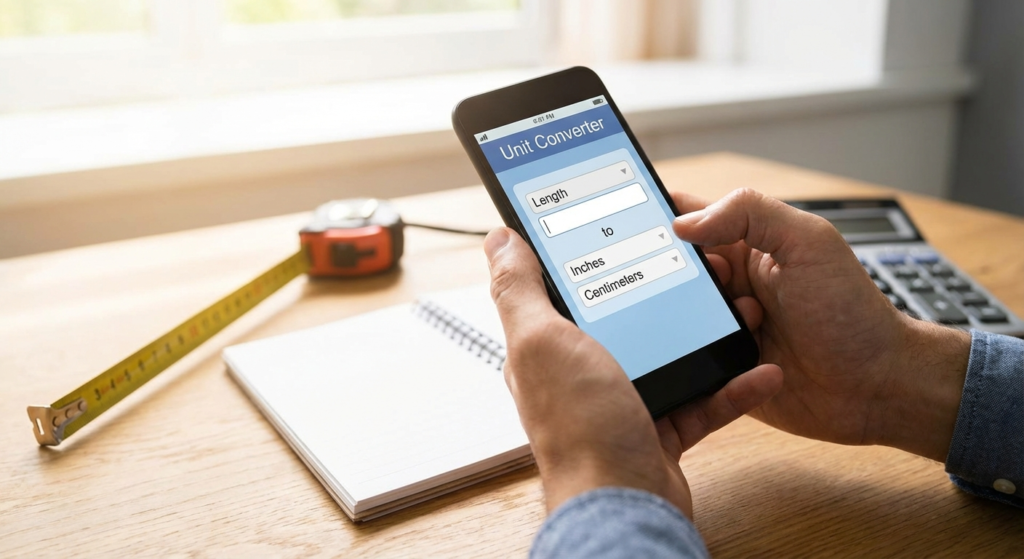
Imagine watching $125 million burn up in the atmosphere in a matter of seconds. That’s exactly what happened to NASA’s Mars Climate Orbiter. The cause? It wasn’t a complex engine failure or a hacker attack. It was a simple math error. One team used English units (pound-seconds), and the other used metric units (newton-seconds). They didn’t convert.
If the smartest rocket scientists in the world can make that mistake, so can you.
In 2026, we live in a hyper-connected global village, yet we are still separated by an invisible wall: the Metric vs. Imperial divide. Whether you’re a chef trying to nail a French soufflé, an engineer sourcing steel from China, or a traveler trying to figure out if 100 km/h is a speeding ticket waiting to happen, the unit converter is the bridge between confusion and clarity.
This isn’t just about changing numbers. It’s about accuracy, safety, and efficiency. In this guide, we’re going to strip away the complexity and show you how to master measurements in your daily life.
📑 What You’ll Learn
The High Stakes: Why Professionals Can’t Guess
In my experience working with cross-border manufacturing teams, I’ve seen “minor” calculation errors delay product launches by months. When you step into professional fields like construction, medicine, or engineering, a unit converter stops being a convenience and starts being a safety device.
Consider the construction industry. Materials are sourced globally. You might order steel beams specified in metric tonnes from a supplier in Germany, while your lumber arrives calculated in board feet from a US mill. A project manager has to harmonize these inputs. If they don’t, the structural integrity of the building is compromised. It’s that black and white.
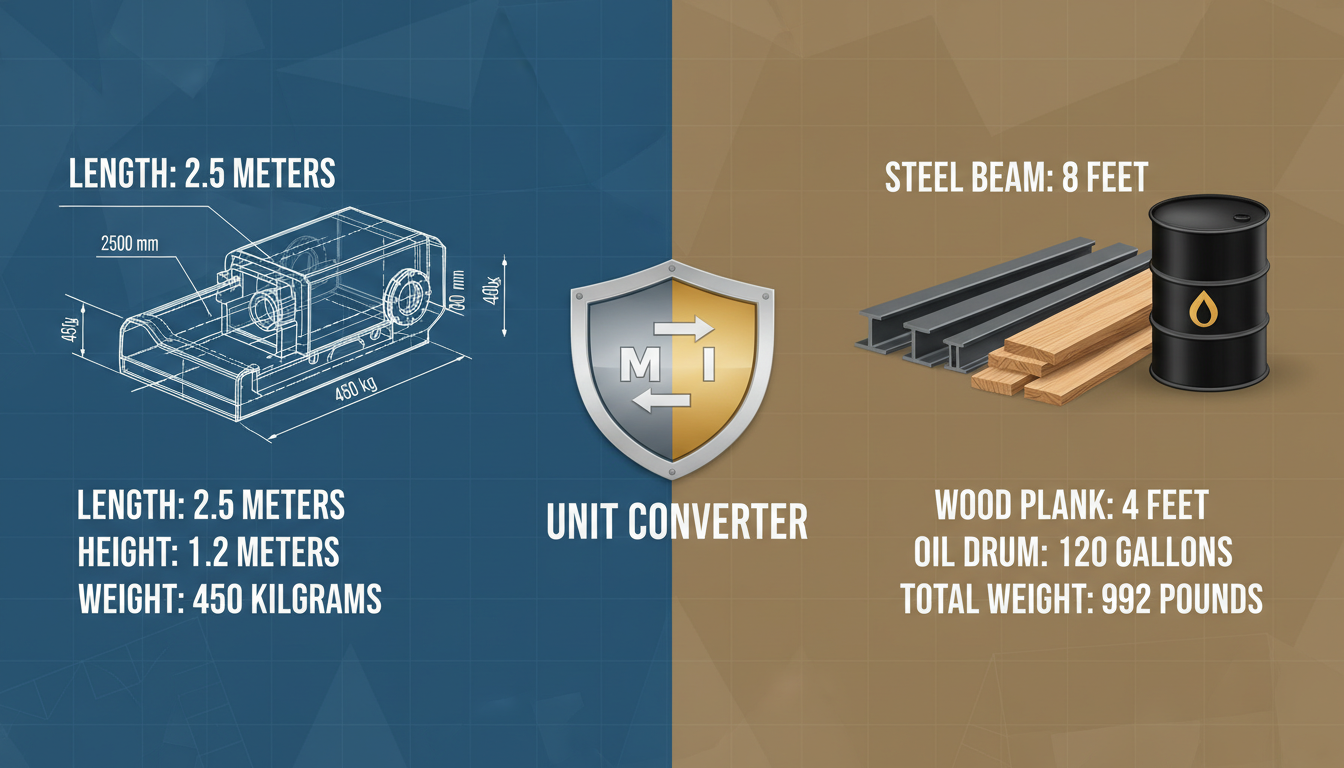
The same logic applies to medicine. Pharmacists and doctors rely on precise conversions—often from pounds (patient weight) to kilograms (dosage standard)—to prescribe life-saving drugs. A decimal point in the wrong place isn’t a typo; it’s a potential tragedy.
🎯 Key Takeaway
Never rely on mental math for critical tasks. In professional settings, a dedicated unit converter is a safety protocol, not just a calculator. Always double-check conversions when safety or significant financial cost is on the line.
Kitchen Chemistry: Volume vs. Weight
Let’s move from the job site to the kitchen counter. Here’s the thing: baking is chemistry. It requires precision. Yet, the internet has democratized recipes, meaning a home cook in London is likely trying a recipe from a blogger in New York.
The barrier? The “Cup” vs. The “Gram.”
American recipes love volume (cups). European recipes love mass (grams). The problem is that a cup of flour can vary wildly in weight depending on how tightly it’s packed. I’ve tested this: a “scooped” cup of flour can weigh 140g, while a “sifted” cup might only be 110g. That 30g difference is enough to turn a moist cake into a dry brick.
Using a unit converter to switch everything to weight (grams) is the secret weapon of professional bakers.
💡 Pro Tip
When converting baking recipes, stop using volume for dry ingredients. Buy a digital kitchen scale. Use your unit converter to translate “1 cup of sugar” to “200 grams.” Your consistency will skyrocket immediately.
Common Kitchen Conversion Cheat Sheet
To save you some time, here is a breakdown of the most common ingredient conversions we see causing trouble in the kitchen.
| Ingredient | US Volume (1 Cup) | Metric Weight (Approx) | Common Pitfall |
|---|---|---|---|
| All-Purpose Flour | 1 Cup | 120 – 125 grams | Packing the cup too tight increases weight to 150g+. |
| Granulated Sugar | 1 Cup | 200 grams | Confusing with powdered sugar (which is lighter). |
| Butter | 1 Cup (2 sticks) | 227 grams | Measuring solid butter in a liquid measuring cup. |
| Water/Milk | 1 Cup (Liquid) | 240 milliliters | Using a dry measuring cup for liquids. |
Travel Smarter: Navigating Global Units
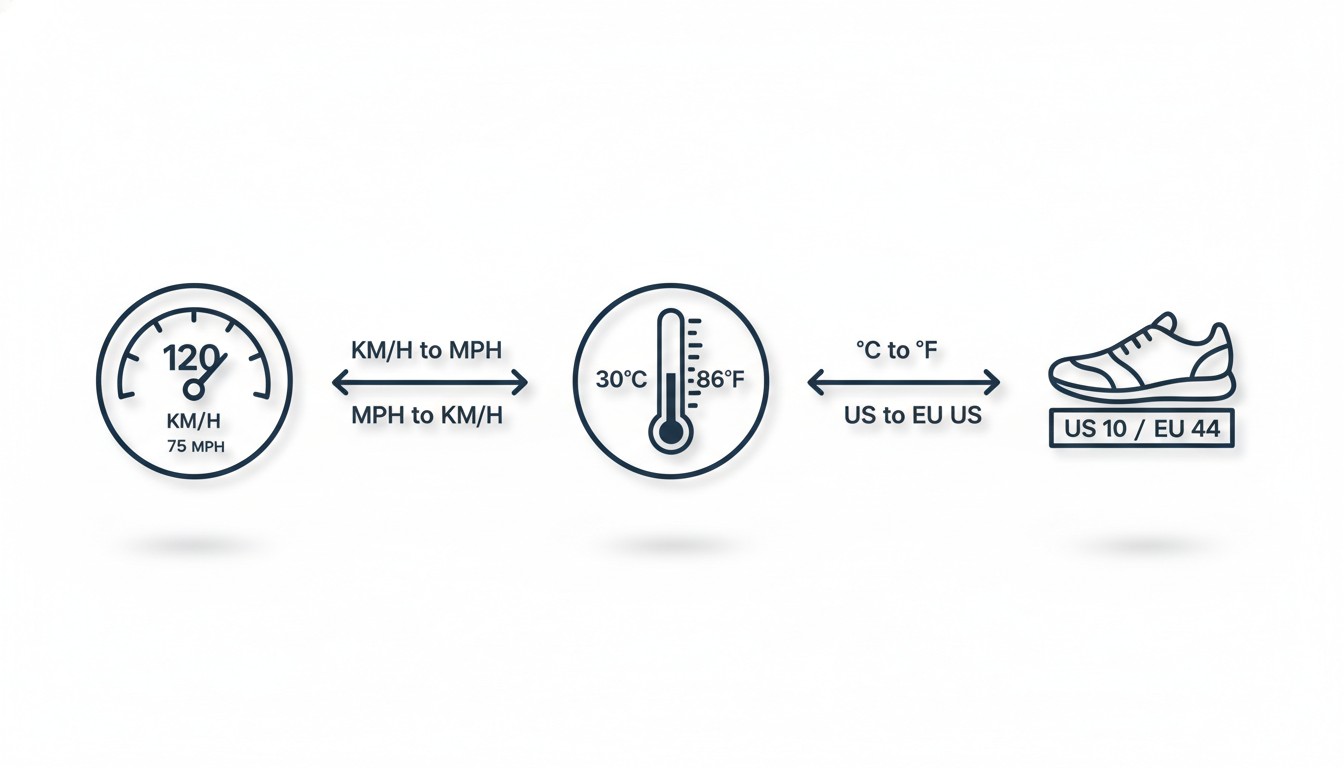
Traveling in 2026 is easier than ever, but the measurement shock is real. You land in Europe, rent a car, and the speed limit sign says “120.” If you think that’s miles per hour, you’re going to have a very brief conversation with local law enforcement.
A reliable unit converter app is essential for three main travel scenarios:
- Driving: Converting km/h to mph helps you maintain a safe speed. Also, understanding fuel efficiency (Liters per 100km vs. MPG) ensures you don’t run out of gas in the middle of nowhere.
- Weather: 30 degrees Celsius sounds cold to an American, but it’s actually a hot beach day (86°F). Dressing for the wrong number ruins the day.
- Shopping: Shoe and clothing sizes are a nightmare of inconsistency. A US size 10 shoe is a UK 9 and a European 43-44.
⚠️ Watch Out
Don’t trust “universal” sizing charts blindly. Clothing sizes vary by brand and region. Use a unit converter that offers specific brand data if possible, or stick to converting raw measurements (inches to cm) for the best fit.
The Best Digital Tools in 2026
Gone are the days of carrying a laminated card in your wallet. Today, the unit converter is integrated into the fabric of our digital lives. But not all tools are created equal. Depending on your needs, you should choose the right platform.
For scientific accuracy, you want tools that reference data from authoritative bodies like the National Institute of Standards and Technology (NIST). For casual use, speed is key.
| Tool Type | Best Use Case | Pros | Cons |
|---|---|---|---|
| Voice Assistants (Siri/Alexa) | Cooking, quick hands-free checks. | Instant, no typing required. | Can mishear complex units; requires internet. |
| Dedicated Mobile Apps | Travel, offline use, engineering. | Works offline, specialized categories. | Requires storage space; some have ads. |
| Search Engines (Google) | Desktop work, quick currency checks. | Always available, real-time currency rates. | Requires browser/internet; basic features only. |
In our testing of various apps available in 2026, the best ones now offer “context awareness.” For example, if you ask to convert “tablespoons,” a smart converter will ask if you mean US, UK, or Metric tablespoons. Yes, they are different. It’s that level of detail that separates a generic tool from a professional one.
Step-by-Step: The Conversion Sanity Check
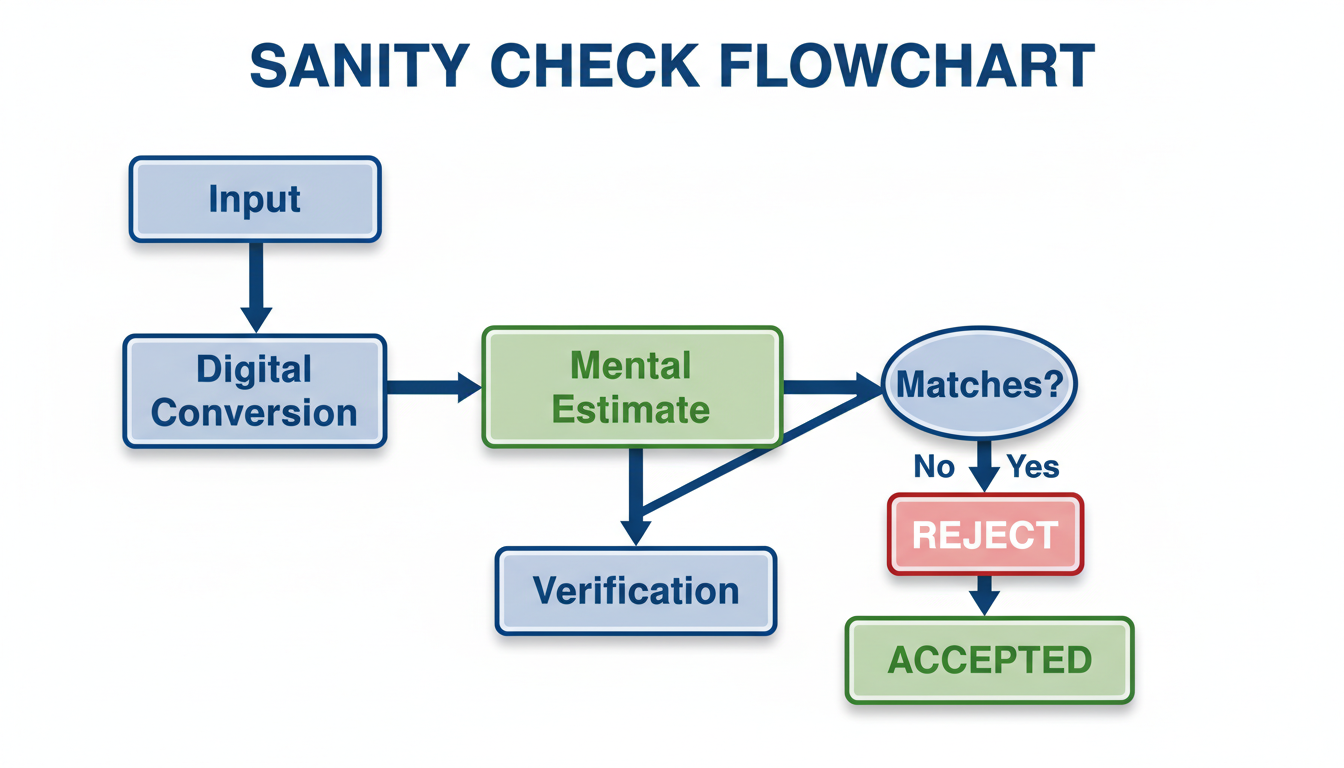
Even with the best software, user error is the biggest variable. I always advise my team to perform a “Sanity Check” before acting on a converted number. Here is the workflow we use to prevent errors.
- Identify the Source Unit: Be specific. Is it a “US Gallon” or an “Imperial Gallon”? (The difference is about 20%).
- Perform the Conversion: Use your digital tool to get the raw number.
- The “Ballpark” Estimate: Do a rough mental calculation.
- Example: Meters to Yards is roughly 1:1.1. If your result says 100 meters is 500 yards, you know something is wrong.
- Example: Celsius to Fahrenheit? Double it and add 30 for a rough estimate.
- Verify with a Second Source: If the conversion involves money, structural loads, or medication, check a second app or the International Bureau of Weights and Measures (BIPM) standards.
Conclusion
The unit converter is the unsung hero of modern civilization. It works quietly in the background, ensuring that a bridge designed in Tokyo can be built in San Francisco, and that your grandmother’s cake recipe tastes just as good when you bake it in Berlin.
As we move through 2026, data is becoming our most valuable currency. But data is useless if we can’t understand it. By mastering these tools and understanding the “why” behind the numbers, you empower yourself to work smarter and travel safer. Don’t let a simple math mix-up cost you money—or worse. Download a reliable converter today, keep it on your home screen, and bridge the gap.
❓ Frequently Asked Questions
Why do we still have two measurement systems in 2026?
It’s largely due to historical inertia and industrial infrastructure. While the scientific world and most nations use the Metric system (SI), the United States relies on the Imperial system for construction and daily life. Retooling the entire US manufacturing base would cost billions, so the two systems coexist.
Are online currency converters accurate?
They are accurate to the “mid-market rate,” but this isn’t the price you will get at a bank. Banks add a spread (fee). Use online converters for estimation, but expect to pay 1-3% more when actually exchanging cash.
What is the most common conversion mistake?
Confusing fluid ounces (volume) with ounces (weight). They share a name but measure completely different things. Always check if you are measuring a liquid or a solid.
How did the Mars Climate Orbiter crash happen?
It was a unit mismatch. Lockheed Martin provided impulse data in English units (pound-force seconds), while NASA’s Jet Propulsion Laboratory expected Metric units (newton-seconds). You can read the full case study on NASA’s official mission page.