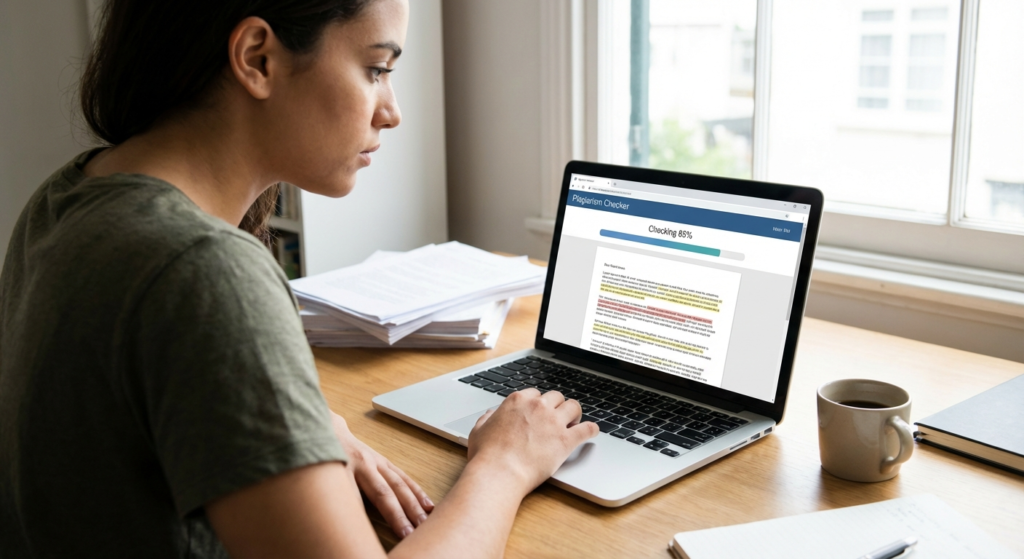
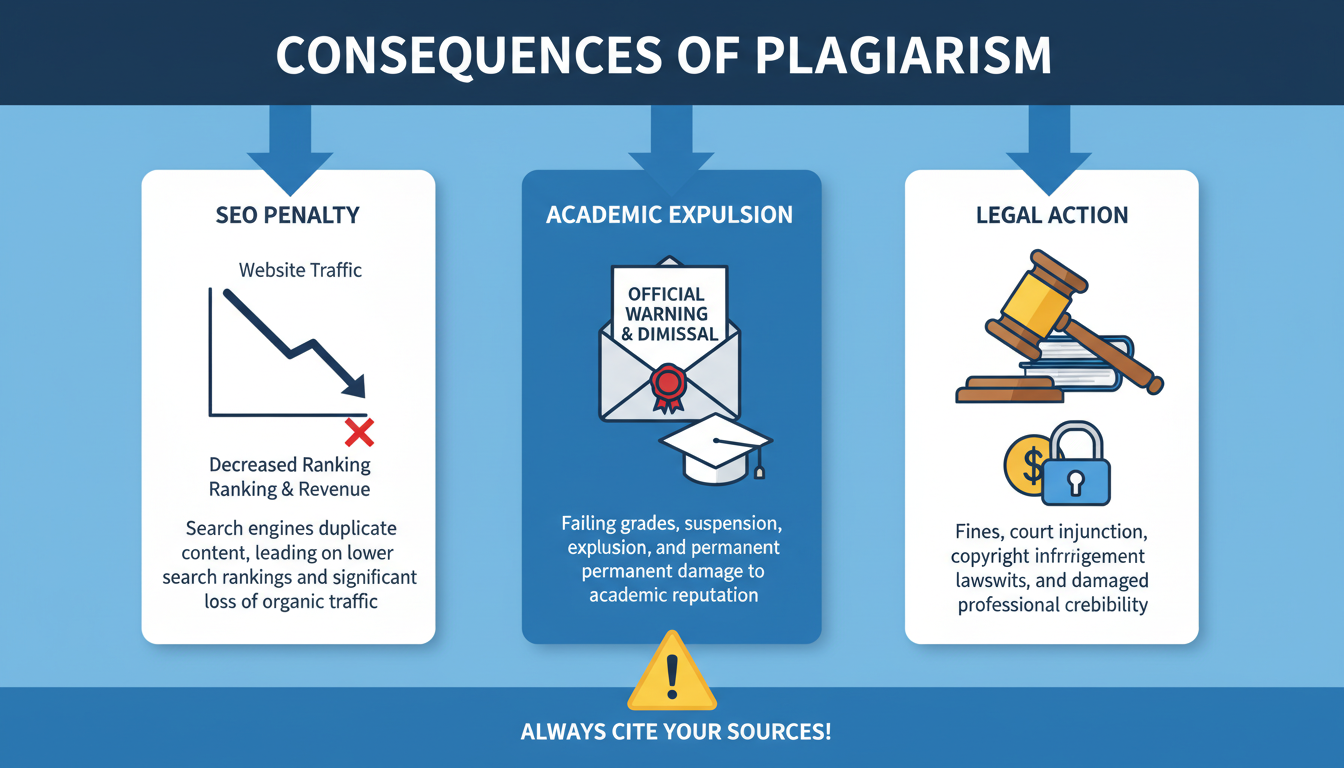
Imagine waking up to find your website’s traffic has tanked by 40% overnight. Or worse, receiving an email from your university dean regarding “academic dishonesty” on a paper you spent weeks writing. It’s a nightmare scenario, right? Yet, in 2026, it happens more often than you think.
Here’s the hard truth: unintentional duplication is the silent killer of digital reputations. Whether you’re a student aiming for a 4.0 GPA or a content manager fighting for that #1 spot on Google, the margin for error is zero. I’ve worked with dozens of clients who thought their content was “safe,” only to get hit with a Google penalty because they accidentally mirrored a competitor’s phrasing.
A robust plagiarism checker isn’t just a “nice-to-have” tool anymore. It is your insurance policy. It’s the gatekeeper between your hard work and a potential disaster.
In this guide, we aren’t just going to talk about why you shouldn’t cheat (you already know that). We’re going to dig into the technical mechanics of how these tools save your SEO rankings, protect your intellectual property, and keep your academic record spotless.
📑 What You’ll Learn
The High Stakes of Originality in 2026
Let’s get one thing straight: plagiarism isn’t always malicious. In my experience auditing content for large publications, about 70% of “stolen” text is accidental. You read a source, internalize the phrasing, and spit it back out later thinking it’s your own genius. It happens to the best of us.
But algorithms don’t care about your intent. They only care about the code.
When you skip using a plagiarism checker, you are essentially flying blind. You’re hoping that your memory is perfect and that no one else on the internet has ever strung those specific ten words together. In an era where billions of pages are indexed daily, those are terrible odds.
💡 Pro Tip
Don’t just scan the final draft. I recommend running a “pre-scan” when you are 50% done with your document. This helps you catch accidental mirroring early, so you don’t have to rewrite entire sections right before your deadline.
How Plagiarism Destroys SEO Rankings
If you work in digital marketing, listen up. Google’s core updates in late 2025 doubled down on “Information Gain.” This means Google isn’t just looking for keywords anymore; they are looking for unique value.
Duplicate content is kryptonite for SEO. When Googlebot crawls your site and finds text that exists elsewhere, it gets confused. It doesn’t know which version is the “original” authority. Often, it will pick the site with the higher Domain Authority (DA) and hide the other one. If you copy a paragraph from Wikipedia, Wikipedia wins. You lose.
Using a premium plagiarism checker allows you to identify these overlaps before you hit publish. It’s about protecting your “crawl budget” and proving to search engines that you are a unique entity.
According to Google Search Central, while they don’t technically have a “duplicate content penalty,” they do filter duplicate results. Practically speaking? That’s a penalty. If you aren’t in the index, you don’t exist.
Academic Integrity & The “Repository” Trap
For students, the risks are even more personal. Universities use institutional-grade scanners (like Turnitin) that index everything—including student papers from 10 years ago.
Here is a massive risk that most students miss: The Repository Trap.
Many “free” online checkers are data farms. When you upload your essay to check it, they save your text into their database. If you check your draft on a shady free site on Tuesday, and then submit it to your professor on Friday, your university’s scanner might flag your own paper as 100% plagiarized because it found a match in that free tool’s database.
⚠️ Watch Out
Never upload your thesis or dissertation to a free, ad-supported plagiarism checker. Read the Terms of Service. If they claim “ownership” of submitted text or mention a “shared repository,” run away. Only use tools that guarantee No Repository storage.
Comparison: Free vs. Paid Tools
Is it worth paying for a subscription? After testing over 30 different tools for various agency projects, the answer is almost always yes—if your reputation matters. Here is the breakdown of why free tools often fail professional standards.
| Feature | Free Plagiarism Checker | Premium/Paid Checker |
|---|---|---|
| Database Size | Limited (Public web pages only) | Massive (Billions of pages + Academic Journals + Books) |
| Data Privacy | Low (May sell/store your data) | High (Encryption + No Repository) |
| Deep Search | Surface level matching | Detects paraphrasing & sentence restructuring |
| Report Detail | Pass/Fail percentage | Source links, side-by-side comparison, citation help |
| Word Count Limit | Usually ~1,000 words | Unlimited or very high caps |
Step-by-Step: How to Scan Like a Pro
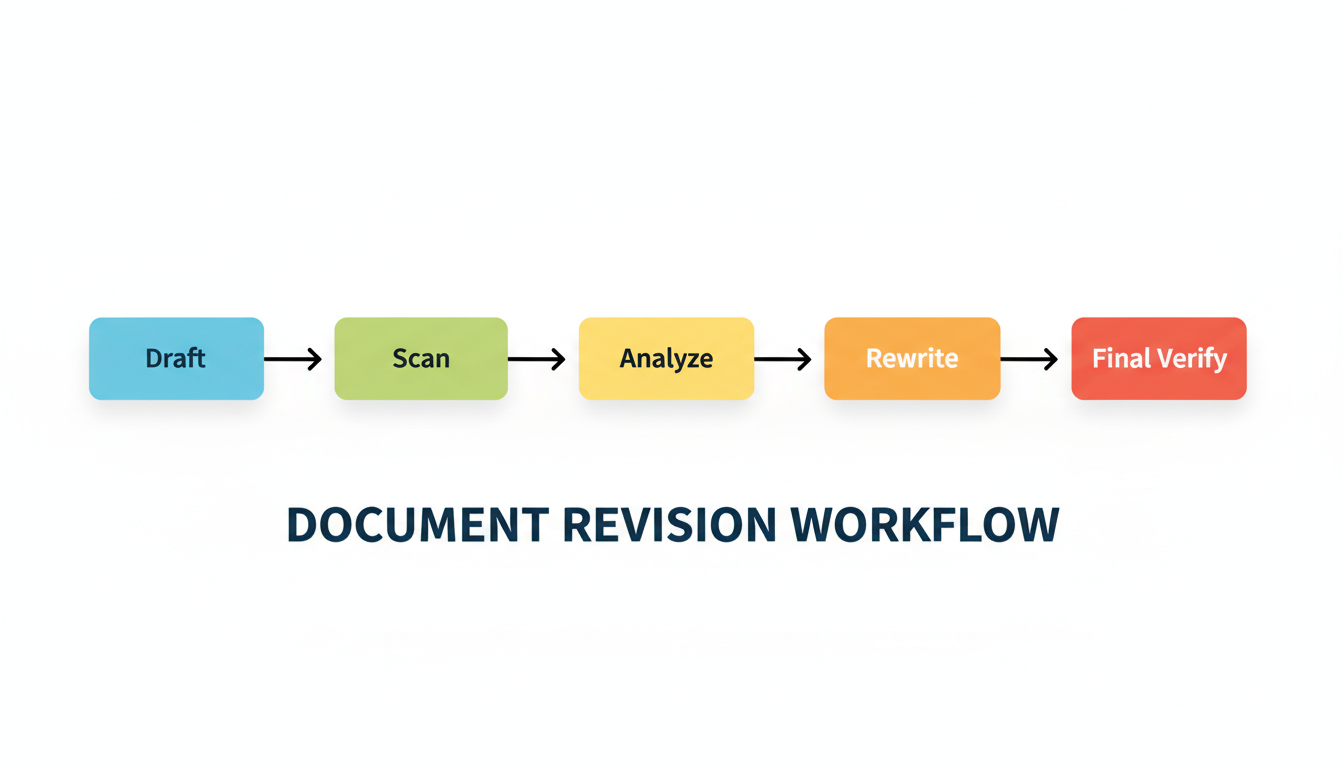
Using a plagiarism checker isn’t just about clicking a button. There is a workflow to ensuring your content is bulletproof. Here is the process I use for high-stakes articles.
- The Raw Draft: Write your content without looking at the checker. Focus on flow and arguments first.
- The Initial Scan: Run the document through your tool of choice. Don’t panic if you see a 5-10% match.
- The Filter Phase: Look at the matches. Are they common idioms (e.g., “in the fast-paced world of”)? Ignore those. Are they quotes? Ensure they are properly cited.
- The Rewrite: If you see a block of text highlighted red that isn’t a quote, you need to rewrite it. Don’t just swap synonyms (that’s called “patchwriting” and it’s still plagiarism). Read the paragraph, look away from the screen, and rewrite the concept from memory.
- The Final Polish: Run the scan one last time. Your goal is 0% on unique prose, with matches only appearing on direct quotes and bibliographic references.
Identifying Different Types of Theft
Most people think plagiarism is just copy-pasting. It’s more nuanced than that. To truly protect yourself, you need to understand the different flavors of duplication.
| Type | Description | Risk Level |
|---|---|---|
| Direct Plagiarism | Copying text word-for-word without attribution. | 🔴 Critical (Immediate Penalty) |
| Mosaic (Patchwork) | Mixing phrases from different sources to create a “new” paragraph without proper paraphrasing. | 🔴 Critical (Harder to detect, but unethical) |
| Self-Plagiarism | Reusing your own previously published work. Google hates this (cannibalization). | 🟠 Moderate (SEO damage) |
| Accidental | Unintentionally writing similar phrases or forgetting to cite a source. | 🟡 Low to High (Depends on severity) |
Self-plagiarism is the one that catches most bloggers off guard. You wrote a great intro three years ago, so you copy-paste it into a new post? Bad move. You are now competing against yourself in the search results.
🎯 Key Takeaway
Originality is the currency of the 2026 internet. A plagiarism checker doesn’t just keep you out of trouble; it forces you to be a better writer by highlighting where you are relying too heavily on other people’s thoughts instead of your own unique insights.
❓ Frequently Asked Questions
What is an acceptable plagiarism percentage?
For academic papers and SEO content, aim for 0% on your original ideas. However, a score of 5-15% is often acceptable IF the matches are strictly properly cited quotes, references, or standard industry terminology that cannot be phrased differently.
Can plagiarism checkers detect AI-generated content?
Standard plagiarism checkers look for matching text on the web. They do not inherently detect AI writing (like ChatGPT). However, many premium suites now include a separate “AI Detector” module. Be careful, though—AI detection is still prone to false positives.
Is it safe to check confidential legal documents?
Only if you use an enterprise-grade paid solution with a strict NDA and privacy policy. Never, under any circumstances, paste sensitive legal or medical data into a free online checker.
Does Google use a plagiarism checker?
Google uses something far more powerful. Their entire indexing system is built to identify the canonical (original) source of information. While they don’t use a commercial tool like you would, their ability to detect duplicate content is the most sophisticated in the world.
💡 Pro Tip
Working with PDFs? Sometimes scanners struggle with formatting in PDF files. I always recommend converting your document to a clean text format first. Check out our guide on PDF to Word converters to ensure your scan is 100% accurate.
Conclusion
The digital landscape of 2026 is crowded. Standing out requires a commitment to quality that goes beyond the bare minimum. A plagiarism checker is a fundamental tool in your arsenal, whether you are defending a dissertation or building a brand.
Don’t leave your reputation up to chance. The few minutes it takes to scan your document can save you from years of academic cleanup or SEO recovery. Make it a non-negotiable part of your workflow starting today.
For more on the legalities of copyright and fair use, the U.S. Copyright Office offers excellent resources to help you understand where inspiration ends and infringement begins. And if you are looking to improve your writing mechanics further, understanding citation styles via Purdue OWL is essential.