
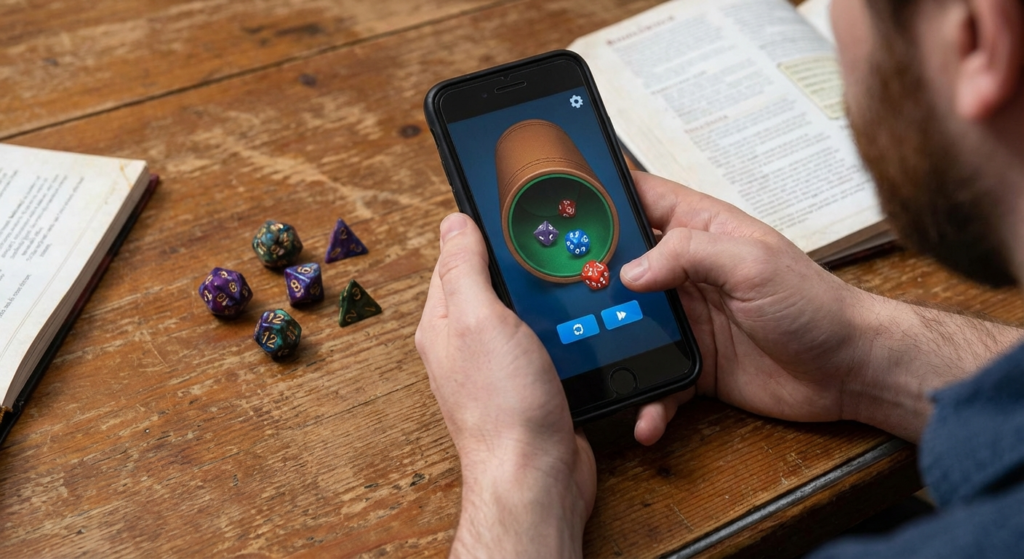
Ever been mid-session in a D&D campaign and realized your lucky d20 just rolled under the couch? It’s a total mood killer. Honestly, while I love the clatter of plastic on a wooden table, sometimes you just need something more reliable. That’s where a digital dice roller comes in. It’s not just a backup for when you’re missing pieces; it’s a powerful tool for anyone who needs randomness without the hassle. Whether you’re running a game, teaching a class, or just can’t decide what to eat for lunch, these tools are surprisingly versatile.
Why a Digital Dice Roller is Actually Better Than Physical Dice
Look, I get it. The tactile feel of rolling dice is part of the hobby. But here’s the thing: most cheap physical dice are actually biased. Tiny air bubbles inside the plastic or uneven edges can make certain numbers pop up more often than they should. A digital dice roller uses something called a Pseudo-Random Number Generator (PRNG). It’s a fancy way of saying a computer algorithm ensures the results are as fair as possible.
Beyond fairness, there’s the speed factor. If you’re playing a high-level game of Warhammer or Pathfinder, you might need to roll 20 dice at once. Counting those up manually takes forever. A digital tool does it in a heartbeat. No more math errors mid-combat. No more “cocked” dice leaning against a book. It just works.
10 Creative Ways to Use a Digital Dice Roller
1. Speeding Up TTRPG Combat
In games like Dungeons & Dragons, a fireball spell requires 8d6 damage. That’s eight six-sided dice. Rolling and adding them up can stall the narrative. With a digital dice roller, you click once, and the total is there. It keeps the energy high and the story moving.
2. Managing Weird Polyhedral Shapes
Ever tried to find a physical 7-sided die (d7) or a 100-sided one (d100)? They’re either expensive or look like golf balls that never stop rolling. A digital tool lets you roll a d3, d17, or even a d1000 instantly. This is a lifesaver for indie RPGs or homebrew rules that use non-standard math.
3. Teaching Probability and Statistics
I’ve found that kids engage way more with math when it feels like a game. Teachers can use a digital dice roller to demonstrate the Law of Large Numbers. Want to show how 2d6 creates a bell curve? Roll it 1,000 times in a second using a simulator. It’s much more effective than rolling by hand for an hour. For the technical theory behind this, Wolfram MathWorld is a goldmine of info.
4. Gamifying Your Daily Chores
Decision fatigue is real. If you’re staring at a sink full of dishes and a floor that needs vacuuming, let the dice decide. Assign chores to numbers 1-6. Roll the die. Whatever it lands on is your first task. It sounds silly, but it takes the mental weight out of starting your day.
5. Fair Conflict Resolution in Groups
Who gets the last slice of pizza? Who has to give the presentation first? Don’t argue about it. A quick roll on a digital dice roller settles it instantly and fairly. If the dispute is about money—like splitting a massive dinner bill—I’d suggest using a dedicated expense splitter tool instead to keep things perfectly accurate.
6. Randomizing Fitness Workouts
Want to spice up your gym routine? Create a list of six exercises (pushups, squats, lunges, etc.). Roll a d6 to pick the move and a d20 to determine the reps. It keeps your body guessing and prevents that boring plateau we all hit eventually.
7. Procedural Storytelling and Writing
Writers often get stuck on what happens next. Use dice to determine plot twists. 1 = a new character enters, 2 = a secret is revealed, 3 = disaster strikes. Many professional authors use these kinds of “oracle” tables to break through writer’s block.
8. Board Game Replacements
We’ve all been there—opening a box of Monopoly or Yahtzee only to find the dice are missing. A phone-based roller saves the night. Some apps even let you “lock” dice, which is perfect for games where you need to keep certain results and re-roll the rest.
9. Generating Random Data for Developers
If you’re building a website, you often need random IDs or placeholders. While a dice roller handles the numbers, you might also need something like an SEO friendly URL slug generator to handle the text side of things. Combining these tools makes testing much faster.
10. Setting Up “Exploding” Rolls
Some advanced gaming systems (like Shadowrun) use “exploding dice.” This means if you roll the max number, you get to roll again and add it. Doing this manually for 20 dice is a nightmare. A good digital dice roller handles this logic automatically, showing you the final massive total in one go.
The Tech: Is it Truly Random?
People ask me this all the time: “Can I trust the computer?” The short answer is yes. Here is how they compare:
| Feature | Physical Dice | Digital Roller (PRNG) |
|---|---|---|
| Fairness | Can be biased by weight/shape | Statistically unbiased |
| Speed | Slow (manual counting) | Instantaneous |
| Convenience | Easy to lose or damage | Always in your pocket |
Most apps use PRNGs, which use a seed number and a math formula. For 99% of humans, this is indistinguishable from “true” randomness. If you’re running a high-stakes casino, you’d want a True Random Number Generator (TRNG) that uses atmospheric noise, but for your Friday night D&D session? The digital version is actually fairer than that cheap plastic d20 you bought at the hobby shop.
Conclusion
At the end of the day, a digital dice roller is more than just a backup plan. It’s a tool for efficiency, fairness, and a bit of fun. From the classroom to the dungeon, it solves the logistical headaches that come with physical components. So, the next time you can’t find your dice bag or you’re trying to explain probability to a bored teenager, give a digital roller a shot. It might just become your new favorite tool.
What’s your favorite use for digital dice? Do you still swear by the feel of physical resin, or have you made the switch to digital? Let me know in the comments!
Frequently Asked Questions
Yes! In fact, many players prefer it for complex damage rolls like 10d6, as it calculates the total instantly. Many official tools from Wizards of the Coast even integrate them directly into character sheets.
Generally, yes. They are often fairer than physical dice, which can have manufacturing defects that bias the results toward certain numbers.
Not necessarily. You can find simple rollers directly in Google search or use web-based tools, though dedicated apps often offer more features like history logs and custom dice shapes.