
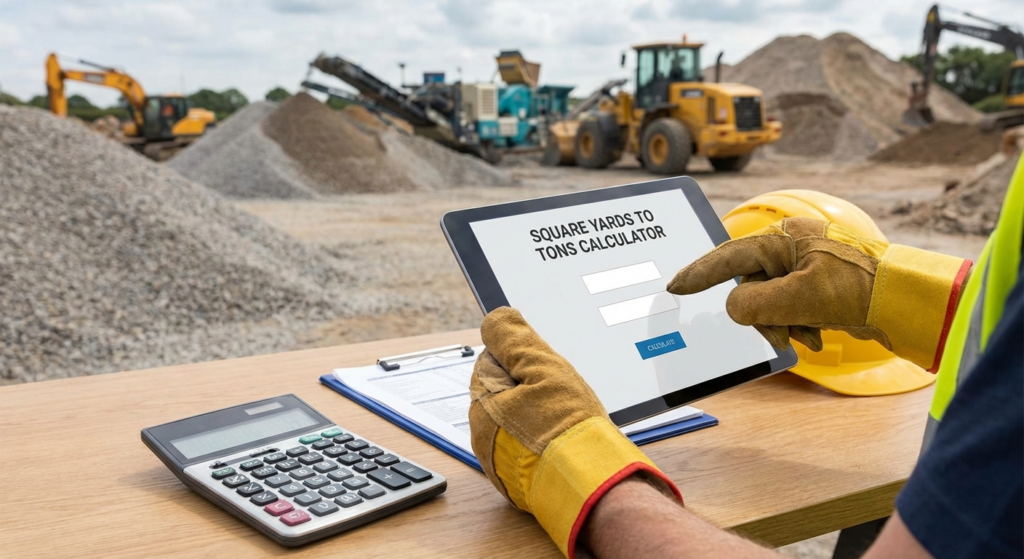
There is a specific kind of panic that sets in when the dump truck tilts its bed, pours out a mountain of gravel, drives away, and you realize—halfway through spreading it—that you are going to be short. It’s a nightmare scenario for any homeowner or contractor. It stops the project dead in its tracks, forces you to pay a second delivery fee (which often costs more than the material itself), and ruins your schedule.
On the flip side, ordering too much is just literally throwing money in the dirt. I’ve seen DIYers stuck with a massive pile of leftover topsoil in their driveway for months because they guessed the volume instead of calculating it.
Here is the reality: Ordering construction materials isn’t as intuitive as measuring a rug. You measure your driveway or garden in area (square yards), but the quarry sells the material by weight (tons). Bridging that gap requires more than a guess; it requires a precise square yards to tons calculator method.
In this guide, we aren’t just going to give you a formula. We are going to walk through the physics of material density, the “compaction factor” that most calculators miss, and how to ensure your 2026 projects land exactly on budget.
📑 What You’ll Learn
The “Missing Link” in the Calculation
To use a square yards to tons calculator effectively, you have to understand why you can’t just convert one to the other directly. It’s like asking, “How many miles is 50 pounds?” The units measure two completely different dimensions of reality.
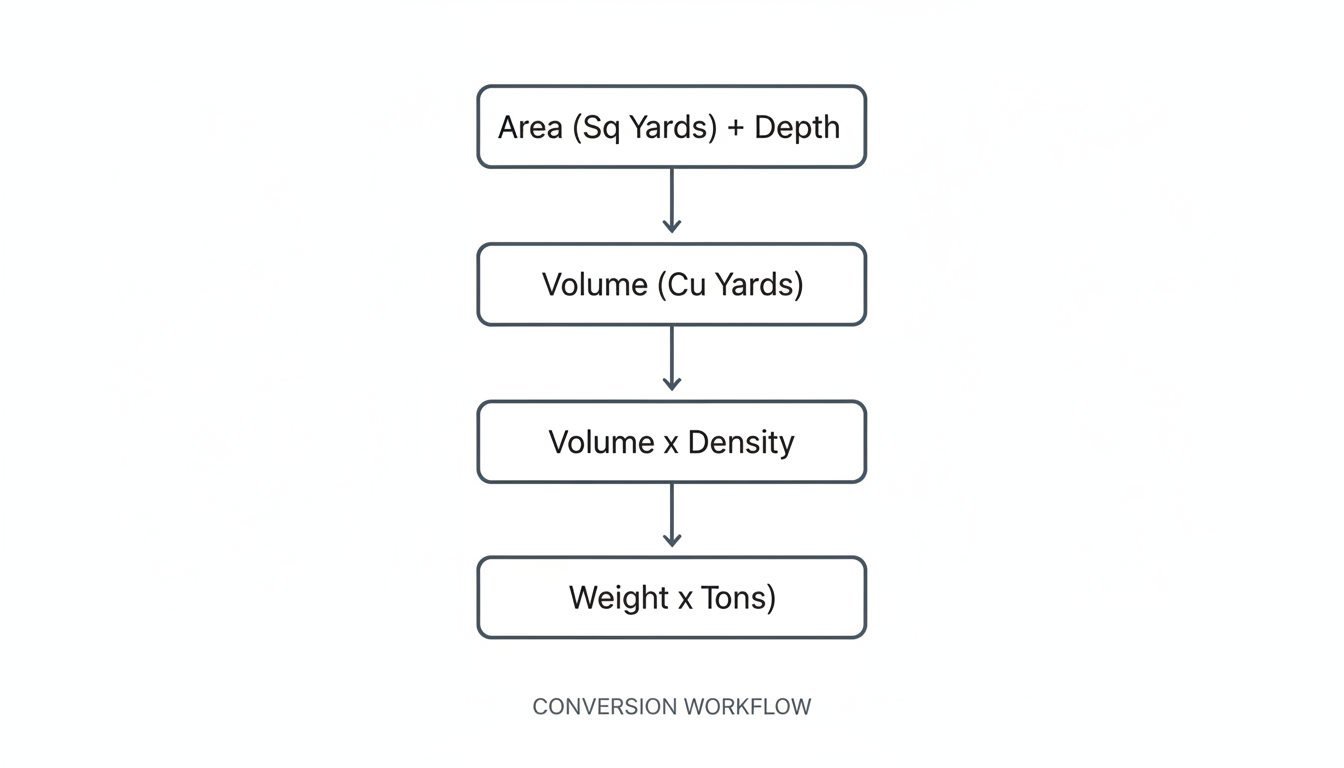
Square yards measure a flat, 2D surface. Tons measure weight. To get from one to the other, you need a third dimension: Depth.
Think of your project like a cake pan. The square yardage is the size of the pan. The tons are the weight of the finished cake. To know the weight, you need to know how deep the batter is (depth) and how heavy the ingredients are (density).
🎯 Key Takeaway
You cannot convert square yards directly to tons. You must first calculate the Volume (Cubic Yards) by factoring in the depth, and then apply the specific Density of the material to find the weight.
Why Density is Your Biggest Variable
This is where 90% of people get it wrong. They plug numbers into a generic calculator that assumes a “standard” weight for dirt or stone. But in my experience, there is no such thing as “standard.”
A cubic yard of dry mulch is light enough for a teenager to lift in a few buckets. A cubic yard of wet, compacted crusher-run gravel can weigh nearly 3,000 pounds. If you use the same conversion factor for both, your order will be disastrously wrong.
Let’s look at the density variance. This data is crucial when inputting values into any square yards to tons calculator.
| Material Type | Avg. Weight per Cubic Yard (lbs) | Avg. Tons per Cubic Yard | Density Characteristic |
|---|---|---|---|
| Mulch (Dry) | 600 – 800 lbs | 0.3 – 0.4 tons | Very Light / High Volume |
| Topsoil (Loose) | 2,000 – 2,200 lbs | 1.0 – 1.1 tons | Variable based on moisture |
| Gravel (Clean Stone) | 2,500 – 2,700 lbs | 1.25 – 1.35 tons | Consistent density |
| Gravel (Crusher Run) | 2,800 – 3,000 lbs | 1.4 – 1.5 tons | Very Heavy / Compacts tightly |
| Asphalt (Hot Mix) | 3,800 – 4,000 lbs | 1.9 – 2.0 tons | Extremely Dense |
⚠️ Watch Out: The Moisture Trap
Water is heavy. A cubic yard of water weighs about 1,685 lbs. If you are buying topsoil or sand that has been sitting in the rain at the quarry, you might be paying for water weight. Always ask your supplier if the material is sold by “dry weight” or if they account for moisture content.
Step-by-Step: How to Calculate Manually
While online calculators are great, I always recommend running the math manually at least once to double-check. It prevents “fat finger” errors where a typo leads to a dump truck overflowing with gravel you don’t need.
Here is the foolproof method we use in the field:
Step 1: Measure Your Area
Measure the length and width of your project in feet. Multiply them to get Square Feet.
Example: A driveway is 50 ft long and 10 ft wide = 500 sq. ft.
Step 2: Convert to Square Yards
Divide your square footage by 9.
Example: 500 sq. ft / 9 = 55.55 sq. yards.
Step 3: Determine Volume (Cubic Yards)
This is the tricky part. You need to convert your depth (inches) into a fraction of a yard. The easiest way is this formula:
(Square Yards × Depth in Inches) ÷ 36 = Cubic Yards
Example: (55.55 sq. yards × 4 inches deep) ÷ 36 = 6.17 Cubic Yards.
Step 4: Convert to Tons
Multiply your Cubic Yards by the material density (in tons). Refer to the chart above or ask your supplier.
Example: 6.17 Cubic Yards × 1.4 (Density of Crusher Run) = 8.64 Tons.
The Compaction Factor (Don’t Skip This)
If you order exactly 8.64 tons for the example above, you will run short. Guaranteed.
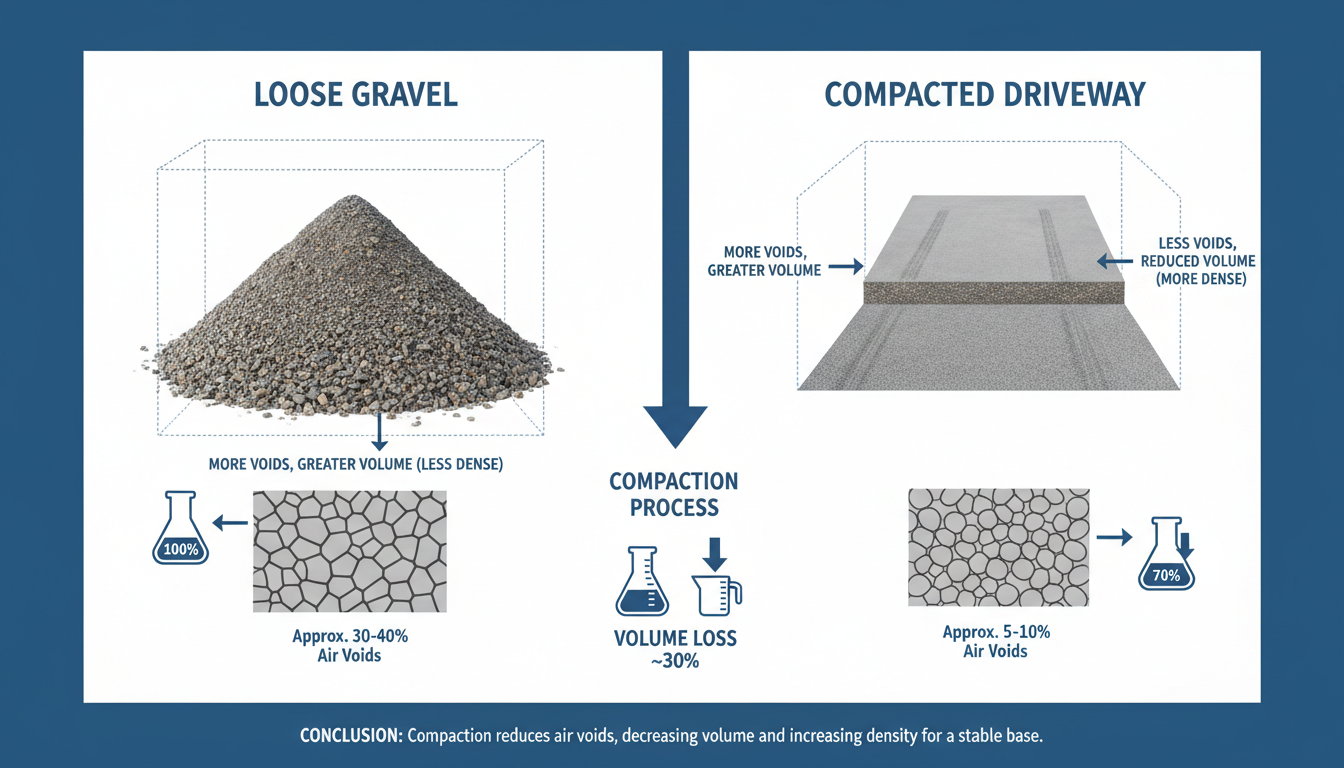
Why? Because when gravel or soil is delivered, it is “fluffed up” with air pockets. When you spread it and run a plate compactor over it (which you absolutely should do for a driveway), the material settles. You lose volume.
Industry standards suggest that materials like gravel and soil can compact by 10% to 20%. To avoid the “short load” panic, you need to add a safety margin.
💡 Pro Tip
Always add a 10-15% buffer to your final tonnage calculation. For the example above, instead of ordering 8.64 tons, you should order roughly 10 tons. It is far cheaper to have a little extra gravel for pothole repairs later than to pay a $150 delivery fee for one missing ton.
Real-World Scenarios: Planning Your Order
Let’s look at how this plays out in two different common projects. Notice how the material choice drastically changes the tonnage, even if the area is similar.
| Project Scenario | Dimensions | Depth | Material | Calculated Weight |
|---|---|---|---|---|
| The Flower Bed | 20′ x 5′ (100 sq ft) | 6 inches | Topsoil (Dry) | ~2.0 Tons |
| The Walkway | 20′ x 5′ (100 sq ft) | 4 inches | Pea Gravel | ~2.3 Tons |
| The Patio Base | 20′ x 5′ (100 sq ft) | 4 inches | Stone Dust (Dense) | ~2.8 Tons |
As you can see, even though the walkway is shallower than the flower bed (4 inches vs 6 inches), the gravel walkway requires more tonnage because stone is simply denser than dirt. For authoritative data on material densities, resources like The Engineering Toolbox are invaluable for checking specific weights.
Optimizing Your Workflow
Using a square yards to tons calculator is just step one. When you call the quarry, sound like a pro. Give them your square yardage and your desired depth, but ask them: “What is the conversion rate you use for this specific aggregate?”
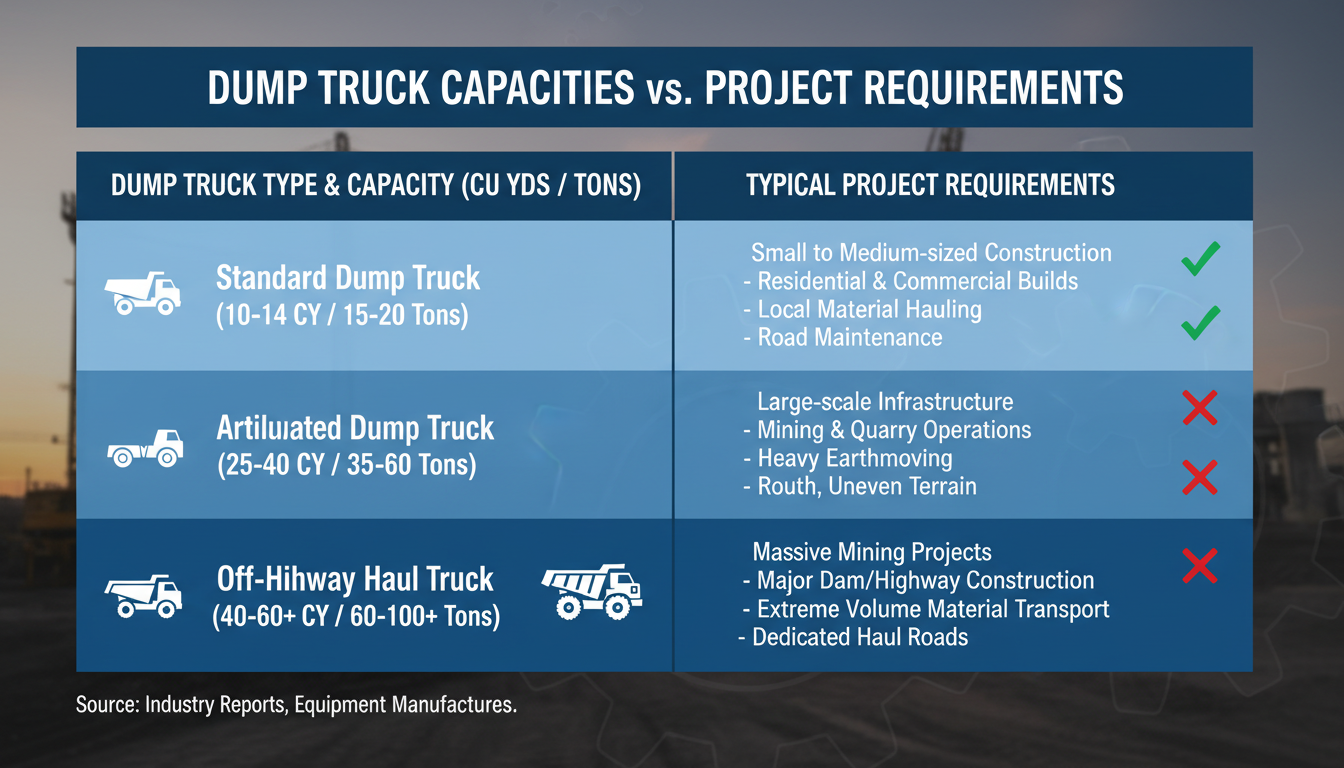
They might tell you their limestone runs heavy this year, or their mulch is particularly wet. Adjust your math based on their insider info. Also, consider the logistics. A standard dump truck holds about 15-20 tons. If your calculation comes out to 22 tons, you are looking at two delivery charges. You might be able to adjust your depth slightly to fit everything in one load, saving you significant cash.
❓ Frequently Asked Questions
How many square yards does 1 ton of gravel cover?
It depends on the depth. At a standard 2-inch depth for landscaping, 1 ton of gravel covers approximately 8 to 10 square yards. However, if you are laying a 4-inch driveway base, that same ton will only cover about 4 to 5 square yards.
Is a cubic yard the same as a ton?
No. A cubic yard is a measure of volume (size), while a ton is a measure of weight. For light materials like mulch, 1 cubic yard weighs much less than a ton. For dense materials like concrete or asphalt, 1 cubic yard weighs roughly 2 tons.
How do I calculate asphalt tonnage?
Asphalt is denser than gravel. The standard industry formula is: Area (sq ft) × Depth (inches) × 0.056 = Weight in Tons. This assumes a standard density of roughly 145-150 lbs per cubic foot. Always verify with your asphalt plant.
What if my project area isn’t a perfect rectangle?
Break the area down into smaller rectangles, calculate the square footage for each, and add them together. For curved areas, estimate the average width and length. It is better to overestimate the area slightly than to underestimate it.
Does rain affect the tonnage I buy?
Yes. If you buy by weight, wet material costs more for the same volume. However, most reputable quarries have “moisture corrections” or sell by the cubic yard to avoid this issue. Always clarify this before purchasing.
Conclusion
Mastering the square yards to tons calculator logic separates the amateurs from the pros. It’s not just about plugging numbers into a box; it’s about understanding the relationship between the space you need to fill and the density of the material you are filling it with.
Remember the golden rules for 2026: Measure twice, check the density with your supplier, and always—always—add that 10% buffer for compaction. Whether you are paving a massive driveway or just topping off a garden bed, accuracy saves you budget and backaches.
For more technical details on soil management and material estimation, the USDA Natural Resources Conservation Service provides excellent guides on soil composition, while NAPA (National Asphalt Pavement Association) offers specific calculators for paving projects.
Now, go measure that project and order with confidence.