
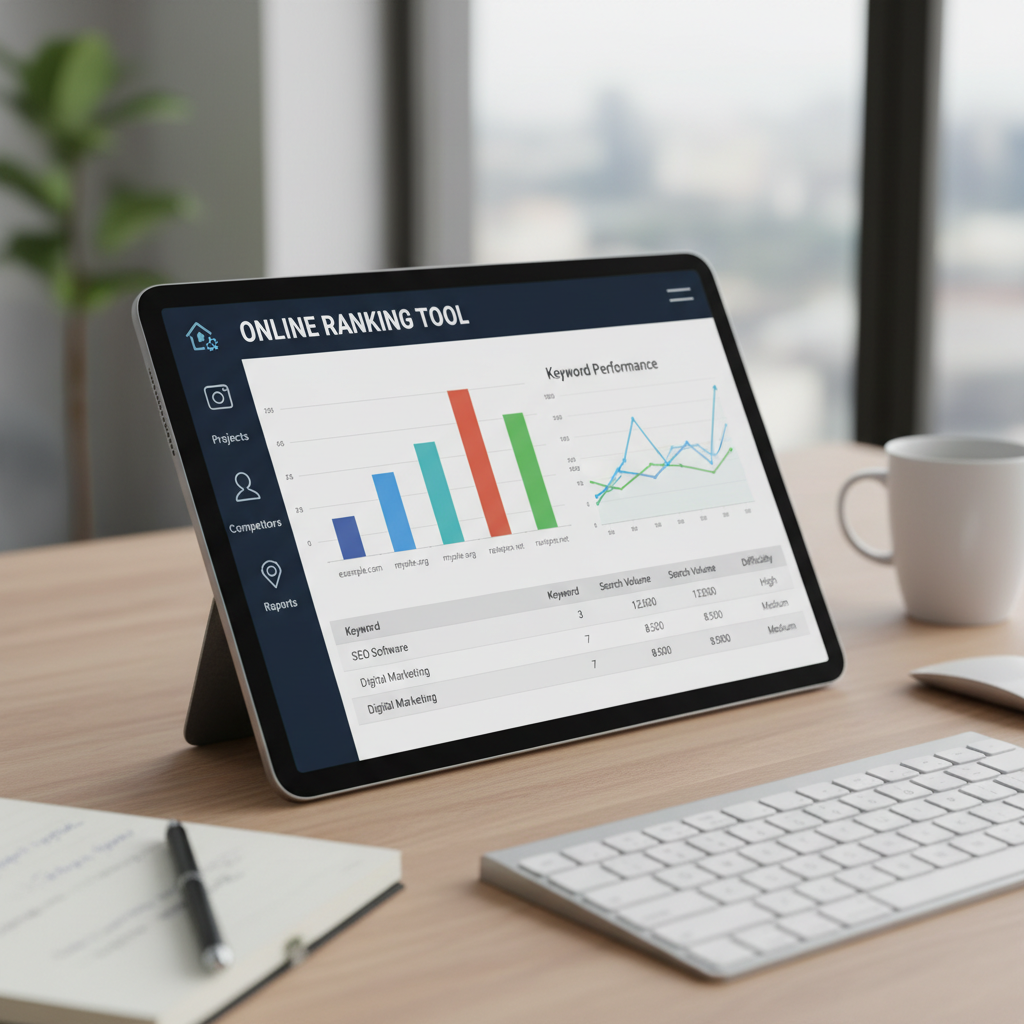
Unlocking SEO Success: Your Comprehensive Guide to the Online Ranking Tool
In the vast, competitive digital landscape, visibility is everything. You can have the most beautifully designed website and the most compelling content, but if your target audience can’t find you on Google, your efforts are lost in the digital void. This is where a powerful online ranking tool becomes not just a helpful utility, but an indispensable part of your marketing arsenal. It’s the compass that tells you where you are, where you’re going, and how you stack up against the competition. Without it, you’re essentially navigating the complex world of Search Engine Optimization (SEO) blindfolded.
This guide will demystify the world of rank tracking. We’ll explore what these tools are, why they are critical for any business with an online presence, and how to leverage their data to make strategic decisions that drive real, measurable growth. Whether you’re a seasoned SEO professional or a small business owner just starting, understanding how to effectively use an online ranking tool is your first step towards mastering the search engine results pages (SERPs).
What Exactly is an Online Ranking Tool?
At its core, an online ranking tool is a specialized software application designed to automatically monitor and report the position of a website or specific web page for a given set of keywords in a search engine. Think of it as an automated scout that tirelessly checks Google, Bing, and other search engines to see where your website appears when someone searches for terms relevant to your business.
Manually checking your rankings by typing keywords into Google is not only time-consuming but also highly inaccurate. Search results are heavily personalized based on your location, search history, and device. An online ranking tool bypasses this personalization, providing you with unbiased, accurate data from specific geographic locations and devices. This allows you to understand your true visibility to potential customers.
Beyond simple position tracking, these tools provide a wealth of data, including:
- Historical Performance: See how your rankings have changed over days, weeks, or months.
- Competitor Analysis: Monitor the keyword rankings of your direct competitors.
- SERP Feature Tracking: See if you own valuable real estate like Featured Snippets, People Also Ask boxes, or image packs.
- Search Volume Data: Understand how many people are searching for your target keywords.
In essence, it transforms the abstract goal of “ranking higher” into a measurable, data-driven process.
Why Every Business Needs a Reliable Online Ranking Tool
Investing in SEO without a way to measure its impact is like trying to fill a bucket with a hole in it. You’re putting in resources but have no way of knowing what’s working and what’s leaking away. A reliable online ranking tool plugs that hole by providing clear, actionable insights into your SEO performance. It is the bridge between your efforts and your results.
Measure SEO ROI
How do you justify your SEO budget? By showing results. Rank tracking provides tangible proof that your strategies are working, correlating ranking improvements with increases in organic traffic and conversions.
Gain Competitor Intelligence
Your competitors are a goldmine of information. By tracking their rankings, you can identify keywords they are targeting successfully, discover content gaps in your own strategy, and find opportunities to outperform them.
Identify Critical Ranking Drops
Sudden drops in rankings can signal serious issues, like a Google algorithm update penalty or a technical problem on your site. An online ranking tool with alerts can notify you immediately, allowing you to diagnose and fix the problem before it significantly impacts your traffic.
Discover New Keyword Opportunities
Many tools suggest related keywords or show you terms you’re ranking for unintentionally. This can help you expand your content strategy and target new segments of your audience you might have overlooked.
Core Features to Look for in a Powerful Online Ranking Tool
Not all rank trackers are created equal. When evaluating an online ranking tool, there are several key features that separate the basic from the brilliant. Choosing a tool with a robust feature set ensures you have all the data you need to make informed decisions.
Accurate and Granular Rank Tracking
The most fundamental feature is, of course, accuracy. The tool must provide reliable ranking data. But beyond that, look for granularity. A top-tier online ranking tool will allow you to:
- Track by Location: See your rankings in specific countries, states, cities, or even ZIP codes. This is absolutely critical for local businesses.
- Track by Device: Monitor your positions on both desktop and mobile devices separately. With Google’s mobile-first indexing, your mobile rankings are arguably more important.
- Track Different Search Engines: While Google is the giant, you may also want to track your performance on Bing, Yahoo, or even YouTube and Amazon depending on your business model.
Comprehensive Competitor Analysis
Understanding your own performance is only half the battle. A powerful tool should let you add multiple competitors and track their rankings for the same set of keywords you’re targeting. This allows you to benchmark your performance, identify their strengths and weaknesses, and reverse-engineer their success. Look for features that show a side-by-side comparison or a “share of voice” metric, which estimates your overall visibility in the SERPs compared to your rivals.
Historical Data and Performance Graphs
SEO is a long-term game. A single day’s ranking is just a snapshot; the real story is in the trend. Your tool must store historical data and present it in an easy-to-understand format, like line graphs. This visualization helps you:
- See clear progress over time.
- Correlate ranking changes with your SEO activities (e.g., “Our rankings for ‘X’ started climbing a week after we published that new blog post”).
- Identify seasonal trends in search interest and rankings.
SERP Feature Tracking
The modern Google search results page is much more than just ten blue links. It’s a dynamic mosaic of SERP features like Featured Snippets, Knowledge Panels, ‘People Also Ask’ boxes, Image Packs, and Video Carousels. Winning these placements can drive significantly more traffic than a standard number one ranking. A sophisticated online ranking tool will not just tell you your URL’s position, but also if you own any of these valuable SERP features for a given keyword.
How to Effectively Use an Online Ranking Tool for Maximum Impact
Having a great tool is one thing; knowing how to use it strategically is another. Simply looking at the numbers isn’t enough. You need to turn that data into a plan of action. Here’s a step-by-step approach to get the most out of your rank tracker.
Step 1: Strategic Keyword Selection and Grouping
Don’t just dump every conceivable keyword into your tracker. Start with a focused list of your most important terms. Group them logically by topic, user intent (informational vs. transactional), or product/service category. This organization will make your reports much easier to analyze and act upon.
Step 2: Establish Your Baseline
When you first set up a new project, the initial report is your baseline. This is your starting point. Take a snapshot of your current rankings, your competitors’ positions, and your overall visibility. Every future report will be measured against this baseline to demonstrate progress.
Step 3: Regular Monitoring and Correlation
Check your rankings regularly, but avoid panicking over minor daily fluctuations. Weekly analysis is often a good cadence. The key is to correlate changes with your actions. Did you optimize a page’s title tag? Note the date and watch if its ranking improves over the next few weeks. Did you launch a new link-building campaign? See if it lifts the target pages. Master the Math: 7 Ways a Unit Converter Saves Time, Money & Sanity
Step 4: Deep Dive into Competitor Data
Schedule time each month to analyze your competitors. Look for “striking distance” keywords—terms where you rank on page two, but a competitor is in the top five. These are often your best opportunities for a quick win. Analyze their high-ranking page: is their content more comprehensive? Do they have a better backlink profile? Use these insights to improve your own page.
Step 5: Integrate Ranking Data with Other Analytics
Your online ranking tool doesn’t exist in a vacuum. Integrate its findings with data from Google Analytics and Google Search Console. A #1 ranking is great, but is it actually driving traffic and conversions? Conversely, a page might have low rankings but a high click-through rate, indicating its title and meta description are very compelling. Connecting these data points gives you a holistic view of your SEO performance. Furthermore, technical health is a direct ranking factor. Ensure your site is technically sound by periodically using an HTTP status code checker to find and fix broken links or incorrect redirects.
Advanced Strategies with Your Online Ranking Tool
Once you’ve mastered the basics, you can use your rank tracker for more advanced SEO diagnostics and strategy formulation.
Uncovering ‘Keyword Cannibalization’
Keyword cannibalization occurs when two or more pages on your own website are competing for the same keyword, confusing search engines and diluting your authority. A good online ranking tool can help you spot this by showing you if the ranking URL for a specific keyword keeps fluctuating between different pages on your site. Once identified, you can resolve the issue by merging the content, de-optimizing one of the pages, or using a 301 redirect.
Monitoring Volatility and Algorithm Updates
The SEO world is often rocked by major Google algorithm updates. When you see widespread, sudden changes in your rankings (both positive and negative), your tool can help you diagnose the cause. Many rank trackers have a “volatility” sensor that shows overall SERP turbulence. If your site’s drop correlates with a high volatility score, it’s likely due to an update. You can then research the nature of the update to understand what you need to fix or improve.
Validating Your On-Page and Technical SEO Efforts
An online ranking tool provides the ultimate feedback loop for your SEO work. After you’ve implemented on-page optimizations—like improving content, rewriting meta tags, or adding internal links—you can directly monitor the impact on your rankings for the targeted keywords. The same goes for technical improvements. For instance, after working to improve your website’s page load speed, you can observe if this leads to better rankings, especially on mobile, over the following weeks.
Common Pitfalls to Avoid When Using an Online Ranking Tool
To get the most value, it’s just as important to know what not to do. Avoid these common mistakes that can lead to misinterpretation of data and wasted effort.
Mistake 1: Obsessing Over Daily Fluctuations
Rankings naturally fluctuate. It’s normal. Panicking over a one-day drop of a few positions is counterproductive. Focus on long-term trends over weeks and months.
Mistake 2: Tracking Only ‘Vanity’ Keywords
Ranking #1 for a high-volume, broad keyword feels great, but does it drive business? Prioritize tracking keywords with clear commercial intent that are more likely to lead to conversions.
Mistake 3: Ignoring Local and Mobile Rankings
Your rankings can be vastly different in another city or on a mobile device. If you’re not segmenting your tracking, you’re missing a huge piece of the puzzle and potentially misleading yourself about your true performance.
Mistake 4: Not Taking Action on the Data
The biggest mistake of all is treating your online ranking tool as a passive report card. It’s a diagnostic tool. Use the insights to build to-do lists, create new content, optimize existing pages, and inform your entire digital strategy.
Conclusion: From Data to Dominance
An online ranking tool is far more than a simple vanity checker. It is a strategic command center for your entire SEO campaign. It provides the data-driven clarity needed to navigate the complexities of search engines, measure the true impact of your work, and gain a decisive edge over your competition. By choosing a tool with the right features and, more importantly, by building a consistent process to analyze and act on its insights, you transform raw data into a roadmap for sustainable organic growth. Remember, the goal isn’t just to track your rankings; it’s to improve them. And that journey begins with knowing exactly where you stand.
FAQs
For most businesses, a weekly check-in is ideal. This frequency is enough to spot significant trends and issues without getting bogged down in minor daily fluctuations, which are perfectly normal. If you’ve just launched a new site or a major SEO initiative, you might check more frequently for the first few weeks.
Free tools can be a good starting point for very small projects, but they are often limited in features, accuracy, and the number of keywords you can track. They may not offer historical data, competitor tracking, or localized results. For any serious business, investing in a reputable, paid tool is essential for reliable data and strategic insights. For a deeper understanding of SEO principles, you can reference comprehensive resources like Moz’s Beginner’s Guide to SEO.
A keyword research tool helps you discover new keywords to target, analyze their search volume, and assess their difficulty. An online ranking tool, on the other hand, is used to monitor your performance for the keywords you have already decided to target. While some all-in-one SEO platforms combine these functions, they serve two distinct purposes in the SEO workflow: one for planning (research) and one for measurement (tracking).
No, a ranking tool cannot predict the future. SEO is too dynamic, and Google’s algorithm is too complex. A rank tracker’s purpose is to provide accurate data about your current and past performance. You can then use this historical data to make educated guesses and strategic decisions, but it is not a crystal ball.
Rankings fluctuate for many reasons. Minor daily changes are normal and are often referred to as the “Google dance.” Larger shifts can be caused by Google algorithm updates, new competitors entering the SERPs, changes made by competitors to their pages, loss or gain of backlinks, or technical issues on your own website. A good ranking tool helps you see the trend through the noise.