
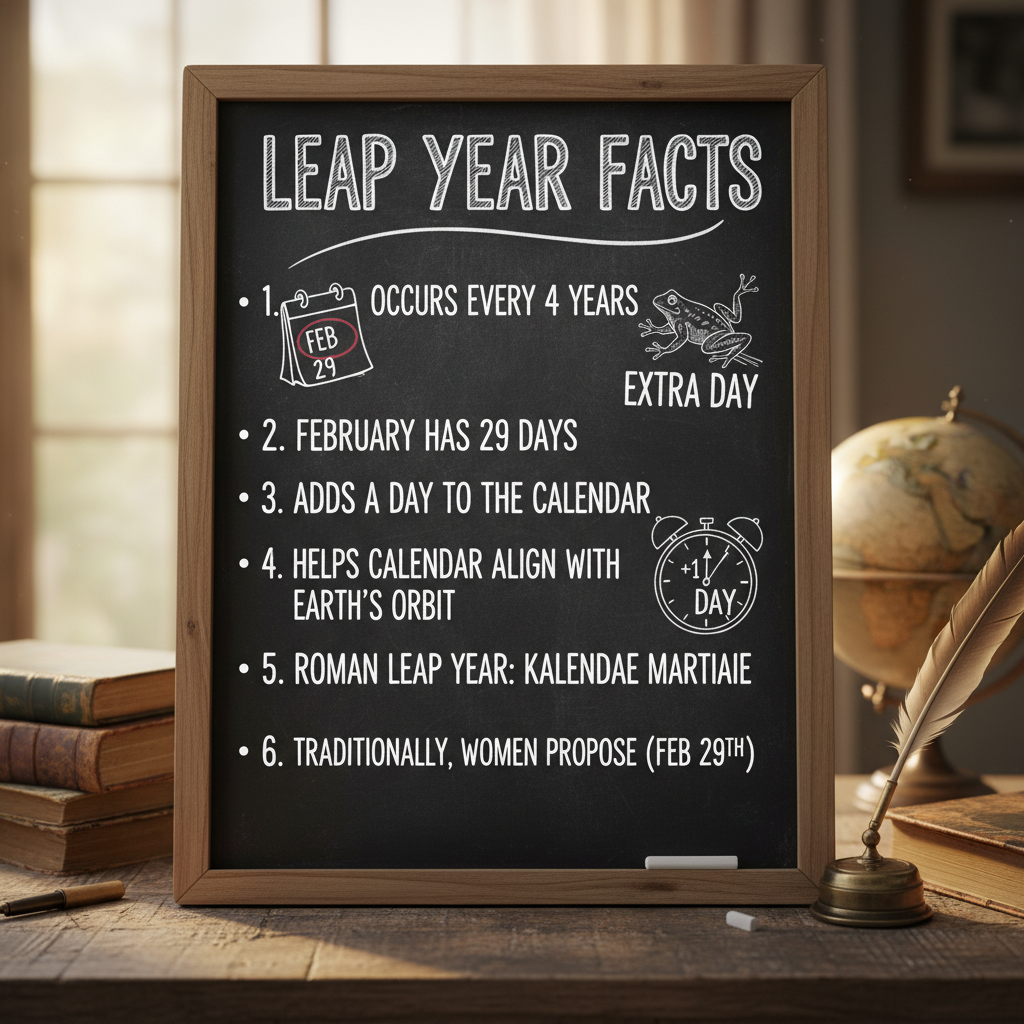
Introduction: Answering the Critical Question, Is 2026 a Leap Year?
Every four years, the calendar introduces an extra day—February 29th—to keep our civil timekeeping aligned with the Earth’s journey around the sun. This crucial adjustment is known as a leap year. However, the cycle isn’t perfectly rigid, leading to confusion about which years qualify. The short answer to the critical question, is 2026 a leap year, is straightforward: definitively no. This year will adhere to the standard 365 days.
While the concept seems simple (add a day every four years), the underlying astronomical and historical reasons are complex, involving ancient Roman decrees, papal interventions, and meticulous mathematics. Understanding these mechanisms not only satisfies the curiosity about 2026 but provides a fascinating insight into how humanity has attempted to master time itself. We will delve into the precise rules that dictate the leap year cycle, ensuring you know exactly why 2026 misses the cut, and when the next 366-day year will occur.
The Core Rule: Determining if 2026 is a Leap Year
The system we use today – the Gregorian calendar – relies on a simple yet effective set of rules to determine whether a year is a leap year. These rules ensure that the calendar year remains closely synchronized with the tropical year, which is the actual time it takes for the Earth to complete one orbit around the Sun (approximately 365.2422 days).
The Simple Divisibility Test That Confirms 2026 is Not a Leap Year
For most years, the rule is easy to apply. A year is typically a leap year if it is perfectly divisible by four. Let’s apply this test to our primary query:
- 2024: Divisible by 4 (2024 / 4 = 506). Result: Leap Year.
- 2025: Not divisible by 4. Result: Standard Year.
- 2026: Not divisible by 4. Result: Standard Year.
- 2027: Not divisible by 4. Result: Standard Year.
- 2028: Divisible by 4 (2028 / 4 = 507). Result: Leap Year.
Therefore, based on the fundamental rule, the answer to is 2026 a leap year remains negative. The next occurrence will be 2028. This four-year cycle is essential, but it is not the whole story. The exceptions, related to century years, are what make the calendar truly accurate.
Why We Need Leap Years: Bridging the Astronomical Gap
If we simply used a 365-day calendar every year, our seasons would slowly drift. Over time, the summer solstice would occur later and later on the calendar. This drift is caused by the extra quarter-day (0.2422 days) needed for Earth to complete its orbit. Over four years, this accumulated time amounts to almost exactly one full day (4 x 0.2422 = 0.9688 days).
The Tropical Year Defined
The time it takes for the Earth to complete one cycle of the seasons is called the tropical year. It is precisely 365 days, 5 hours, 48 minutes, and 45 seconds long.
The Accumulation Problem
Without the leap day, the calendar would fall behind the actual astronomical year by nearly 6 hours every year. In just 100 years, the calendar would be off by approximately 24 days.
Synchronization Goal
The primary goal of the leap year system is to ensure that key astronomical events, like equinoxes and solstices, consistently fall on or near the same calendar dates year after year.
Historical Journey: From Julian to Gregorian Calendar
The attempt to reconcile the calendar with the cosmos is not new. The necessity of the leap day was first formally recognized by Julius Caesar in 45 BCE, resulting in the Julian calendar.
The Flaws of the Julian System
The Julian calendar simply added a leap day every four years without exception. While a vast improvement, this calculation assumed the solar year was exactly 365.25 days. Because the true solar year is slightly shorter (365.2422 days), the Julian calendar was too long by about 11 minutes per year. Over centuries, this error accumulated significantly.
By the 16th century, the calendar had drifted by 10 days, causing particular distress to the Church, which relies on the date of the vernal equinox to determine the date of Easter. This required a radical reform.
The Introduction of the Gregorian Reform
In 1582, Pope Gregory XIII introduced the Gregorian calendar. This new system kept the basic four-year rule but added crucial exceptions to correct the accumulated error and prevent future drift. This is why the question, is 2026 a leap year, requires knowledge of these exception rules, even though 2026 itself is not a century year.
Understanding the Leap Year Cycle and Its Exceptions
The Gregorian system introduces two key exceptions to the “divisible by four” rule. These exceptions are essential for achieving the necessary precision of 365.2425 days per year, which is incredibly close to the actual tropical year length (365.2422 days).
The Century Rule (The 100-Year Exception)
A year that is divisible by 100 is not a leap year, unless it meets the final rule. For example, 1700, 1800, and 1900 were all divisible by four, but they were skipped as leap years because they were divisible by 100.
The 400-Year Rule (The Ultimate Exception)
If a year is divisible by 400, it is a leap year, overriding the 100-year exception. This is why the year 2000 was a leap year, whereas 1900 was not. This rare adjustment is what keeps the calendar accurate over millennia.
If you are trying to calculate time spans, or perhaps determine the exact age of someone born on February 29th, using an accurate system is key. You can utilize an Age Calculator to handle the complexities of these dates quickly and accurately.
Rule 1: Standard Leap Year
If the year is divisible by 4 (and not a century year), it is a leap year. (e.g., 2024, 2028).
Rule 2: Century Exception
If the year is divisible by 100, it is NOT a leap year. (e.g., 1900, 2100).
Rule 3: 400-Year Override
If the year is divisible by 400, it IS a leap year, overriding Rule 2. (e.g., 2000, 2400).
Fascinating Leap Year Facts and Traditions
The occurrence of February 29th has generated unique traditions, legal peculiarities, and even social quirks throughout history. Being born on this day is statistically rare, earning the nickname “leaplings” or “leapers.”
The Rarity of the Leap Day Birthday
The chance of being born on February 29th is approximately 1 in 1,461 (365 × 4 + 1). Many countries have designated specific dates for leaplings to legally celebrate their birthday during non-leap years, often choosing either February 28th or March 1st. For those interested in the scientific precision of timekeeping, the U.S. Naval Observatory provides excellent resources on the Earth’s rotation and time standards, emphasizing the importance of keeping our calendars accurate. The US Naval Observatory maintains highly accurate time standards that validate these calendar calculations.
The Tradition of Women Proposing
Perhaps the most famous leap year tradition is the “Ladies’ Privilege” or “Bachelor’s Day.” Legend holds that in some European cultures, February 29th was the only day women were allowed to propose marriage to men. This tradition is often traced back to 5th-century Ireland and St. Patrick, though historical evidence is scarce, it remains a popular cultural phenomenon associated with the leap day.
“A calendar is merely a device for measuring the passage of time, but the leap year is a reminder of the Earth’s uncompromising orbital reality.”
Addressing the Specific Query: Is 2026 a Leap Year?
To confirm our findings and ensure clarity, let’s place 2026 within the established cycle. The last leap year was 2024. Counting forward four years brings us to 2028. Since 2026 is an even number, some might mistakenly believe it qualifies, but remember, the core requirement is divisibility by four.
The sequence of upcoming standard and leap years is as follows:
- 2024: Leap Year
- 2025: Standard Year
- 2026: Standard Year
- 2027: Standard Year
- 2028: Leap Year
This pattern confirms that 2026 is not a leap year, meaning February will have 28 days and the year will contain 365 days exactly.
The Future of Calendar Adjustments: Is the System Perfect?
Even the highly refined Gregorian calendar is not absolutely perfect. The 365.2425 average year length is still slightly longer than the true tropical year (365.2422 days). This tiny discrepancy means the calendar gains about 26 seconds per year, accumulating to an error of one full day every 3,323 years. This error is so small that no immediate adjustment is needed, but it highlights the continuous astronomical challenge of timekeeping.
Some scientists have proposed even more radical calendar reforms, such as omitting the leap day in years divisible by 4,000, but these proposals have not gained traction. For the foreseeable future, the Gregorian rules, which clearly indicate that 2026 is a standard year, will remain the global standard for civil timekeeping. For those who enjoy diving deep into historical and astronomical topics, we recommend exploring more insightful articles in our knowledge base.
Understanding the history and mathematics behind timekeeping is a great way to appreciate the precision required to keep our modern world running smoothly. Britannica offers an excellent overview of the historical shifts from Roman timekeeping to the modern system.
Conclusion: Why 2026 is Not a Leap Year
The comprehensive analysis of the Gregorian rules confirms that 2026 is not a leap year. It is a standard 365-day year because it is not evenly divisible by four. The leap year system, introduced and refined over millennia, ensures our calendar remains synchronized with the Earth’s orbital period, preventing seasonal drift. While the next leap year won’t arrive until 2028, the underlying principles governing time remain a fascinating testament to human ingenuity in measuring the cosmos.
FAQs
No, 2026 is not a leap year. It is a standard 365-day year. The next leap year in the Gregorian calendar will be 2028, followed by 2032.
The primary rule is that a year must be divisible by four. However, century years (years ending in ’00’) must also be divisible by 400 to qualify. Since 2026 is not divisible by four, it fails the initial test.
The leap day is added to February because of historical precedent dating back to the Roman calendar. Originally, February was the last month of the year and often the shortest, making it the most practical place to insert the extra day when calendar adjustments were needed.
The calendar year is exactly 365 days (or 366 in a leap year). The tropical year is the actual time it takes for the Earth to complete one orbit relative to the seasons, which is approximately 365.2422 days. Leap years are necessary to bridge this difference.
No, 2100 will not be a leap year. Although 2100 is divisible by four and 100, it is not divisible by 400. Therefore, according to the Gregorian rules, 2100 will be a standard year.
Read Also:
- The Definitive Guide to Using a BMI Chart for Men with Age
- Mastering Your Academics: How to Calculate SRM CGPA from SGPA Explained
- Mastering Your Intake: A Definitive Guide on How Many Calories Should I Eat a Day to Lose Weight
- The Definitive Guide to SBI IFSC Code Search by Branch: Methods and Verification
- Master the Math: How to Convert Tenths to Inches (2026 Guide)