
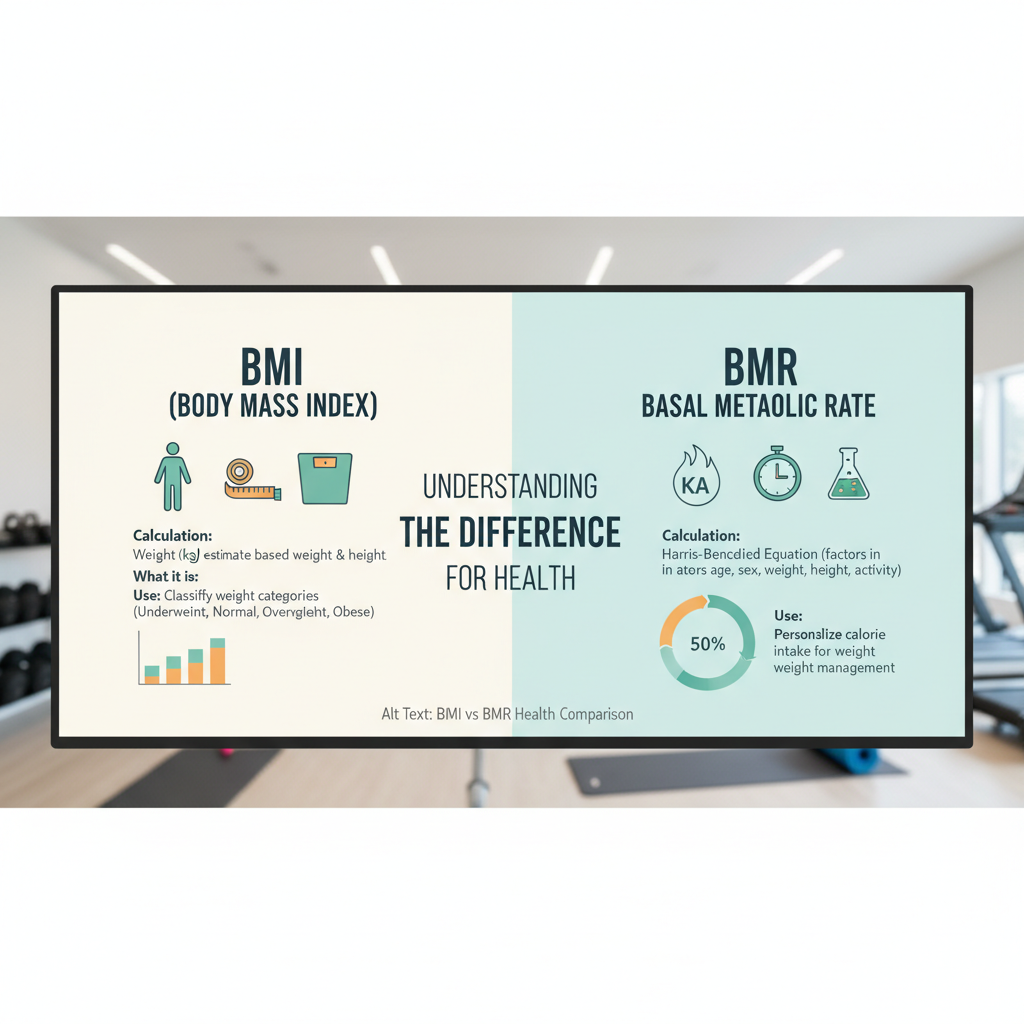
Understanding the BMI vs BMR Difference Health Fitness Connection
When you start a new health or exercise regimen, the amount of data available can be overwhelming. From step counts to heart rate zones, the metrics seem endless. However, two acronyms stand out as the most fundamental pillars of body composition and metabolism: BMI and BMR. Understanding the bmi vs bmr difference health fitness is not just a matter of academic interest; it is a practical necessity for anyone looking to lose weight, gain muscle, or simply maintain a healthy lifestyle. While they sound similar, they serve entirely different purposes in your health toolkit.
Body Mass Index (BMI) and Basal Metabolic Rate (BMR) provide different snapshots of your physical state. BMI is a screening tool used to categorize your weight relative to your height, offering a broad view of potential health risks. On the other hand, BMR measures the energy your body requires to perform basic life-sustaining functions while at rest. By mastering the bmi vs bmr difference health fitness, you can create a more personalized and effective plan to reach your goals. In this guide, we will break down these concepts, compare them side-by-side, and explain how to use them to transform your health.
What is BMI?
BMI stands for Body Mass Index. It is a simple calculation based on your height and weight to determine if you are underweight, at a healthy weight, overweight, or obese.
What is BMR?
BMR stands for Basal Metabolic Rate. It represents the number of calories your body burns just to keep your organs functioning while you are at rest.
The Primary Goal
BMI focuses on health risk assessment based on size, while BMR focuses on energy expenditure and caloric needs for weight management.
The Fundamental BMI vs BMR Difference Health Fitness Explained
To truly grasp the bmi vs bmr difference health fitness, we must look at what each number actually tells you. BMI is essentially a tool of proportion. It doesn’t care if your weight comes from muscle or fat; it simply looks at the total mass distributed across your height. This makes it a great “first-look” tool for healthcare providers to identify individuals who might be at risk for conditions like type 2 diabetes or heart disease. According to the Centers for Disease Control and Prevention (CDC), BMI is a reliable indicator of body fatness for most people, though it is not a direct measurement.
Conversely, BMR is a tool of energy. It is the “cost of living” for your body. Even if you spent the entire day lying in bed without moving a muscle, your body would still need energy to breathe, circulate blood, and regulate hormones. This is your BMR. When you understand your BMR, you can calculate your Total Daily Energy Expenditure (TDEE) by adding your physical activity levels to it. This is the cornerstone of any weight management program: knowing how much fuel your body requires.
Deep Dive into BMI vs BMR Difference Health Fitness Metrics
Let’s look at how these are calculated. BMI is calculated by taking your weight in kilograms and dividing it by the square of your height in meters. It is a static number that only changes when your weight or height changes. It categorizes individuals into four main groups: Underweight (below 18.5), Normal weight (18.5–24.9), Overweight (25–29.9), and Obese (30 or above). For a quick and easy calculation, you can use a BMI Calculator to see where you stand.
BMR calculation is more complex. It often uses the Harris-Benedict equation or the Mifflin-St Jeor equation, factoring in age, biological sex, weight, and height. Unlike BMI, your BMR is heavily influenced by your body composition. Muscle tissue is more metabolically active than fat tissue, meaning a person with more muscle will have a higher BMR than someone of the same weight with more body fat. This is a crucial distinction in the bmi vs bmr difference health fitness debate.
Practical Implications of the BMI vs BMR Difference Health Fitness
Why does this matter for your daily life? Imagine two people who both weigh 200 pounds and are 6 feet tall. Their BMI will be identical (approximately 27.1), which places them in the “overweight” category. However, if one is a professional athlete with 8% body fat and the other is a sedentary office worker with 30% body fat, their BMRs will be vastly different. The athlete’s body requires significantly more calories to maintain its muscle mass than the office worker’s body requires to maintain its fat mass.
This is where the bmi vs bmr difference health fitness becomes vital for goal setting. If you only look at BMI, you might feel discouraged because you are labeled as “overweight,” even if you are fit and muscular. If you only look at BMR, you might know how many calories to eat but have no idea if your current weight is putting a strain on your cardiovascular system. Using them together provides a holistic view of your health.
BMI Utility
- Quick health risk screening
- Population-level data
- Identifies weight-related risks
BMR Utility
- Personalized nutrition planning
- Optimizing metabolism
- Sustainable weight loss
Navigating the BMI vs BMR Difference Health Fitness for Weight Loss
If your goal is weight loss, the bmi vs bmr difference health fitness acts as your roadmap and your fuel gauge. BMI tells you where you are starting and what your target “safe” weight range might be. It gives you a destination. BMR tells you how much fuel (calories) you need to get there. To lose weight, you generally need to consume fewer calories than your TDEE (which is your BMR plus activity). However, you should rarely eat fewer calories than your BMR, as this can lead to metabolic adaptation where your body slows down its functions to conserve energy, stalling your progress.
Expert nutritionists often suggest a moderate calorie deficit. By knowing your BMR, you can ensure you are fueling your body enough to maintain vital functions while still losing fat. This balance is the key to long-term success. As noted by the Mayo Clinic, while you can’t easily change your BMR overnight, increasing your muscle mass through strength training is the most effective way to raise it over time.
Common Misconceptions about BMI vs BMR Difference Health Fitness
One common myth is that BMI is a measure of health. It is not; it is a measure of size. A high BMI is a correlation to health risks, not a causation. Another misconception is that BMR is the only thing that matters for weight loss. While BMR is the largest component of your daily calorie burn (about 60-75%), your physical activity and the thermic effect of food also play significant roles. Understanding the bmi vs bmr difference health fitness requires looking at the whole picture, including lifestyle, genetics, and diet quality.
Limitations and Nuances of Body Metrics
While these metrics are useful, they are not perfect. BMI famously fails to distinguish between bone density, muscle mass, and fat distribution. It can misclassify athletes as obese and elderly individuals with low muscle mass as “healthy” even if they have high internal fat. This is why many experts suggest using BMI alongside waist circumference measurements or skinfold tests for a more accurate assessment of health.
BMR also has its nuances. It can fluctuate based on illness, hormone levels, and even environmental temperature. For instance, your BMR might increase when you are feverish as your body works harder to fight infection. It also naturally declines as we age, which is why many people find it harder to maintain their weight in their 40s and 50s than they did in their 20s. Recognizing these limitations is part of understanding the bmi vs bmr difference health fitness relationship.
Focus on Composition
Don’t just chase a lower BMI. Focus on improving your body composition by increasing muscle, which boosts your BMR and improves long-term health outcomes.
Consistency is Key
Both BMI and BMR are dynamic. Regular monitoring and adjusting your caloric intake based on your changing BMR will lead to better fitness results.
Conclusion: Mastering the BMI vs BMR Difference Health Fitness
In summary, the bmi vs bmr difference health fitness is a vital concept for anyone serious about their physical well-being. BMI serves as a useful, though imperfect, benchmark for assessing weight-related health risks on a broad scale. BMR provides the specific, metabolic data needed to tailor your diet and exercise routine to your body’s unique energy requirements. By using BMI to set general goals and BMR to manage daily nutrition, you create a powerful synergy that supports sustainable health.
Always remember that these numbers are just tools. They should be used to inform your journey, not define your worth or your health in isolation. Consult with healthcare professionals or certified fitness experts to interpret these numbers in the context of your overall health profile. Whether you are using a BMI Calculator to check your status or calculating your BMR to fine-tune your meal prep, the knowledge of how these two metrics interact will undoubtedly lead to smarter, healthier choices.
FAQs
The most important difference is that BMI measures your body’s size and weight category, while BMR measures your body’s internal energy expenditure. BMI is for risk assessment, and BMR is for caloric management.
Yes, especially if you have a lot of muscle mass. Athletes often have a BMI in the “overweight” or “obese” range, but because muscle is metabolically active, they have a very high and healthy BMR.
It is generally sufficient to check these metrics every 3 to 6 months. Since they change as your weight and muscle mass change, periodic checks help you adjust your fitness and nutrition plans accordingly.
Yes, age is a major factor. BMR typically decreases with age as muscle mass naturally declines. BMI may also become less accurate in older adults due to changes in bone density and height loss.
Generally, no. Eating below your BMR can be dangerous as it may not provide enough energy for your organs to function properly and can lead to a significant metabolic slowdown.

